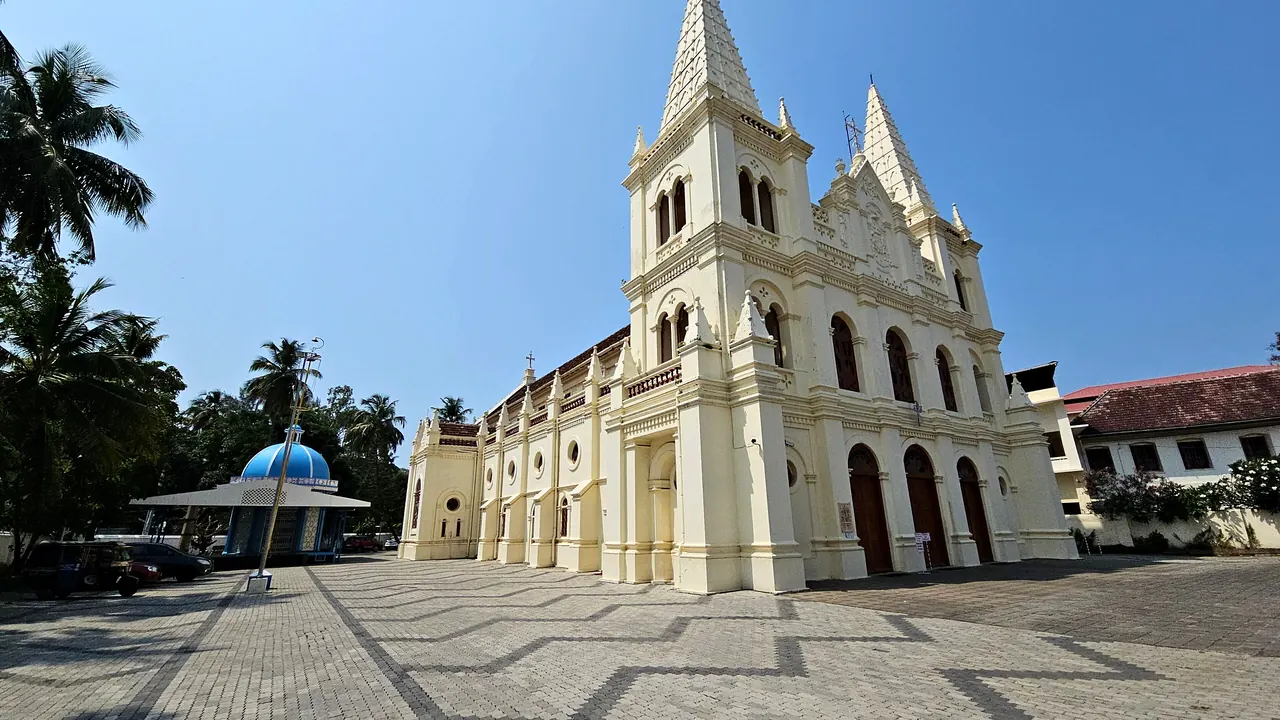
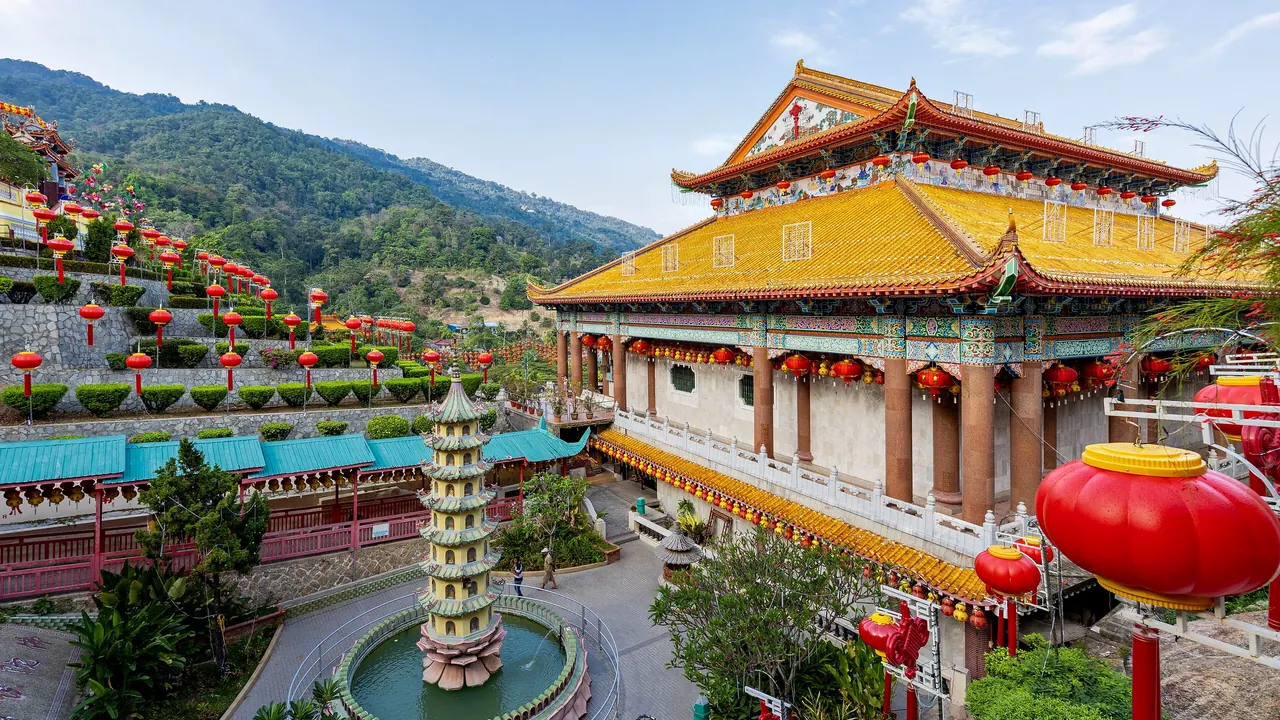
Photos: Kochi by Vis M, CC BY-SA 4.0, cropped; Penang by Supanut Arunoprayote, CC BY 4.0, cropped.
Kochi or Penang?
Our verdict in twelve categories, each scored against the same fixed benchmark cities, and the climate month by month, so you can choose for your trip.
Choose Kochi for
- wellness
- live music and the arts
- prices
Kochi suits a slower, cheaper trip built around Kerala itself. Ayurveda is taken seriously here, mornings go to the backwaters and evenings to Kathakali, and nights end quietly after a banana-leaf dinner. It is also the better base for outings to Alappuzha's canals or the temple town of Thrissur, and it costs very little. In return you get almost nothing to do after dark, and swimming is not easy.
Choose Penang for
- food and drink
- nightlife
- families
Travellers who plan their days around meals should pick Penang. George Town's hawker stalls, shophouse streets and clan temples make a richer and more varied town to walk. The north coast resorts and theme parks make it easier with children, and Love Lane has at least a modest bar scene. It costs a little more, and treatment there means a good massage rather than a course of care.
Scoreboard
Twelve categories on one fixed scale from 0 to 100. The shaded stretch is the gap between the two.
Your match
Pick a travel style or drag the sliders, and both match scores follow your weighting.
Too close to call, level with your weighting
Wins on wellness and live music and the arts with your weighting.
Wins on food and drink and nightlife with your weighting.
What matters to you?
Category by category
What the scores mean for a trip.
Beaches & swimming
Neither is a beach destination, but Penang has more swimming close at hand. Batu Ferringhi on the north coast has resort hotels, water sports and sea near 29°C all year. The national park's Monkey Beach and Kerachut are reached by forest trail or by boat, though cloud and jellyfish send many visitors back to the pool.
In Kochi, the shore at Fort Kochi is for walking, not swimming. The nearest good beach is Cherai, about an hour north, a palm-backed strip with a lagoon behind it. From June to September the surf makes that coast unsafe for swimming.
Food & drink
Both are serious places to eat, but Penang is the one people travel to for its food. Its hawker cooking draws on Hokkien, Teochew, Malay, Tamil and Peranakan kitchens, so one evening at Gurney Drive or in George Town's lanes can take in char kway teow, assam laksa and nasi kandar.
Kochi's cooking is narrower but deep: Kerala food built on coconut, curry leaf and tamarind. Look for fish curry soured with kudampuli, pearl spot cooked in banana leaf and the Syrian Christian duck roast. Drinking is where Kochi falls further behind. Kerala's controls leave you with toddy shops and hotel bars, while Penang has proper bars, even if tax makes the drinks costly.
Culture & sights
Both are old trading ports where a few days cover a cluster of small sights, and neither has a great museum. George Town has more to see: a whole UNESCO-listed grid of shophouse streets, the carved Khoo Kongsi, the clan jetties on stilts and the mixed temples, churches and mosques of Harmony Street. Kek Lok Si stands on the hillside outside town.
Kochi's heritage is packed into Fort Kochi and Mattancherry. St Francis Church, the tiled Paradesi Synagogue and the murals of Mattancherry Palace span Portuguese, Dutch, Jewish and Hindu history. It feels more like a quiet quarter than a town, and in the years the Biennale is held, contemporary art fills the old warehouses.
Nightlife
Neither is a place for going out, but Penang at least has somewhere to go. Backpackers fill the small bars of Love Lane and Chulia Street, Upper Penang Road stays open late with a few clubs, and Batu Ferringhi has beach bars and a night market. In Kochi, Kerala's alcohol controls keep drinking to hotel bars and a few lounges in Ernakulam, and Fort Kochi goes quiet soon after dinner.
Nature & outdoors
The two are about level outdoors, but the landscapes are different. Kochi's is water: kayaks and country boats pass through the Kumbalangi canals and the villages around Vembanad Lake. The Thattekad bird sanctuary and Athirappilly falls lie inland, and the tea hills of Munnar need an overnight stay.
Penang's is island forest. You can take the funicular or jungle trails up Penang Hill, follow the national park's coastal paths to the lighthouse and turtle beaches, or cycle through Balik Pulau's durian and nutmeg orchards. In both places, the heat pushes walks into the early morning.
Day trips
Kochi has the wider choice of outings. Alappuzha's houseboats and canals make an easy day south. The Muziris sites trace an ancient port that traded with Rome, and Thrissur and Kumarakom are also within reach, though slow roads make every journey take longer.
In Penang the island is the main event, and leaving it means crossing to the mainland. Ipoh, about two hours south by train, is the one strong choice, with Taiping and Kuala Kangsar as quieter extras. Langkawi needs more than a day.
Good for families
Penang is the easier place to bring children. A base at Batu Ferringhi puts resort pools within reach, along with the Teluk Bahang water theme park, butterfly park and spice garden. The Penang Hill funicular and the monkeys at the Botanic Gardens fill another day.
Children in Kochi enjoy the ferries, the backwater boats and watching the fishing nets hauled in. Beyond one amusement park on the eastern edge, though, little is built for them, and families need to take more care with food and water.
Getting around
Getting around is about equally awkward in both, for different reasons. Kochi is split by its harbour, but the ferries and water metro between Fort Kochi and Ernakulam make the crossing a pleasant part of the day, and a metro line runs through Ernakulam. Day trips usually need a hired car and driver.
Penang has no rail at all. Beyond George Town's walkable core, the choice is slow buses or cheap ride-hailing, and a hired scooter or car suits the roads to the national park and Balik Pulau.
Shopping & style
Shopping is a small pleasure in both, with a big mall for brands and the best buys in the old quarter. Kochi's buys are bulkier and more specialised: carved doors and Dutch-era furniture in Jew Town, spices by the sack from Mattancherry's wholesalers, and kasavu handloom.
George Town's buys are smaller and easier to pack. Little studios sell Peranakan beadwork, batik and prints, and Little India has fabrics and gold.
Affordability
Both are cheap, but your money goes further in Kochi. Homestays, banana-leaf meals, ferries and mostly free sights cost very little, and the big costs are all optional: heritage hotels, private houseboats and Ayurvedic courses.
Penang is still inexpensive for hawker food, ride-hailing and guesthouses. The beach resorts cost more, though, and heavily taxed drinks add up in a way that Kochi's sober evenings avoid.
Live music & performing arts
Kochi has the one regular performance worth planning an evening around. Kathakali is staged every night in Fort Kochi's small theatres, where you can watch the actors put on their green-and-red make-up. Mohiniyattam dance or Kalaripayattu martial art are often on the same bill.
On an ordinary week, Penang has little to offer. Its performances follow the calendar: the George Town Festival, Chinese street opera and puppet shows at temple festivals, and lion dances at Chinese New Year.
Wellness & relaxation
Wellness is Kochi's clearest advantage. Kerala is the home of Ayurveda, and its clinics and doctor-led programmes offer shirodhara and warm-oil courses lasting one to three weeks, with backwater resorts nearby for real quiet afterwards.
Penang's version is foot reflexology or Chinese and Malay massage, cheap enough to have every day but not a reason to travel. For rest, there are the resort spas at Batu Ferringhi and the cool air on Penang Hill.
When should you go?
Pick your month. The climate figures are measured averages, not a forecast.
Kochi in July
Penang in July
Daytime high, °C
Rainfall in the month, mm
Where the figures come from
Kochi has no weather station within reach, so its figures come from a gridded climate model rather than a measured record, and read a broad area rather than one spot.
Temperature and rainfall are climate normals, averaged over the years shown. Kochi: 2001-2020 normals, NASA POWER reanalysis grid, no weather station within 90 km. Penang: 1991-2020 (sunshine 1981-2010) normals, Penang / Bayan Lepas (14.5 km from centre).
Both are hot all year, so the choice comes down to rain. Kochi has a sharp dry season from December to March, with only about 13mm of rain in January. That is when its beaches are calm and the backwaters are most pleasant, though middays near 33°C push sightseeing into the mornings and evenings. The southwest monsoon builds through May and peaks in June at around 494mm, when the sea turns rough and unsafe. A second wet spell follows in October. The greener monsoon months are still the traditional season for Ayurvedic treatment.
Penang's figures are measured where most visitors stay. It never has a dry season as clear as Kochi's, but it never gets a downpour as heavy either. January and February are the driest and sunniest months, with about 258 hours of sunshine in January, and the sea is warm enough to swim in all year. Rain builds to a peak in September and October, at around 335mm in October, and the clouds cut the sunshine sharply. From June to August, when Kochi is at its wettest, Penang is the easier of the two.
Which traveller are you?
On a relaxing and wellness trip, choose Kochi. In Kerala, Ayurveda is a medical tradition, with doctor-led oil treatments that run for weeks. Fort Kochi's shaded lanes and the nearby backwater resorts give you the stillness that George Town's traffic and heat do not.
On a food and nightlife trip, Penang wins on both counts. Its hawker centres, coffee shops and Gurney Drive stalls offer far more variety than Kochi. Love Lane and Upper Penang Road give you somewhere to drink afterwards, which Kerala's alcohol rules largely prevent.
On a family trip with children, Penang is easier. Batu Ferringhi's resort pools, the parks at Teluk Bahang and the funicular up Penang Hill keep children busy for days. Kochi has one amusement park, boat rides and little else built for young visitors.
Before you go
| Measure | Kochi | Penang |
|---|---|---|
| Official language | Hindi, English | Malay |
| Currency | Indian Rupee (INR) | Malaysian Ringgit (MYR) |
| Sockets | CM230 V, 50 Hz | G240 V, 50 Hz |
| Driving side | Left | Left |
| Time zone | UTC+5:30 | UTC+8 |
| Emergency number | 108 or 112 | 999 |
| Elevation | 0 m | - |
| Main airport | Cochin International Airport (COK)24 km from centre36 non-stop destinations | Penang International Airport (PEN)32 non-stop destinations |
By the numbers
| Measure | Kochi | Penang |
|---|---|---|
| Population | 677,381 | 794,313 |
| People per km² | 7,138 | - |
| Museums within 10 km | 4 | - |
| UNESCO World Heritage sites within 50 km | 0 | - |
| Swim season, months above 21 °C | 12 months | 12 months |
Where else could you go?
Every comparison below shares a destination with this one, so you can follow Kochi or Penang somewhere new.
- Langkawivs Penang
- Koh Lipevs Penang
- Mysorevs Kochi
- Perhentian Islandsvs Penang
- Koh Lantavs Penang
- Kuala Lumpurvs Penang