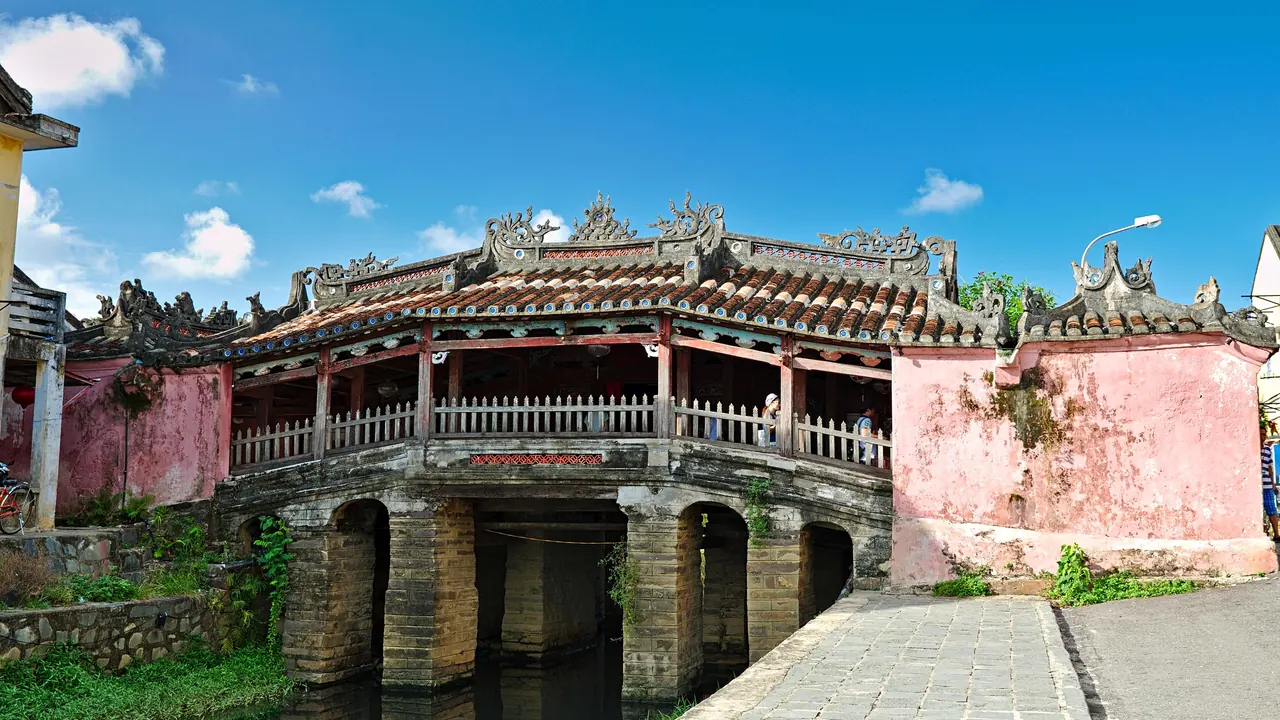
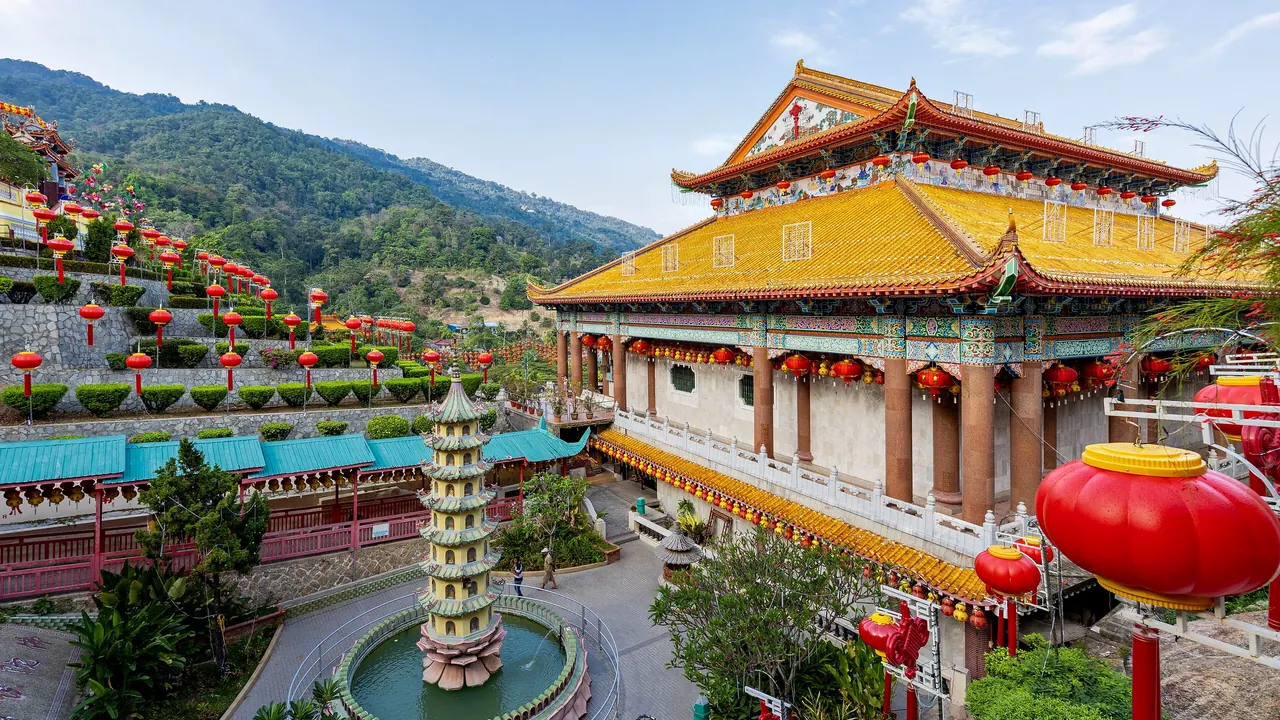
Photos: Hoi An by François Guerraz, CC BY-SA 3.0, cropped; Penang by Supanut Arunoprayote, CC BY 4.0, cropped.
Hoi An or Penang?
Our verdict in twelve categories, each scored against the same fixed benchmark cities, and the climate month by month, so you can choose for your trip.
Choose Hoi An for
- beaches
- wellness
- shopping
Hoi An suits a slower, gentler trip where the old town is only half the point. Sandy beaches lie a bicycle ride away through rice fields, resorts and spas are made for doing very little, and tailors will make clothes to measure while you wait. It is also the cheaper of the two. In return you get a short menu, early nights and a stormy autumn that shuts the sea.
Choose Penang for
- food and drink
- nightlife
- live music and the arts
Penang is the choice for travellers who plan their days around meals. George Town's hawker centres and coffee shops cook from half a dozen traditions, and the heritage streets, temples and bars give a bigger, more varied town to explore over several days. Its beaches and its sense of rest are weaker, so come for the eating and the streets, not the sand.
Scoreboard
Twelve categories on one fixed scale from 0 to 100. The shaded stretch is the gap between the two.
Your match
Pick a travel style or drag the sliders, and both match scores follow your weighting.
Wins on beaches and wellness with your weighting.
Wins on food and drink and nightlife with your weighting.
What matters to you?
Category by category
What the scores mean for a trip.
Beaches & swimming
Hoi An's beach is the real thing: pale sand at An Bang about 5km from the old town, then an almost unbroken shore toward Da Nang where quieter stretches are easy to find. From spring to late summer the sea is calm and warm enough for easy swimming. In the autumn monsoon it is only good for walking along.
Penang's beaches are an add-on to a stay. Batu Ferringhi is a resort strip of jet skis and parasailing, and the sea, though warm all year, is often murky, so many people swim in the hotel pool instead. The prettiest sand, at Monkey Beach and Kerachut, means a forest walk or a boat ride, and there are few facilities.
Food & drink
Hoi An has a cooking of its own, with cao lau, white rose dumplings, chicken rice and a famous banh mi, eaten cheaply at market counters and family shopfronts. The list is short, though, and the riverfront menus repeat themselves. Its cooking classes have a setting of their own, often starting among the vegetable beds of Tra Que village outside town.
Penang is the stronger place to eat. Its hawker cooking draws on Hokkien, Teochew, Malay, Tamil and Peranakan kitchens, from charcoal-fried char kway teow and sour assam laksa to nasi kandar, banana-leaf meals in Little India and slow-cooked Nyonya dishes. You can eat something different at every meal for a week.
Culture & sights
Both are old trading ports with listed heritage centres, and they are close in what they offer. The difference is scale and mix. Hoi An is one compact ensemble of wooden merchant houses, the Japanese Bridge and Chinese assembly halls, which you can see in a day or two and which looks best under the lanterns after dark.
George Town is larger and more varied. It has the carved Khoo Kongsi, clan jetties on stilts, Peranakan mansions and a single street lined with mosques, churches, and Hindu and Chinese temples, with the huge Kek Lok Si outside town. It is better suited to two or three days of walking.
Nightlife
Neither is a party destination, but Penang has more to go out for. George Town has backpacker bars around Love Lane and Chulia Street, cocktail bars in restored shophouses, and late bars and a few clubs on Upper Penang Road.
In Hoi An an evening means floating a candle on the river and having a drink by the water. There are a few loud bars on An Hoi islet and some beach bars at An Bang, but the old town is quiet before midnight, and anyone wanting a big night goes to Da Nang.
Nature & outdoors
The outdoors are about equal, but they are different kinds of country. Around Hoi An everything is flat and on the water: paddies and vegetable gardens by bicycle, coconut basket boats in the Cam Thanh palm channels, and coral to snorkel around the Cham Islands. The Son Tra peninsula and the Hai Van Pass add drama further north.
Penang is hilly and forested. A funicular climbs Penang Hill to a canopy walkway, forest trails in the national park lead to turtle beaches and a lighthouse, and the Balik Pulau side has durian and nutmeg orchards. Heat limits both, and Hoi An's stormy autumn cuts its season shorter.
Day trips
Hoi An has the single best outing: the Cham temple ruins of My Son in their jungle valley, about an hour away. Da Nang's Museum of Cham Sculpture and the Marble Mountains make a good second day. After that there is little, and Hue is too far for a day trip.
Penang's choices take more effort, because they start with a bridge or ferry to the mainland. Ipoh, with its cave temples and its own food, is about two hours by train. Taiping's lake garden, royal Kuala Kangsar and the early temple sites of the Bujang Valley give more choice, but none matches My Son.
Good for families
Hoi An keeps children busy with small, hands-on things: making a silk lantern, spinning in a basket boat, cycling through the paddies and paddling off a sandy shore in the calm season. For a bigger day out, a large theme park with a safari park lies down the coast.
Penang leans on organised attractions instead, with a water theme park, a butterfly and insect park, the funicular up Penang Hill and the macaques in the Botanic Gardens. Resort pools at Batu Ferringhi make up for the sea. In both places the midday heat and uneven pavements are hard work with a pushchair.
Getting around
Getting around is about as easy in both, but in different ways. Hoi An's old town is largely closed to motor traffic, and a borrowed bicycle covers the flat ride to the beach and the villages. There is no useful public transport, though, so My Son or the airport means a taxi or driver.
Penang has buses round the island, but they are slow, so ride-hailing does most of the work. George Town's walkways are broken and hot to walk, and a hired car or scooter suits the roads to the national park and over the hills to Balik Pulau.
Shopping & style
Hoi An gives shoppers a clear reason to come: hundreds of tailors who will make a suit, dress or coat to measure in a day or two, plus leather shoes and bags made the same way. Silk lanterns and the An Hoi night market add the rest. The catch is that many shops sell the same things.
Penang's shopping is mostly mainstream malls on Gurney Drive and near the bridge. The more interesting buys are in George Town: antique shops, Peranakan beadwork and batik, fabrics and gold in Little India, and nutmeg from Chowrasta market.
Affordability
Both are cheap, and Hoi An is cheaper. Homestays with pools cost little, market meals cost almost nothing and bicycles are often free. Only the riverfront restaurants and the beach resorts push the bill up.
Penang's hawker meals and ride-hailing are just as kind on the wallet, but alcohol is heavily taxed, so an evening of beer or wine soon costs more than the food. The boutique hotels and Batu Ferringhi resorts are pricier too.
Live music & performing arts
Neither has a theatre or concert scene. What is on differs mainly in timing. Hoi An has something most evenings: the sung card game bai choi, which visitors can join, short folk shows at a traditional arts house, and a large outdoor spectacle on a river island.
Penang's highlights depend on when you come. The George Town Festival fills the streets with theatre and music for a few weeks a year, and temple festivals bring Chinese street opera and puppet shows. Outside those times there is little to see.
Wellness & relaxation
Hoi An is the easier place to unwind. The day moves at the pace of the river and the bicycle, resorts among the paddies or by the sea are built for idling, and massage and yoga are easy to find at every level. Its crowded old town evenings are easy to avoid by staying outside the centre.
Penang's daily foot reflexology is cheap and good, and the resort spas and the cooler air on Penang Hill offer some calm. But George Town itself, hot and full of traffic, is not restful, so rest means staying at a resort or going up the hill.
When should you go?
Pick your month. The climate figures are measured averages, not a forecast.
Hoi An in July
Penang in July
Daytime high, °C
Rainfall in the month, mm
Temperature and rainfall are climate normals, averaged over the years shown. Hoi An: 1991-2020 normals, Da Nang (23.5 km from centre). Penang: 1991-2020 (sunshine 1981-2010) normals, Penang / Bayan Lepas (14.5 km from centre).
Hoi An has distinct seasons. February to April is the best time for walking the old town: dry, often sunny and warm rather than hot. From May to August the heat builds to around 35°C, which pushes sightseeing into the early morning and evening, but these are the months of the warmest, calmest sea and the longest sunshine. The monsoon arrives in September and peaks in October at 726mm, when the sea turns rough and many outings stop. The rain eases through November and December, and January is milder but still grey.
Penang's temperature hardly changes, with highs around 32°C and the sea near 30°C all year, so rain decides when to go. January to March is the sunniest and among the driest spells, the best time for the north coast and for George Town on foot. December is also fairly dry but greyer. Rain builds from April and is heaviest in September and October, at over 300mm a month. Both have a wet autumn, but Hoi An's is far heavier. Its spring and summer, though, are drier and more settled than Penang in the same months.
Which traveller are you?
For a beach and sun trip, Hoi An is the better choice from spring to late summer. An Bang and the long sand running north toward Da Nang have calm, warm water, while Penang's resort strip is often cloudy and sometimes visited by jellyfish.
On a food and nightlife trip, Penang wins. George Town's hawker stalls cover Hokkien, Malay, Tamil and Nyonya cooking, and Love Lane and Upper Penang Road keep going later. Hoi An's few local specialities and quiet evenings run out quickly by comparison.
For a relaxing and wellness trip, choose Hoi An. You can stay among the paddies or by the sea, with massage and yoga close at hand and a bicycle for getting about. In Penang the calm is mostly in the resort pools, because George Town is hot and full of traffic.
Before you go
| Measure | Hoi An | Penang |
|---|---|---|
| Official language | Vietnamese | Malay |
| Currency | Dong (VND) | Malaysian Ringgit (MYR) |
| Sockets | ACFG220 V, 50 Hz | G240 V, 50 Hz |
| Driving side | Right | Left |
| Time zone | UTC+7 | UTC+8 |
| Emergency number | Police 113, ambulance 115, fire 114 | 999 |
| Elevation | 13 m | - |
| Main airport | Da Nang International Airport (DAD)23 km from centre47 non-stop destinations | Penang International Airport (PEN)32 non-stop destinations |
By the numbers
| Measure | Hoi An | Penang |
|---|---|---|
| Population | 121,716 | 794,313 |
| Museums within 10 km | 5 | - |
| UNESCO World Heritage sites within 50 km | 2 | - |
| Swim season, months above 21 °C | 12 months | 12 months |
Where else could you go?
Every comparison below shares a destination with this one, so you can follow Hoi An or Penang somewhere new.
- Da Nangvs Hoi An
- Huevs Hoi An
- Langkawivs Penang
- Koh Lipevs Penang
- Perhentian Islandsvs Penang
- Koh Lantavs Penang