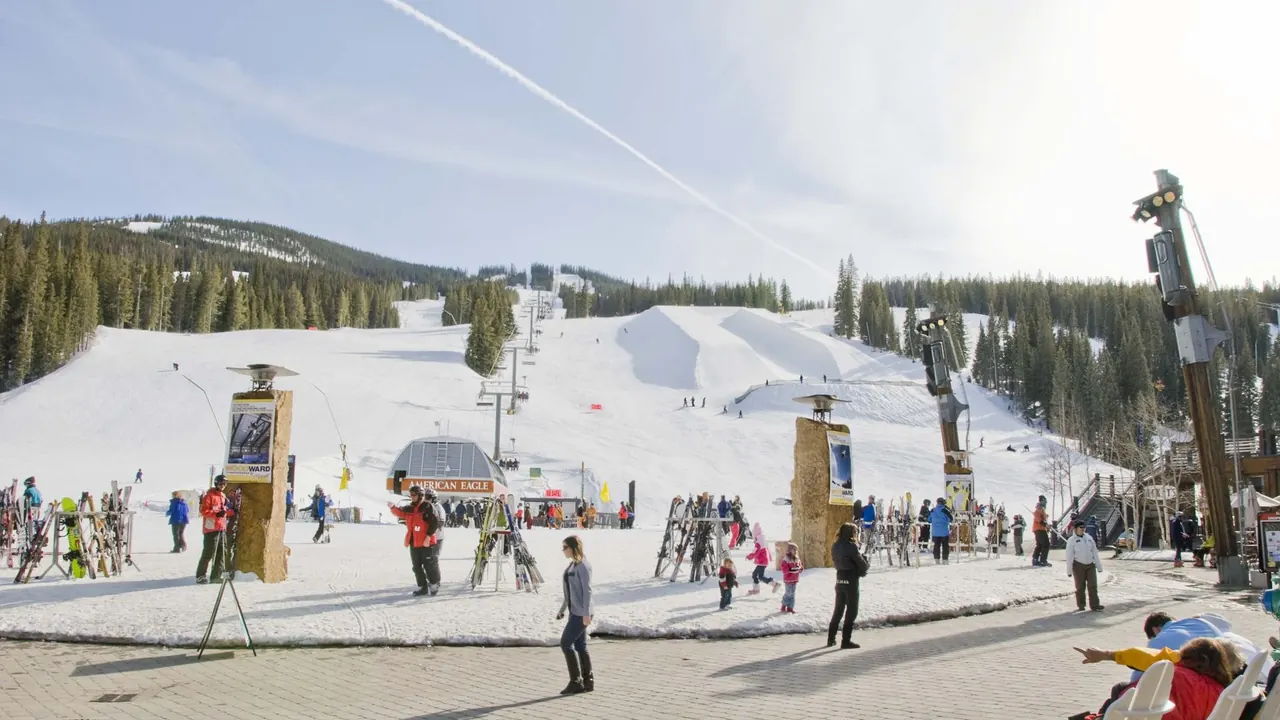
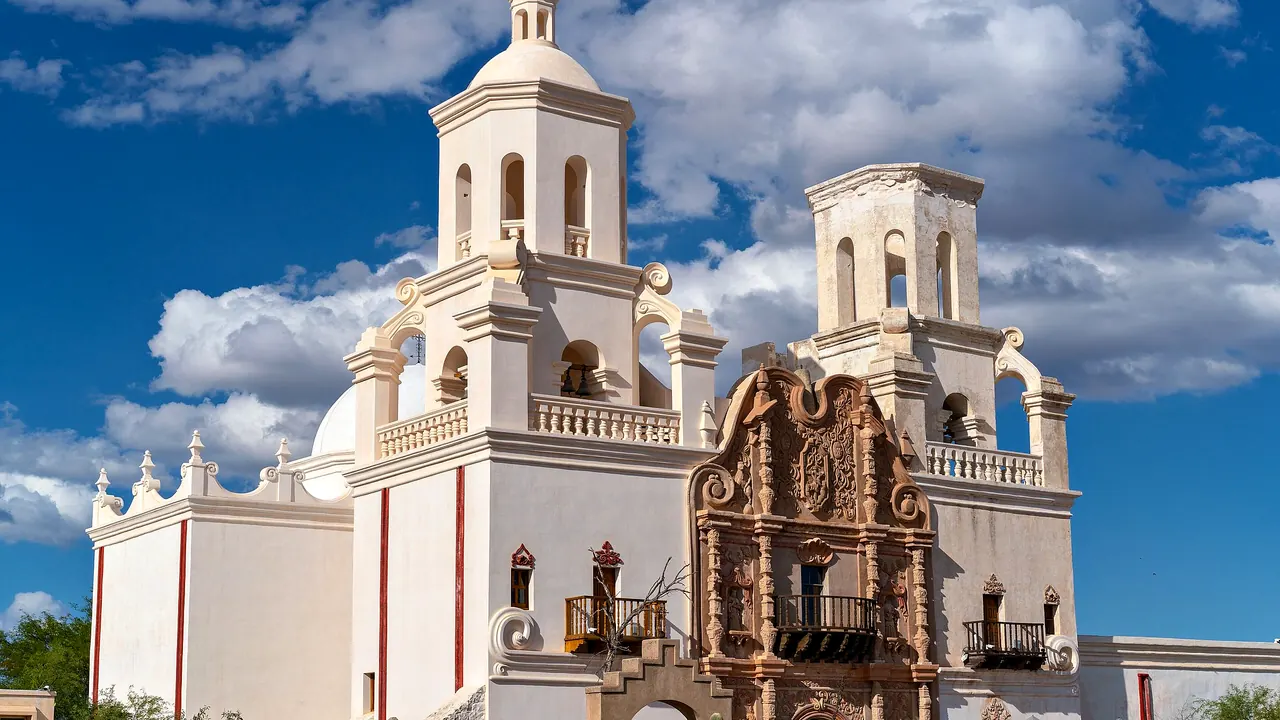
Photos: Copper Mountain by SparkFunElectronics, CC BY 2.0, cropped; Tucson by Steve and Kimberly Rader, CC BY-SA 4.0, cropped.
Copper Mountain or Tucson?
Our verdict in twelve categories, each scored against the same fixed benchmark cities, and the climate month by month, so you can choose for your trip.
Choose Copper Mountain for
- getting around
- nature and the outdoors
- families
Copper Mountain is for people who travel to be on a mountain. Its ski terrain, high treeless bowls and easy reach of several other big Colorado ski areas make it a serious choice for a skiing or snowboarding week, and in summer the same slopes suit hikers and mountain bikers. Off the mountain there is very little: resort food, après-ski rather than nightlife, no sights of its own and a high bill. It suits travellers who will spend every daylight hour outdoors and go to bed early.
Choose Tucson for
- food and drink
- culture and sights
- live music and the arts
Tucson gives a more rounded trip. The Sonoran Mexican cooking, a Spanish colonial mission, desert spa resorts and a modest arts season fill the evenings and rest days, and Saguaro National Park and Mount Lemmon still give plenty of outdoor time. It costs a good deal less, and it suits a sunny winter escape with a mix of hiking, eating well and slowing down, as long as you hire a car.
Scoreboard
Twelve categories on one fixed scale from 0 to 100. The shaded stretch is the gap between the two.
Your match
Pick a travel style or drag the sliders, and both match scores follow your weighting.
Wins on getting around and nature and the outdoors with your weighting.
Wins on food and drink and culture and sights with your weighting.
What matters to you?
Category by category
What the scores mean for a trip.
Beaches & swimming
Neither city has a beach, so swimming is not a reason to choose either one. At Copper Mountain the Summit County lakes are cold with snowmelt even in July, so a dip means a heated lodge pool or a hot tub. In Tucson the resort pool is the main way to cool off in the long hot season. The sea at Puerto Peñasco is a four-hour drive, and the pools in Sabino Canyon only form after rains.
Food & drink
Copper Mountain offers fuel rather than a food culture: burgers and chilli in the mid-mountain lodges, a few pizza and pub-style places in the village, and plenty of condo kitchens. For a better evening meal, people drive to Frisco or Breckenridge.
Tucson has a real cuisine of its own. It is Sonoran Mexican: carne asada over mesquite, paper-thin flour tortillas and the bacon-wrapped Sonoran hot dog, and the most traditional family kitchens are along South 12th Avenue and in the old barrios. Fine dining is thin, but food here is a reason to visit and not just a necessity.
Culture & sights
There is nothing to see at Copper Mountain itself, which is a village of condos and lodges built around the lifts. The region's mining heritage belongs to Breckenridge and Leadville.
Tucson has a few days of genuine sightseeing. The painted and gilded interior of Mission San Xavier del Bac is the highlight. The adobe row houses of Barrio Viejo and El Presidio show the city's Spanish and Mexican roots, and the hundreds of aircraft at the Pima Air & Space Museum are something few places can match.
Nightlife
At Copper Mountain the evening starts and ends with après-ski. Skiers in boots fill the bars at the base of the lifts in the afternoon, and by late evening the village has emptied, tired out by the altitude. Anyone wanting a later night goes to Breckenridge.
Tucson has an actual night out, though a modest one. Fourth Avenue has dive bars and patios full of students, and Congress Street, a short walk away, adds cocktail bars, rooftops and a few dance floors. Warm evenings outdoors are a large part of the appeal.
Nature & outdoors
Both are outdoor destinations, but Copper Mountain is the more complete one for mountain lovers. In winter it offers big ski terrain with bowls above 3,600m and several other major ski areas within a short drive. In summer the Colorado Trail, the paved path over Vail Pass and the fourteen-thousand-foot peaks keep hikers and cyclists busy, provided they cope with the altitude.
Tucson's landscape is desert. There are forests of saguaro on both sides of the city, canyon trails in Sabino Canyon and Catalina State Park, and the drive up Mount Lemmon takes you from cactus to pine. It is superb from autumn to spring and attracts serious road cyclists and birdwatchers, but summer heat pushes outings to dawn or up the mountain.
Day trips
Both have a similar choice of outings and both need a car, but the character differs. From Copper Mountain the drives are short. They lead to Victorian mining towns such as Breckenridge and Leadville, to Vail's Alpine-style village and on to Denver's museums, though weekend ski traffic on I-70 can stretch the journey.
From Tucson the trips run into frontier and border country. You can visit Tombstone's Wild West streets, the steep copper town of Bisbee, the artists' village of Tubac with the Tumacácori mission ruins, and the grassland wineries around Sonoita. Most of these drives are a little longer.
Good for families
A car-free ski village and a spread-out desert city make for very different family trips. Copper Mountain keeps the day in one place, with children's ski school, slopes that separate by ability, snow tubing, a mountain coaster and an indoor trampoline centre. At nearly 3,000m, though, the altitude can unsettle small children for the first couple of days, and beyond the resort there is little aimed at them.
Tucson offers museums and animals rather than snow. At the Arizona-Sonora Desert Museum children can see mountain lions and hummingbirds, and Reid Park Zoo, the Children's Museum, the Flandrau planetarium, the giant aircraft and the stunt shows on a former western film set fill out the list. Almost all of them need a car. The city suits families best from October to April, because summer heat makes the outdoor sights hard going for small children. In summer families tend to keep to the indoor museums, the resort pool and the cooler air on Mount Lemmon.
Getting around
Once you have arrived, Copper Mountain is the easier place to be without a car. Walkways, lifts and a free shuttle link the resort, and free county buses run to Frisco and on to Breckenridge and Keystone. Getting there is harder: Denver airport is about two hours away by road, and winter conditions on I-70 can be difficult.
Tucson only works by car. The streetcar covers just downtown, Fourth Avenue and the university, and the national park, Desert Museum, mission and Mount Lemmon all lie on the edges or beyond. Traffic is mild and parking is easy.
Shopping & style
At Copper Mountain, shopping means ski rental, outdoor gear and resort-branded clothing. Anything more means a drive to the Silverthorne outlets or the boutiques of Breckenridge.
Tucson has things worth taking home. You can find Native American jewellery, Tohono O'odham baskets, pottery and Mexican folk art in the old-town galleries and in Tubac, and vintage shops along Fourth Avenue. The winter gem and mineral show draws collectors from around the world.
Affordability
Copper Mountain is the costlier trip by some distance, particularly in winter, when lift access, slope-side lodging, equipment rental and resort meals all add up. A condo with a kitchen, or a bed in Frisco or Silverthorne, takes some of the edge off, and summer costs less.
Tucson is easier on the budget. Mid-range hotels are reasonable and taquerías and hot dog stands make cheap eating simple, though the hire car and the desert spa resorts add to the bill. Summer brings real bargains for anyone who can take the heat.
Live music & performing arts
Nobody plans a week at Copper Mountain around a performance. The music is acoustic sets at après-ski and bands on the village plaza on summer concert weekends, and a proper programme is a drive away in Breckenridge.
Tucson's season runs from autumn to spring and is small but real. The Tucson Symphony Orchestra, Arizona Opera and the Arizona Theatre Company all perform in the city, touring Broadway shows play Centennial Hall, and the restored Fox Theatre hosts concerts. Mariachi, deeply rooted in the city, gives Tucson a sound of its own.
Wellness & relaxation
Wellness at Copper Mountain amounts to an outdoor hot tub facing the slopes and the pools and massages at the athletic club. The thin air can spoil the first nights' sleep.
Tucson is a far better place to unwind. Long-established destination spas in the Catalina foothills and towards Oracle offer fitness, meditation and desert walks, and the clear winter light and quiet evenings set a slow pace. Neither city has a public bathing tradition.
When should you go?
Pick your month. The climate figures are measured averages, not a forecast.
Copper Mountain in July
Tucson in July
Daytime high, °C
Rainfall in the month, mm
Where the figures come from
Copper Mountain's temperatures are measured 35 km from the centre, at Leadville / Stringtown.
Copper Mountain has no rain gauge within 25 km of the centre, so its rainfall comes from a gridded climate dataset read at the city rather than from a gauge further away.
Temperature and rainfall are climate normals, averaged over the years shown. Copper Mountain: 2006-2020 (rainfall 1991-2020) normals, Leadville / Stringtown (35.2 km from centre). Tucson: 1991-2020 normals, Tucson International Airport (10.1 km from centre).
The two cities have almost opposite seasons. Copper Mountain spends winter below freezing, with daytime highs around -2°C from December to February, and snow usually lasts from November into spring, which is what the skiers come for. Summer is short and mild, peaking near 21°C in July, good weather for hiking and biking, though July and August bring afternoon thunderstorms. Rain and snow are spread fairly evenly through the year, with June the driest month.
Tucson is at its best from October to April, when highs sit around 19°C in midwinter and the days are dry and right for walking and hiking. By June the heat reaches about 39°C and stays close to that through September, too hot for exploring on foot outside the early morning. The monsoon then brings the wettest months, with July around 56mm, mostly in short, dramatic storms. A warm winter break points to Tucson, and in summer Copper Mountain's mountain air is the cooler of the two.
Which traveller are you?
For a ski trip, Copper Mountain is the obvious pick. It has big, well-divided terrain with high bowls and snow from November into spring, and Vail and other Summit County mountains are a short drive away. Tucson has only a small ski area on Mount Lemmon.
On a culture and arts trip, Tucson is the clear choice. It has Mission San Xavier del Bac, the adobe streets of Barrio Viejo, the Arizona State Museum's Native American collections, a symphony and the Fox Theatre. Copper Mountain has no sights of its own.
For a relaxing and wellness trip, Tucson suits better. It is one of the early homes of the American destination spa, with foothill resorts offering massage, desert walks and pools facing the mountains. At Copper Mountain, relaxing means a condo hot tub, and the altitude can disturb your sleep.
Before you go
| Measure | Copper Mountain | Tucson |
|---|---|---|
| Currency | US Dollar (USD) | US Dollar (USD) |
| Sockets | AB120 V, 60 Hz | AB120 V, 60 Hz |
| Driving side | Right | Right |
| Time zone | UTC-7, UTC-6 in summer | UTC-7 |
| Emergency number | 911 | 911 |
| Elevation | 2,955 m | 728 m |
| Main airport | Denver International Airport (DEN)132 km from centre231 non-stop destinations | Tucson International Airport (TUS)12 km from centre18 non-stop destinations |
| Public holidays this year | 12 days | 12 days |
By the numbers
| Measure | Copper Mountain | Tucson |
|---|---|---|
| City population | 650 | 542,629 |
| People per km² | 8 | 923 |
| Museums within 10 km | 0 | 10 |
| UNESCO World Heritage sites within 50 km | 0 | 0 |
Where else could you go?
Every comparison below shares a destination with this one, so you can follow Copper Mountain or Tucson somewhere new.