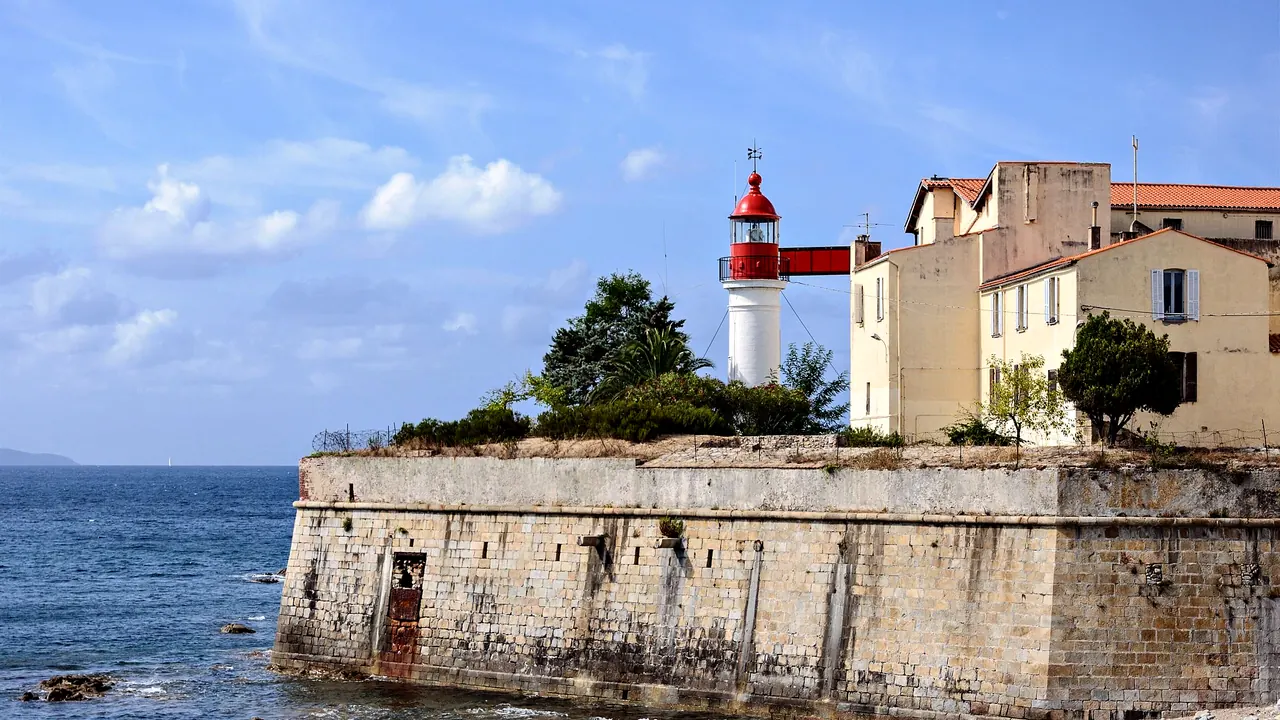
Photos: Corsica by Myrabella, CC BY-SA 3.0, cropped.
Corsica or Menorca?
Our verdict in twelve categories, each scored against the same fixed benchmark cities, and the climate month by month, so you can choose for your trip.
Choose Corsica for
- nature and the outdoors
- day trips
- food and drink
Corsica suits travellers who want the sea and the mountains in one trip. Behind its southern beaches rises a granite range with some of Europe's hardest trekking, sea cliffs at Scandola and Piana, and gorges for canyoning. It rewards a road trip or two bases, a hire car and patience on slow, winding roads. In return you get far more variety of landscape and more towns and villages to visit.
Choose Menorca for
- getting around
- families
- shopping
Menorca is the easier island to settle into. It is small, the drives are short and the low-rise resorts are built around calm, shallow bays, which makes it the better choice for families and for anyone who wants one base and little planning. Its countryside is gentle rather than wild. What it gives you is coves, two handsome harbour towns and Bronze Age monuments, all within an hour's drive.
Scoreboard
Twelve categories on one fixed scale from 0 to 100. The shaded stretch is the gap between the two.
Your match
Pick a travel style or drag the sliders, and both match scores follow your weighting.
Too close to call, 1 point apart
Wins on nature and the outdoors and day trips with your weighting.
Wins on getting around and families with your weighting.
What matters to you?
Category by category
What the scores mean for a trip.
Beaches & swimming
Both islands have Mediterranean beaches of the first rank, but the setting differs. Corsica's famous southern beaches, Palombaggia, Santa Giulia and Rondinara, are pale sand framed by pines and pinkish granite. The Agriates beaches in the north can only be reached by boat or a long track, which gives them the feel of an expedition.
Menorca's best swimming is in its south-coast limestone coves, Macarella, Turqueta and Mitjana, which are small, white and often have no buildings at all. Its north coast has red sand and gets rough when the tramuntana wind blows. Car-park limits and shuttle buses control access to the southern coves, while Corsica's crowds are managed simply by arriving early and walking further.
Food & drink
Both islands eat well when you leave the resort strips. Corsica's cooking comes from its mountains: chestnut-fed charcuterie such as lonzu and figatellu, brocciu in everything from omelettes to fiadone, and wild boar stews in village inns. It also makes serious wine around Patrimonio and Sartène, which gives it a slight edge for anyone who plans meals around a bottle.
Menorca's food is more about its harbours: lobster caldereta in Fornells, Mahón cheese bought at the farm gate, and a glass of pomada on the quay. On both islands the menus by the beaches are ordinary.
Culture & sights
The two offer about as much sightseeing, from different eras. Corsica's heritage is a fortified frontier: Genoese citadels at Calvi and Bonifacio, the hilltop old capital of Corte, Napoleon's Ajaccio with the Palais Fesch paintings, and the carved standing stones of Filitosa. These sights are spread round a large island, so they make the stops on a road trip.
Menorca's distinctive layer is older and more concentrated. Hundreds of Bronze Age navetas, taulas and villages lie in farmland a short drive apart, and the island's two towns add Ciutadella's Gothic core and Mahón's British-era sash windows above its deep harbour. Two or three days covers it all.
Nightlife
Neither island is built for nightlife, and most evenings on both end over dinner and a drink by the water. Corsica's late nights are in a few big open-air clubs in the hills behind Porto-Vecchio and in the beach and harbour bars of Calvi in July and August.
Menorca's going-out is on the quays of Ciutadella and Mahón and at a club set in a sea cave near Cala en Porter. Its real high points are the town festes, above all Sant Joan in Ciutadella in June, when horses rear through the crowds and the streets party until dawn.
Nature & outdoors
This is where the islands differ most. Corsica is a mountain range rising out of the sea, with high peaks in sight of the beaches. It has the GR20 along its spine, the red granite of Piana, the sea caves of Scandola and chestnut forest cut by rivers you can go canyoning in. An active traveller could spend weeks here without running out of things to do.
Menorca is a gentle biosphere reserve of dry-stone walls, wild olive and pine-lined gorges. Its best feature is the Camí de Cavalls, about 185km of coastal path in easy stages. It also has birdwatching at S'Albufera des Grau and calm sailing in Fornells Bay. It is pleasant walking country, but it has no high ground or wilderness.
Day trips
Corsica gives you more to aim for. From the south there is stony Sartène and a ferry from Bonifacio to Sardinia in under an hour. From Calvi you can reach the craft villages of the Balagne, and from Bastia Cap Corse and the Patrimonio vineyards, while the narrow-gauge railway climbs to Corte. Slow roads mean each base has its own set of outings.
On Menorca a day out mostly means crossing to the other town, since Ciutadella and Mahón differ enough to fill a day each, or visiting Fornells and Binibeca. The ferry to Mallorca makes a long day, and after that most visitors go back to the beach.
Good for families
Corsica entertains children with nature rather than attractions. Boat trips into the sea caves along the coast, cool river pools in the inland valleys and family campsites with pools on the east and south coasts can fill a week. There is no zoo, aquarium or theme park, though, so the island suits families who are happy with the sea and the outdoors and need nothing more.
Menorca has a little more aimed at children, and it is the easier choice overall. A small water park, farm and animal parks and glass-bottom boats break up the beach days. Older children usually enjoy scrambling around the Bronze Age villages and taulas or kayaking under the cliffs, and Arenal d'en Castell and Son Saura are gentle bays for small swimmers. The loveliest southern coves are about half an hour's walk from the car, so you have to carry everything in.
Getting around
Menorca is far easier to get around. The island is about 50km long, one main road links Mahón and Ciutadella, and most drives take well under an hour. Summer buses reach the main resorts. The only hassle is the full car parks and shuttle-bus rules at the famous coves.
In Corsica a car is close to essential, and the narrow mountain roads turn short distances into long drives, with heavy summer traffic near the resorts. The scenic railway between Ajaccio, Corte, Bastia and Calvi is worth riding for its own sake, but it does not go to the south, where most of the famous beaches are.
Shopping & style
On Corsica you mostly shop for food and blades: charcuterie, chestnut flour, honey, island wine and hand-forged knives, plus pottery and woodwork in the Balagne villages. Outside the summer boutiques of Porto-Vecchio and Calvi there is little else to browse.
Menorca's speciality is leather, which gives it a little more for those who like to shop. Avarques sandals are sold everywhere, Ciutadella and Alaior have a long tradition of making shoes, and both old towns have small boutiques. Summer evening craft markets also move from town to town.
Affordability
Both islands are expensive in July and August, and neither is a budget option in high season. In Corsica, ferry crossings and the near-essential hire car add to room rates in Porto-Vecchio, Bonifacio and Calvi. Its many campsites and village inns are the best way to save.
On Menorca the savings come from renting an apartment, cooking with market produce and eating in the inland towns. Its beaches and most of its prehistoric sites cost nothing to visit. On both islands June and September are noticeably kinder to your budget.
Live music & performing arts
Corsica's own sound is polyphonic singing, unaccompanied male voices in close harmony that you hear in village churches in summer. The season also brings jazz in Calvi and guitar evenings among the Patrimonio vines.
Menorca's tradition is classical. Mahón's Teatre Principal, built in 1829, is one of Spain's oldest opera houses, the great organ of Santa Maria gives summer recitals, and Ciutadella holds a long-running classical festival. On both islands there is little on outside summer.
Wellness & relaxation
On both islands rest comes from the pace rather than from spas. Corsica's version is long lunches, siestas and mountain villages that go quiet at dusk, along with a few simple old thermal springs such as Pietrapola.
Menorca's version is converted farmhouses, low-rise resorts and slow evenings by the harbour. Yoga and massage are easy to book in summer, and it is at its calmest in June and September.
When should you go?
Pick your month. The climate figures are measured averages, not a forecast.
Corsica in July
Menorca in July
Daytime high, °C
Rainfall in the month, mm
Temperature and rainfall are climate normals, averaged over the years shown. Corsica: 1991-2020 normals, Ajaccio (5.1 km from centre). Menorca: 1991-2020 normals, Menorca / Mahon (3.7 km from centre).
The two islands keep almost the same calendar. Around the main resort areas the beach season runs from June to September, with daytime highs near 29°C in July and August, and the sea stays warm enough to swim into October. Corsica gets a little more sunshine in high summer, while Menorca's water is a touch warmer late in the season, at 26°C in August. July and August are too hot for long walks at low altitude on either island, but in Corsica you can climb into the mountains to escape the heat.
Spring is drier on Menorca, so May is a good month for the Camí de Cavalls. In Corsica the trails are best in May, June and late September. Both islands get wetter through the autumn. In September Menorca has slightly more rain, but from October Corsica is the wetter of the two, reaching 115mm in November. Winters on both are mild at around 14°C, but quiet and often damp.
Which traveller are you?
For an outdoors trip, Corsica is the clear choice. It has the GR20 and the gentler Mare e Monti paths, the needles of Bavella, the lakes above the Restonica gorge, rivers for canyoning and sea kayaking around Scandola. Menorca's coastal bridleway is lovely, but its landscape is gentle.
On a family trip with young children, Menorca makes life simpler. Every drive is short, the resorts are low-rise and built for families, and bays like Cala Galdana and Son Bou are shallow and sheltered. Corsica's long, twisting roads can wear out young passengers.
On a culture and arts trip, choose Menorca if you want a lot in a small space: UNESCO-listed Talayotic monuments, Georgian Mahón and Gothic Ciutadella, all close together. Corsica's citadels and Bonifacio's clifftop old town are grander but much further apart, so they suit a slower road trip instead.
Before you go
| Measure | Corsica | Menorca |
|---|---|---|
| Official language | French | Spanish |
| Currency | Euro (EUR) | Euro (EUR) |
| Sockets | CE230 V, 50 Hz | CF230 V, 50 Hz |
| Driving side | Right | Right |
| Time zone | UTC+1, UTC+2 in summer | UTC+1, UTC+2 in summer |
| Emergency number | 112 | 112 |
| Main airport | Ajaccio Napoléon Bonaparte airport (AJA)29 non-stop destinations | Menorca Airport (MAH)72 non-stop destinations |
| Public holidays this year | 11 days | 13 days |
By the numbers
| Measure | Corsica | Menorca |
|---|---|---|
| Population | 355,486 | 100,323 |
| People per km² | 41 | 145 |
| Swim season, months above 21 °C | 4 months | 5 months |
Where else could you go?
Every comparison below shares a destination with this one, so you can follow Corsica or Menorca somewhere new.
- Sardiniavs Corsica
- Mallorcavs Menorca
- Cinque Terrevs Corsica
- Ibizavs Menorca
- Lake Gardavs Corsica
- Lake Comovs Corsica