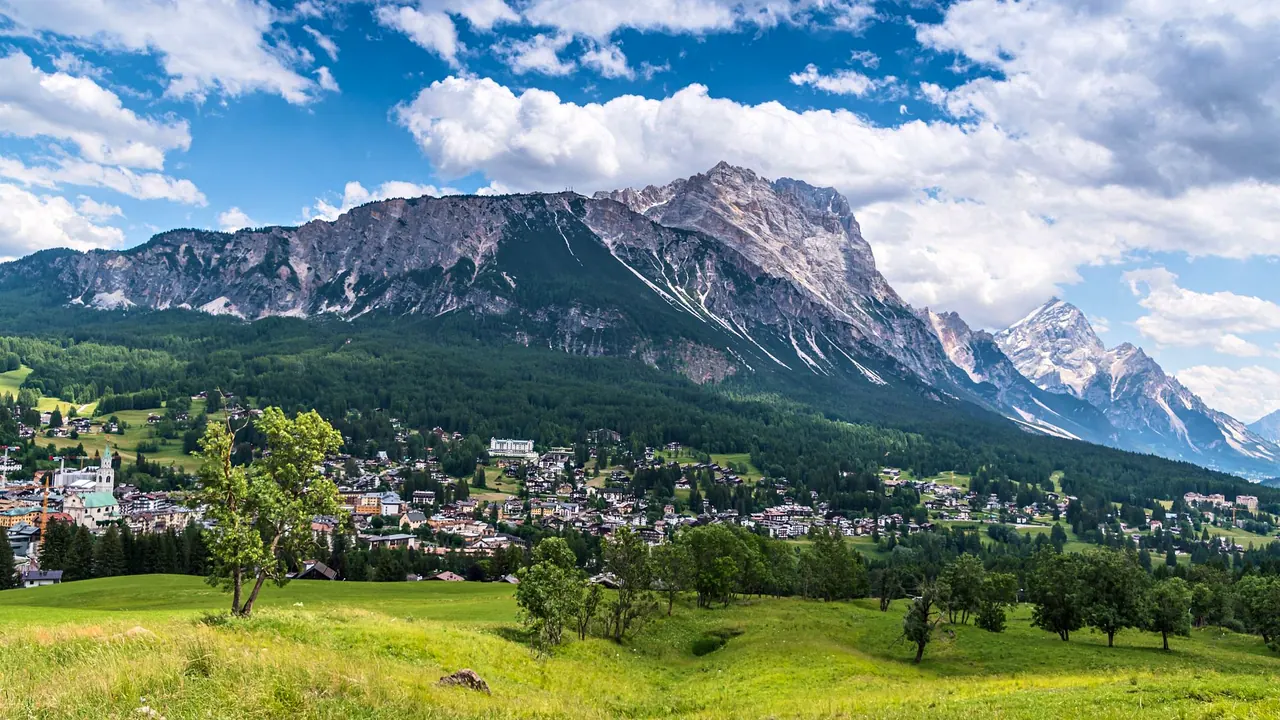
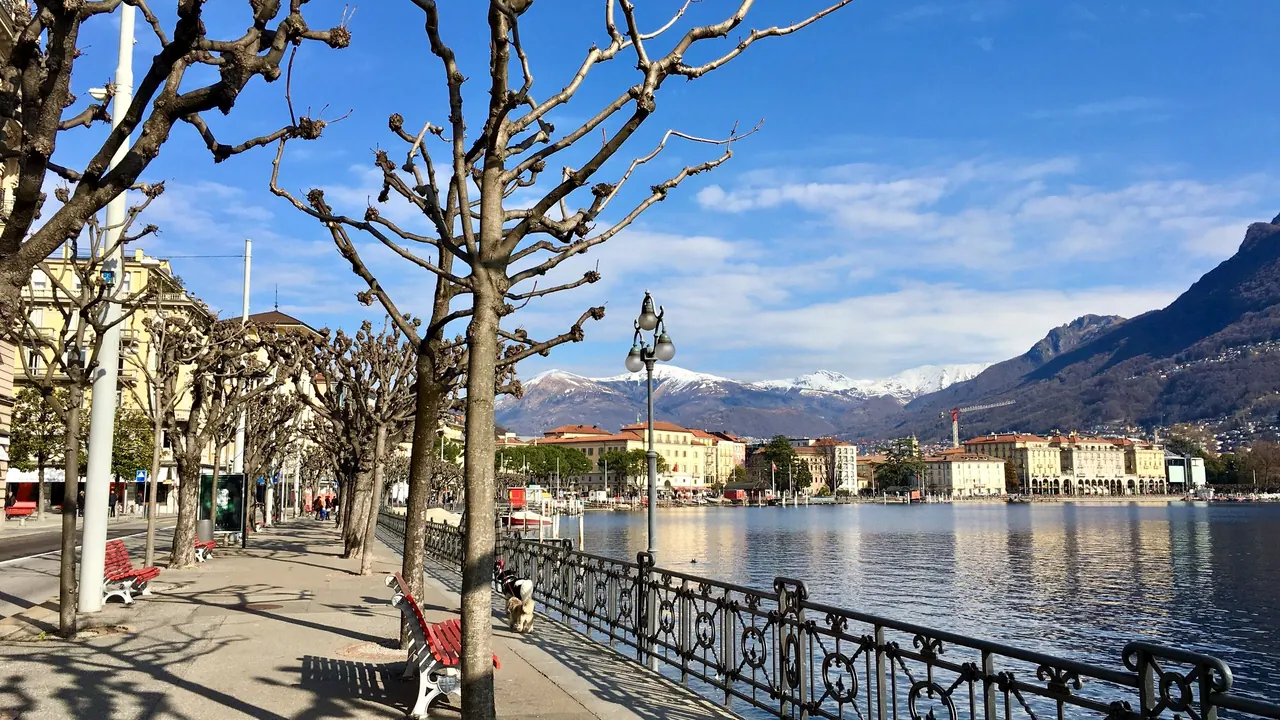
Photos: Cortina d'Ampezzo by Andreas Neubauer, Pexels License; Lugano by Thomas Woodtli from Zürich, Switzerland, CC BY-SA 2.0, cropped.
Cortina d'Ampezzo or Lugano?
Our verdict in twelve categories, each scored against the same fixed benchmark cities, and the climate month by month, so you can choose for your trip.
Choose Cortina d'Ampezzo for
- nature and the outdoors
- prices
Cortina d'Ampezzo is the choice when the mountains are the whole point. Lifts rise from the edge of town into the Dolomites. In winter the slopes link into the Dolomiti Superski area, and in summer you can hike from hut to hut or climb via ferrata routes along the old First World War front. In return, the town offers little beyond its slopes and trails, and the evenings are quiet.
Choose Lugano for
- beaches
- day trips
- getting around
Lugano suits travellers who want scenery together with a proper town and easy connections. The lake is good for swimming in summer, and the old town and the LAC arts centre fill a day of sights and concerts. Trains reach Milan, Como and Bellinzona without a car. The mountains around the lake are greener and gentler, so the walking is pleasant but rarely dramatic.
Scoreboard
Twelve categories on one fixed scale from 0 to 100. The shaded stretch is the gap between the two.
Your match
Pick a travel style or drag the sliders, and both match scores follow your weighting.
Wins on nature and the outdoors and prices with your weighting.
Wins on beaches and day trips with your weighting.
What matters to you?
Category by category
What the scores mean for a trip.
Beaches & swimming
Lugano is clearly the better place to swim. The lake warms enough in midsummer for real swims from the lidos at the mouth of the Cassarate and along the shore towards Castagnola and Paradiso, with lawns and decks to lie on and boats out to the village bathing spots. It is lake bathing rather than a beach, but it is a proper summer pastime.
In Cortina the water is snowmelt. Lakes such as Ghedina and Pianozes are for walking round, a dip in them is a test of nerve, and most swimming happens in hotel pools.
Food & drink
The two eat about equally well, and both have a narrow range with little street food or international cooking. The difference is in the setting. Cortina's best meals come at the rifugi, where you eat casunziei or polenta with game on a terrace among the peaks, and the town's wine bars pour Veneto and South Tyrolean wines.
Lugano's equivalent is the grotto, a rustic tavern built against rock cellars. Braised meats, risotto and salumi arrive at granite tables under chestnut trees, with a glass of Ticino Merlot. The town also has pastry shops, café tables under the arcades and a weekly market in the old centre.
Culture & sights
Lugano has more to see, although neither is a major sightseeing destination. Its Lombard-style old town around Piazza della Riforma, the Cathedral of San Lorenzo, Luini's Passion fresco and the art collection split between LAC and Palazzo Reali make a satisfying day. The Hermann Hesse museum in Montagnola is a worthwhile extra.
In Cortina, the basilica bell tower, the painted houses, the 1956 Olympic ice stadium and the Rimoldi art collection fill a rainy afternoon. Its most striking heritage is the First World War front line on Lagazuoi and the Cinque Torri, and seeing it takes a day in the mountains.
Nightlife
Neither town is made for late nights, and the main difference is the season. Cortina livens up with après-ski and the evening passeggiata along the Corso Italia. Only in the peak winter weeks do a few smart bars and clubs stay open late, and in summer the town goes quiet early.
Lugano's evenings change less through the year: an aperitivo by the lake or under the arcades, then a long dinner, with the promenade staying lively on summer weekends. Anyone after a real night out goes to Milan.
Nature & outdoors
Both settings are superb, but Cortina is in another league for mountains. The pale Dolomites stand right around the valley, lifts reach the Tofane and Cristallo from town, and the Tre Cime and Lago di Misurina are close. Winter brings the Dolomiti Superski area, and summer brings the Alta Via 1, via ferrata routes and climbing.
Lugano's landscape is softer: a winding lake below wooded peaks, funiculars up Monte Brè and San Salvatore, the lakeside path to Gandria and the ridge walk from Lema to Tamaro. It is excellent for walking and paddling, but the high Alps are some distance away.
Day trips
Lugano is far better placed for outings. Milan is just over an hour away by train and Como about half an hour. Bellinzona's castles and the Borromean Islands on Lake Maggiore are easy trips, and you can reach Morcote by boat.
From Cortina, most excursions lead into the mountains. South Tyrol is the best direction, with San Candido, Brunico's castle and the Iceman in Bolzano, but these towns are charming rather than essential, and Venice is a long day by coach.
Good for families
Lugano is the easier family destination overall, and Cortina comes close only for families who come to ski or hike. Cortina has ski schools for every age, beginner slopes at Socrepes, public skating at the Olympic ice stadium and a forest rope park in summer. Beyond the outdoors there is little built for children, so wet days with small ones are hard to fill, and the costs mount quickly.
In Lugano the lake keeps children busy without any special gear or skills. They can take boat trips to the villages, use the slides at the lidos, ride the funiculars up Monte Brè and San Salvatore, and visit the park of Swiss landmarks in miniature at Melide. The steep streets are hard work with a pushchair, and teenagers who want big attractions will find little.
Getting around
Rail is the big divide. Cortina has had no railway since its mountain line closed in 1964, so you arrive by coach from Venice or after a long drive. The centre is easy on foot and ski buses serve the slopes in winter. Buses up to the passes and the Tre Cime are limited, though, and many visitors end up hiring a car.
Lugano is on the Swiss rail network, so Milan, Como and Bellinzona are an easy train ride away. A short funicular links the station to the old town, and buses, lake boats and rack railways cover the rest, so you rarely need a car.
Shopping & style
Each town has one polished street for wealthy visitors and little beyond it, but they sell different things. Cortina's Corso Italia leans towards furriers and upmarket mountain wear. The Cooperativa di Cortina, founded in 1893, sells everything from local food to outdoor gear, and there are local crafts such as wood carving and filigree.
Lugano's Via Nassa is about Swiss watches, jewellery and Italian fashion under the arcades. There is a designer outlet near Mendrisio, and Milan is close enough for serious shopping.
Affordability
Both are among the more expensive places you could pick, so the real difference is how you soften the bill. In Cortina, meals at the rifugi are fair value, and early summer and late September bring easier rates. Budget travellers often sleep in cheaper valleys nearby and drive in.
In Lugano, prices are Swiss for everything, from hotels to boats and mountain railways. Grotti and set lunches help, as does the free regional transport that usually comes with a hotel stay, and meals across the Italian border cost less.
Live music & performing arts
Lugano has a real cultural season. The concert hall at LAC is home to the Orchestra della Svizzera italiana, its theatre stages drama and dance, and in summer Estival Jazz brings free open-air concerts to Piazza della Riforma.
Cortina has no theatre and no regular music venue. Evening culture depends on summer chamber and classical festivals in churches and halls, plus the odd concert around Christmas.
Wellness & relaxation
Neither town has thermal springs, so in both, relaxation comes from the hotels and the pace of life. Cortina's hotel spas follow the Alpine model, with saunas, steam rooms and hay baths after a day on the slopes. The valley is calmest in June, September and the quieter winter weeks.
Lugano's version is gentler and more social: coffee under the arcades, an afternoon at a lido or in Parco Ciani, and a long lunch in a grotto. For pools and saunas outside the hotels, there is a large indoor complex near Rivera.
When should you go?
Pick your month. The climate figures are measured averages, not a forecast.
Cortina d'Ampezzo in July
Lugano in July
Daytime high, °C
Rainfall in the month, mm
Temperature and rainfall are climate normals, averaged over the years shown. Cortina d'Ampezzo: 1991-2020 normals, Dobbiaco (22.5 km from centre). Lugano: 1991-2020 normals, Lugano (1.2 km from centre).
Cortina has two clear seasons. From December to February, daytime highs hover around freezing, about 0°C in January. These are also the driest months, which suits skiing. March turns noticeably milder. Summer is short and fresh, with highs of about 22°C in July and August. That is ideal for hiking, but it is also the wettest part of the year, with around 130mm of rain in July, so leave some slack in mountain plans. June and September are cooler and drier.
Lugano is several degrees warmer in every month. The lake is warm enough for swimming from June to early September, when highs reach 27°C and the days are at their sunniest. It is also much wetter than Cortina. Heavy rain falls from April to November and peaks at around 178mm in May, so keep a spare day for spring and autumn walks. Winters are cool and grey rather than harsh, which makes them better for strolling the old town than for the hills.
Which traveller are you?
On an outdoors trip, Cortina is the stronger pick. The Dolomites ring the valley and lifts climb straight from town. The Alta Via 1, some of the oldest via ferrata routes in the Alps and the Tre Cime are close by, and there is serious skiing in winter.
For a culture and arts trip, Lugano offers far more. The arcaded old town, Luini's Passion fresco and the art collection at LAC fill a day. The Orchestra della Svizzera italiana plays in the lakeside hall, and Milan's galleries are an hour away by train.
For a short city break, Lugano works better. The centre is walkable, trains run to Milan and Como, and boats and funiculars reach lake villages and summits without a car. Cortina has no railway, takes a long coach ride to reach and rewards a longer stay.
Before you go
| Measure | Cortina d'Ampezzo | Lugano |
|---|---|---|
| Official language | Italian | French, German, Italian, Romansh |
| Currency | Euro (EUR) | Swiss Franc (CHF) |
| Sockets | CFL230 V, 50 Hz | CJ230 V, 50 Hz |
| Driving side | Right | Right |
| Time zone | UTC+1, UTC+2 in summer | UTC+1, UTC+2 in summer |
| Emergency number | 112 | 112 |
| Elevation | 1,224 m | 283 m |
| Main airport | Venice Marco Polo Airport (VCE)116 km from centre103 non-stop destinations | Milan Malpensa International Airport (MXP)46 km from centre208 non-stop destinations |
| Public holidays this year | 13 days | 15 days |
By the numbers
| Measure | Cortina d'Ampezzo | Lugano |
|---|---|---|
| City population | 5,546 | 63,495 |
| People per km² | 22 | 837 |
| Museums within 10 km | 3 | 17 |
| UNESCO World Heritage sites within 50 km | 1 | 5 |
Where else could you go?
Every comparison below shares a destination with this one, so you can follow Cortina d'Ampezzo or Lugano somewhere new.
- Comovs Lugano
- Milanvs Lugano
- Bergamovs Lugano
- Zermattvs Lugano
- Innsbruckvs Cortina d'Ampezzo
- Interlakenvs Lugano