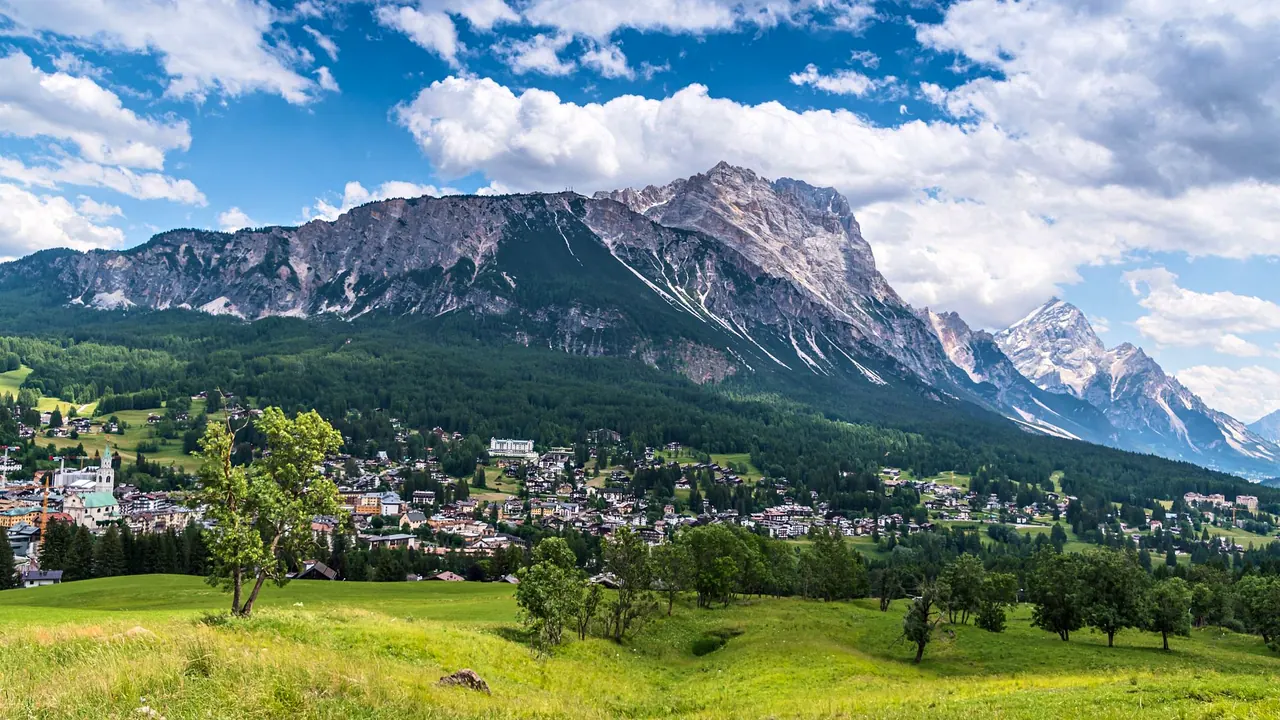
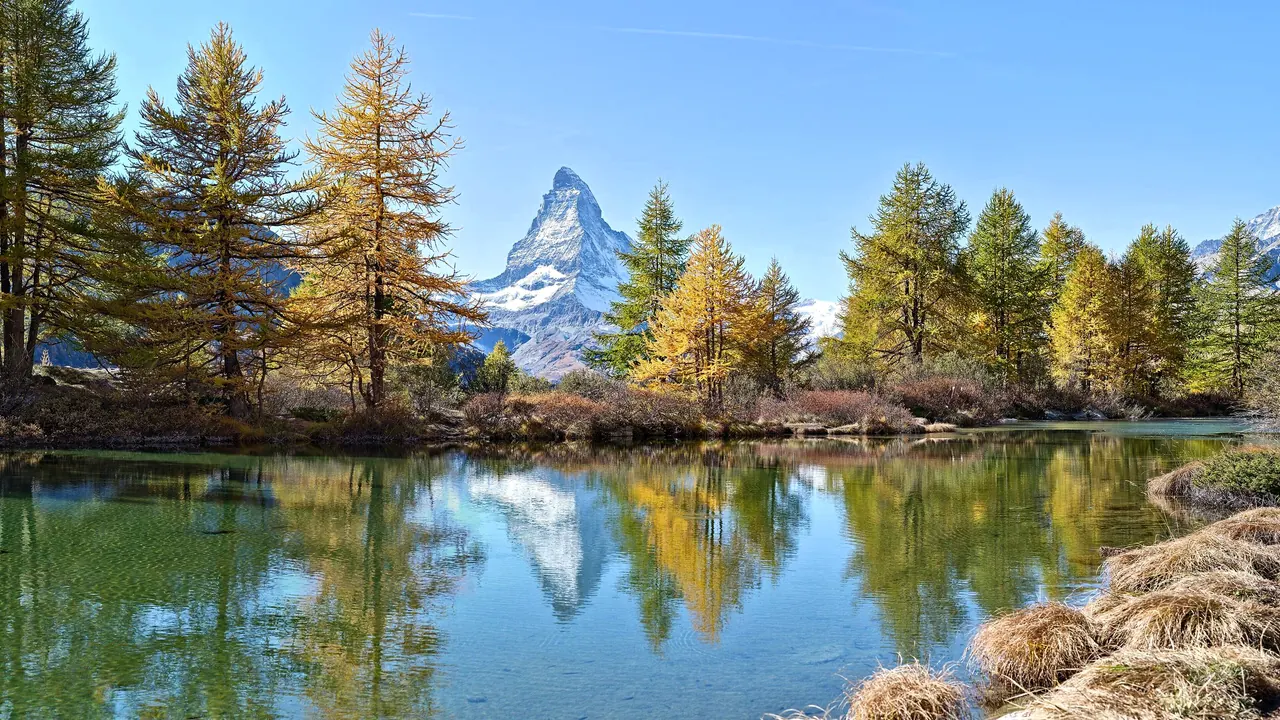
Photos: Cortina d'Ampezzo by Andreas Neubauer, Pexels License; Zermatt by Roy Egloff, CC BY-SA 4.0, cropped.
Cortina d'Ampezzo or Zermatt?
Our verdict in twelve categories, each scored against the same fixed benchmark cities, and the climate month by month, so you can choose for your trip.
Choose Cortina d'Ampezzo for
- shopping
- day trips
- prices
Cortina d'Ampezzo suits travellers who want the Dolomites with an Italian accent and the freedom to roam. It works best for a trip with a hire car, because South Tyrol's towns, the Tre Cime and the wider Dolomiti Superski area are all within a drive. The Corso Italia gives you more to browse, and summer in the valley is properly warm. It is still expensive, but rifugi meals and the cheaper valleys nearby give you a little more room to manage the bill.
Choose Zermatt for
- getting around
- nightlife
- live music and the arts
Zermatt is the better pick for anyone who wants to arrive by train, leave the car behind and walk from the hotel to the lifts. The Matterhorn hangs over the village, the glacier keeps some skiing going in summer, and après-ski runs later and louder than in Cortina. The price of all this is a village that sits far from other towns and costs even more.
Scoreboard
Twelve categories on one fixed scale from 0 to 100. The shaded stretch is the gap between the two.
Your match
Pick a travel style or drag the sliders, and both match scores follow your weighting.
Too close to call, level with your weighting
Wins on shopping and day trips with your weighting.
Wins on getting around and nightlife with your weighting.
What matters to you?
Category by category
What the scores mean for a trip.
Beaches & swimming
Neither place has any beach life, and both are a long way from the sea. Cortina at least has the Adriatic a little over two hours' drive away, and lakes such as Ghedina and Pianozes make pretty walks. Zermatt's tarns are best for photographing the Matterhorn's reflection. In both, a real swim means a hotel pool.
Food & drink
The two eat about equally well for their size, but the food itself is different. Cortina cooks Ampezzan mountain food with a Venetian touch: casunziei with poppy seeds, polenta with game, barley soup. Lunch at a rifugio among the Dolomite peaks is often the best meal of the trip.
Zermatt serves Valais cooking: raclette, fondue, air-dried beef and apricot desserts, with Petite Arvine or Cornalin to drink. Its best meals come in the chalet hamlets of Findeln and Furi, facing the Matterhorn. In both places cheap food is hard to find.
Culture & sights
Neither is a place you visit for its sights, and each has enough for half a day. Cortina's interest is in art and war. It has the Rimoldi collection of twentieth-century Italian painting and the Olympic ice stadium in town, plus the preserved First World War tunnels on Lagazuoi, which take a day in the mountains to reach.
Zermatt's heritage is all about climbing. The underground Matterhorn Museum tells the story of the 1865 first ascent, the mountaineers' cemetery holds climbers who died on the surrounding peaks, and the old larch barns of the Hinterdorf show the farming village that came before the hotels.
Nightlife
Zermatt is the livelier of the two after the lifts close. Its slope-side bars fill with ski boots and loud music, and on busy winter weekends a few bars and small clubs on the main street stay open past midnight.
Cortina's evenings are more about the passeggiata along the Corso Italia and long dinners. Only the peak winter weeks keep a handful of smart bars open late. In summer, both villages go quiet early.
Nature & outdoors
Both rank among the finest mountain settings in Europe, but the mountains are different. Cortina sits in a ring of pale, jagged Dolomite peaks. The Tre Cime and Lago di Misurina are close by, and the area has historic via ferrata routes, the Alta Via 1 trail and the huge Dolomiti Superski area.
Zermatt is higher and icier. The Matterhorn rises right above the village, surrounded by four-thousand-metre peaks and the Gorner Glacier. Lifts reach more than 3,800m, some pistes stay open in summer, and guides lead ascents of the big summits.
Day trips
Cortina has more good places to visit on a day out. San Candido and Brunico in South Tyrol are under an hour away, Bolzano and its Iceman are about two hours, and Lienz in Austria and Venice are both possible on a long day.
From Zermatt, every outing starts with the slow train down the valley. Sion's castle hills and vineyards are the best reward, and Brig's Stockalper Palace makes a shorter trip. Most visitors simply go back up the mountains instead.
Good for families
Both suit families who ski or hike together, and neither has a zoo or theme park for rainy days. Cortina has more to fill the gaps, with public skating at the Olympic ice stadium and a forest rope park. Zermatt's advantage is its car-free streets, where children can walk safely between hotel and ski school. Small children may struggle with the thin air at its highest viewpoints.
Getting around
Zermatt is far easier to get to and get around. Trains run in from the Swiss network, the village is walkable, and the cog railway, the funicular and the gondolas all start within a short walk of the centre.
Cortina has had no railway since 1964, so you arrive by coach or car. Its centre is easy on foot, but buses up to the passes and the Tre Cime are infrequent. Many visitors hire a car, and the mountain roads can be crowded in August.
Shopping & style
Cortina has more to offer shoppers. The Corso Italia combines luxury fashion, furriers and jewellers with local wood carving and filigree. The Cooperativa, open since 1893, sells everything from local food to mountain gear across several floors.
Zermatt's single main street mostly sells Swiss watches and souvenirs. Its strong point is serious mountaineering equipment.
Affordability
Both are among the most expensive places in the Alps, but Zermatt is harder on the wallet. Swiss prices apply to everything: rooms, terrace drinks and the cog railways you will use every day.
In Cortina, rifugi lunches and the shoulder months bring some relief, and staying in a cheaper valley nearby is common. In Zermatt, the biggest savings come from self-catering and staying down the valley in Täsch.
Live music & performing arts
Neither has a theatre or a regular concert hall, but Zermatt's calendar has a little more going on. Zermatt Unplugged brings well-known acoustic performers to mountain stages in spring, and a chamber music festival fills the church in late summer. Cortina's live music is mostly summer classical concerts in churches and halls, with an occasional concert around New Year.
Wellness & relaxation
Cortina's hotel spas lean on Alpine tradition, with hay baths alongside the saunas and pools. The valley is at its most restful in June and September, when a long afternoon on a rifugio terrace does as much good as any treatment. In the peak weeks, traffic on the valley roads breaks the calm.
Zermatt has more fine spas in one small village, and a few sell day access to non-residents, which helps if your own hotel lacks one. Because there are no cars, evenings after skiing are quiet. Neither town has thermal springs, but from Zermatt you can reach proper thermal baths in the Valais spa towns down the valley.
When should you go?
Pick your month. The climate figures are measured averages, not a forecast.
Cortina d'Ampezzo in July
Zermatt in July
Daytime high, °C
Rainfall in the month, mm
Where the figures come from
Zermatt has no weather station within reach, so its figures come from a gridded climate model rather than a measured record, and read a broad area rather than the city itself.
Temperature and rainfall are climate normals, averaged over the years shown. Cortina d'Ampezzo: 1991-2020 normals, Dobbiaco (22.5 km from centre). Zermatt: 1991-2020 normals, TerraClimate 4 km grid at the town, no weather station within 90 km.
Summer is when the two differ most. Cortina's valley warms to about 22°C in July and August, which is pleasant for hiking and sitting on terraces. It is also the wettest time of year there, with afternoon rain peaking at around 130mm in July. Zermatt sits much higher, and even at its warmest it reaches only about 14°C, so walkers need layers in every month. Its rain falls fairly evenly through the year, and November is the wettest month.
In winter, Cortina is mostly dry and crisp, with highs around freezing. Zermatt stays below zero from December to February, at about -2°C, which keeps its snow reliable. For hiking, June and September suit both. The milder valley gives Cortina the longer comfortable season on foot, while Zermatt is the more dependable cold-weather choice.
Which traveller are you?
On a trip on a tight budget, Cortina is the gentler of two costly choices. Come in June or late September and make a rifugio lunch the main meal of the day. In Zermatt, even self-catering and a bed in Täsch still leave a higher bill.
For a short city break, Zermatt makes better use of a few days. The train takes you right into the village, and the Gornergrat railway and gondolas start a short walk from the centre. In Cortina, most of the best places outside town need a hire car.
On a shopping trip, Cortina is worth an afternoon, ideally one when cloud hides the peaks, and you can take home local wood carving or filigree. In Zermatt, go shopping for kit and buy boots or technical clothing, but don't plan on much browsing.
Before you go
| Measure | Cortina d'Ampezzo | Zermatt |
|---|---|---|
| Official language | Italian | French, German, Italian, Romansh |
| Currency | Euro (EUR) | Swiss Franc (CHF) |
| Sockets | CFL230 V, 50 Hz | CJ230 V, 50 Hz |
| Driving side | Right | Right |
| Time zone | UTC+1, UTC+2 in summer | UTC+1, UTC+2 in summer |
| Emergency number | 112 | 112 |
| Elevation | 1,224 m | 1,624 m |
| Main airport | Venice Marco Polo Airport (VCE)116 km from centre103 non-stop destinations | Geneva International Airport (GVA)128 km from centre150 non-stop destinations |
| Public holidays this year | 13 days | 9 days |
By the numbers
| Measure | Cortina d'Ampezzo | Zermatt |
|---|---|---|
| City population | 5,546 | 6,023 |
| People per km² | 22 | 25 |
| Museums within 10 km | 3 | 2 |
| UNESCO World Heritage sites within 50 km | 1 | 2 |
Where else could you go?
Every comparison below shares a destination with this one, so you can follow Cortina d'Ampezzo or Zermatt somewhere new.
- Chamonixvs Zermatt
- Interlakenvs Zermatt
- Luganovs Zermatt
- Innsbruckvs Cortina d'Ampezzo
- Lausannevs Zermatt
- Turinvs Zermatt