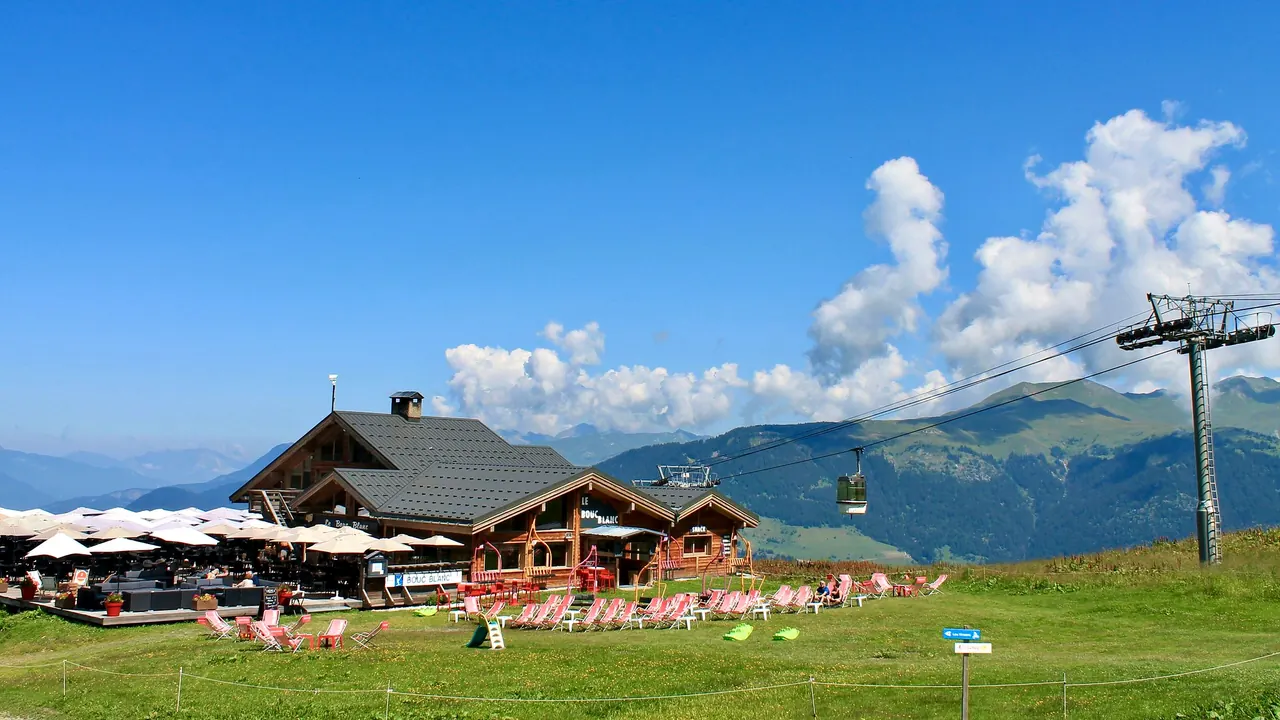
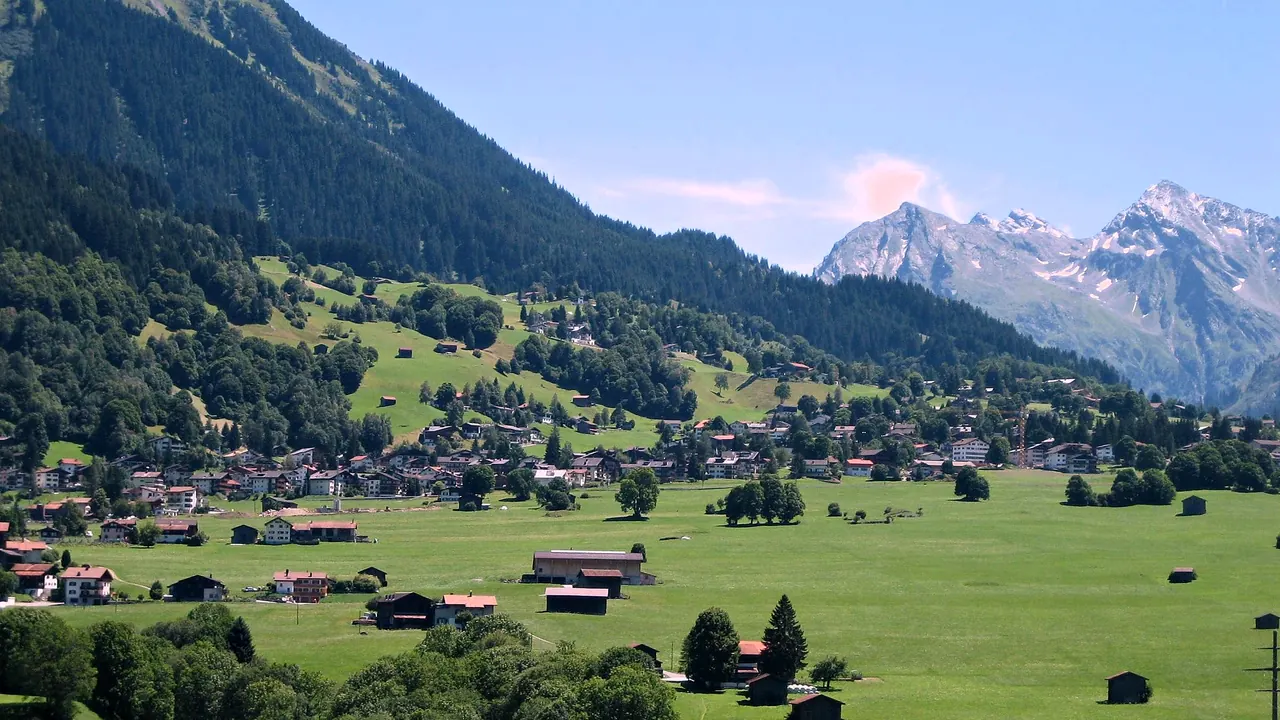
Photos: Courchevel by B. Brassoud, CC BY-SA 4.0, cropped; Klosters by Adrian Michael, CC BY-SA 3.0, cropped.
Courchevel or Klosters?
Our verdict in twelve categories, each scored against the same fixed benchmark cities, and the climate month by month, so you can choose for your trip.
Choose Courchevel for
- food and drink
- nightlife
- shopping
Courchevel suits skiers who want the full glamour of a winter week. Lunch is a long affair on a sunny terrace, dinner can be in one of the starred kitchens of the 1850 palace hotels, and the night ends in a champagne club. Between runs there are luxury boutiques to browse, and the vast linked pistes of Les 3 Vallées are on the doorstep. Expect to pay for all of it, even by the high standards of the Alps.
Choose Klosters for
- day trips
- getting around
- prices
Klosters is for travellers who want the mountains without the show. It is a discreet Graubünden village where you arrive by train and the evening is a drink by the fire. The Parsenn's long runs down to the valley are as good a reason to come as anything across the border. Off the slopes, the Rhaetian Railway turns rest days into easy outings to Chur, the painted houses of the Engadine and the thermal baths at Scuol.
Scoreboard
Twelve categories on one fixed scale from 0 to 100. The shaded stretch is the gap between the two.
Your match
Pick a travel style or drag the sliders, and both match scores follow your weighting.
Wins on food and drink and nightlife with your weighting.
Wins on day trips and getting around with your weighting.
What matters to you?
Category by category
What the scores mean for a trip.
Beaches & swimming
Neither resort is a place to swim, and both are equally far from the sea. In Courchevel, a summer swim means a cold dip in Lac de la Rosière above Moriond, with sunbathing on the grass, or the indoor pools of the aquatic centre in Courchevel Village. Klosters has an outdoor village pool in summer and a bathing area on the lake at Davos, half an hour away, with thermal baths in the region for warmer water.
Food & drink
Courchevel eats far better. The palace hotels of 1850 have one of the densest clusters of Michelin-starred kitchens in France, and lunch on the slopes is a proper occasion, with grilled meats, seafood and long wine lists. Fondue, raclette, tartiflette and Beaufort cheese cover the everyday Savoyard side.
Klosters cooks honest Graubünden food in wood-panelled stuben and mountain huts: capuns, pizokel, barley soup and air-dried Bündnerfleisch, with Pinot Noir from the Bündner Herrschaft down the valley. It is distinctive but limited, with only a few refined kitchens. A sunny terrace lunch is often the best meal you will have here.
Culture & sights
There is little sightseeing in either place, and in both you come for the mountains. What there is differs in age. Courchevel's landmarks are post-war: the Olympic ski jumps at Le Praz from the 1992 Games and modernist chalets at 1850. Klosters has older things to show, with Augusto Giacometti's stained glass in the church of St. Jakob and the Nutli-Hüschi farmhouse museum of Prättigau rural life.
Nightlife
Courchevel has the bigger night out by far, though only in winter and only for those ready to spend. Après-ski on the terraces leads into hotel bars and a few glamorous clubs at 1850, where champagne and big tables keep things going into the early hours.
Klosters is quiet by design. Après-ski winds down in a few hotel bars, and only a late spot or two fills up in the peak weeks. If you want more than a drink by the fire, you take the train up to Davos. Out of season, both villages are silent at night.
Nature & outdoors
Both are first-class mountain country, and the difference lies in the kind of terrain. From Courchevel you can ski Les 3 Vallées, some 600km of linked pistes reaching Méribel and Val Thorens, from groomed tree-lined runs to steep couloirs off the Saulire. In summer the Vanoise National Park adds glaciers, ibex and marmots.
Klosters is known for the Parsenn's long descents to the valley, shared with Davos, and the gentler Madrisa opposite. Cross-country trails and toboggan runs give non-skiers more to do. Its summers are greener and more pastoral, with hikes into the Silvretta and the Swiss National Park within reach.
Day trips
From Courchevel, a day away means driving down the hairpins to the valley floor and climbing the same road again at the end. Even the closest outings, the old hill village of Conflans above Albertville and the cheese town of Beaufort, take about an hour each way. The Savoy lakes and towns beyond take up most of a day in a car or taxi. Few skiers think it worth losing a day on the slopes, so a rest day here is usually spent in the resort.
Klosters sits on the Rhaetian Railway, so a day out starts with a walk to the village station rather than a drive. You can be among the Pinot Noir villages of the Bündner Herrschaft or in Heidi country at Maienfeld, or cross the border to Vaduz, and still be back for dinner without driving. For a whole day, the UNESCO-listed Albula line is a trip in itself.
Good for families
Both work well for a family that has come for the snow. Courchevel has the easier first days on skis, with sunny beginner slopes at Moriond and Village and free beginner lifts. Its aquatic centre with slides covers a bad-weather afternoon, which Klosters cannot offer. Klosters is stronger in summer, when the Madrisa play and adventure area, sledging runs and short walks to farm huts keep children busy in a calm, safe village.
Getting around
Klosters is far easier to reach and move around without a car. Trains stop at Platz and Dorf, the Gotschna cable car leaves beside the station, and buses connect the long village with the lifts.
Courchevel is easy once you are there, with a free shuttle between the villages, a gondola from Le Praz to 1850 and many ski-in, ski-out stays. Getting up is the hard part: the railway ends at Moûtiers, about 25km below, and a climb of hairpin bends follows, with snow chains needed in winter.
Shopping & style
Courchevel is the place to shop, if only in winter and only at the top end. A short stretch of 1850 holds luxury fashion houses, jewellers and watchmakers, along with excellent ski shops and Savoyard cheeses and woodcraft. Klosters has one main street around Platz, with gear and rental shops, a few boutiques and Graubünden delicatessens. For a proper shopping day you go to Zurich.
Affordability
Neither offers any real saving: both are among the most expensive resorts in the Alps. The way to trim the bill differs. In Courchevel it means staying in Le Praz, Courchevel Village or La Tania rather than 1850. In Klosters the guest card covers local transport, and self-catering apartments help in both, though nothing here is cheap.
Live music & performing arts
You do not come to either for live performance, and neither has a theatre or concert hall. Klosters has slightly more of a cultural thread, with a classical concert series in summer and church recitals. Courchevel's live music mostly means après-ski bands and occasional seasonal events. For a real concert from Klosters you go to Chur.
Wellness & relaxation
Both rely on hotel spas rather than a bathing tradition of their own, but the mood differs. Courchevel's palace spas are among the most lavish in the mountains and open to non-residents, and the aquatic centre in Village adds a public sauna and steam area with views. Klosters relaxes you through its slow pace and quiet evenings, with the thermal baths of Scuol under an hour away by train and Davos's large pool complex just up the valley.
When should you go?
Pick your month. The climate figures are measured averages, not a forecast.
Courchevel in July
Klosters in July
Daytime high, °C
Rainfall in the month, mm
Where the figures come from
Courchevel has no weather station within reach, so its figures come from a gridded climate model rather than a measured record, and read a broad area rather than one spot.
Klosters's temperatures are measured 51 km from the centre, at S. Valentino Alla Muta.
Klosters's station stands 280 m above the city centre, so the centre is likely a little warmer than the figures say.
Klosters has no rain gauge within 25 km of the centre, so its rainfall comes from a gridded climate dataset read at the destination rather than from a gauge further away.
Temperature and rainfall are climate normals, averaged over the years shown. Courchevel: 2001-2020 normals, NASA POWER reanalysis grid, no weather station within 90 km. Klosters: 1991-2020 normals, S. Valentino Alla Muta (51.4 km from centre).
Both are mountain resorts, so neither has beach weather, and the choice is between snow and summer walking. Courchevel sits higher and is clearly colder. Daytime highs stay below freezing from December to February, around -4°C in January, which keeps the snow reliable but makes the village a chilly place to stroll. Klosters is milder, with midwinter days nearer 2°C, so walking and tobogganing in the valley are more comfortable. Both are at their snowiest from December to March.
In summer the gap narrows. Courchevel peaks around 18°C in July and Klosters around 20°C, both pleasant for hiking from June to September. The real difference is rain. Klosters has its wettest months in high summer, reaching 141mm in August, so you should plan for wet days on the trails. Courchevel's summers are drier, and its wettest month is May, when snowmelt and rain make the spring between seasons a poor time to visit.
Which traveller are you?
On a food and nightlife trip, Courchevel is the clear pick. Dinner can be at a starred table in 1850 and the evening can run into the early hours. In Klosters, evenings are deliberately quiet and there are only a few places to eat.
For a shopping trip, Courchevel is ahead, though only in winter and only for luxury buyers. You can fit a watch or designer piece in between ski days. Klosters has little beyond what a skier needs.
On a relaxing and wellness trip, Klosters has the edge in character. The village is unhurried and goes to bed early, and the Scuol thermal baths are under an hour away by train. Courchevel's spas are more lavish, but they sit within a scene of early lifts and late parties.
Before you go
| Measure | Courchevel | Klosters |
|---|---|---|
| Official language | French | French, German, Italian, Romansh |
| Currency | Euro (EUR) | Swiss Franc (CHF) |
| Sockets | CE230 V, 50 Hz | CJ230 V, 50 Hz |
| Driving side | Right | Right |
| Time zone | UTC+1, UTC+2 in summer | UTC+1, UTC+2 in summer |
| Emergency number | 112 | 112 |
| Elevation | 1,757 m | 1,179 m |
| Main airport | Geneva International Airport (GVA)100 km from centre150 non-stop destinations | Zürich Airport (ZRH)120 km from centre226 non-stop destinations |
| Public holidays this year | 11 days | 9 days |
By the numbers
| Measure | Courchevel | Klosters |
|---|---|---|
| Population | - | 4,499 |
| People per km² | - | 20 |
| Museums within 10 km | 0 | 3 |
| UNESCO World Heritage sites within 50 km | 0 | 1 |
Where else could you go?
Every comparison below shares a destination with this one, so you can follow Courchevel or Klosters somewhere new.
- Méribelvs Courchevel
- Davosvs Klosters
- La Plagnevs Courchevel
- Les Menuiresvs Courchevel
- Val Thorensvs Courchevel
- Arosavs Klosters