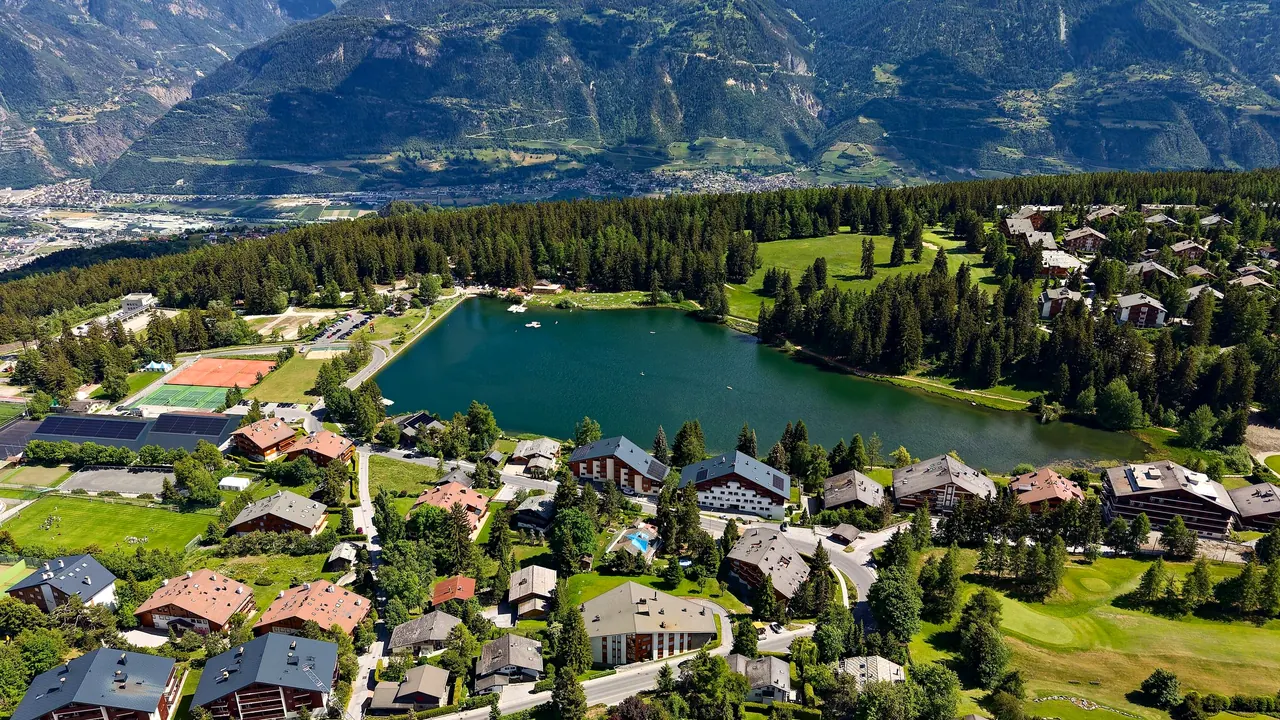
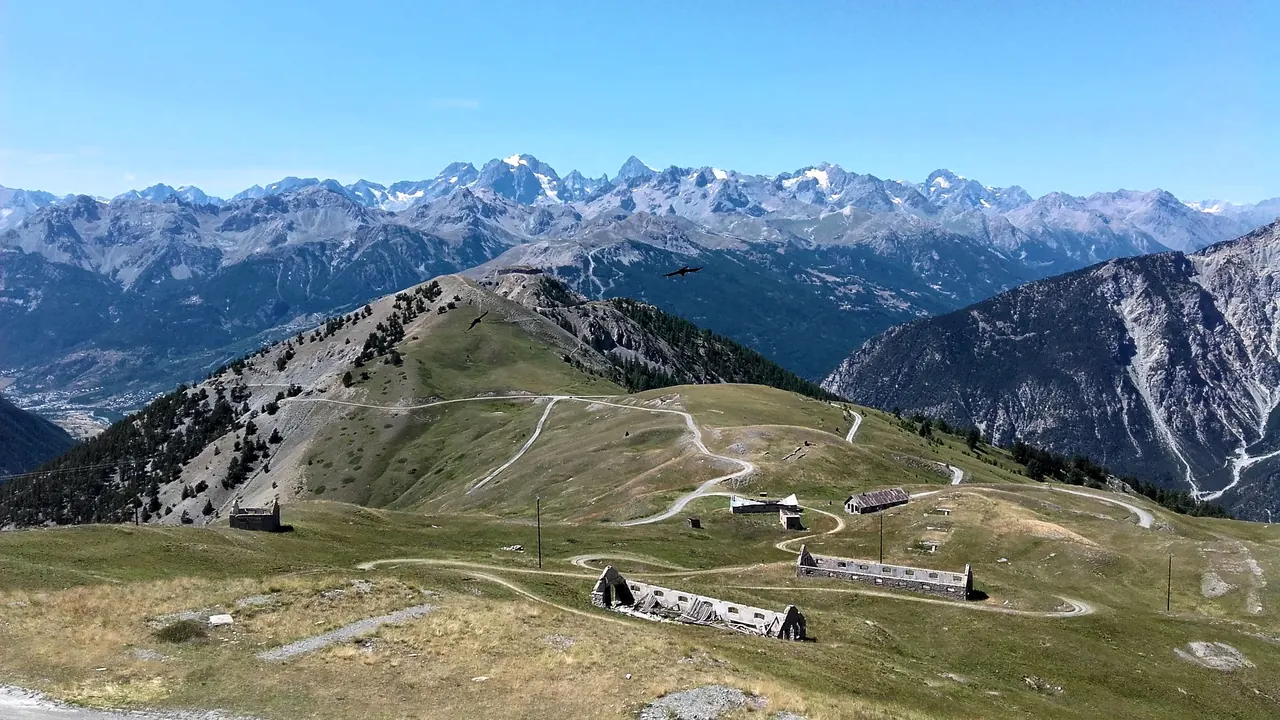
Photos: Crans-Montana by Daniel Reust, CC BY-SA 4.0, cropped; Montgenèvre by Jonathan Queutois, CC0.
Crans-Montana or Montgenèvre?
Our verdict in twelve categories, each scored against the same fixed benchmark cities, and the climate month by month, so you can choose for your trip.
Choose Crans-Montana for
- shopping
- getting around
- food and drink
Crans-Montana suits travellers who care about the comforts around the skiing as much as the skiing itself. It has designer boutiques in Crans, gastronomic dinners with Valais wine, and hotel bars that stay lively in peak weeks. A funicular links the resort to Swiss trains, so you don't need a car. It costs a great deal more, and it rewards people who are happy to pay for polish.
Choose Montgenèvre for
- prices
- families
Families and anyone watching their spending will find Montgenèvre easier. The village sits right on the slopes of the cross-border Milky Way ski area, the apartments let you cook for yourself, and the Italian bars in Claviere keep costs down. Evenings are simple and early. Bring a car, though, because most of what lies beyond the pass is reached by road.
Scoreboard
Twelve categories on one fixed scale from 0 to 100. The shaded stretch is the gap between the two.
Your match
Pick a travel style or drag the sliders, and both match scores follow your weighting.
Wins on shopping and getting around with your weighting.
Wins on prices and families with your weighting.
What matters to you?
Category by category
What the scores mean for a trip.
Beaches & swimming
Neither is a swimming destination, but Crans-Montana at least has somewhere to lie on the grass and get wet. Lac Moubra and Lac Grenon on the plateau warm up in July and August, and they have lawns and pontoons for a lazy afternoon.
Montgenèvre's alpine lakes stay cold even in high summer, so swimming there mostly means the heated pools at the leisure centre. The other option is a drive of over an hour to the sandy shores of Serre-Ponçon.
Food & drink
You eat better in Crans-Montana. Beyond raclette and fondue, there is Valais wine from the vineyards just below, Petite Arvine and Cornalin among them, and a wealthy winter crowd keeps several ambitious hotel and gastronomic restaurants open. A special dinner is easy to find.
Montgenèvre's cooking is quicker and plainer, aimed at skiers who want tartiflette, crêpes or pizza between runs. The border helps: Claviere, a few minutes away, has Italian espresso and trattorias, but for a serious meal you drive to Briançon or the Susa valley.
Culture & sights
Neither resort has much to see in itself, and the history differs in kind. In Crans-Montana it is a twentieth-century story of sanatoriums and grand hotels, told in a few period buildings among the chalets. In Montgenèvre it is older, with an obelisk marking the Napoleonic-era road and a small church on a pass used since Roman times. In both places, sightseeing means going down the valley.
Nightlife
Crans-Montana has more going on after dark. Après-ski on the terraces moves on to piano lounges and hotel bars in Crans, and at weekends in peak season a couple of nightclubs keep a well-dressed crowd out late. The scene is small and expensive, but it is there.
Montgenèvre's evenings belong to families and groups of friends, who fill the bars by the lifts in their ski boots and then go to bed early for the first lift. A small club and a few pubs carry on in peak weeks. Outside the season both villages are very quiet.
Nature & outdoors
The mountains are the reason to go to either, and both deliver in full. Crans-Montana is about sun and views: a south-facing terrace looking across the Rhône valley to the Matterhorn and Mont Blanc, with skiing up to the Plaine Morte glacier. In summer there are level paths beside the old irrigation channels, called bisses, and paragliding off the plateau.
Montgenèvre starts higher, at about 1,860m on the pass itself. It is part of the Milky Way ski area, which runs across into Italy, and it gets good snow from storms on the Italian side. In summer its strength is the country around it: the Clarée valley, the Écrins and the Queyras, with climbing, via ferrata and rafting on the Durance.
Day trips
The outings are equally good but reached in different ways. From Crans-Montana the funicular and the Rhône valley railway do the work. They take you to the twin hilltop castles of Sion, Roman Martigny and the abbey at Saint-Maurice, and further on to Chillon and the Lavaux vineyard terraces above Lake Geneva.
Montgenèvre's trips cross a border and are easiest by car. Vauban's fortifications at Briançon and Mont-Dauphin are close by. In Italy there are the Sacra di San Michele, the Roman arch at Susa and the huge Fenestrelle fortress, and Turin, with its royal palaces and Egyptian Museum, makes a long day out.
Good for families
Montgenèvre is the simpler family base. The village is compact and sits right on the slopes, with ski classes for very young children and sledging and husky rides for those who don't ski. An indoor pool with a toddler lagoon saves bad-weather days.
Crans-Montana also suits families who ski or hike, with children's ski areas and pedalos and playgrounds by the plateau lakes. Its villages are spread out along a hillside, though, so with small children the choice of base and the shuttle buses matter more.
Getting around
Crans-Montana is easier to reach and to manage without a car. A funicular climbs from Sierre in about twelve minutes and connects with Swiss mainline trains. Free shuttles link Crans, Montana and the lift bases, although the resort is long enough that you need a bus to get from one end to the other.
Montgenèvre is a single walkable village where the lifts carry you across to Italy. The nearest stations, Briançon and Oulx, both need a bus up to the pass. To go anywhere beyond the resort a car is the practical choice, with winter tyres or chains.
Shopping & style
Crans-Montana is clearly the better place to spend money, though only of one particular kind. Its shops follow the wealthy winter crowd, so the few central streets of Crans make a pleasant browse after a day on the slopes, with cashmere and luxury shop windows of a sort rarely seen at this altitude. Montana covers everyday needs. There is no market or crafts quarter on the plateau, though.
Montgenèvre's shops are there to kit out a ski week, not to fill an afternoon. The more interesting buying happens off the pass, at Briançon's weekly market down the hill or in the Italian food shops across the border.
Affordability
This is the biggest gap between the two. Crans-Montana is among the most expensive places in Europe for a vacation. Rooms are costly all year, winter extras such as lift passes, hire and lessons add a lot, and a meal on a mountain terrace costs well above most of the continent. Coming off-peak barely helps.
Montgenèvre costs about what a mid-range French resort does, and most lodging is apartments and chalets where families cook for themselves. Food and drink on the Italian side are often cheaper, and summer costs much less.
Live music & performing arts
Neither has a theatre or a concert season, but Crans-Montana has more to plan a visit around. The Caprices electronic music festival comes at the end of the ski season, and a summer series of chamber and classical concerts fills churches and halls.
In Montgenèvre live music means an après-ski band or an occasional outdoor concert. For real performances you drive to Briançon or Turin.
Wellness & relaxation
Both are good places to soak tired legs, in different settings. In Crans-Montana that means the large hotel spas, most of which take outside guests for a fee, on a plateau that began as a place to recover. Leukerbad's alpine hot pools are under an hour away.
Montgenèvre has one resort spa centre with indoor and outdoor pools, a sauna and a hammam. The natural hot springs and thermal baths at Le Monêtier-les-Bains are about forty minutes' drive down the valley.
When should you go?
Pick your month. The climate figures are measured averages, not a forecast.
Crans-Montana in July
Montgenèvre in July
Daytime high, °C
Rainfall in the month, mm
Where the figures come from
Crans-Montana has no weather station within reach, so its figures come from a gridded climate model rather than a measured record, and read a broad area rather than one spot.
Montgenèvre has no weather station within reach, so its figures come from a gridded climate model rather than a measured record, and read a broad area rather than one spot.
Temperature and rainfall are climate normals, averaged over the years shown. Crans-Montana: 2001-2020 normals, NASA POWER reanalysis grid, no weather station within 90 km. Montgenèvre: 2001-2020 normals, NASA POWER reanalysis grid, no weather station within 90 km.
Both are mountain resorts with long, freezing winters. From December to February daytime highs stay below zero in each, which is good for snow but hard on anyone hoping to wander the streets slowly. Summer is mild rather than hot, at about 18°C in Crans-Montana and 19°C in Montgenèvre in July and August. That is fine walking and hiking weather but never beach heat, although on good days the small lakes on the Crans-Montana plateau are warm enough for a swim. Spring and late autumn are cool in both.
The real difference is the rain. Crans-Montana is wettest from May to August, at around 130mm a month, so summer hikes there often run into showers. Montgenèvre is drier in every month except November, when it gets slightly more rain than Crans-Montana. Its summer months bring nearer 60mm, which makes July to September the most settled time on the pass.
Which traveller are you?
On a trip on a tight budget, Montgenèvre is the realistic choice. Self-catering apartments, cheaper food and drink just over the Italian border and much lower summer prices keep a mountain week manageable. Crans-Montana stays expensive in every season.
For a shopping trip, Crans-Montana wins easily. The small centre of Crans has international fashion labels, Swiss watches, jewellery and designer ski wear, and its delicatessens sell Valais wine and cheese. Montgenèvre offers little beyond ski hire, outdoor gear and a supermarket.
On a food and nightlife trip, Crans-Montana is ahead, with Valais wines, ambitious hotel dining, piano lounges and late clubs in peak weeks. Montgenèvre has plainer skiers' food and early nights, which suit people who want to be on the first lift.
Before you go
| Measure | Crans-Montana | Montgenèvre |
|---|---|---|
| Official language | French, German, Italian, Romansh | French |
| Currency | Swiss Franc (CHF) | Euro (EUR) |
| Sockets | CJ230 V, 50 Hz | CE230 V, 50 Hz |
| Driving side | Right | Right |
| Time zone | UTC+1, UTC+2 in summer | UTC+1, UTC+2 in summer |
| Emergency number | 112 | 112 |
| Elevation | 1,495 m | 1,360 m |
| Main airport | Geneva International Airport (GVA)106 km from centre150 non-stop destinations | Turin Airport (TRN)79 km from centre65 non-stop destinations |
| Public holidays this year | 9 days | 11 days |
By the numbers
| Measure | Crans-Montana | Montgenèvre |
|---|---|---|
| Population | 10,447 | 461 |
| People per km² | 175 | 11 |
| Museums within 10 km | 3 | 3 |
| UNESCO World Heritage sites within 50 km | 1 | 1 |
Where else could you go?
Every comparison below shares a destination with this one, so you can follow Crans-Montana or Montgenèvre somewhere new.
- Serre Chevaliervs Montgenèvre
- Leukerbadvs Crans-Montana
- Adelbodenvs Crans-Montana
- Gstaadvs Crans-Montana
- Verbiervs Crans-Montana
- Zermattvs Crans-Montana