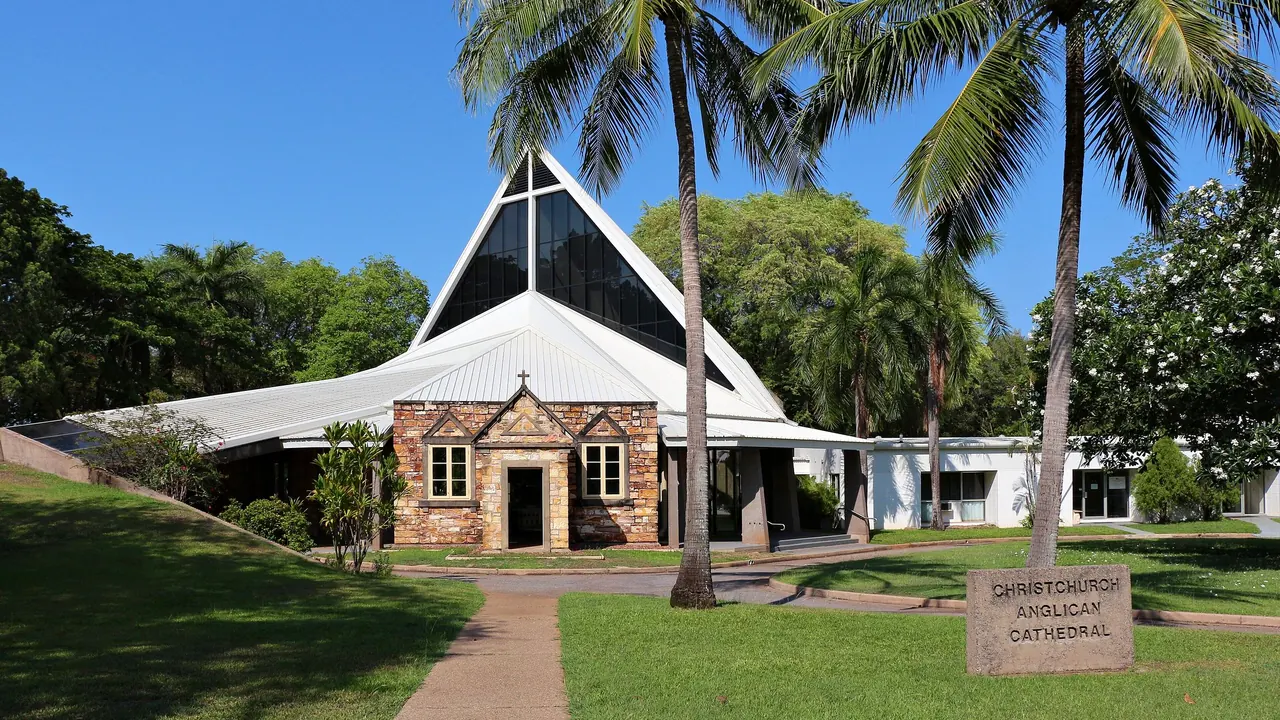
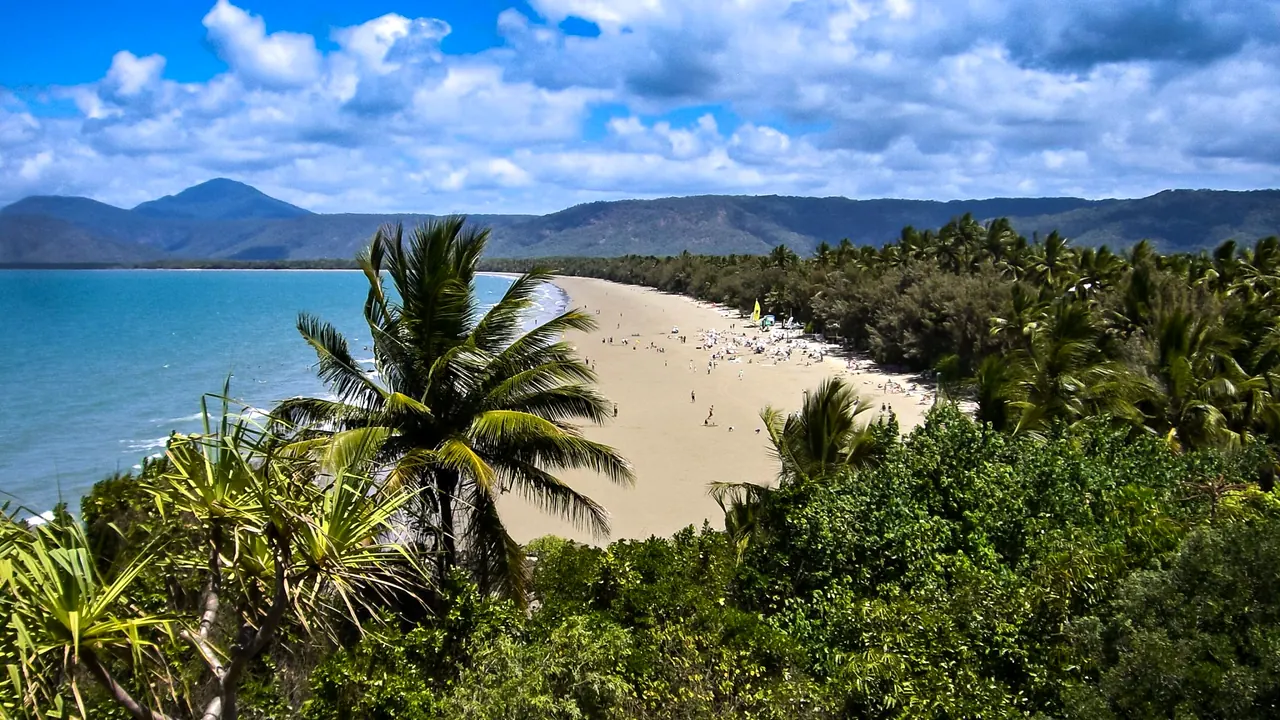
Photos: Darwin by Bernard Gagnon, CC BY-SA 4.0, cropped; Port Douglas by dronepicr, CC BY 2.0, cropped.
Darwin or Port Douglas?
Our verdict in twelve categories, each scored against the same fixed benchmark cities, and the climate month by month, so you can choose for your trip.
Choose Darwin for
- culture and sights
- nightlife
- live music and the arts
Darwin suits travellers who want a real town with a story behind it as well as wild country on the doorstep. Its Aboriginal art collection, Second World War tunnels and Cyclone Tracy history give it more to see, the Mindil and Parap markets and the Mitchell Street pubs give it livelier evenings, and Litchfield and the crocodile wetlands are close enough for day trips. It is the better choice for a Top End trip with a hire car, as long as you aren't expecting a beach vacation.
Choose Port Douglas for
- beaches
- wellness
- nature and the outdoors
Port Douglas is the place for a slow vacation built around water and forest. Four Mile Beach is a beach you actually use, the Great Barrier Reef is a boat ride from the marina and the Daintree rainforest is just up the road. Resort pools, spas and early nights set the pace. Couples, families and anyone who wants to snorkel by day and eat seafood outdoors at night will be happier here, as long as they don't need museums or a night out.
Scoreboard
Twelve categories on one fixed scale from 0 to 100. The shaded stretch is the gap between the two.
Your match
Pick a travel style or drag the sliders, and both match scores follow your weighting.
Wins on culture and sights and nightlife with your weighting.
Wins on beaches and wellness with your weighting.
What matters to you?
Category by category
What the scores mean for a trip.
Beaches & swimming
Darwin has long sandy beaches at Mindil, Casuarina and East Point, but box jellyfish and saltwater crocodiles keep locals out of the sea. You go to the shore for a sunset walk or the market, not for a swim. To swim, you use the netted lagoon and wave pool at the Waterfront, or drive out to the spring-fed pools at Litchfield.
In Port Douglas the beach is the main event. You can walk, lie on and swim off Four Mile Beach, using the patrolled stinger net from November to May and the whole beach once the dry season begins. The water is often milky green rather than clear, but it is a proper beach vacation in a way Darwin is not.
Food & drink
Darwin eats better, mostly thanks to its Asian-leaning markets. You can have Thai, Indonesian and Sri Lankan dishes on the sand at the Mindil sunset market or laksa at Parap on a Saturday, and crocodile and buffalo are there for the curious.
Port Douglas is built around a long outdoor dinner of reef fish, prawns or mud crab on Macrossan Street or at the marina, with fresh mangoes and papayas at breakfast. Its food is more polished and resort-like but has less character of its own, and both places run out of new options within a week.
Culture & sights
Darwin's sights are few, but they are serious. The Fannie Bay museum holds a fine collection of Aboriginal art and a sobering gallery on Cyclone Tracy, and the 1942 bombing can be traced through the oil storage tunnels, the East Point fortifications and the Esplanade memorials.
Port Douglas has the old Court House and the chapel of St Mary's by the Sea, each worth only a few minutes. Its most meaningful cultural experience is outside town, on a walk with Kuku Yalanji guides at Mossman Gorge.
Nightlife
Darwin has an actual night out. The open-air pubs and backpacker bars of Mitchell Street get loud and stay busy past midnight on weekends and through the dry season, though there is little clubbing beyond that strip.
Port Douglas evenings are dinner and a drink on a pub terrace, maybe with a cover band, and then bed, because the reef boats leave early. Anyone who wants more has to drive an hour to Cairns.
Nature & outdoors
Both are gateways to wild tropical country, but Port Douglas has the rarer pairing. Boats run from its marina to the outer ribbon reefs of the Great Barrier Reef, with turtles, reef sharks and minke whales in midwinter, and the ancient rainforest of Mossman Gorge, the Daintree and Cape Tribulation lies just up the coast.
Darwin's landscape is the drier, flatter Top End. You get Litchfield's waterfalls and magnetic termite mounds about an hour and a half away, croc-filled river cruises on the Adelaide and Mary rivers, and barramundi fishing. It is impressive, but there is no reef, and the great prize, Kakadu, needs an overnight trip.
Day trips
Port Douglas has more places to visit. Cairns is an hour down the coast, Kuranda is reached by the old mountain railway or cable car, and the Atherton Tablelands have crater lakes and villages such as Yungaburra.
Most outings from Darwin go into parks rather than towns. The real exception is the Tiwi Islands, reached by a short flight or ferry, for their art centres. Otherwise there are the war cemetery at Adelaide River and Katherine Gorge, which is a long day away.
Good for families
Both work well with children, in different ways. Darwin's highlight is crocodiles: you can see huge salties up close in town and watch them jump on Adelaide River cruises. There is also the Waterfront wave pool, a free water park and fish feeding at Doctors Gully, but most outings need a car.
Port Douglas is a smaller, calmer base where resort pools stand in for the sea. Children can meet koalas and cassowaries at the Wildlife Habitat, snorkel straight off the sand at Low Isles, or see coral from a glass-bottom boat before they are old enough to swim with it.
Getting around
Neither place works without some help with transport, but Port Douglas is a little easier. Its flat centre is easy to walk or cycle, a shuttle runs along the main road, and reef and rainforest tours pick you up from your hotel. The catch is the hour-long road transfer from Cairns airport.
Darwin has its own airport and a compact centre, but the midday heat makes even short walks tiring and the buses are too infrequent to rely on. Getting to the parks means hiring a car, sometimes a four-wheel drive, or joining a tour.
Shopping & style
Neither is a shopping destination, and what they sell is quite different. Darwin's reason to shop is Aboriginal art from Arnhem Land, the Tiwi Islands and the desert communities, ideally bought from galleries linked to community art centres. Beyond that there is just the everyday Smith Street Mall and Casuarina.
Port Douglas is more about browsing than serious buying. Linen resort wear, swimwear and South Sea pearl jewellery line Macrossan Street, and the Sunday market under the trees in Anzac Park adds crafts and sarongs.
Affordability
Darwin leaves more room to save than Port Douglas. A meal at the Mindil or Parap market stalls costs far less than a restaurant dinner, and the Fannie Bay museum and many outdoor sights are free. The big costs come from getting out of town, since the parks need a hire car or a tour, and from the long flights in and out.
Port Douglas is the dearer of the two from day to day. Most rooms are upmarket resorts and serviced apartments, restaurants charge resort prices, and the reef and rainforest trips you come for are all paid excursions. Self-catering, takeaway seafood by the beach and free days on Four Mile Beach help, and both towns are cheaper to stay in during the wet season.
Live music & performing arts
Darwin has the one real draw here, the Darwin Festival every August, with theatre, dance, comedy and Aboriginal performance on outdoor stages. The rest of the year there are touring shows at the Entertainment Centre and local theatre at Brown's Mart.
Port Douglas has no theatre or concert venue. Live music is a pub cover band, apart from the street parades and outdoor music of its autumn carnival.
Wellness & relaxation
Port Douglas is built for doing very little. You get palm-shaded lagoon pools, resort day spas using native botanicals, and yoga and massage in town, all set to an easy daily rhythm.
Darwin has an unhurried foreshore at sunset and the shady spring-fed pools at Berry Springs, about 45 minutes south. Beyond that it has only a few hotel spas, and from October to April the humid heat tires you out rather than restoring you.
When should you go?
Pick your month. The climate figures are measured averages, not a forecast.
Darwin in July
Port Douglas in July
Daytime high, °C
Rainfall in the month, mm
Temperature and rainfall are climate normals, averaged over the years shown. Darwin: 1991-2020 normals, Darwin Airport (7.7 km from centre). Port Douglas: 1991-2020 normals, Low Isles (17.1 km from centre).
Darwin is hot all year, with highs of around 32°C in every month, so its seasons are set by rain rather than temperature. The dry season from May to September is almost rainless and very sunny, and it is the time for markets, sunsets and the national parks. Rain builds through October and November, and from December to March the wet brings heavy storms, with January seeing about 470mm. Those months are humid and tiring for walking around town, though the waterfalls are at their most dramatic.
Port Douglas has a real cool season, which Darwin doesn't. In June and July highs ease to about 25°C, which is pleasant for walking, cycling and long beach days, and the sea stays near 24°C with the stinger season over. From January to March each month brings more than 400mm of rain, with sticky heat and rough seas that can cancel reef trips. That makes the middle of the year the best time for both places, and the cooler air gives Port Douglas the edge for anyone who finds constant heat hard going.
Which traveller are you?
For a beach and sun trip, Port Douglas is the clear choice. You can swim off Four Mile Beach, inside the nets in summer and freely in the dry season. Darwin's beaches are for watching the sunset, and swimming means the Waterfront lagoon or a pool.
On a culture and arts trip, Darwin has much more to offer. There is the Aboriginal art and Cyclone Tracy galleries at Fannie Bay, the wartime oil tunnels and East Point gun emplacements, and the Darwin Festival every August. In Port Douglas you can see all the sights in under an hour.
For a relaxing and wellness trip, Port Douglas suits better. The town is built around lagoon pools, resort day spas, yoga and an easy daily rhythm. Darwin has only a few hotel spas, and its heavy heat for much of the year is more draining than restful.
Before you go
| Measure | Darwin | Port Douglas |
|---|---|---|
| Official language | English | English |
| Currency | Australian Dollar (AUD) | Australian Dollar (AUD) |
| Sockets | I230 V, 50 Hz | I230 V, 50 Hz |
| Driving side | Left | Left |
| Time zone | UTC+9:30 | UTC+10 |
| Emergency number | 000 | 000 |
| Elevation | 0 m | 24 m |
| Main airport | Darwin International Airport / RAAF Darwin (DRW)5 km from centre20 non-stop destinations | Cairns International Airport (CNS)53 km from centre32 non-stop destinations |
| Public holidays this year | 12 days | 11 days |
By the numbers
| Measure | Darwin | Port Douglas |
|---|---|---|
| City population | 139,902 | 3,650 |
| People per km² | 3,446 | - |
| Museums within 10 km | 6 | 2 |
| UNESCO World Heritage sites within 50 km | 0 | 1 |
| Swim season, months above 21 °C | 12 months | 12 months |
Where else could you go?
Every comparison below shares a destination with this one, so you can follow Darwin or Port Douglas somewhere new.
- Cairnsvs Port Douglas
- Noosavs Port Douglas
- Gold Coastvs Port Douglas
- Byron Bayvs Port Douglas
- Cairnsvs Darwin
- Ubudvs Darwin