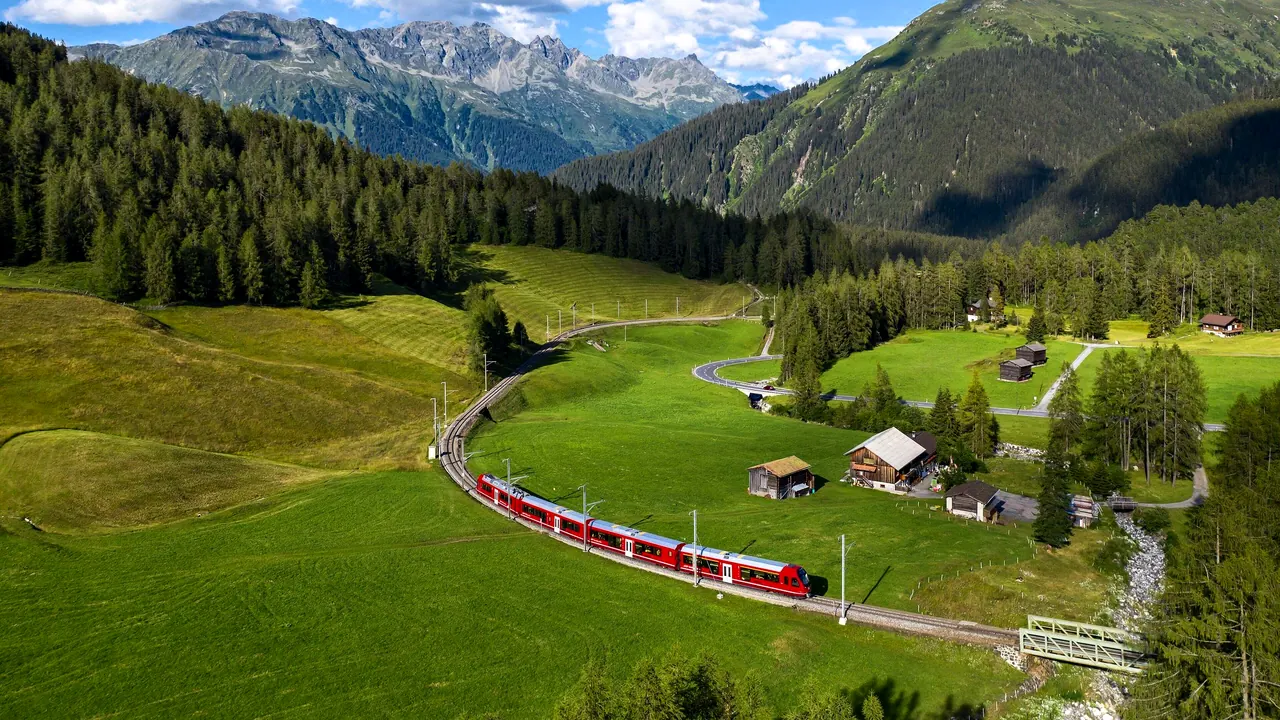
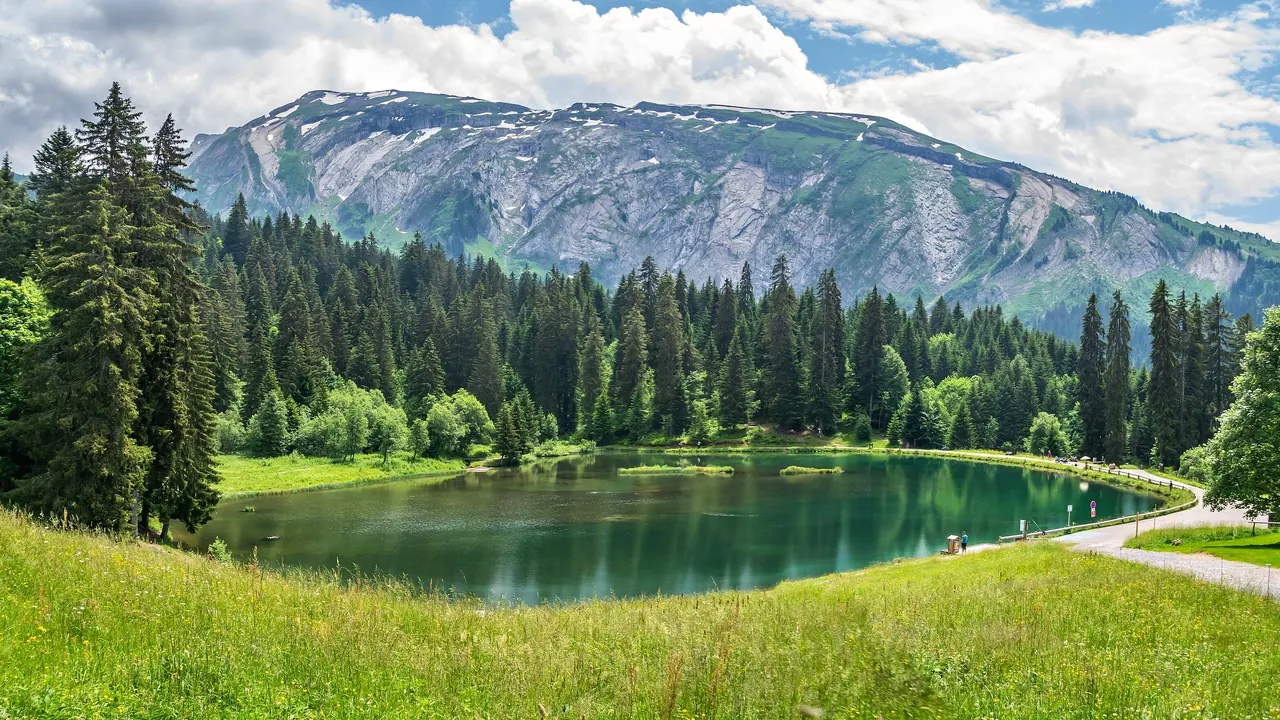
Photos: Davos by Kabelleger / David Gubler, CC BY-SA 4.0, cropped; Morzine by Krzysztof Golik, CC BY-SA 4.0, cropped.
Davos or Morzine?
Our verdict in twelve categories, each scored against the same fixed benchmark cities, and the climate month by month, so you can choose for your trip.
Choose Davos for
- getting around
- wellness
- culture and sights
Davos suits travellers who would rather leave the car at home. Trains run straight into town, the lifts start from the streets, and the Albula line takes you to the Engadine. It also has more for a quiet evening: the Kirchner Museum, the sanatorium history behind The Magic Mountain, and proper hotel spas. Choose it for cross-country skiing, high summer hiking and a calmer, more grown-up resort, as long as cost is not a worry.
Choose Morzine for
- prices
- beaches
- families
Morzine is the better pick for families, groups of friends and mountain bikers who want a livelier village. It sits inside the huge linked Portes du Soleil, has a busy après-ski scene and puts Lake Geneva within an hour's drive for summer swimming. It is noticeably easier on the budget, although you will want a car to make the most of the region around it.
Scoreboard
Twelve categories on one fixed scale from 0 to 100. The shaded stretch is the gap between the two.
Your match
Pick a travel style or drag the sliders, and both match scores follow your weighting.
Too close to call, 1 point apart
Wins on getting around and wellness with your weighting.
Wins on prices and beaches with your weighting.
What matters to you?
Category by category
What the scores mean for a trip.
Beaches & swimming
Neither is a swimming destination, but Morzine has better water within reach. Lac de Montriond is a few minutes up the valley, and the grassy and pebble bathing spots of Thonon and Evian on Lake Geneva are under an hour's drive. There the water warms to around 22°C in high summer.
Davos has the lido on the Davosersee, a pleasant lawn and jetty, but the water rarely gets past the high teens. Most visitors end up in the indoor leisure pool instead.
Food & drink
Both kitchens are hearty, mountain-focused and limited in range, so the difference is in what lands on the plate. Davos serves Graubünden cooking: capuns, pizokel, barley soup, air-dried Bündnerfleisch and Engadiner Nusstorte, at their best in the huts on the runs and in the side valleys.
Morzine is built on Savoyard cheese, with tartiflette, croziflette and reblochon alongside Savoie white wines. It also has a weekly market and cheese shops to browse, which Davos lacks. In both places many kitchens close between seasons.
Culture & sights
Davos has a real if short list of sights. The old sanatoria, Schatzalp above all, recall the tuberculosis era that inspired Thomas Mann. The Kirchner Museum holds the largest collection of the Expressionist's work, and the winter sports museum and St Johann fill out a day or two.
In Morzine, a baroque church, some old farm chalets and a heritage walk about slate quarrying are about all there is. For anything more substantial you drive to sights such as the Abbey of Abondance.
Nightlife
Morzine is the place for a proper night out in the mountains. A large British and seasonal-worker crowd fills the village bars as the lifts close, a few keep going with DJs and bands until late, and in summer the bike crowd keeps some of them busy.
Davos has après-ski at the foot of the Jakobshorn and Parsenn, then hotel bars and a couple of small clubs on the Promenade. It is smaller and pricier, and outside winter it quietens down to a drink on a terrace.
Nature & outdoors
Both are first-rate mountain bases, but they suit different people. Davos spreads across five separate ski areas, has more than 100km of cross-country trails into the Sertig and Dischma valleys, and offers summer hikes to summits above 3,000m, with marmots, chamois and ibex in the quiet valleys and the Swiss National Park within a day's reach.
Morzine sits in the Portes du Soleil, one vast cross-border network of linked lifts with snow-sure Avoriaz above. In summer it becomes one of Europe's leading downhill and enduro riding bases, with paragliding, canyoning and Chamonix's high peaks close by. Choose Davos for Nordic skiing and alpine walking, and Morzine for lift-linked mileage and bikes.
Day trips
Morzine offers the wider choice of outings. Lake Geneva's shore, medieval Yvoire, the lake ferries from Evian to Lausanne and Montreux, Geneva itself, the canals of Annecy and Chamonix beneath Mont Blanc are all within reach, though nearly all need a car.
Davos has fewer kinds of destination but better journeys. The Rhaetian Railway crosses the Landwasser Viaduct on the UNESCO-listed Albula line to St Moritz, and also runs to old Chur and through the Vereina tunnel to painted Guarda and Scuol.
Good for families
Morzine gives children more variety. Avoriaz above it is largely car-free, with a children's ski village and a tropical indoor water park. Summer brings the goats of Les Lindarets, pedal boats on Lac de Montriond and beginner bike trails, though steep streets make pushchairs hard work.
Davos is a good fit for outdoorsy families, with nursery slopes, the long Schatzalp toboggan run, the natural ice rink and a leisure pool with slides. Teenagers who are not into sport will find less to do there.
Getting around
Davos is far easier without a car. Trains from Zurich arrive in a little over two hours, the town has two Rhaetian Railway stations, and the guest card usually gives free bus rides along the valley. The Parsenn funicular and Jakobshorn cable car leave from the town itself.
Morzine has no railway, so most people come by transfer from Geneva airport or drive. In season, free shuttles and gondolas work well, but they largely stop between seasons, and reaching the lake or Annecy really needs a car, sometimes with snow chains.
Shopping & style
Shopping is practical in both and the gap between them is small. Davos's Promenade adds Swiss watch and jewellery stores and delicatessens selling Bündnerfleisch and Nusstorte. Morzine sticks to ski and bike shops and Savoyard cheese and charcuterie, but its weekly market gives it some local produce. For anything more, Morzine has Geneva or Annecy within reach.
Affordability
Morzine is clearly the cheaper of the two, though it is still not a bargain in winter. Lift passes, ski school and school-vacation accommodation add up, but it costs less than the most exclusive French resorts, and summer and the quieter January and March weeks ease the bill further.
Davos is among the most expensive places in the Alps for a vacation. It is pricier still during the World Economic Forum in January. Self-catering apartments and the free buses help only a little.
Live music & performing arts
Neither resort is for theatre or concert-goers, but Davos has a slight edge. Its summer classical festival brings young musicians to churches, hotels and unusual venues around the valley, and the congress centre hosts the occasional concert. Morzine's live music is mostly cover bands and acoustic sets in après-ski bars. For a serious evening out, you head to Zurich from one and Geneva from the other.
Wellness & relaxation
Davos was built for rest and recovery, and that still shows. Its dry mountain air first drew patients here, the larger hotels have pools and treatment rooms, the leisure pool's sauna is open to day visitors, and the mineral baths of Scuol are about an hour away by train.
Morzine's wellness is mainly about easing tired legs, with saunas and outdoor hot tubs in chalets and the thermal baths of Evian a drive away. Its centre is noisier in the peak weeks, but the shoulder months bring real calm.
When should you go?
Pick your month. The climate figures are measured averages, not a forecast.
Davos in July
Morzine in July
Daytime high, °C
Rainfall in the month, mm
Where the figures come from
Davos's temperatures are measured 53 km from the centre, at S. Valentino Alla Muta.
Davos has no rain gauge within 25 km of the centre, so its rainfall comes from a gridded climate dataset read at the destination rather than from a gauge further away.
Morzine's temperatures are measured 63 km from the centre, at Bourg-St-Maurice.
Morzine has no rain gauge within 25 km of the centre, so its rainfall comes from a gridded climate dataset read at the destination rather than from a gauge further away.
Temperature and rainfall are climate normals, averaged over the years shown. Davos: 1991-2020 normals, S. Valentino Alla Muta (53.4 km from centre). Morzine: 1999-2020 (rainfall 1991-2020) normals, Bourg-St-Maurice (62.7 km from centre).
Davos sits higher and stays colder. Winter is crisp and fairly dry, with January highs around 2°C, which is ideal for skiing and cross-country trails from December into March. Summer is mild rather than warm, peaking near 20°C. It is also the wettest time of year, with about 142mm in August, so plan hikes for the mornings and expect showery afternoons. October is often a pleasant, quieter month for walking.
Morzine is warmer all year. July reaches about 27°C, which is warm enough for a swim in Lake Geneva and long days on the bike trails, and September stays comfortable. Its rain is spread much more evenly across the months than in Davos. The heaviest falls come in early winter, around 160mm in December, and at that time of year they mostly arrive as snow. Spring and late autumn are damp and quiet in both resorts.
Which traveller are you?
On a trip on a tight budget, Morzine is the one to pick. Davos is hard to do cheaply in any season, and self-catering barely dents the bill. Morzine is still dear in peak winter, but off-peak and summer stays go noticeably further.
For a relaxing and wellness trip, Davos is the better match. The town was built for rest, and its spas and slow summer days suit an unhurried stay. In Morzine wellness is an add-on to sport, welcome after a hard day but rarely the point.
On a family trip with children, Morzine keeps a wider range of ages happy. Davos works for children who already love skiing and being outdoors, but has less for those who don't. Morzine mixes sport with gentler outings in winter and summer alike.
Before you go
| Measure | Davos | Morzine |
|---|---|---|
| Official language | French, German, Italian, Romansh | French |
| Currency | Swiss Franc (CHF) | Euro (EUR) |
| Sockets | CJ230 V, 50 Hz | CE230 V, 50 Hz |
| Driving side | Right | Right |
| Time zone | UTC+1, UTC+2 in summer | UTC+1, UTC+2 in summer |
| Emergency number | 112 | 112 |
| Elevation | 1,559 m | 890 m |
| Main airport | Zürich Airport (ZRH)122 km from centre226 non-stop destinations | Geneva International Airport (GVA)47 km from centre150 non-stop destinations |
| Public holidays this year | 9 days | 11 days |
By the numbers
| Measure | Davos | Morzine |
|---|---|---|
| Population | 10,738 | 2,658 |
| People per km² | 38 | 60 |
| Museums within 10 km | 3 | 1 |
| UNESCO World Heritage sites within 50 km | 2 | 3 |
Where else could you go?
Every comparison below shares a destination with this one, so you can follow Davos or Morzine somewhere new.