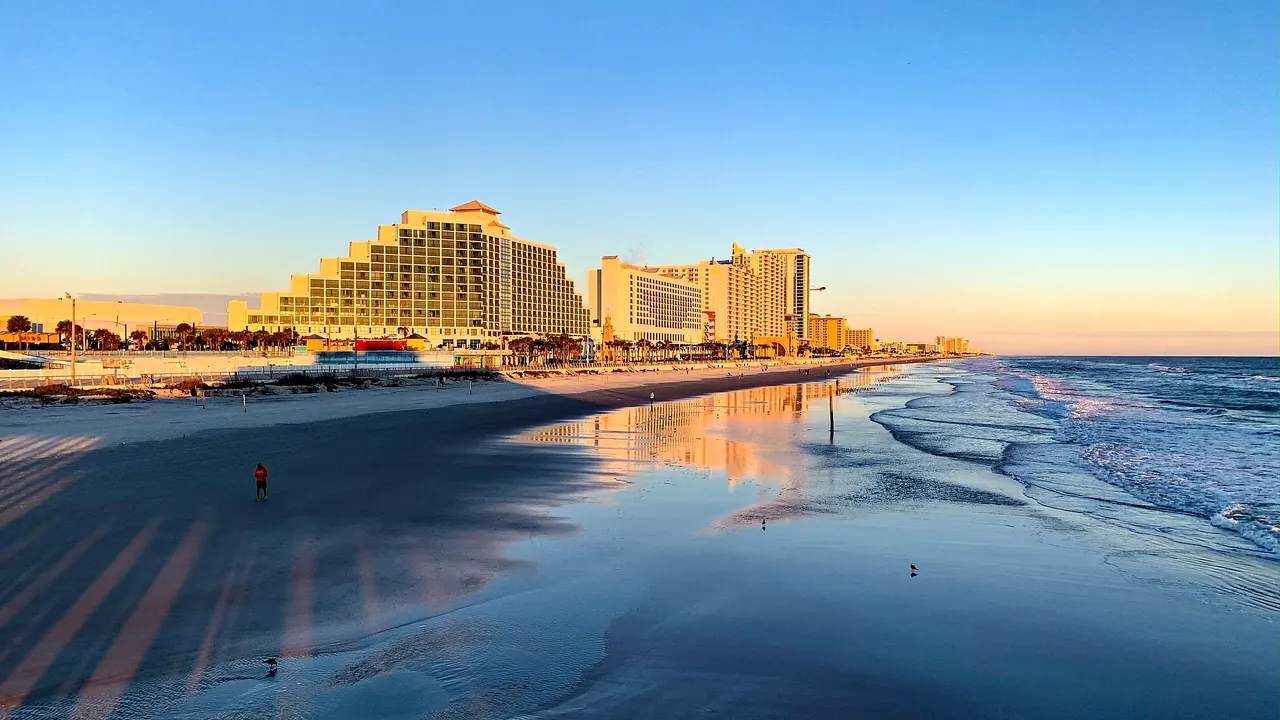
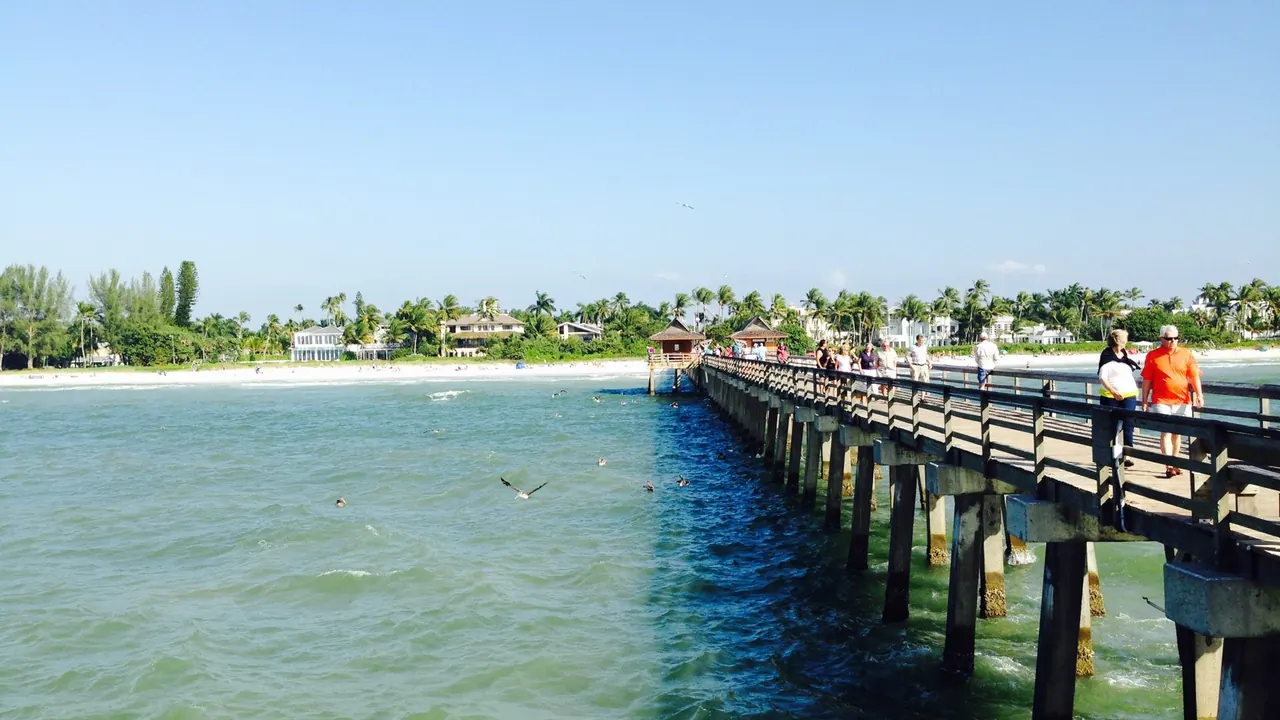
Photos: Daytona Beach by Han Zheng, CC BY-SA 2.0, cropped; Naples, Florida by William “Patrick” Ma…, CC BY-SA 3.0, cropped.
Daytona Beach or Naples, Florida?
Our verdict in twelve categories, each scored against the same fixed benchmark cities, and the climate month by month, so you can choose for your trip.
Choose Daytona Beach for
- prices
- day trips
- nightlife
Daytona Beach suits travellers who want an Atlantic beach vacation at a lower cost, with a car and plans beyond the sand. It is a short drive from St Augustine, Kennedy Space Center and the Orlando parks, its biker bars and race weeks give the evenings some noise, and the older motels and condos keep the bills down. Expect a plain resort strip, waves and rip currents, and avoid the big event weeks if you want quiet.
Choose Naples, Florida for
- shopping
- wellness
- food and drink
Naples is for a slower, more polished stay. The Gulf is calmer and clearer, the evenings revolve around sunset and a long dinner on Fifth Avenue South, and the Everglades and the mangrove islands are close for kayaking and wildlife. It costs a good deal more, especially in the winter season, and the nightlife is quiet, but for rest, gentle swimming and a well-kept town to walk around in, it is the better choice.
Scoreboard
Twelve categories on one fixed scale from 0 to 100. The shaded stretch is the gap between the two.
Your match
Pick a travel style or drag the sliders, and both match scores follow your weighting.
Too close to call, 1 point apart
Wins on prices and day trips with your weighting.
Wins on shopping and wellness with your weighting.
What matters to you?
Category by category
What the scores mean for a trip.
Beaches & swimming
Both are true beach towns, but the water is different. Daytona Beach faces the Atlantic, with a huge 37km sweep of hard-packed sand where cars can drive on marked stretches, greenish water, steady waves and rip currents that keep swimmers near the lifeguards. Quieter sand lies at Ormond Beach and Ponce Inlet, and New Smyrna Beach draws surfers.
Naples comes out ahead for swimming. Its pale, fine Gulf sand meets shallow, clear and usually calm water, the sun sets over the sea, and wilder stretches at Clam Pass, Delnor-Wiggins and Barefoot Beach add variety. Shuffle your feet for stingrays and expect the odd algae bloom.
Food & drink
Neither is a destination for food, but Naples eats better. Its dining is concentrated on Fifth Avenue South and Third Street South, with terraces, wine bars and white-tablecloth rooms, plus stone crab in the cooler months at the fish houses around Tin City.
Daytona Beach is more casual: fried shrimp and smoked fish dip on decks over the Halifax River and towards Ponce Inlet, Southern breakfasts, and a lot of chains along the main roads. It is cheaper and more relaxed, but the choice is thinner.
Culture & sights
Both towns are thin on sights and can be seen in a day or two, and oddly both lean on cars. Daytona Beach has the living version: the Speedway and the speed records once set on its sand, along with the Museum of Arts and Sciences and its Cuban art, and the climb up Florida's tallest lighthouse at Ponce Inlet.
Naples offers the quieter, more curated version, with historic racing cars at the Revs Institute, modern and American art at the Baker Museum, and the handsome Mediterranean-style streets of Old Naples around Palm Cottage.
Nightlife
Daytona Beach is the livelier of the two by some way. Main Street's biker saloons, sports bars and beach bars give it a rowdy, beer-and-motorcycles character that peaks during Bike Week, Biketoberfest and race weeks, though dancing and cocktail bars are scarce.
Naples is built for an early night. A sunset drink at a tiki bar, then a wine bar or piano lounge on Fifth Avenue South, is the usual evening, the crowd is older, and in summer the town is nearly silent before midnight.
Nature & outdoors
Naples has the stronger wild country on its doorstep. Within an hour lie Big Cypress, the western Everglades, the boardwalk at Corkscrew Swamp and the Fakahatchee Strand, and paddling the mangrove channels of the Ten Thousand Islands and Rookery Bay is the best outing either city offers.
Daytona Beach is no poor relation: Canaveral National Seashore and the Mosquito Lagoon are good for kayaking among dolphins, Merritt Island is excellent for birds, and Blue Spring draws manatees in winter. It also has the surf near Ponce Inlet, which the calmer Gulf lacks.
Day trips
Daytona Beach is much better placed for outings. St Augustine's Spanish fort and old streets are about an hour north, Kennedy Space Center a little over an hour south, and Orlando's theme parks and lakeside Winter Park an hour inland, so a week can mix beach days with very different experiences.
From Naples the choices are gentler: the Edison and Ford Winter Estates in Fort Myers, the shelling islands of Sanibel and Captiva, and Everglades City. Sarasota and Miami are each about two hours away, which makes for a long day.
Good for families
Both work well for children, in different ways. Daytona Beach offers the boardwalk's arcades and rides, a water park and the Orlando parks an hour away, but the surf and rip currents need watching, and spring break and Bike Week are best avoided.
Naples is the calmer choice for young children, with shallow, gentle water, dolphins seen from the shore, Naples Zoo and a children's museum. The trade-off is that Orlando is well over three hours away, so theme park days are not practical.
Getting around
Both are car towns with thin bus services, and every day trip needs a hire car. In Daytona Beach the hard sand itself is the best walking and cycling route, but away from the boardwalk the town spreads along wide roads that jam during big events.
Naples differs mainly in where you can manage without a car. The compact grid of Old Naples lets you walk or cycle between the pier, the beach and the restaurants, so a stay there needs the car only for outings.
Shopping & style
Naples is the place for shopping, though even there the range is narrow. Fifth Avenue South and Third Street South mix galleries, jewellers and resort-wear boutiques under palms, and an open-air mall gathers the designer labels.
Daytona Beach is purely practical: an outlet centre, a regional mall, beach shops for towels and swimwear, and Main Street's motorcycle gear, with a few independent galleries on Beach Street.
Affordability
Daytona Beach is clearly the cheaper vacation. Older oceanfront motels and condo rentals keep rooms affordable by American standards, and diners and fish camps keep meals modest, as long as you avoid the Daytona 500 and Bike Week, when rates jump.
Naples is priced for a wealthy clientele, with the steepest rates from January to April and expensive sit-down dinners. Summer is much cheaper but hot and stormy, and staying inland or in Fort Myers is the usual way to cut costs.
Live music & performing arts
Naples has the fuller winter calendar, centred on its arts campus where the Naples Philharmonic plays in its own hall, alongside a professional theatre company, touring Broadway shows and jazz nights in restaurants.
Daytona Beach relies on visiting orchestras in its winter series and touring shows at the Peabody Auditorium, with no orchestra of its own. In summer, though, its free concerts at the oceanfront bandshell give it more going on than Naples, whose programme almost stops.
Wellness & relaxation
Neither has a bathing tradition, but Naples is far more restful. Its big beachfront resort spas are open to non-guests, golf is everywhere, and the whole town moves slowly.
Daytona Beach offers resort spas and day spas on a smaller scale, and its calm comes from early walks on the hard sand and afternoons by a condo pool. Choose your dates carefully, because race weeks and Bike Week bring a lot of noise.
When should you go?
Pick your month. The climate figures are measured averages, not a forecast.
Daytona Beach in July
Naples, Florida in July
Daytime high, °C
Rainfall in the month, mm
Where the figures come from
Naples, Florida has no rain gauge within 25 km of the centre, so its rainfall comes from a gridded climate dataset read at the city rather than from a gauge further away.
Temperature and rainfall are climate normals, averaged over the years shown. Daytona Beach: 1991-2020 normals, Daytona Beach / Mansfield Mobile Home Park (4.9 km from centre). Naples, Florida: 2002-2020 (rainfall 1991-2020) normals, Naples / East Naples (2.3 km from centre).
Both cities are hot and wet in summer and mild in winter, but the details differ. In Daytona Beach the Atlantic is properly warm from late May to October, reaching about 28°C, while winter highs of around 21°C make it a pleasant season for walking and wildlife but too cool for most swimmers. The rains build from June and stay heavy through September, usually as afternoon thunderstorms, and spring and late autumn are the most comfortable compromise.
Naples is a few degrees warmer in winter and much drier then, with only about 40mm a month from December to April, which is why that is its best season for both the beach and the Everglades. Its summer is the more extreme of the two: the Gulf warms to about 30°C, but June brings around 235mm of rain, and the heat and humidity hold until October. For a winter escape Naples has the edge; in high summer neither is comfortable for long days outdoors.
Which traveller are you?
On a trip on a tight budget, Daytona Beach is the obvious pick. Older oceanfront motels and condos with kitchens are plentiful and the casual seafood is reasonably priced, while Naples charges premium rates for rooms and meals, above all from January to April.
For a relaxing and wellness trip, Naples wins comfortably. The resort spas are larger, golf and sunset walks set the pace, and the town is quiet by nature, whereas Daytona's calm can vanish under engines and crowds during race weeks and Bike Week.
For motorsport and motorcycle fans, Daytona Beach has no rival here. The Speedway, home of the Daytona 500, can be toured, the land-speed history began on its sand, and Bike Week fills Main Street. Naples offers only the Revs Institute's historic car collection.
Before you go
| Measure | Daytona Beach | Naples, Florida |
|---|---|---|
| Currency | US Dollar (USD) | US Dollar (USD) |
| Sockets | AB120 V, 60 Hz | AB120 V, 60 Hz |
| Driving side | Right | Right |
| Time zone | UTC-5, UTC-4 in summer | UTC-5, UTC-4 in summer |
| Emergency number | 911 | 911 |
| Elevation | 4 m | -2 m |
| Main airport | Daytona Beach International Airport (DAB)5 km from centre8 non-stop destinations | Southwest Florida International Airport (RSW)43 km from centre79 non-stop destinations |
| Public holidays this year | 11 days | 11 days |
By the numbers
| Measure | Daytona Beach | Naples, Florida |
|---|---|---|
| City population | 72,647 | 19,115 |
| People per km² | 440 | 450 |
| Museums within 10 km | 6 | 4 |
| UNESCO World Heritage sites within 50 km | 0 | 0 |
| Swim season, months above 21 °C | 9 months | 10 months |
Where else could you go?
Every comparison below shares a destination with this one, so you can follow Daytona Beach or Naples, Florida somewhere new.