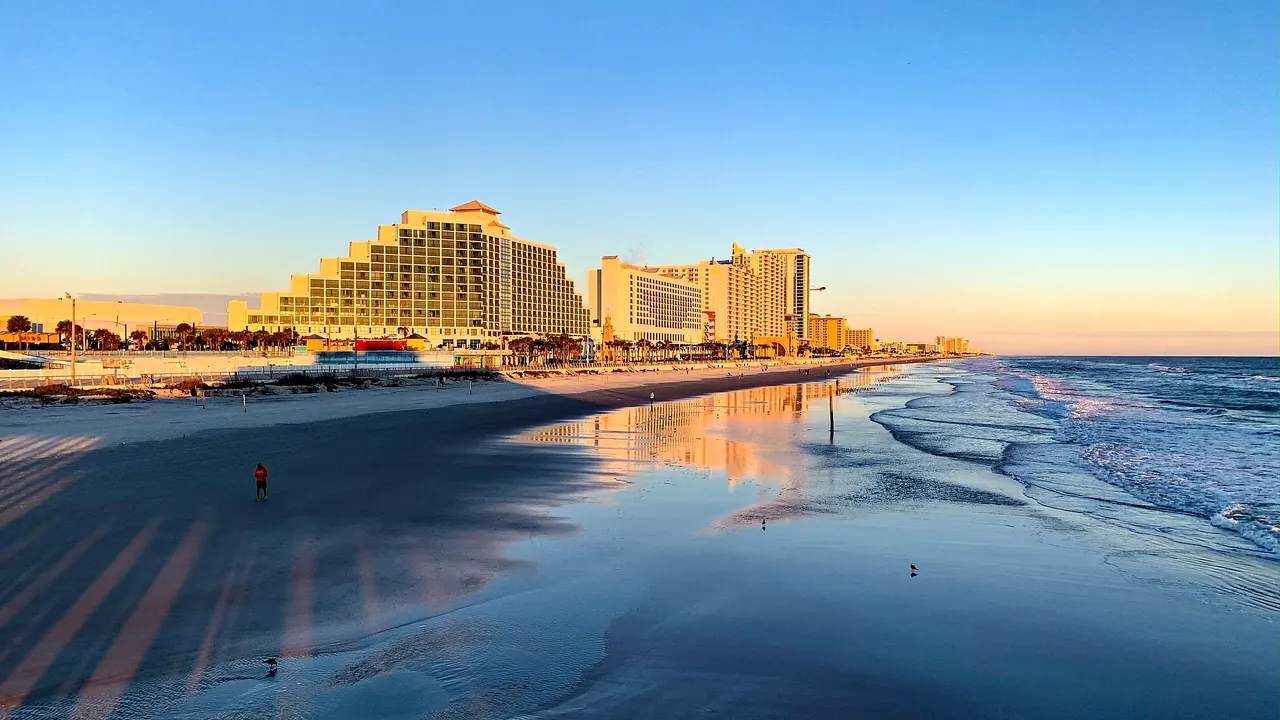
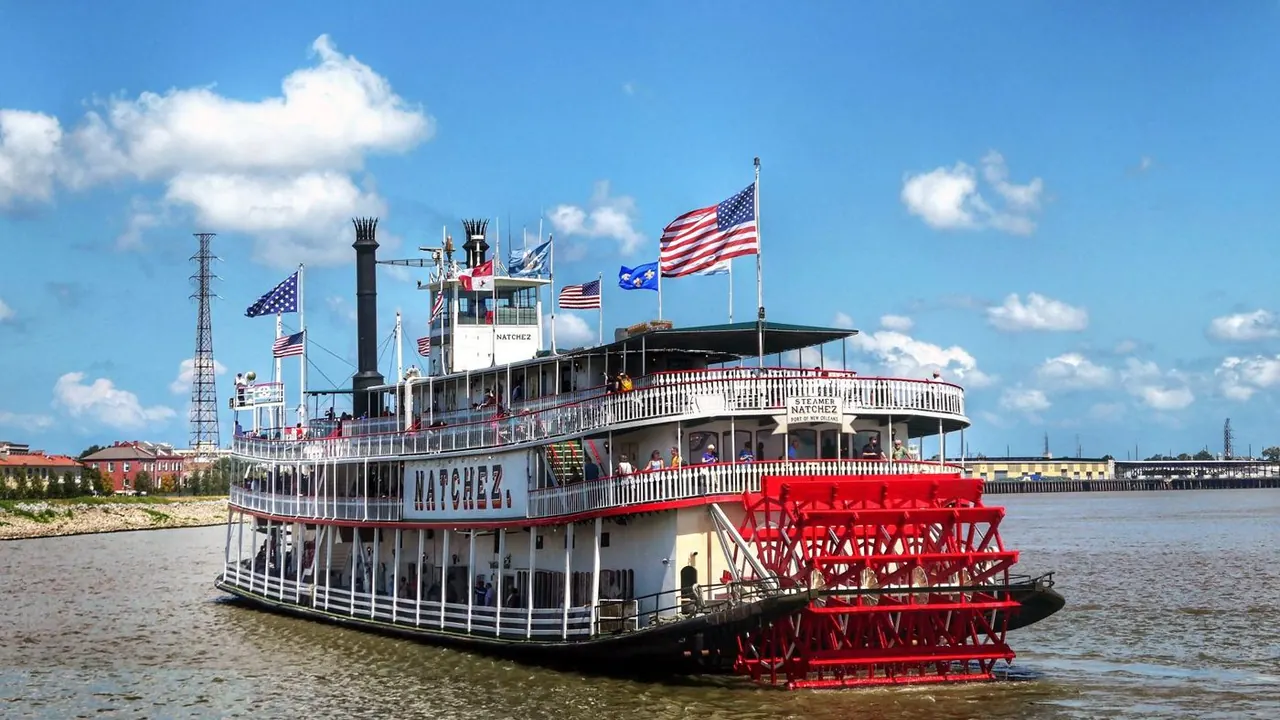
Photos: Daytona Beach by Han Zheng, CC BY-SA 2.0, cropped; New Orleans by Bernard Spragg, CC0.
Daytona Beach or New Orleans?
Our verdict in twelve categories, each scored against the same fixed benchmark cities, and the climate month by month, so you can choose for your trip.
Choose Daytona Beach for
- beaches
- nature and the outdoors
- day trips
Daytona Beach is the choice for a trip built around sand and sea. Its long, firm beach is the whole point of the place, the wildlife country of Canaveral National Seashore lies just to the south, and St Augustine, Kennedy Space Center and Orlando are each about an hour away by car. It suits families and drivers who want sun by day and quiet evenings.
Choose New Orleans for
- live music and the arts
- food and drink
- nightlife
Anyone who travels to eat, drink and listen should pick New Orleans. It has Creole and Cajun cooking, jazz on Frenchmen Street on most nights, the old colonial streets of the French Quarter and a bar culture with no closing time. It is a city to explore on foot and by streetcar, but it has no beach worth the name.
Scoreboard
Twelve categories on one fixed scale from 0 to 100. The shaded stretch is the gap between the two.
Your match
Pick a travel style or drag the sliders, and both match scores follow your weighting.
Wins on beaches and nature and the outdoors with your weighting.
Wins on live music and the arts and food and drink with your weighting.
What matters to you?
Category by category
What the scores mean for a trip.
Beaches & swimming
Daytona Beach is built on its beach. About 37km of firm, flat sand runs along the barrier island, with quieter stretches at Ormond Beach and towards Ponce Inlet, and the Atlantic is warm enough to swim in from late spring into autumn. The surf brings rip currents, so it pays to swim near the lifeguards.
New Orleans has nothing like it. Nobody swims in Lake Pontchartrain or the Mississippi, and the nearest sand, around Bay St. Louis on the Mississippi Gulf Coast, is more than an hour's drive away, where the water is shallow and brownish. If swimming matters at all, Daytona is the place.
Food & drink
New Orleans is one of the great eating cities of the country, with a Creole and Cajun kitchen you won't find anywhere else. There is gumbo, étouffée and red beans and rice, old French Quarter dining rooms that have served the same dishes for more than a century, beignets near Jackson Square and crawfish boils in spring. The cocktails are part of the meal too, since the Sazerac was born here.
Daytona's best meals are fried shrimp, grouper sandwiches and smoked fish dip on a deck over the Halifax River or near Ponce Inlet. They are pleasant and simple, but chain restaurants take up most of the main roads. In Daytona you eat between beach days, while in New Orleans the food can be the reason for the trip.
Culture & sights
New Orleans has far more to see. The French Quarter is an almost complete colonial town of iron balconies and hidden courtyards around Jackson Square, St. Louis Cathedral and the Cabildo. The Garden District adds antebellum mansions, and with the above-ground tombs and the National WWII Museum there is enough for several full days.
Daytona's sights are mostly about speed: the Speedway tour and the history of land-speed records set on the sand. Beyond that there is the Cuban art at the Museum of Arts and Sciences and the climb up the Ponce de Leon Inlet Lighthouse. That makes a day or two, and after it the town is mostly motels and strip roads.
Nightlife
New Orleans has no legal closing time and lets you carry a drink down the street. Nights move from the neon balconies of Bourbon Street to the music bars of Frenchmen Street and the corner dives of the Bywater. It is a city of bars more than clubs, but few places in the country go out as hard.
Daytona livens up mainly during Bike Week, Biketoberfest and race weeks, when the biker saloons on Main Street spill onto the pavement. The rest of the year means tiki bars at sunset and hotel lounges, with little for anyone who wants cocktails or dancing.
Nature & outdoors
Both cities are flat and watery, but Daytona has more to do outdoors. The undeveloped dunes of Canaveral National Seashore and the Mosquito Lagoon are good for kayaking among dolphins, Merritt Island is excellent birding country and Blue Spring draws manatees in winter. The surf breaks near Ponce Inlet add another option.
From New Orleans you can take swamp tours past alligators or walk the boardwalks of the Barataria Preserve, and in town there are City Park's live oaks and the path along the levee. That fills an afternoon or two rather than a whole nature trip. In both places, the summer heat pushes outdoor plans into the early morning.
Day trips
Daytona has the stronger list of outings, each about an hour by car. St Augustine's Spanish fort and old streets are to the north, Kennedy Space Center is to the south and Orlando's theme parks are inland. New Smyrna Beach and DeLand are even closer.
From New Orleans, the classic day out follows the River Road to the old plantations, where the Whitney is the most moving. Baton Rouge and the small Gulf towns make other easy days. Cajun country around Lafayette makes for a long day, and after that the choice runs out.
Good for families
Both work for children, in different ways. Daytona is a beach and boardwalk stay, with wide sand, arcades and ice cream by the pier, condos with pools and Orlando's theme parks an hour away. The drawbacks are the rip currents and the noisy event weeks.
New Orleans is more of a city break for families, with Audubon Zoo, the Aquarium of the Americas, the children's museum in City Park and rides on the streetcars and paddle steamers. The downsides are Bourbon Street at night and some streets after dark. Both cities are very hot in summer.
Getting around
New Orleans is much easier without a car. The French Quarter, the Marigny and the Warehouse District lie close together on flat ground, and the St. Charles streetcar runs through the Garden District. The streetcars are slow, though, so ride-hailing fills the gaps.
In Daytona a car is close to essential. Hotels and sights are spread along wide roads on both sides of the river, and the buses run too rarely to rely on. Only the beach itself and the area around the boardwalk are pleasant on foot or by bike.
Shopping & style
New Orleans gives a shopper far more reason to browse. There are antique dealers and galleries on Royal Street, miles of independent boutiques and vintage shops along Magazine Street, and Mardi Gras masks, pralines and hot sauces at the French Market.
Daytona covers the practical side, with an outlet centre, a mall, beach shops for swimwear and biker gear on Main Street, plus a few galleries on Beach Street. Neither city has much in the way of designer labels.
Affordability
Neither is a bargain by American standards, but Daytona works out a little cheaper. It has plenty of older oceanfront motels and condos, and seafood meals are moderately priced, though a hire car adds to the bill. New Orleans charges big-city rates for rooms near the French Quarter and adds high hotel taxes, while po'boys, the streetcar and free street music keep daily spending down.
In both cities the big events push room rates up sharply: the Daytona 500 and Bike Week in one, Mardi Gras and Jazz Fest in the other. Your dates matter as much as which city you choose.
Live music & performing arts
Music is one of the main reasons to visit New Orleans. Traditional jazz, brass bands, funk and zydeco play every night on Frenchmen Street and in the old French Quarter jazz hall, second-line parades move through the neighbourhoods on Sundays for much of the year, and Jazz Fest is the big date in spring.
Daytona has a modest calendar: a winter series of visiting orchestras, touring Broadway shows at the Peabody Auditorium and free summer concerts at the oceanfront bandshell. Neither city offers much opera or serious theatre, but only New Orleans has a living music culture of its own.
Wellness & relaxation
Neither city has a spa tradition, and both rely on hotel spas and a few day spas. What differs is the kind of calm. Daytona has early walks on the hard sand and slow afternoons by a condo pool, as long as you avoid race weeks and Bike Week. New Orleans has quiet courtyard mornings, streetcar rides under the oaks and lazy hours in City Park, though the French Quarter at night is anything but restful.
When should you go?
Pick your month. The climate figures are measured averages, not a forecast.
Daytona Beach in July
New Orleans in July
Daytime high, °C
Rainfall in the month, mm
Temperature and rainfall are climate normals, averaged over the years shown. Daytona Beach: 1991-2020 normals, Daytona Beach / Mansfield Mobile Home Park (4.9 km from centre). New Orleans: 1991-2020 normals, New Orleans Airport (2.7 km from centre).
Daytona Beach is warm enough for the beach from May to October, and the Atlantic is at its best from July to September at around 28°C. Summer is also the wet season. From June to September afternoon thunderstorms are frequent, with about 180mm of rain in September, and the heat makes midday tiring. Winter stays mild, with highs in the low twenties, but the sea is too cool for most swimmers then. March, April and November are the best months for a mix of beach and sightseeing.
New Orleans has cooler winters, with highs of about 17°C in January, which is pleasant for walking but too cool for anything beachy. Rain falls all year rather than in one season, and June is the wettest month at around 194mm. Summer reaches 33°C with heavy humidity, which makes long walks through the streets hard work. The Gulf is very warm then, but the beaches are a long drive away. Spring and October to November are the most comfortable months to explore the city on foot.
Which traveller are you?
On a beach and sun trip, Daytona Beach is the clear pick. Miles of wide sand start at the hotel door, the sea is warm right through summer and New Smyrna Beach has gentler surf nearby. In New Orleans, swimming means a hotel pool or a long drive.
For a food and nightlife trip, New Orleans is in another league. You get gumbo, po'boys and chargrilled oysters by day, then music bars on Frenchmen Street until late. Daytona has its riverside fish camps, tiki bars and a lot of chain restaurants.
On a culture and arts trip, New Orleans wins again. The French Quarter, the Garden District mansions, the old cemeteries and the National WWII Museum fill several days, with live jazz every night. Daytona's Speedway, its lighthouse and one good museum take a day or two.
Before you go
| Measure | Daytona Beach | New Orleans |
|---|---|---|
| Currency | US Dollar (USD) | US Dollar (USD) |
| Sockets | AB120 V, 60 Hz | AB120 V, 60 Hz |
| Driving side | Right | Right |
| Time zone | UTC-5, UTC-4 in summer | UTC-6, UTC-5 in summer |
| Emergency number | 911 | 911 |
| Elevation | 4 m | -2 m |
| Main airport | Daytona Beach International Airport (DAB)5 km from centre8 non-stop destinations | Louis Armstrong New Orleans International Airport (MSY)18 km from centre51 non-stop destinations |
| Public holidays this year | 11 days | 14 days |
By the numbers
| Measure | Daytona Beach | New Orleans |
|---|---|---|
| City population | 72,647 | 383,997 |
| People per km² | 440 | 423 |
| Museums within 10 km | 6 | 16 |
| UNESCO World Heritage sites within 50 km | 0 | 0 |
| Swim season, months above 21 °C | 9 months | 7 months |
Where else could you go?
Every comparison below shares a destination with this one, so you can follow Daytona Beach or New Orleans somewhere new.