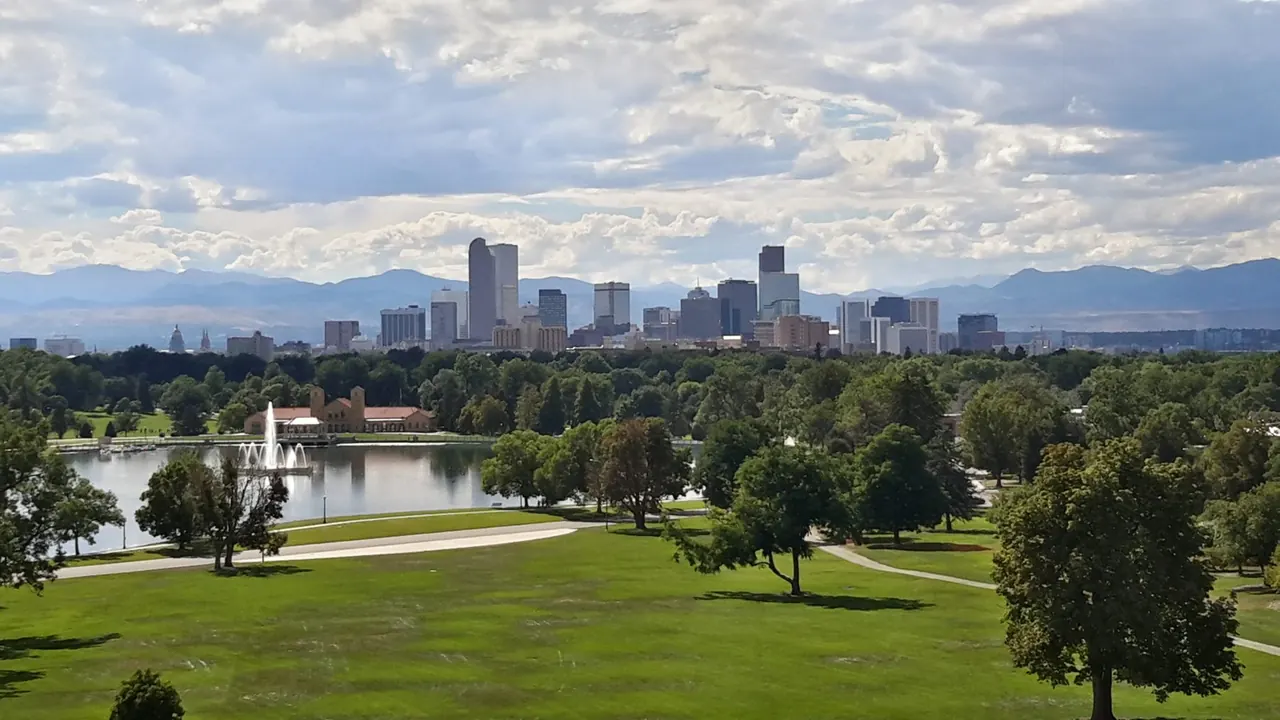
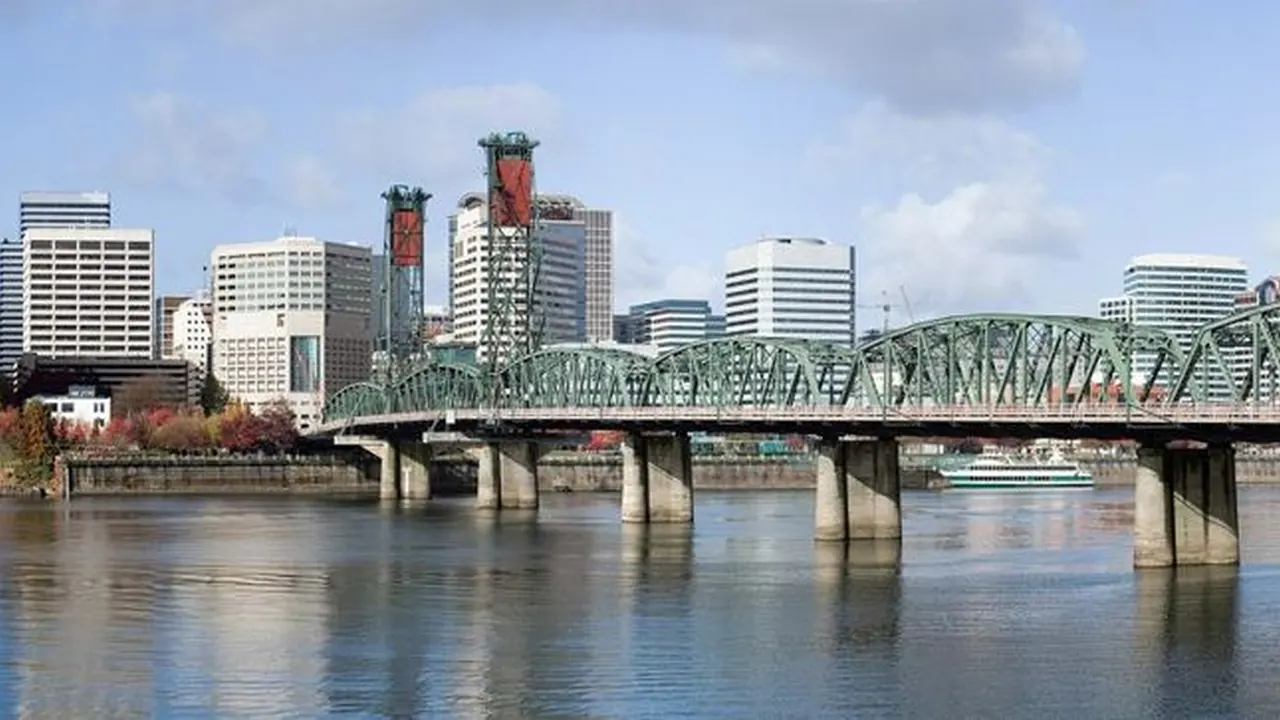
Photos: Denver by Zenhaus, CC BY-SA 4.0, cropped; Portland by Cacophony, CC BY-SA 4.0, cropped.
Denver or Portland?
Our verdict in twelve categories, each scored against the same fixed benchmark cities, and the climate month by month, so you can choose for your trip.
Choose Denver for
- families
- live music and the arts
- culture and sights
Denver is the better pick for families and for anyone who wants big, high mountains close at hand. City Park puts the zoo and a dinosaur-filled nature museum side by side, a summer concert at Red Rocks is worth planning a trip around, and the ski resorts are within reach in winter. The dry climate means outdoor plans rarely get rained off. Expect to hire a car and to feel the altitude for the first day or two.
Choose Portland for
- getting around
- beaches
- food and drink
Portland rewards travellers who like to eat, drink and wander. Food cart pods, serious coffee and Willamette Valley pinot make every meal worth thinking about. Short downtown blocks and a train from the airport mean you can manage without a car until you head out of town. Forest Park's trails start at the end of a city street and the Gorge waterfalls are close by, but plan the trip for summer, because the rest of the year is long and wet.
Scoreboard
Twelve categories on one fixed scale from 0 to 100. The shaded stretch is the gap between the two.
Your match
Pick a travel style or drag the sliders, and both match scores follow your weighting.
Wins on families and live music and the arts with your weighting.
Wins on getting around and beaches with your weighting.
What matters to you?
Category by category
What the scores mean for a trip.
Beaches & swimming
Neither city is a beach destination, but Portland gives you a little more. In summer locals swim in the Willamette and the Columbia from small sandy beaches downtown, in Sellwood and on Sauvie Island. The Oregon coast at Cannon Beach, about an hour and a half away, offers wide sand and sea stacks to walk among, though the cold Pacific keeps most people out of the water.
Denver is landlocked. Swimming means the reservoir beaches at Cherry Creek and Chatfield state parks, or a hotel or public pool, and the mountain lakes stay cold even in high summer.
Food & drink
Both are beer cities with taprooms everywhere, but Portland is the better place to eat. Its food cart pods offer Thai, Georgian and barbecue at shared tables, and its neighbourhood restaurants cook with salmon, Dungeness crab, mushrooms and hazelnuts from the region. Coffee roasters and Willamette Valley pinot noir add more to the drinking than Denver can match.
Denver's best dishes have a Southwestern accent: green chile smothered over burritos, Colorado lamb and bison, and Vietnamese and Mexican cooking along Federal Boulevard. It is good, casual eating, but less of it is worth travelling for. Neither city does much grand fine dining.
Culture & sights
Denver has the slightly fuller set of sights, and most of them sit together around Civic Center Park. There you will find the gold-domed Capitol, the Denver Art Museum with its titanium-clad wing and its Native American collection, and the single-artist Clyfford Still Museum. Union Station and the brick warehouses of LoDo keep the gold-rush city's commercial past in view.
Portland's best sights are its gardens rather than its museums. The walled Lan Su Chinese Garden and the Japanese Garden in Washington Park are the highlights, and Pittock Mansion looks across to Mount Hood. Each city fills two or three days comfortably.
Nightlife
A night out in either city means bars rather than clubs, and both close around 2am or a little after. The difference is in the setting. Denver's evenings centre on LoDo, which fills with sports crowds on game nights, along with RiNo's warehouse taprooms and the scruffy dive bars of East Colfax. Be aware that the altitude makes drinks hit harder.
Portland spreads its bars across neighbourhood strips like Alberta, Mississippi, Division and Belmont, with wine bars and pinball dives among the taprooms. A night there tends to be a long, quiet evening in one area.
Nature & outdoors
Both cities are superb bases for the outdoors, but the landscapes could hardly differ more. Denver's are high and dry: the red sandstone of Red Rocks and the foothill trails above Golden within half an hour, dozens of summits over 4,000m further in, and elk and alpine tundra in Rocky Mountain National Park. The sun keeps it good in every season, and in winter the big ski resorts are a couple of hours up the motorway.
Portland's are green and wet. Forest Park, one of the largest urban forests in the country, begins a short walk from the northwest streets, and the cliffs and waterfalls of the Columbia River Gorge are close by. Windsurfing at Hood River and summer skiing on Mount Hood's glacier have no match near Denver, but the long wet winters leave summer as the season to come.
Day trips
The day trips are equally good, and in both cities they mean hiring a car, but the flavour is different. From Denver you head into the Old West: Victorian mining towns at Georgetown and Idaho Springs, the narrow-gauge railway, Boulder under the Flatirons, and Manitou Springs paired with the Air Force Academy.
From Portland the classic day out is wine tasting in the Willamette Valley, under an hour away. Further afield are the maritime port of Astoria, a coast day at Cannon Beach, and orchards around Hood River.
Good for families
Denver is the easier city with children. The zoo and the Museum of Nature & Science, with its dinosaurs and planetarium, share City Park, while the Children's Museum, an aquarium and an amusement park sit together by the South Platte. Older children can ride scenic railways and walk easy mountain trails, but watch the altitude and the strong sun with little ones.
Portland has a fine science museum in OMSI, with a submarine to climb through, along with the zoo in Washington Park and Oaks Park in Sellwood. The wet winters push families indoors, though, and visible homelessness in parts of downtown bothers some parents.
Getting around
Portland is much easier without a car. The MAX runs from the airport to downtown, the short blocks make walking a pleasure, and the streetcar and wide bridge paths link the Pearl District with the east bank. It is also one of the more bike-friendly cities in the country.
Denver's centre is compact, with a train from the airport to Union Station and a free shuttle along the 16th Street Mall. Beyond downtown, though, the city is built around the car. In both cities a car is close to essential for the mountains and day trips.
Shopping & style
Portland is the better city for browsing. Powell's City of Books fills a whole block and is worth a visit in itself, Mississippi, Alberta and Hawthorne are lined with vintage, record and maker shops, and the Saturday Market sells local crafts. Oregon also has no sales tax.
Denver's shopping is concentrated in the Cherry Creek mall and the boutiques around it, plus vintage on South Broadway. Its real strengths are Western wear and big outdoor gear stores. Neither city does much luxury.
Affordability
Both cities carry normal American big-city prices, with dear downtown hotels, tipping on every meal and a hired car for trips out of town. In Denver, hotel rates peak in ski season and during conventions. Staying near a light rail line and eating at taquerias and breweries keeps costs down.
Portland offers a few more ways to save. Food carts are among its best places to eat, transit fares are low, there is no sales tax, and much of the fun is simply walking the neighbourhoods.
Live music & performing arts
Denver has the bigger stage, and above all it has Red Rocks Amphitheatre, where a summer concert between the sandstone monoliths is reason enough to visit. Downtown, the Denver Center for the Performing Arts brings theatre, Broadway tours, the symphony, opera and ballet together in one complex covering several blocks. Five Points adds jazz with deep local roots.
Portland's symphony, opera and ballet hold full seasons, with the symphony playing in a restored 1920s movie palace. Its stronger suit is indie rock and folk in small east-side rooms and the sprung floor of the Crystal Ballroom.
Wellness & relaxation
Neither city has a bathing tradition, and both rely on hotel and day spas, so the difference lies in what is nearby. From Denver, the historic mineral pools and steam caves at Idaho Springs are under an hour away, and there are larger hot-spring resorts deeper in the mountains.
Portland has soaking houses with saunas and cold plunges in its residential neighbourhoods, but its hot springs are two hours away in the Cascades. Its gardens and slow café mornings make it the gentler city to unwind in.
When should you go?
Pick your month. The climate figures are measured averages, not a forecast.
Denver in July
Portland in July
Daytime high, °C
Rainfall in the month, mm
Temperature and rainfall are climate normals, averaged over the years shown. Denver: 1991-2020 normals, Denver / Stapleton International, Co. (11.2 km from centre). Portland: 1991-2020 normals, Portland International Airport (9.8 km from centre).
Denver stays dry all year. Even its wettest months, May and July, see only about 57mm. Winter days reach around 8°C, which is cool but usually fine for a walk and suits a ski trip. July climbs to 32°C, so midday sightseeing gets tiring at the height of summer. The easiest months are May to June and September to October, when the reservoir beaches still work early in the season and the trails are comfortable.
Portland is a different story: rain sets in from October and lasts into spring, peaking at about 145mm in December, with short grey days. July and August are the reward. They are almost dry and warm, around 28°C, which is when the river beaches and mountain hikes are at their best. Choose Denver if you are travelling in winter or the shoulder seasons, and Portland if you are going between late June and September.
Which traveller are you?
On a family trip with children, Denver gives more to do across the year. Summer brings splash fountains in wide parks and a butterfly house in the northern suburbs, older children can spot elk in Rocky Mountain National Park, and winter means sunny days in the snow.
For a food and nightlife trip, Portland comes out ahead. Food cart pods, Dungeness crab and morning coffee fill the days, and in the evenings each east-side strip has its own taprooms, cocktail bars and pinball dives for a long night of talk.
For a short city break, Portland fills two or three days well. Spend a morning in the Japanese Garden and on the Forest Park trails, an afternoon among Old Town's cast-iron facades and the Oregon Trail story, and an evening in Powell's.
Before you go
| Measure | Denver | Portland |
|---|---|---|
| Currency | US Dollar (USD) | US Dollar (USD) |
| Sockets | AB120 V, 60 Hz | AB120 V, 60 Hz |
| Driving side | Right | Right |
| Time zone | UTC-7, UTC-6 in summer | UTC-8, UTC-7 in summer |
| Emergency number | 911 | 911 |
| Elevation | 1,609 m | 152 m |
| Main airport | Denver International Airport (DEN)30 km from centre231 non-stop destinations | Portland International Airport (PDX)10 km from centre88 non-stop destinations |
| Public holidays this year | 12 days | 12 days |
By the numbers
| Measure | Denver | Portland |
|---|---|---|
| City population | 715,522 | 652,503 |
| People per km² | 1,783 | 1,736 |
| Museums within 10 km | 26 | 17 |
| UNESCO World Heritage sites within 50 km | 0 | 0 |
Where else could you go?
Every comparison below shares a destination with this one, so you can follow Denver or Portland somewhere new.