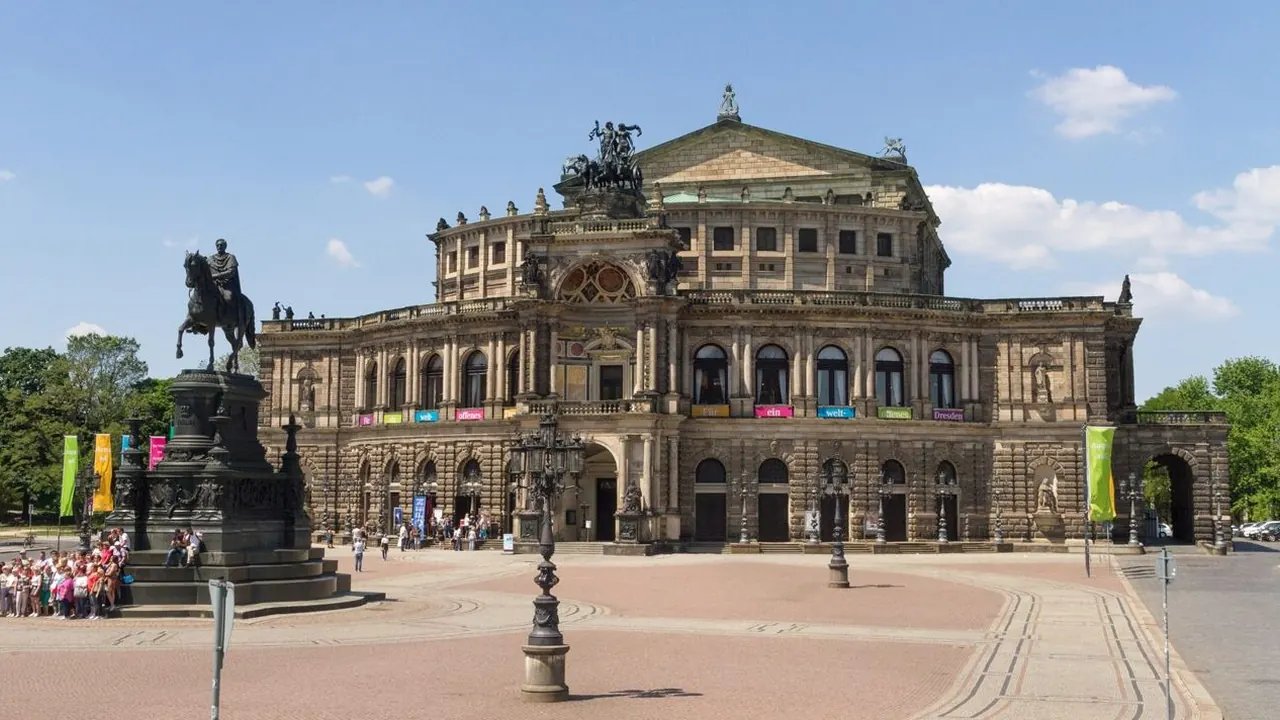
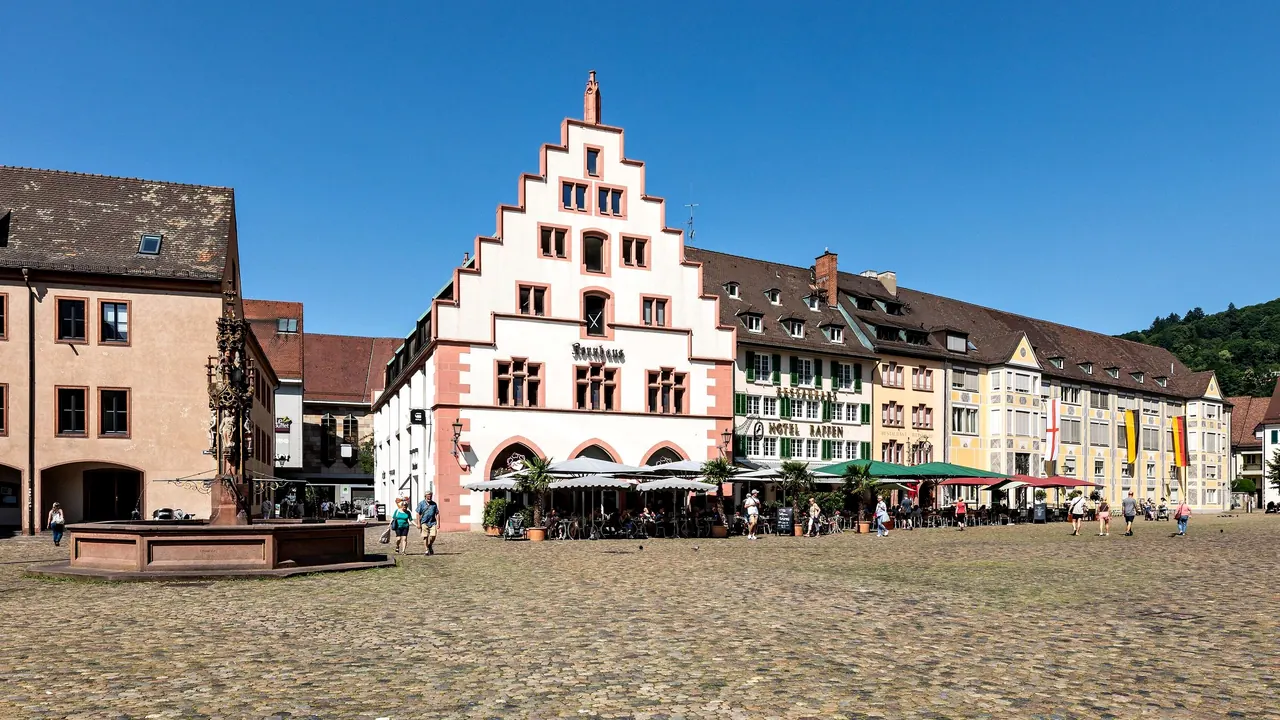
Photos: Dresden by Maksym Kozlenko, CC BY-SA 4.0, cropped; Freiburg by Dietmar Rabich, CC BY-SA 4.0, cropped.
Dresden or Freiburg?
Our verdict in twelve categories, each scored against the same fixed benchmark cities, and the climate month by month, so you can choose for your trip.
Choose Dresden for
- live music and the arts
- culture and sights
- prices
Dresden is the choice for a trip built around art and music. Its baroque riverside centre holds the Old Masters, the Green Vault and the Albertinum, and the Semperoper and the Staatskapelle give the evenings real weight. It also costs a little less to stay in, the Neustadt gives you a livelier few nights out, and Saxon Switzerland is close enough for days among the sandstone towers.
Choose Freiburg for
- wellness
- families
- food and drink
Freiburg suits travellers who would rather be outdoors, eat well and slow down. The Black Forest starts at the edge of town, the spa towns of southern Baden are a short ride away, and the Baden cooking and Kaiserstuhl wines are lighter and more refined than Saxon fare. Families get the easier stay, with Europa-Park within reach and a small, car-free centre to wander.
Scoreboard
Twelve categories on one fixed scale from 0 to 100. The shaded stretch is the gap between the two.
Your match
Pick a travel style or drag the sliders, and both match scores follow your weighting.
Too close to call, 1 point apart
Wins on live music and the arts and culture and sights with your weighting.
Wins on wellness and families with your weighting.
What matters to you?
Category by category
What the scores mean for a trip.
Beaches & swimming
Neither city is a beach destination. In Dresden the Elbe has sandy banks for deckchairs, but its shipping and currents make it unsafe for swimming. Cooling off there means outdoor pools, gravel pits and the ponds around Moritzburg.
Freiburg has a little more choice. The gravel pits on the Rhine plain get pleasantly warm, and the Black Forest lakes of Titisee and Schluchsee are about an hour away and make a scenic swim, though the water stays cool.
Food & drink
Freiburg eats better. Baden cooking takes a lighter touch from neighbouring France: Flammkuchen, Schäufele, Black Forest ham and mountain trout, served with Pinot from the Kaiserstuhl. The morning market around the Münster and the fine dining in the countryside around it add real depth.
Dresden's Saxon cooking is heavier, built on sauerbraten, dumplings and game. Its strength is baking, with Stollen and Eierschecke at afternoon coffee. The Neustadt has a wider international mix than anything in Freiburg, but tourist menus dominate around the Frauenkirche.
Culture & sights
Dresden is in a different league here. The court of the Saxon electors left world-class collections: Raphael's Sistine Madonna in the Zwinger, the treasures of the Green Vault, and Caspar David Friedrich in the Albertinum. Add the Frauenkirche, Brühl's Terrace and Pillnitz, and the sights fill three or four days.
Freiburg's appeal is its townscape more than its collections. The red sandstone Münster, the city gates, the Bächle and the medieval art in the Augustinermuseum make a rewarding day or two, and then you have seen most of it.
Nightlife
Both are student cities with relaxed, friendly evenings, and Dresden's is the fuller of the two. The Äußere Neustadt is a whole quarter given over to going out, with bars, beer kiosks, courtyard pubs and clubs in old industrial buildings. It stays busy late at weekends.
Freiburg's evenings are spread around the old town lanes near the Martinstor and along the Dreisam in summer. They depend more on the university calendar and are noticeably quieter in the semester break.
Nature & outdoors
Both have fine country on the doorstep, but Freiburg's reaches further. The Black Forest begins at the city's edge, and the Schauinsland cable car climbs to about 1,280m. The Feldberg offers summer hiking and reliable winter snow, and mountain biking and the vineyard cycling of the Kaiserstuhl add variety.
Dresden's great asset is Saxon Switzerland, under an hour away by suburban train. Its sandstone towers, the Bastei viewpoint and the Malerweg trail make it a place for walkers and traditional rock climbers. The Elbe cycle route and the Dresden Heath cover easier days, and the skiing in the Ore Mountains is modest.
Day trips
Both are excellent bases, and the difference is the kind of trip. Dresden's outings stay mostly within Saxony: porcelain at Meissen, the lakeside lodge at Moritzburg, the Königstein fortress, and the historic towns of Leipzig, Bautzen and Görlitz. Prague is possible at the outer edge of a day.
Freiburg's draw is three countries within easy reach. Basel is about 45 minutes away by train and Strasbourg roughly an hour and a half. The half-timbered Alsace villages are close too, but easiest by car, unlike nearly everything on Dresden's list.
Good for families
Freiburg is the easier city with children. Europa-Park, Germany's largest theme park, is about forty minutes away. In town, children can sail toy boats along the Bächle channels, and the free Mundenhof animal park and the cable car fill out a week.
Dresden has no large theme park or aquarium. It does better on rainy days, though, with the Transport Museum and the hands-on children's section of the Hygiene Museum. It also has a miniature railway run largely by children and trips on the paddle steamers.
Getting around
Both are easy without a car, and Freiburg is a shade easier. Its old town is largely car-free and everything is within about twenty minutes on foot. The city is made for cycling, and many hotels give guests a card that covers regional buses and trains.
In Dresden, the old town and the Neustadt are linked on foot by the Augustus Bridge. Trams cover the rest, and suburban trains and paddle steamers run along the Elbe to Meissen, Pillnitz and Saxon Switzerland.
Shopping & style
Shopping is modest in both, and the best souvenirs are regional crafts. Dresden has Meissen porcelain, wooden toys from the Ore Mountains, the design shops of the Kunsthofpassage and, in Advent, the long-established Striezelmarkt.
Freiburg answers with cuckoo clocks, wood carvings, and wine, schnapps and ham from the Münster market, plus independent boutiques in the Gerberau quarter. Locals go to Basel for anything more serious.
Affordability
Dresden is the cheaper stay. Its hotels are reasonable for most of the year and eating out in the Neustadt is good value. The main extra cost is that each major museum charges its own entry.
In Freiburg, hotel rooms are the problem. They are scarce and expensive for a city of its size, especially on summer weekends and during trade fairs. Once you are there, though, the market food, the taverns and the free Münster keep daily spending moderate, as long as you don't cross into Switzerland.
Live music & performing arts
For music, Dresden is a reason to travel in itself. The Semperoper is home to the Staatskapelle and has a history of Wagner and Strauss premieres. Add the Philharmonic in the Kulturpalast, the Kreuzchor and Bach at the Frauenkirche, and the city has one of Europe's deepest classical traditions.
Freiburg has a solid stage for its size. Theater Freiburg performs in repertory, and the Freiburger Barockorchester is a leading period-instrument ensemble. In summer the Zelt-Musik-Festival puts on concerts in tents, but it makes a good evening out rather than the point of the trip.
Wellness & relaxation
Freiburg sits in spa country. It has a mineral thermal bath on its eastern edge, and the warm outdoor pools of Bad Krozingen are about twenty minutes away. Badenweiler's thermal baths stand beside the ruins of Roman ones, and the bathhouses of Baden-Baden are an hour away by train.
Dresden has no thermal springs. You relax there in the municipal saunas, on the wide Elbe meadows and with coffee and cake above the river, and the nearest proper thermal pool is at Bad Schandau.
When should you go?
Pick your month. The climate figures are measured averages, not a forecast.
Dresden in July
Freiburg in July
Daytime high, °C
Rainfall in the month, mm
Temperature and rainfall are climate normals, averaged over the years shown. Dresden: 1991-2020 normals, Dresden-Strehlen (3.8 km from centre). Freiburg: 1991-2020 normals, Freiburg (0.6 km from centre).
Dresden is warmest in July and August, at about 26°C. That is warm enough for the outdoor pools and gravel pits and still comfortable for walking the old town, but rain peaks in those same months, often as summer showers. Late April and May bring long, sunny days with less rain than high summer, and September is drier again, so those are the best weeks for sightseeing. Winter is cold, with January highs near 4°C and short, grey days.
Freiburg stays a couple of degrees milder in winter and is a touch warmer in high summer. July is its sunniest month, with June and August close behind, and this is the time for the lakes. It is wetter than Dresden for most of the year, though, and May is its rainiest month at about 103mm, so expect regular showers in spring rather than settled weather. Early autumn is the more reliable choice: September still reaches around 21°C and is drier than early summer.
Which traveller are you?
On a culture and arts trip, Dresden is the clear choice. Its collections are world-class rather than regional, and its musical tradition means you can spend the day with great paintings and the evening at the opera or a choral concert. Freiburg's old town takes a day or two.
On a family trip with children, Freiburg makes life simpler. The centre is small, flat and safe, the walks are short enough for tired legs, and mountains and a major theme park make full days out easy. Dresden is the better fallback in bad weather.
For a relaxing and wellness trip, Freiburg is the better base. It sits in spa country, so you can spend a different afternoon in warm water without long journeys, and the pace in town stays slow. In Dresden, relaxing means a sauna and a riverside stroll rather than proper spa days.
Before you go
| Measure | Dresden | Freiburg |
|---|---|---|
| Official language | German | German |
| Currency | Euro (EUR) | Euro (EUR) |
| Sockets | CF230 V, 50 Hz | CF230 V, 50 Hz |
| Driving side | Right | Right |
| Time zone | UTC+1, UTC+2 in summer | UTC+1, UTC+2 in summer |
| Emergency number | 112 | 112 |
| Elevation | 126 m | 278 m |
| Main airport | Dresden Airport (DRS)10 km from centre13 non-stop destinations | EuroAirport Basel–Mulhouse–Freiburg (BSL)50 km from centre112 non-stop destinations |
| Public holidays this year | 11 days | 12 days |
By the numbers
| Measure | Dresden | Freiburg |
|---|---|---|
| City population | 562,764 | 238,299 |
| People per km² | 1,713 | 1,558 |
| Museums within 10 km | 70 | 13 |
| UNESCO World Heritage sites within 50 km | 1 | 2 |
Where else could you go?
Every comparison below shares a destination with this one, so you can follow Dresden or Freiburg somewhere new.
- Colmarvs Freiburg
- Baselvs Freiburg
- Strasbourgvs Freiburg
- Zurichvs Freiburg
- Baden-Badenvs Freiburg
- Leipzigvs Dresden