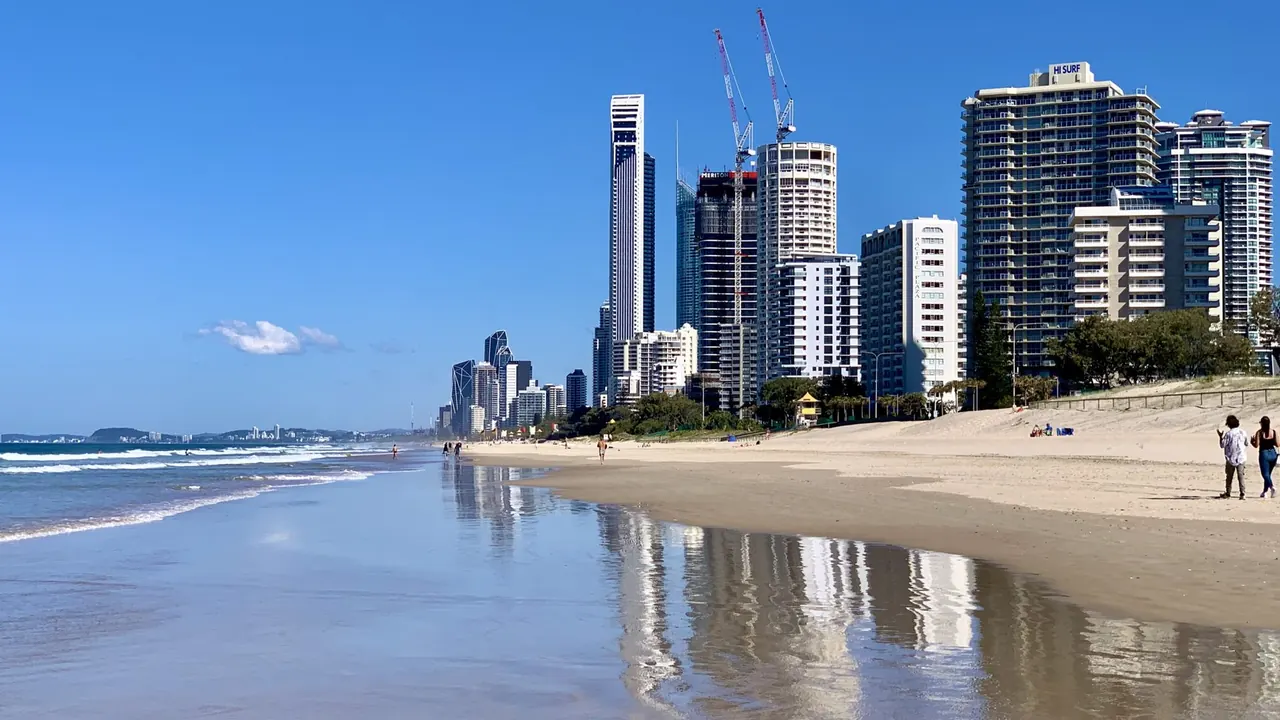
Photos: Gold Coast by Kgbo, CC BY-SA 4.0, cropped.
Durban or Gold Coast?
Our verdict in twelve categories, each scored against the same fixed benchmark cities, and the climate month by month, so you can choose for your trip.
Choose Durban for
- prices
- culture and sights
- food and drink
Durban suits the traveller who wants a warm-water beach trip that also has some depth to it. The curry houses and bunny chow, the spice stalls of Victoria Street, and the history held in the KwaMuhle Museum and Gandhi's Phoenix Settlement give it a character the Gold Coast lacks. Your money also goes much further. The price is convenience: you will need a car or ride-hailing almost everywhere, and you have to pick your areas with some care.
Choose Gold Coast for
- families
- getting around
- nightlife
The Gold Coast is the easier, more polished choice for a pure beach and outdoors vacation, and the stronger one by a distance for families. It has the longer and more varied run of patrolled sand, theme parks clustered at the northern end, World Heritage rainforest an hour inland and a light rail along the coastal strip. It costs a good deal more, though, and anyone who wants museums or a memorable meal ends up taking the train to Brisbane.
Scoreboard
Twelve categories on one fixed scale from 0 to 100. The shaded stretch is the gap between the two.
Your match
Pick a travel style or drag the sliders, and both match scores follow your weighting.
Wins on prices and culture and sights with your weighting.
Wins on families and getting around with your weighting.
What matters to you?
Category by category
What the scores mean for a trip.
Beaches & swimming
Both are beach cities first, with warm water all year and lifeguarded, flagged swimming, but the Gold Coast has the finer and more varied shore. Durban's Golden Mile runs from uShaka to the north beaches behind piers and shark nets. Umhlanga is the quieter alternative, and after heavy summer rain the water near the river mouths can be closed.
The Gold Coast's sand runs almost unbroken from Main Beach to Coolangatta, and each stretch has its own feel. Surfers Paradise is wide and backed by towers, and Burleigh has a grassy headland. The sheltered point beaches at Rainbow Bay and Greenmount are the gentlest swims, and the Broadwater lagoon offers flat water for small children.
Food & drink
Durban is the place to travel for food. Its Indian heritage gives it a fiery red curry and the bunny chow, best eaten from a plain takeaway counter in the centre. The Victoria Street Market sends you home with masalas. Away from curry the range narrows to seafood, braai and the restaurants of Florida Road.
The Gold Coast eats well but generically. Brunch cafés in Burleigh and Mermaid Beach, prawns and Moreton Bay bugs, brewery taprooms and twilight markets make for pleasant meals rather than a dish worth seeking out, and Surfers Paradise leans on chains.
Culture & sights
Durban has more to understand. The City Hall holds the art gallery and the natural science museum, the Juma Masjid stands on Grey Street, the KwaMuhle Museum covers the pass laws, and Gandhi's Phoenix Settlement lies on the city's edge. Together they tell a layered story, even if a day or a guided walk covers most of it.
The Gold Coast is a young resort with little to see beyond the HOTA gallery by the Nerang River and the view from the SkyPoint deck. Serious sightseeing means a train to Brisbane.
Nightlife
The Gold Coast goes out harder and later. Cavill and Orchid Avenues in Surfers Paradise mean big clubs and young crowds into the small hours. Broadbeach's wine bars and Burleigh's rooftops and taprooms cover the calmer end.
Durban's evenings gather on Florida Road's terraces and in Umhlanga's hotel lounges, and you reach them by car rather than on foot. Its most memorable outing is a Sunday afternoon at a township shisanyama, ideally with someone local, and that is something the Gold Coast has no equivalent for.
Nature & outdoors
The Gold Coast has the stronger outdoors. Inland, the World Heritage rainforest of Springbrook and Lamington lies within about an hour and a half, with the glow-worms at Natural Bridge. Offshore, the point breaks at Snapper Rocks and Kirra are among the best known surf waves anywhere, and humpbacks pass close from June to November.
Durban's best outdoors is underwater. Aliwal Shoal, an hour south, is a superb dive for ragged-tooth sharks, and the winter sardine run fills the coast with dolphins and gannets. The Valley of a Thousand Hills and Krantzkloof are close by, but the big game parks and the Drakensberg are overnight trips.
Day trips
From the Gold Coast, the best outings are both quick and very different from the coast itself. Brisbane's galleries and South Bank are a train ride away, and Byron Bay and its hinterland villages lie about an hour south over the border. Tamborine Mountain adds wineries.
Durban's outings are gentler, and every one of them needs a car. You can visit Pietermaritzburg and the station tied to Gandhi, the craft studios and cheese makers of the Midlands Meander, and the Mandela Capture Site near Howick. The Zulu battlefields, the region's major heritage, are too far for a day.
Good for families
Durban is a sound family beach city, though on a smaller scale than the Gold Coast. uShaka puts an aquarium and a water park right on the sand. The tidal pools, the cable car over the stadium and the shark dissections at the Sharks Board fill further days. Parents will need a car and should keep to busy areas, which is why many base themselves in Umhlanga.
The Gold Coast is built for children in a way few places are. Dreamworld, Movie World, Sea World and the water parks are spread out between Coomera and the Spit, so it pays to plan a day around each one. Currumbin Wildlife Sanctuary has koalas and kangaroos, and family apartments with pools are everywhere.
Getting around
The Gold Coast is far easier without a car. The G:link light rail runs through Southport, Surfers and Broadbeach and connects to the Brisbane train, buses reach Coolangatta and the airport, and you only need to hire a car for the hinterland and the trips over the border.
Durban has no transport a visitor can comfortably rely on apart from the small beachfront bus. Ride-hailing is how most people get about, and a hire car is needed for any outing beyond the city.
Shopping & style
Both coasts shop mainly in big malls, at Umhlanga Ridge in Durban and at Pacific Fair and the Harbour Town outlets on the Gold Coast, and neither has a real boutique street. What sets them apart is what you bring home. From Durban that means Zulu beadwork, wire bowls and spices from Victoria Street. From the Gold Coast it is mostly surfwear and finds from the beachfront night markets.
Affordability
Durban is much the cheaper trip. Beachfront rooms are moderately priced, and curry, wine and beer cost little. The extra spending goes on daily ride-hailing or a hire car, and on staying in Umhlanga if you choose it.
On the Gold Coast you pay full Australian prices for meals, drinks and attractions. Theme-park tickets add up quickly for a family, although self-catering apartments and the free beaches and national parks soften the bill.
Live music & performing arts
Durban has more of a stage life. The Playhouse stages theatre and dance, the KwaZulu-Natal Philharmonic plays in the City Hall, and the Jomba dance festival and the film festival anchor the year. The city also has its own sounds, gqom and maskandi, though hearing them live takes local help.
On the Gold Coast, HOTA hosts touring shows and outdoor concerts, and the rest of the live music happens in pubs and surf clubs or at Blues on Broadbeach. For orchestras or serious theatre you go to Brisbane.
Wellness & relaxation
Neither coast has a bathing tradition, but the Gold Coast offers more ways to slow down. There are health retreats with yoga and rainforest walks around Tamborine Mountain and Currumbin Valley, and the southern suburbs around Burleigh and Coolangatta keep an unhurried pace.
In Durban, wellness means good-value resort spas in Umhlanga and towards Ballito. Real quiet means driving inland to the country spa hotels of the Midlands.
When should you go?
Pick your month. The climate figures are measured averages, not a forecast.
Durban in July
Gold Coast in July
Daytime high, °C
Rainfall in the month, mm
Where the figures come from
Gold Coast's sunshine is measured 75 km from the centre, at Brisbane Airport.
Temperature and rainfall are climate normals, averaged over the years shown. Durban: 1991-2020 normals, Durban, Durban International Airport (14.1 km from centre). Gold Coast: 1991-2020 normals, Gold Coast Seaway (13 km from centre).
Both coasts are warm enough to swim in all year, with the sea never dropping below about 21°C. Both also have their rain in the southern summer. Durban is wettest from October to March. From May to August it turns dry and mild, with only around 30mm of rain a month, and its sunniest weeks fall in those same winter months. That makes winter the best time for hiking, for walking the city and for watching the sardine run. Summer highs near 29°C come with humidity and afternoon storms.
On the Gold Coast the rain arrives later and falls harder, peaking in February at around 203mm. The best stretch runs from August to November, when it is dry and very sunny, the sea is warming again and whales are passing offshore. Its winter days are a degree or two cooler than Durban's, but they are still pleasant for the rainforest walks inland.
Which traveller are you?
On a family trip with children, Durban manages a few easy beach days from a base in Umhlanga, but the Gold Coast is the better choice. Stay near the light rail at Broadbeach, keep midday for the pool, and budget for park tickets.
For a trip on a tight budget, Durban is the clear choice, since eating, drinking and sleeping all cost far less than on the Gold Coast. Stay in the city rather than in Umhlanga, and keep something back for daily ride-hailing.
On a culture and arts trip, choose Durban, but plan on two days of guided walks and an evening at the theatre rather than a week of museums. If you stay on the Gold Coast, expect your best cultural days to be spent in Brisbane.
Before you go
| Measure | Durban | Gold Coast |
|---|---|---|
| Official language | English, Zulu, Xhosa, Afrikaans, Venda, Northern Sotho, Swazi, Tswana, Tsonga, Sesotho, Southern Ndebele, South African Sign Language | English |
| Currency | Rand (ZAR) | Australian Dollar (AUD) |
| Sockets | CMN230 V, 50 Hz | I230 V, 50 Hz |
| Driving side | Left | Left |
| Time zone | UTC+2 | UTC+10 |
| Emergency number | 112 | 000 |
| Elevation | 22 m | 12 m |
| Main airport | King Shaka International Airport (DUR)29 km from centre13 non-stop destinations | Gold Coast Airport (OOL)20 km from centre19 non-stop destinations |
| Public holidays this year | 13 days | 11 days |
By the numbers
| Measure | Durban | Gold Coast |
|---|---|---|
| City population | 595,061 | 607,665 |
| People per km² | 2,634 | 433 |
| Museums within 10 km | 1 | 2 |
| UNESCO World Heritage sites within 50 km | 1 | 1 |
| Swim season, months above 21 °C | 12 months | 12 months |
Where else could you go?
Every comparison below shares a destination with this one, so you can follow Durban or Gold Coast somewhere new.