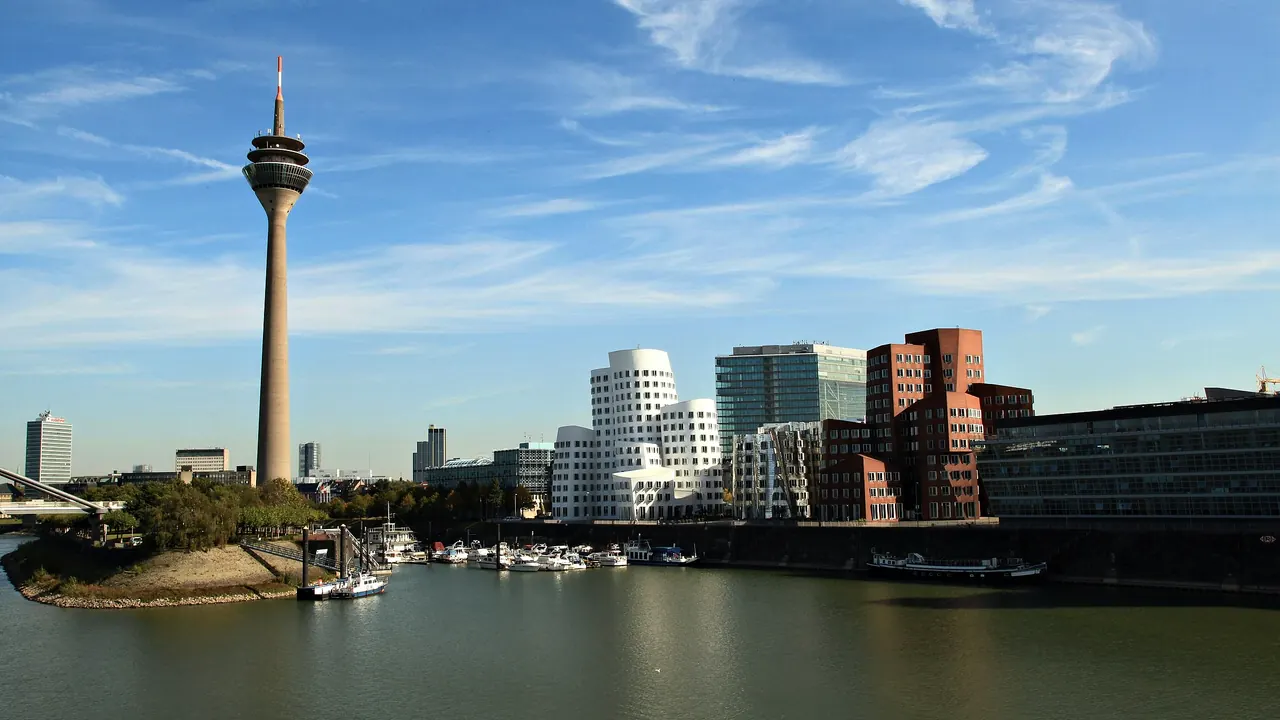
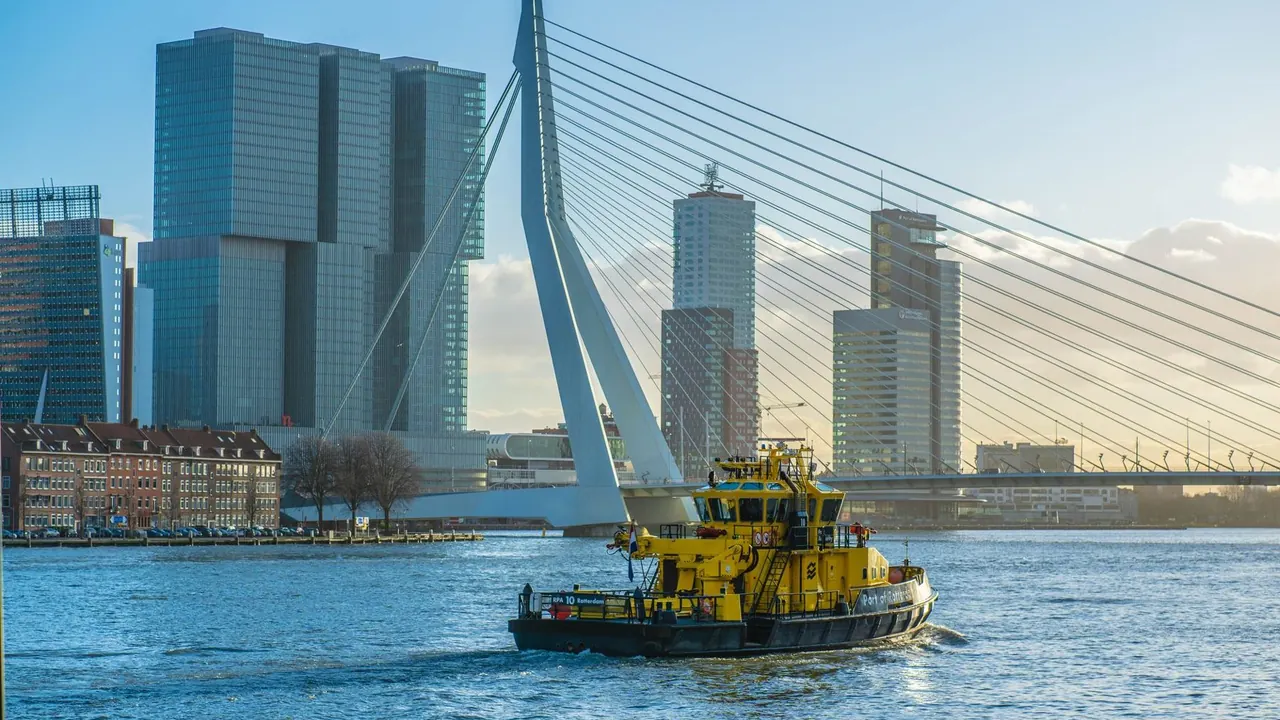
Photos: Dusseldorf by Frank Vincentz, CC BY-SA 3.0, cropped; Rotterdam by Bas Geerlings, Pexels License.
Dusseldorf or Rotterdam?
Our verdict in twelve categories, each scored against the same fixed benchmark cities, and the climate month by month, so you can choose for your trip.
Choose Dusseldorf for
- shopping
- food and drink
- nightlife
Düsseldorf is the better pick for a few days of eating, drinking and shopping in one compact centre. The Altstadt brewhouses, the Japanese quarter around Immermannstrasse and the Königsallee are all a short walk apart. In the evenings the old town turns into one long street party, and the art collections give the days some weight. It suits travellers who want comfort, good food and polish over novelty.
Choose Rotterdam for
- beaches
- day trips
- families
Rotterdam is for travellers who like to look at modern buildings, eat their way through a port city's immigrant kitchens and go clubbing in old harbour warehouses rather than crowding into old-town pubs. It also has a real sandy beach on its metro line, and it sits at the centre of the Dutch rail network. That makes it a sensible base if you want to fit Delft, The Hague, Amsterdam and Antwerp into the same trip.
Scoreboard
Twelve categories on one fixed scale from 0 to 100. The shaded stretch is the gap between the two.
Your match
Pick a travel style or drag the sliders, and both match scores follow your weighting.
Too close to call, 1 point apart
Wins on shopping and food and drink with your weighting.
Wins on beaches and day trips with your weighting.
What matters to you?
Category by category
What the scores mean for a trip.
Beaches & swimming
Rotterdam has an actual coastline and Düsseldorf does not. Hoek van Holland is a wide, sandy strand backed by dunes at the end of the metro line, with container ships passing close by. Even so, the wind and the cool North Sea mean you go there for a walk more than a swim.
In Düsseldorf, the Rhine is off limits for swimming because of its currents and shipping. On a hot day locals head to Unterbacher See or to the gravel-pit lakes around the region. The coast is a long day's journey away.
Food & drink
Düsseldorf eats better, and its food has a stronger identity of its own. On one side are the Altstadt brewhouses, with sauerbraten, pork knuckle and Halve Hahn served with the city's spicy mustard. On the other is the Japanese quarter, with queues outside its ramen counters, Japanese bakeries and izakaya.
Rotterdam's food reflects its port. Surinamese roti, Turkish bakeries and Cape Verdean and Indonesian kitchens give it variety rather than a local tradition, and there is little Dutch cooking beyond herring and bitterballen. The Markthal and the restaurants along Witte de Withstraat are where most meals start.
Culture & sights
The two are evenly matched, but they reward different interests. Düsseldorf is about art inside buildings: Klee and classic modern art at K20, the net slung under the glass dome of K21, the Kunstpalast, and the pink rococo Benrath Palace.
In Rotterdam the buildings are the main attraction. The Cube Houses, the Markthal vault, the Erasmus Bridge and the mirrored Depot Boijmans make the city a working gallery of modern architecture. Its museums are good rather than outstanding, and its history survives mainly in Delfshaven.
Nightlife
Düsseldorf has the livelier night out, and almost all of it takes place in one place. A few hundred pubs crowd the Altstadt lanes, people drink standing in the street on weekend nights, and Carnival turns the whole city out in costume.
Rotterdam's bar streets around Witte de Withstraat and the Oude Haven are quieter and more local, and the centre empties early on ordinary nights. Its strength is clubbing: the city where gabber was born still holds techno and house nights in warehouse venues, a scene Düsseldorf cannot match.
Nature & outdoors
Both cities have flat, gentle surroundings, so the difference lies in the landscape. Düsseldorf has wooded country close by: the Grafenberg forest, the trails of the Neandertal, and the hills of the Bergisches Land within half an hour.
Rotterdam's outdoors is all water and polder. You can sail and run at Kralingse Bos, paddle and watch birds among the tidal creeks of the Biesbosch, and walk or kitesurf in the dunes at Hoek van Holland.
Day trips
Both are excellent bases with fast, frequent trains, but they lead to very different places. From Düsseldorf you reach Cologne Cathedral in under half an hour, as well as Bonn, the Brühl palaces, the industrial heritage of the Ruhr and, with a full day, the castles of the Middle Rhine.
Rotterdam reaches more classic sights in less time. Delft and The Hague are minutes away, Amsterdam, Leiden and Haarlem are about an hour, and a water bus runs to the windmills of Kinderdijk. Antwerp, Ghent and Bruges also lie to the south.
Good for families
Both are safe, flat and easy with a buggy, and Rotterdam has a slight edge in what there is to do. Diergaarde Blijdorp, with its large ocean section, the hands-on harbour area at the Maritime Museum, and the water taxis keep children busy for days.
Düsseldorf's highlights are the Aquazoo, the free wild boar enclosure in the Grafenberg forest, and Phantasialand about an hour away. The rowdy Altstadt weekend nights are easy to avoid.
Getting around
Düsseldorf is a city you can mostly walk. The Altstadt, the Kö, the Hofgarten and the Japanese quarter sit close together on flat ground by the river, trams fill the few gaps to the Medienhafen and the museums, and the S-Bahn brings you in from the airport in minutes.
Rotterdam's postwar centre is spread out, with wide roads and long, windy walks between the sights. Most visitors mix walking with the tap-in metro and trams, cross the Maas by water taxi, or do as the locals do and rent a bike, since there are separate cycle paths almost everywhere.
Shopping & style
Düsseldorf is clearly the better shopping city, especially at the top end. The Königsallee, with its canal, luxury flagships and arcades, reflects a long fashion-fair tradition, and the boutiques of Flingern and the stationery and homeware shops of the Japanese quarter add independent character.
Rotterdam does the high street well around the pedestrian Lijnbaan and the Bijenkorf, and its vintage, record and design shops on the Meent and Nieuwe Binnenweg are worth a browse. Designer labels are scarce, though, so it is not a city for luxury shopping.
Affordability
Neither city is cheap, and the costs fall in different places. In Düsseldorf the hotels are the problem, especially during trade fairs, when rooms become scarce and very expensive. Once you are there, brewhouse meals and noodle-bar lunches are fair value.
Rotterdam is the reverse. Rooms are plentiful and reasonable for the Netherlands, but meals, beer and coffee cost the high Dutch going rate. The Markthal counters and the Surinamese snack shops are where to save.
Live music & performing arts
Düsseldorf has an opera house and Rotterdam does not. The Deutsche Oper am Rhein stages opera and ballet by the Hofgarten, the symphony plays in the domed Tonhalle on the river, and the city adds political cabaret and its place in history as Kraftwerk's home town.
Rotterdam's strength is music. Its Philharmonic, one of the best in the country, gives a full season at De Doelen, and each July the North Sea Jazz Festival brings hundreds of acts to the city over one long weekend. In both cities much of the theatre is in the local language.
Wellness & relaxation
In Düsseldorf the sauna is part of everyday city life. The public pools and leisure baths have mixed, textile-free sauna areas, larger thermal complexes are within about an hour, and Aachen's hot springs make a spa day out. The Hofgarten and the Japanese garden in Nordpark help keep the pace slow.
Rotterdam's brisk port-city pace is less restful. Its big sauna and wellness complexes are on the edge of town and in nearby towns, while the centre has hotel spas and a few day spas. Neither city has thermal springs of its own, and for calm Rotterdammers head to the Kralingse Bos.
When should you go?
Pick your month. The climate figures are measured averages, not a forecast.
Dusseldorf in July
Rotterdam in July
Daytime high, °C
Rainfall in the month, mm
Where the figures come from
Rotterdam has no rain gauge within 25 km of the centre, so its rainfall comes from a gridded climate dataset read at the city rather than from a gauge further away.
Rotterdam's sunshine is measured 52 km from the centre, at De Bilt.
Temperature and rainfall are climate normals, averaged over the years shown. Dusseldorf: 1991-2020 normals, Düsseldorf (8.3 km from centre). Rotterdam: 1993-2020 (sunshine 1991-2020, rainfall 1991-2020) normals, Rotterdam Airport Zestienhoven (3.9 km from centre).
The two cities share a mild, damp climate, and both are at their best from May to September, when the days are long and sunny and the streets are pleasant to walk. Düsseldorf is the warmer of the two in summer, with highs of about 25°C in July against about 22°C on the windier Dutch coast. Rotterdam has slightly more sunshine through the year. Winters are much alike, grey and cold from November to February. It is never too hot to walk in either city.
The main difference comes after summer. Düsseldorf stays fairly dry into autumn, while Rotterdam gets wetter from July on and peaks at around 99mm in October. September and October are therefore better for walking in Düsseldorf. Rotterdam's sea is warmest in August at about 19°C, which is cool enough that most people walk on the beach rather than swim.
Which traveller are you?
For a food and nightlife trip, Düsseldorf is the stronger choice. It has Altbier brewhouses with blue-aproned waiters, ramen counters in one of Europe's largest Japanese communities, and an Altstadt that stays crowded and loud well past midnight at weekends.
On a shopping trip, Düsseldorf also comes out ahead. The Königsallee has luxury flagships and jewellers, and the big department stores are close by. Rotterdam's Lijnbaan does chain shopping well and has good vintage shops, but luxury labels are scarce there.
For a beach and sun trip, neither city is ideal, but Rotterdam at least has the sea. The metro runs to the wide sand and dunes at Hoek van Holland, while Düsseldorf can only offer a lake on the edge of the city.
Before you go
| Measure | Dusseldorf | Rotterdam |
|---|---|---|
| Official language | German | Dutch |
| Currency | Euro (EUR) | Euro (EUR) |
| Sockets | CF230 V, 50 Hz | CF230 V, 50 Hz |
| Driving side | Right | Right |
| Time zone | UTC+1, UTC+2 in summer | UTC+1, UTC+2 in summer |
| Emergency number | 112 | 112 |
| Elevation | 38 m | 10 m |
| Main airport | Düsseldorf Airport (DUS)7 km from centre182 non-stop destinations | Rotterdam The Hague Airport (RTM)5 km from centre53 non-stop destinations |
| Public holidays this year | 11 days | 11 days |
By the numbers
| Measure | Dusseldorf | Rotterdam |
|---|---|---|
| City population | 619,444 | 664,311 |
| People per km² | 2,849 | 2,080 |
| Museums within 10 km | 25 | 40 |
| UNESCO World Heritage sites within 50 km | 4 | 5 |
| Swim season, months above 21 °C | - | None |
Where else could you go?
Every comparison below shares a destination with this one, so you can follow Dusseldorf or Rotterdam somewhere new.