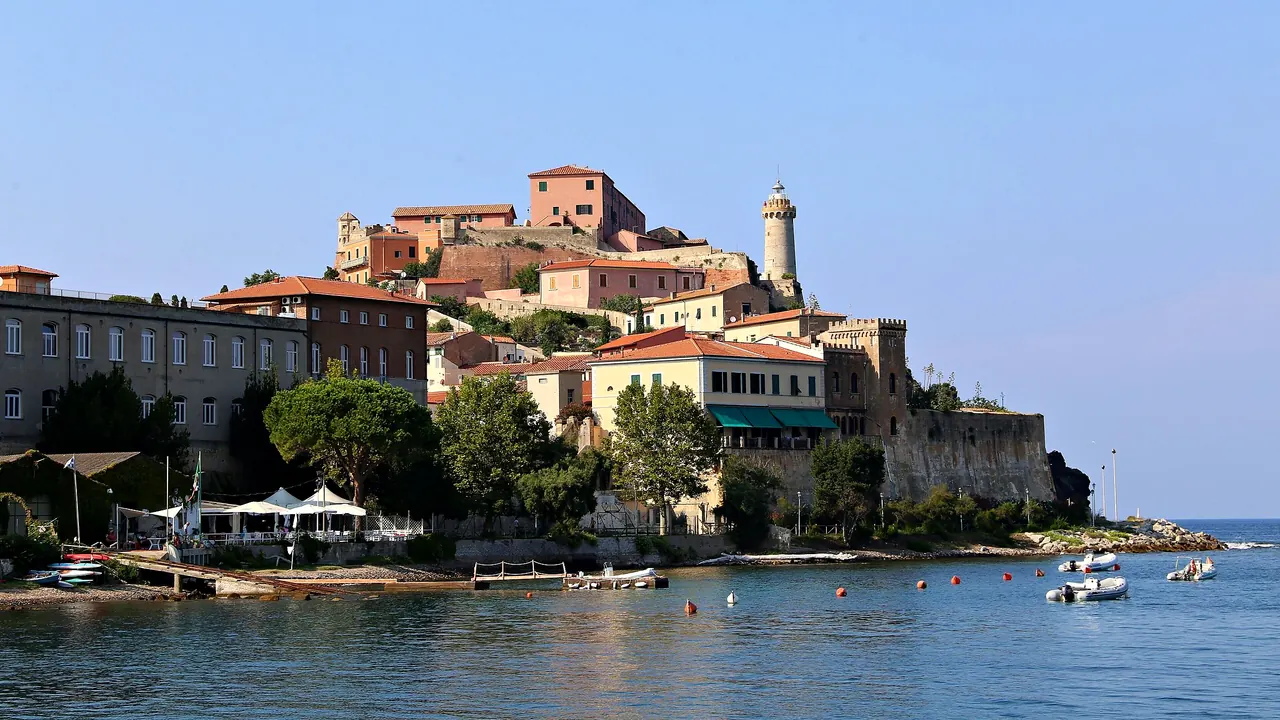
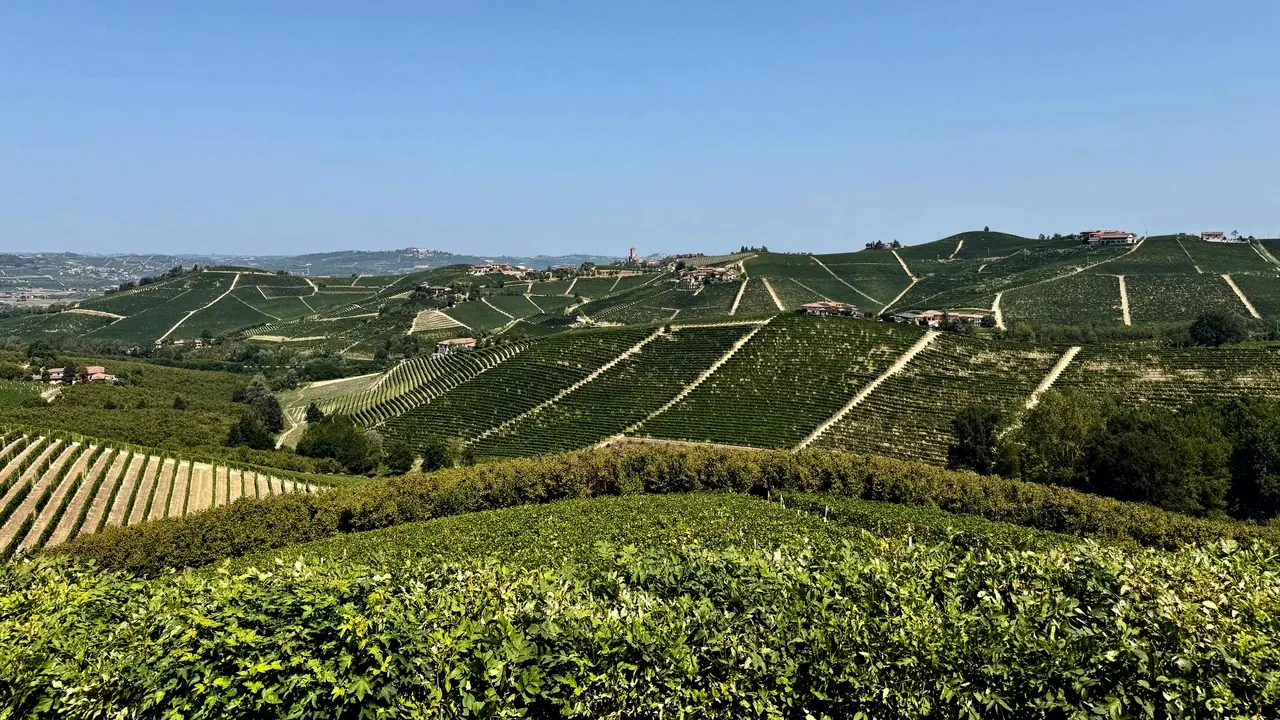
Photos: Elba by Sailko, CC BY 3.0, cropped; Piedmont by Martina Amaro, Pexels License.
Elba or Piedmont?
Our verdict in twelve categories, each scored against the same fixed benchmark cities, and the climate month by month, so you can choose for your trip.
Choose Elba for
- beaches
- families
Elba is for a sea trip. Its south-western granite bays, the long sand at Marina di Campo and the gently shelving family beaches carry the whole stay, with island walks, a cable-lift ride up Monte Capanne and a Napoleonic half-day in Portoferraio to fill the gaps. Choose it if you want a few weeks in one place, warm water every day and slow evenings in a hill-village piazza, and you don't mind thin culture, little nightlife and high summer prices.
Choose Piedmont for
- day trips
- live music and the arts
- culture and sights
Piedmont rewards travellers who come to eat, drink and look. Barolo and truffle country around Alba, Turin's Egyptian Museum, royal palaces and opera house, and real Alpine mountains under Monte Rosa make it a region to move around rather than settle in. It costs less, has far more to do on a rainy day and works well for touring, but its swimming is lake swimming and the best tables are spread across the hills.
Scoreboard
Twelve categories on one fixed scale from 0 to 100. The shaded stretch is the gap between the two.
Your match
Pick a travel style or drag the sliders, and both match scores follow your weighting.
Wins on beaches and families with your weighting.
Wins on day trips and live music and the arts with your weighting.
What matters to you?
Category by category
What the scores mean for a trip.
Beaches & swimming
This is where Elba wins clearly. Its coast has turquoise granite bays at Fetovaia and Cavoli, a long sandy beach at Marina di Campo and white pebble coves under the cliffs near Portoferraio, and quieter coves at the end of footpaths for when the famous bays fill.
Piedmont can only offer lake swimming: lidos and bathing platforms on the western shore of Lake Maggiore and grassy spots on Lake Orta. It is pleasant on a hot afternoon, but its season is shorter and it is a side activity, not the reason to come.
Food & drink
Piedmont is one of Italy's great places to eat, and Elba isn't. The Langhe hills give you Barolo and Barbaresco at the cellar door, white truffles in autumn and dishes like tajarin and agnolotti del plin. Turin adds chocolate, bicerin, vermouth and the huge Porta Palazzo market.
Elba's cooking is honest island food: cacciucco, stuffed squid and its own Ansonica and Aleatico wines, best eaten in the hill villages. Beyond that the choice is thin, and resort menus get repetitive.
Culture & sights
Piedmont has far more to see. Turin alone offers the Egyptian Museum, a Baroque royal capital, the Cinema Museum in the Mole and the Venaria Reale palace, and the Sacra di San Michele and the Borromean Islands lie further out.
Elba's history is a good supporting act: Napoleon's two houses, Medici bastions at Portoferraio, the Spanish fortress at Porto Azzurro and mining museums. They fill a cloudy afternoon rather than a trip.
Nightlife
Neither is a party destination, but Piedmont gives you more to do after dinner, and nearly all of it is in Turin: a serious aperitivo habit, student-filled bar streets in San Salvario and Vanchiglia, summer evenings along the Po and some late clubs. On Elba, a night out means a late passeggiata in Capoliveri's piazza or along the Porto Azzurro harbour, plus a few seasonal discos near Marina di Campo and Procchio on summer weekends.
Nature & outdoors
Both are good for the outdoors, but Piedmont's landscape is on a bigger scale. It has high Alpine trails and refuges below Monte Rosa, ibex country around Gran Paradiso, the empty wilderness of the Val Grande and Olympic ski slopes in the Via Lattea, with vineyard cycling in the Langhe lower down.
Elba packs its outdoors into a small island: the ridge-top Grande Traversata, the climb to Monte Capanne with views to Corsica, mountain-bike tracks around Capoliveri and diving among granite reefs. It can't offer winter sports or real altitude, but here the sea and the trails sit side by side.
Day trips
Piedmont is the far better base for outings. From Turin, Milan, Genoa and Aosta are easy train trips. Within the region you can tour the Barolo villages, Asti and Saluzzo, and from Lake Maggiore boats run to the islands and the Swiss shore.
Leaving Elba always starts with an hour on the ferry. After that, Populonia's Etruscan tombs and the hill towns of Campiglia and Suvereto are within reach, and boats run to Pianosa and Capraia, but most visitors manage one or two outings at most.
Good for families
Both work for families, in different ways. Elba is the simpler choice: gently shelving sandy bays at Lacona and Biodola, campsites set up for children, a small aquarium and boat trips, all within short drives on one island, though the roads can be hard on car-sick children.
Piedmont needs more planning but has more variety. You could combine the mummies and the Cinema Museum in Turin with boats and peacock gardens on Lake Maggiore, or with ski schools in winter. The wine hills will bore most children.
Getting around
Piedmont is easier without a car, at least in Turin. The city has trams, a metro line, arcaded streets and fast trains, regional lines reach Alba, Asti and Stresa, and boats link the lake towns. In the Langhe and the Alpine valleys you will want to drive.
Elba is small, but in practice a car or scooter is essential: buses are sparse, hill roads are slow and twisting, and in August Portoferraio has traffic queues and beach car parks fill up. On top of that comes the ferry from Piombino, which needs booking ahead in summer.
Shopping & style
Piedmont has real shopping and Elba barely does. In Turin you will find the arcades of Via Roma and Via Garibaldi, the Porta Palazzo market and the Saturday Balon flea market, as well as chocolates, vermouth, cellar-door Barolo and Biella cashmere to take home. Elba has small linen and jewellery boutiques in Capoliveri and Porto Azzurro and evening markets, and its best souvenirs are Aleatico wine, honey and mining-country minerals.
Affordability
Piedmont is the cheaper trip. Turin hotels, generous aperitivo spreads and countryside set lunches keep costs moderate, and prices rise mainly in the Langhe during truffle season, at the lakes in high summer and at the ski resorts.
Elba's costs peak in the very season people go: in August, beach-side rentals, the car ferry, car hire, parking and sunbeds all add up. Campsites, self-catering and a June or September stay soften the bill.
Live music & performing arts
A handful of summer concerts against a year-round season of opera, orchestra and drama: that is the gap between these two. On Elba, music arrives with the summer, in shows held in squares, churches and Portoferraio's fortresses and a long-standing chamber festival in late summer. For the rest of the year there is no theatre season and no regular venue.
Turin gives Piedmont a real stage. The Teatro Regio runs opera and ballet, the RAI National Symphony Orchestra plays in its own auditorium, and the historic Teatro Carignano puts on drama in Italian. A spring jazz festival, a September music festival and the Stresa concerts on Lake Maggiore add to the calendar.
Wellness & relaxation
The real difference is that Piedmont has true hot springs and Elba has a single mud-and-seawater establishment. Elba's bathing tradition is the thermal centre at San Giovanni, across the bay from Portoferraio, which uses mud and seawater from the old salt pans. Beyond that there are hotel spas around Biodola and Procchio. The island is calm in June and September, in hill villages such as Marciana, but in August the crowds and traffic make it busy.
In Piedmont, the Bollente spring rises at about 75°C in the middle of Acqui Terme, and Valdieri and Vinadio have mountain baths in the Maritime Alps. Add the farm stays and wine resorts of the Langhe and Monferrato, many with their own spas, and the quiet shores of Lake Orta, and the region is the better place to slow down.
When should you go?
Pick your month. The climate figures are measured averages, not a forecast.
Elba in July
Piedmont in July
Daytime high, °C
Rainfall in the month, mm
Where the figures come from
Elba's temperatures are measured 62 km from the centre, at Grosseto.
Elba has no rain gauge within 25 km of the centre, so its rainfall comes from a gridded climate dataset read at the destination rather than from a gauge further away.
Piedmont has no weather station within reach, so its figures come from a gridded climate model rather than a measured record, and read a broad area rather than one spot.
Temperature and rainfall are climate normals, averaged over the years shown. Elba: 1991-2020 (sunshine 1961-1990) normals, Grosseto (61.7 km from centre). Piedmont: 1991-2020 normals, TerraClimate 4 km grid at the town, no weather station within 90 km.
Elba's season is summer. The sea is warm enough for swimming from June to late September, peaking around 25°C in August, and July and August are almost rainless with long sunny days, though the open slopes get hot for walking at 31°C or more. May, June and September suit walkers and cyclists best. From October the rain builds to its wettest in November, at about 92mm, and the beaches empty.
Where most visitors stay in Piedmont, the year runs cooler and more evenly. Summers are warm without Elba's peak heat, which makes June to September comfortable for the lakes and the high trails. Autumn, when the truffles and the grape harvest come in, is mild but increasingly wet. Winters are colder than on the island, with daytime highs near 9°C in the lowlands, and that is skiing time in the Alpine valleys. Spring brings more rain to Piedmont than to Elba, so April and May are the island's better months.
Which traveller are you?
For a beach and sun trip, Elba is the obvious pick. It has a long coast of sandy bays and pebble coves, a summer sea warm enough for daily swimming, and clear water for snorkelling. Piedmont has no sea at all, only lake lidos with a short season.
On a culture and arts trip, Piedmont wins comfortably. Turin has the Egyptian Museum, the Savoy palaces, the Teatro Regio's opera season and historic drama stages, and abbeys and Sacri Monti lie beyond. Elba offers Napoleon's residences and a few forts.
For a food and nightlife trip, choose Piedmont. Barolo cellars, autumn truffles, long Langhe lunches and Turin's coffee houses and aperitivo set it far above Elba's seafood trattorias. The bar streets of San Salvario and Vanchiglia beat the island's quiet piazza evenings too.
Before you go
| Measure | Elba | Piedmont |
|---|---|---|
| Official language | Italian | Italian |
| Currency | Euro (EUR) | Euro (EUR) |
| Sockets | CFL230 V, 50 Hz | CFL230 V, 50 Hz |
| Driving side | Right | Right |
| Time zone | UTC+1, UTC+2 in summer | UTC+1, UTC+2 in summer |
| Emergency number | 112 | 112 |
| Main airport | Pisa International Airport (PSA)82 non-stop destinations | Turin Airport (TRN)65 non-stop destinations |
| Public holidays this year | 13 days | 13 days |
By the numbers
| Measure | Elba | Piedmont |
|---|---|---|
| Population | 32,000 | 4,341,375 |
| People per km² | 143 | - |
| Swim season, months above 21 °C | 4 months | 4 months |
Where else could you go?
Every comparison below shares a destination with this one, so you can follow Elba or Piedmont somewhere new.
- Tuscanyvs Elba
- Lake Maggiorevs Piedmont
- Cinque Terrevs Piedmont
- French Rivieravs Piedmont
- Cinque Terrevs Elba
- Corsicavs Elba