Estonia
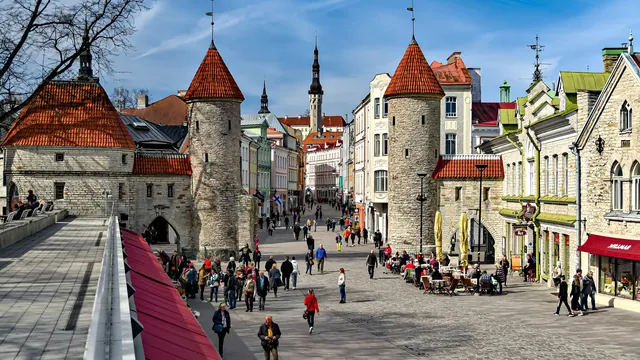
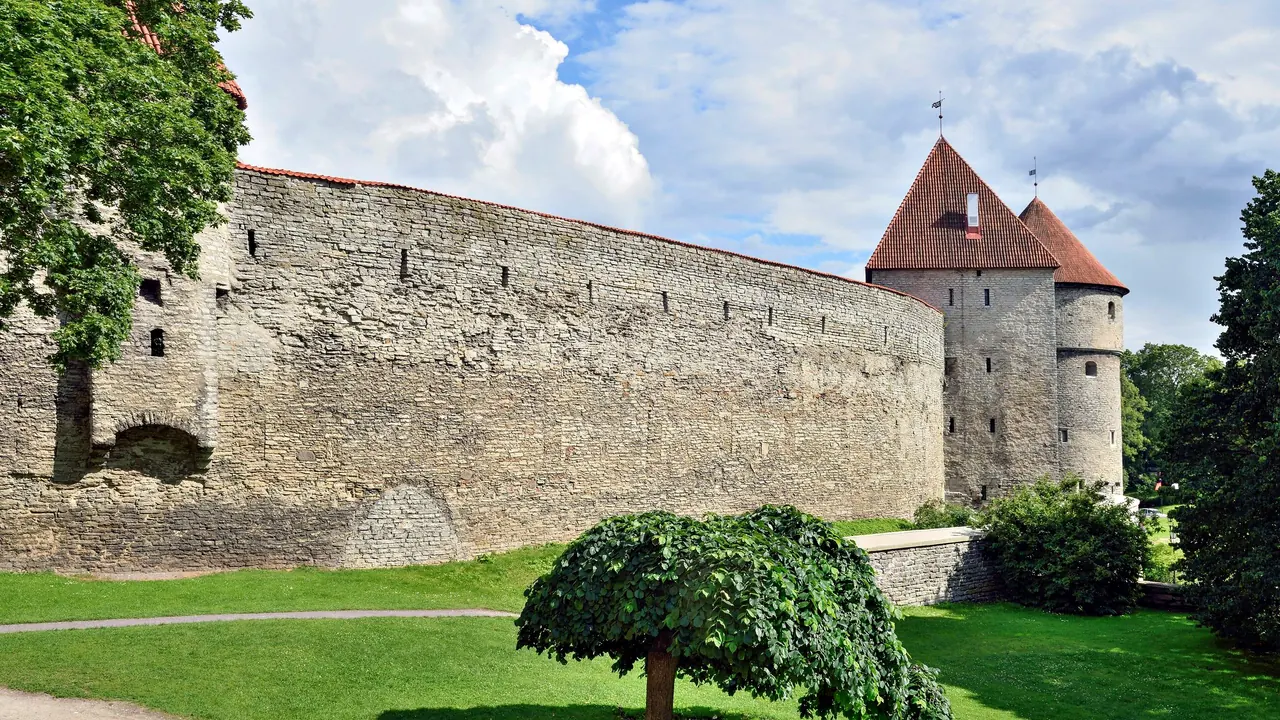
The towers of Tallinn's medieval city wall
- Getting around68
- Culture & sights66
- Wellness & relaxation64
Photo: Cayambe, CC BY-SA 4.0, cropped
Match
53
Every category weighted equally
- Beach & sun51
- Culture & arts55
- Food & nightlife50
- Family trip55
- Outdoors54
- Relax & unwind54
- Shopping & style51
- On a budget53
Estonia in twelve categories
Our verdict on the country as a whole, scored 0 to 100 against the same fixed benchmark cities as every destination, so a score means the same thing on every page.
Beaches & swimming. Scores 38 out of 100.
Food & drink. Scores 45 out of 100.
Culture & sights. Scores 66 out of 100.
Nightlife. Scores 40 out of 100.
Nature & outdoors. Scores 58 out of 100.
Day trips. Scores 56 out of 100.
Good for families. Scores 62 out of 100.
Getting around. Scores 68 out of 100.
Shopping & style. Scores 36 out of 100.
Affordability. Scores 52 out of 100.
Live music & performing arts. Scores 48 out of 100.
Wellness & relaxation. Scores 64 out of 100.
Estonia category by category
Under each: where in Estonia it is best, and our destinations in Estonia that score highest on it.
Beaches & swimming
38Estonian beach life is a short, intense summer affair. Pärnu, on its shallow bay in the southwest, is the country's summer capital: a long sandy beach backed by parkland and old wooden villas, with water that can reach about 20°C in July and early August. Saaremaa and Hiiumaa have quieter sand and pebble shores among junipers, and Narva-Jõesuu in the far northeast has a long pine-backed strand.
In Tallinn, Pirita and Stroomi are city beaches for a warm afternoon. Outside July and August the Baltic is cold, and on cooler days it is chilly even in summer. Come for a swim as part of the trip, not for a beach vacation.
Where: Pärnu, Saaremaa, Hiiumaa, Narva-Jõesuu
Food & drink
45Estonian cooking is built on rye bread, smoked and pickled Baltic fish, pork, potatoes, forest mushrooms and berries, along with sour milk products and kama, a roasted grain flour. Tallinn is where it is best: chefs there turn foraged and farm produce into a serious modern Nordic tasting menu, and the old harbour sheds and Kalamaja neighbourhood have relaxed bistros, bakeries and craft beer taprooms. The Balti Jaam market by the station is good for smoked fish and local produce.
Tartu has a small café and student food scene. Smoked fish and fresh bread on Saaremaa and around Lake Peipsi are a pleasure. Beyond these places the choice is thin, so food lovers should plan to eat mostly in the capital.
Culture & sights
66Tallinn's Old Town is the centrepiece. It is one of the most complete medieval Hanseatic towns in Europe, with its walls and towers, Toompea hill, the Gothic town hall, guild houses and church spires all intact. Beyond the walls are the baroque Kadriorg Palace and park, the Kumu art museum and the Seaplane Harbour maritime museum in its concrete hangars.
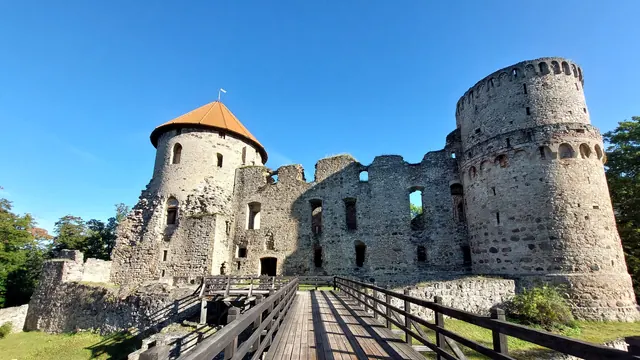
Tartu, the old university town, has the Estonian National Museum, the country's best guide to its own history and folk life. Elsewhere the heritage is spread thinly but rewards a visit: Kuressaare's bishop's castle on Saaremaa, the fortress at Narva facing Russia across the river, and restored baltic German manor houses such as Palmse and Sagadi in the north.
Nightlife
40Going out in Estonia mostly means Tallinn. In the Old Town there are cellar pubs and cocktail bars, and on weekend nights groups of visitors crowd them. Locals tend to drink in Kalamaja and the Telliskivi creative district, among craft beer bars, wine bars and courtyards that fill up on summer nights. There are a few clubs for late dancing.
Tartu has a lively student bar strip during term, and Pärnu has a summer club season on its beachfront. Everywhere else, evenings are quiet, and long winter nights keep most people indoors.
Nature & outdoors
58Estonia is low, green and quiet: half forest, with wide raised bogs, juniper heaths and a long, indented coast of islands and limestone cliffs. Lahemaa National Park, east of Tallinn, combines boardwalks over bogs, boulder-strewn headlands and fishing villages. Soomaa in the southwest is known for its seasonal floods, which make the woods navigable by canoe, and for walks across bogs on special snowshoes.
Saaremaa and Hiiumaa are good for cycling past windmills, lighthouses and seaside cliffs. The North Estonian cliff rises along the coast near Ontika. The forests hold elk, beavers and bears, and the hides are well organised. In the hilly southeast around Otepää there is cross-country skiing in winter. Nothing here is high or wild in the mountain sense.
Where: Lahemaa National Park, Soomaa National Park, Saaremaa, Otepää
Day trips
56From Tallinn, Rakvere is the most rewarding day out in Estonia. Its hilltop castle ruins and the old town below are about an hour and a quarter east. On the way, the restored manor houses of the north coast and the old captains' village of Käsmu make an easy detour. Haapsalu is about an hour and a half to the southwest. It is a quiet seaside town of wooden villas and promenades, with a bishop's castle at its centre. The best-known outing is across the border: Helsinki is about two hours away by ferry, and its harbour and island fortress fill a full day.
From Tartu as a base, Viljandi is about an hour away. Its castle ruins sit above a lake valley and its streets are small and pleasant. The Old Believer villages along the shore of Lake Peipsi are closer still, with onion-domed chapels and roadside stalls selling dried fish. All of these are small places, so a day out is relaxed rather than full of sights, and Tartu and Pärnu are better as places to stay than as a rushed trip from the capital.
Where: Rakvere, Haapsalu, Viljandi, Lake Peipsi
Good for families
62Estonia is safe, uncrowded and easy with children, and its museums are unusually hands-on. In Tallinn, children can climb into a submarine at the Seaplane Harbour, try science and invention exhibits and visit the zoo. Kadriorg Park has playgrounds, and the walls and towers of the Old Town are fun to explore. Tartu's AHHAA science centre is the best of its kind in the country.
In summer, families head to Pärnu, where the shallow bay is ideal for small children and a fairy-tale theme park and water parks are nearby. Rakvere castle stages a medieval world that children enjoy. There is no large theme-park resort, and winter visits mean short, dark days.
Getting around
68The country is small and easy to manage. Tallinn's Old Town is best seen on foot, and trams and buses connect it with Kadriorg, Kalamaja and Pirita. Comfortable trains and frequent intercity coaches link Tallinn with Tartu and Pärnu in about two to two and a half hours. Car ferries make short crossings to Saaremaa and Hiiumaa, and the roads are quiet and well kept.
The weak point is the countryside. Lahemaa's manors, the bogs of Soomaa and the island villages are scattered, and rural buses are sparse, so most visitors who go beyond the cities hire a car or cycle.
Shopping & style
36Shopping is modest and almost all in Tallinn. In the Old Town, craft workshops sell hand-knitted woollens, linen, juniper-wood kitchenware, leather and glass. Some of the most authentic are the workshops clustered in St Catherine's Passage. The Telliskivi creative district and Kalamaja have small Estonian design and clothing shops, and the city has the usual large malls.
The Balti Jaam market is good for produce and odd finds. Beyond Tallinn, look for handicrafts on Saaremaa and in Tartu and the folk-craft towns of the south. Nobody comes to Estonia to shop for fashion.
Affordability
52Estonia is priced like the middle of Western Europe, not like a budget destination. In Tallinn, Old Town hotels and restaurants cost about what they would in a typical European capital. Pärnu's beach season pushes prices up in July and August. Public transport, museums and simple lunches are reasonably priced everywhere.
You get noticeably more for your money in Tartu, where rooms and student cafés are cheaper than in the capital. On Saaremaa, guesthouses and farm stays are good value outside the summer peak. In the southeastern Võromaa region, country guesthouses with their own sauna cost far less than a city hotel.
Where: Tartu, Saaremaa, Võromaa
Live music & performing arts
48Music runs deep in Estonia, and singing is the national art. The great Song Festival brings tens of thousands of singers to the open-air Song Festival Grounds in Tallinn every few years, and smaller choral concerts are held throughout the year. The Estonian National Opera in Tallinn stages opera and ballet in season. Arvo Pärt's music, often performed in churches, has made the country's choirs internationally known.
Summer adds festivals: the Pärnu Music Festival, the folk festival in the castle ruins at Viljandi, and jazz in Tallinn. Tartu's Vanemuine theatre is the leading stage outside the capital. Most drama is in Estonian, so visitors should look for music and dance.
Wellness & relaxation
64Estonia has a real bathing culture built on the sauna. In the southeastern Võromaa region, the old smoke sauna tradition survives, with long sessions in wood-smoke-blackened log huts beside a lake or pond. Many country guesthouses have their own sauna and a cold plunge.
Pärnu has been a spa town since the nineteenth century, known for therapeutic mud baths, and it still has large spa hotels with pools and treatments. Haapsalu shares the mud tradition, and Kuressaare on Saaremaa is a quiet spa resort. The pace in the countryside and on the islands is slow and still, which is restorative in itself.
Where: Pärnu, Võromaa, Kuressaare, Haapsalu
When should you go?
Estonia has no single climate. Its months are measured at Tallinn; pick one to see it. The figures are measured averages, not a forecast.
Tallinn in July
Daytime high, °C
Rainfall in the month, mm
Temperature and rainfall are climate normals, averaged over the years shown. Tallinn: 1991-2020 normals, Tallin / Harku (10.9 km from centre).
Compare Estonia with
Every comparison with a written verdict behind it.
Our destinations in Estonia
Every place in Estonia with its own page: its twelve scores, its texts and its months.