Estonia
Tallinn
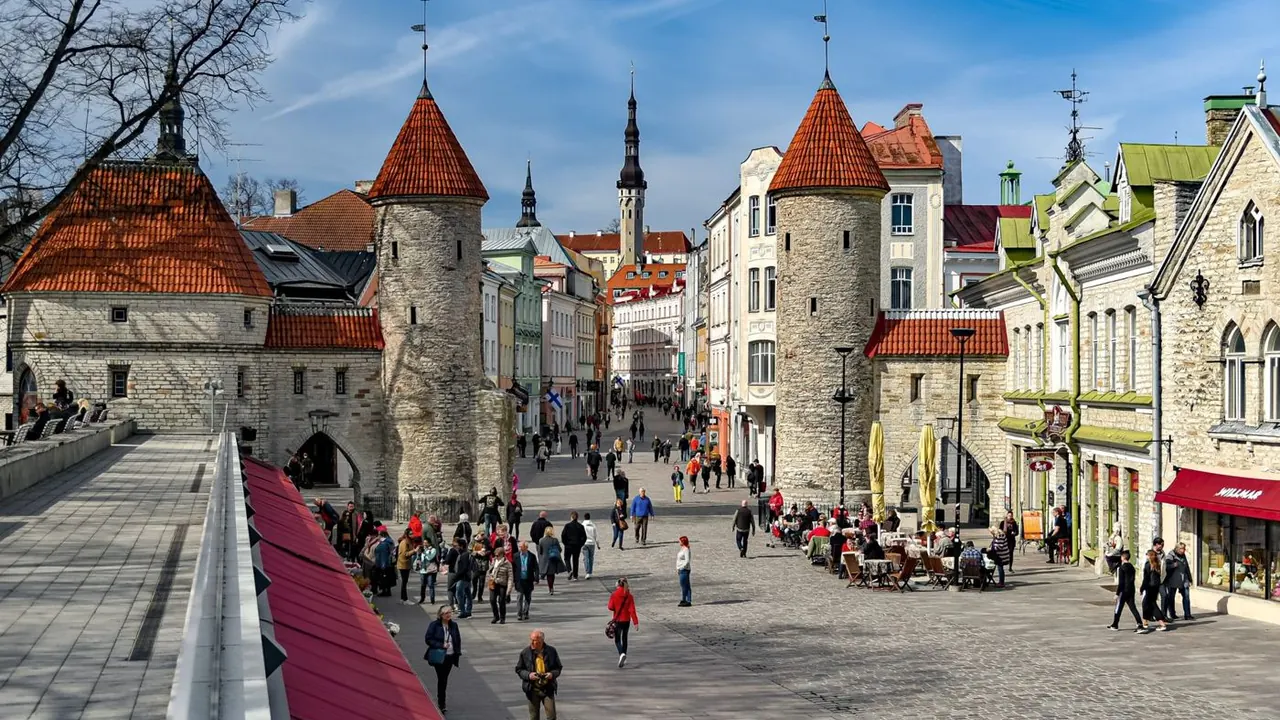
The Viru Gate
- Getting around72
- Culture & sights68
- Families60
Photo: Jorge Franganillo, CC BY 2.0, cropped
Match
52
Every category weighted equally
- Beach & sun49
- Culture & arts56
- Food & nightlife52
- Family trip53
- Outdoors53
- Relax & unwind50
- Shopping & style52
- On a budget51
Tallinn in twelve categories
Our verdict on each, scored 0 to 100 against the same fixed benchmark cities, so a score means the same thing on every page.
Beaches & swimming. Scores 28 out of 100.
Food & drink. Scores 52 out of 100.
Culture & sights. Scores 68 out of 100.
Nightlife. Scores 44 out of 100.
Nature & outdoors. Scores 55 out of 100.
Day trips. Scores 58 out of 100.
Good for families. Scores 60 out of 100.
Getting around. Scores 72 out of 100.
Shopping & style. Scores 40 out of 100.
Affordability. Scores 47 out of 100.
Live music & performing arts. Scores 50 out of 100.
Wellness & relaxation. Scores 50 out of 100.
Tallinn category by category
Beaches & swimming
28Tallinn has sandy beaches inside the city. Pirita, the longest, lies at the mouth of the Pirita river backed by pine forest, and Stroomi and Pikakari face the bay west of the centre. Both are easy to reach by bus. The Gulf of Finland is shallow and brackish, and in a good July or early August it reaches about 18-20°C, so locals swim on hot days and the sand fills up with picnickers. For most of the year the shore is for walking, not swimming, and summer weather is unreliable. A visitor who wants beach days will find a pleasant few hours here, not a beach vacation.
Food & drink
52The best eating in Tallinn is modern Estonian cooking: small kitchens working with Baltic fish, forest mushrooms, berries, rye and game, in a light Nordic style that runs from casual bistros to a handful of serious tasting menus. These cluster around the Telliskivi creative quarter, the Rotermann district and Kalamaja, the old wooden-house neighbourhood behind the station. The Baltic Station Market is the place for smoked fish, black bread, pickles and quick lunches.
Traditional food is hearty and fairly narrow: black rye bread, sprats, blood sausage in winter, kama for dessert. Inside the Old Town walls, many restaurants serve medieval-themed menus aimed at tour groups, and the good cooking is mostly elsewhere. Craft beer is popular, and there is a solid café culture.
Culture & sights
68The Old Town is the reason most people come. It is one of the best-preserved medieval Hanseatic towns in northern Europe, with long stretches of city wall and towers, the Gothic Town Hall on its square, merchant houses, and the tall spire of St Olaf's. Above it sits Toompea hill, with the castle, the onion domes of Alexander Nevsky Cathedral, the Dome Church and viewing platforms over the red roofs.
Outside the walls, Kadriorg Park holds the baroque palace Peter the Great built and KUMU, the national art museum. The Seaplane Harbour displays ships, a submarine and seaplanes in a concrete hangar from 1917. The open-air museum at Rocca al Mare and Kalamaja's wooden houses fill out a stay of two or three days.
Nightlife
44Going out in Tallinn happens in a few places. Old Town has cellar pubs and cocktail bars in medieval buildings, busy on weekends and popular with groups visiting from abroad. Telliskivi and the streets of Kalamaja have craft beer bars and a younger local crowd that drinks in former factory spaces. There are a few clubs, some open until morning on Fridays and Saturdays. During the white nights of June, long outdoor evenings make the city livelier. On weekdays and through the dark winter it is fairly quiet, and the scene is small enough to see in a couple of nights.
Nature & outdoors
55The landscape around Tallinn is low and green, and there are no hills to speak of. Inside the city, Pirita's pine forest and river valley, Kadriorg park and the long seaside promenade make for easy walks. West of the centre, the limestone cliffs of the North Estonian klint rise along the coast at Rannamõisa, and the Keila-Joa waterfall is a little further on.
Lahemaa National Park is about an hour away, with forest, boulder-strewn peninsulas and coastal trails. Boardwalks cross raised bogs such as Viru, which is the most typical Estonian scenery. Cycling is easy on the flat ground, and kayaking and bog-shoeing tours run in summer. Winters are dark, though snow sometimes brings cross-country skiing.
Day trips
58The best day trip is Helsinki, a second capital with its own sights, about two hours across the Gulf of Finland on the fast ferries. Closer to home, the manor houses of Palmse and Sagadi in Lahemaa make a good day out combined with fishing villages on the coast. The ruined castle at Rakvere, the seaside resort of Haapsalu with its bishop's castle, and the island of Naissaar are other options.
Tartu, the university town, and the summer resort of Pärnu are each a little over two hours away and are better for an overnight stay. Past these, the list gets short, and much of what surrounds the city is forest and bog rather than towns.
Good for families
60Tallinn is calm, safe and small, which makes it easy with children. The Seaplane Harbour is the standout, with a real submarine to climb inside and plenty of hands-on exhibits. The Energy Discovery Centre and the Proto invention factory in the Noblessner harbour cater to curious older children, the zoo is large, and the puppet museum and the open-air museum with its farmhouses and windmills work for younger ones. Kadriorg Park has playgrounds and a children's museum. The Old Town's walls and towers feel like a storybook, but the cobbles are hard work with a pushchair. There is no theme park, and the sea is usually too cold for long beach days.
Getting around
72Most of what a visitor wants is within walking distance. The Old Town, the harbour, Rotermann, Telliskivi and Kalamaja are all within about a twenty-minute walk of each other, though Old Town's steep cobbles and the climb to Toompea are tiring. Trams run to Kadriorg and out to the airport, which is unusually close to the centre, and buses cover Pirita, the zoo and the open-air museum. The network is simple, ride-hailing is common, and a car is only useful for exploring the countryside. The ferry terminals for Helsinki are a short walk from the Old Town.
Shopping & style
40Shopping here is about crafts and local design, not fashion. In the Old Town, workshops in St Catherine's Passage and the surrounding streets sell glass, ceramics, leather and hand-knitted woollens, mixed in with plenty of amber and souvenir shops. For Estonian designers in clothing, homeware and jewellery, try the small studios and concept stores in Telliskivi and the Rotermann quarter. The Baltic Station Market adds a covered food hall and vintage stalls. International brands are mainly found in a few malls in the modern centre, and there is nothing that amounts to a luxury shopping district.
Affordability
47Tallinn costs about as much as an average Western European capital, and much more than its reputation as a former Eastern Bloc city might suggest. Hotels and apartments are fairly priced outside the summer peak and the cruise-ship season. In the city centre, eating out, coffee and drinks cost about what they do in most Western European cities, and the Old Town's tourist restaurants charge extra for the setting. Public transport and the main museums are inexpensive, and lunch menus in the neighbourhoods beyond the walls make it easy to eat well for less.
Live music & performing arts
50Classical music and singing are the strengths here. The Estonia Theatre houses the national opera and ballet alongside a concert hall used by the national symphony orchestra, and churches across the Old Town hold organ, choral and early-music concerts. Estonia's choral tradition runs deep, and the works of Arvo Pärt are often performed. Its peak is the national Song Festival, which draws tens of thousands of singers to the open-air Song Festival Grounds every few years. The spring jazz festival is long-running. Theatre is lively but almost entirely in Estonian, so for most visitors the evening options come down to opera, ballet and concerts.
Wellness & relaxation
50The sauna is part of daily life in Estonia, and Tallinn is a good place to try it. Old neighbourhood public saunas still operate in Kalamaja, there are seaside saunas where a cold plunge into the Baltic is part of the ritual, and several spa hotels near the harbour have pools, sauna suites and treatment rooms. Traditional smoke saunas are a countryside custom and need a trip out of the city. The pace is gentle, with quiet parks, long light evenings in summer and an unhurried coffee culture. There are no thermal springs, and the spa offer is ordinary for a European capital, not a reason to book on its own.
When should you go?
Pick a month to see what it is like. The climate figures are measured averages, not a forecast.
Tallinn in July
Daytime high, °C
Rainfall in the month, mm
The whole year
Shaded against this city’s own year: the deepest cell is its best month for that figure and the palest its weakest.
Temperature and rainfall are climate normals, averaged over the years shown. Tallinn: 1991-2020 normals, Tallin / Harku (10.9 km from centre).
Before you go
| Measure | Tallinn |
|---|---|
| Official language | Estonian |
| Currency | Euro (EUR) |
| Sockets | CF230 V, 50 Hz |
| Driving side | Right |
| Time zone | UTC+2, UTC+3 in summer |
| Emergency number | 112 |
| Elevation | 28 m |
| Main airport | Lennart Meri Tallinn Airport (TLL)6 km from centre56 non-stop destinations |
| Public holidays this year | 12 days |
By the numbers
| Measure | Tallinn |
|---|---|
| City population | 457,572 |
| People per km² | 2,871 |
| Museums within 10 km | 16 |
| UNESCO World Heritage sites within 50 km | 1 |
| Swim season, months above 21 °C | None |
Compare Tallinn with
Every comparison with a written verdict behind it.