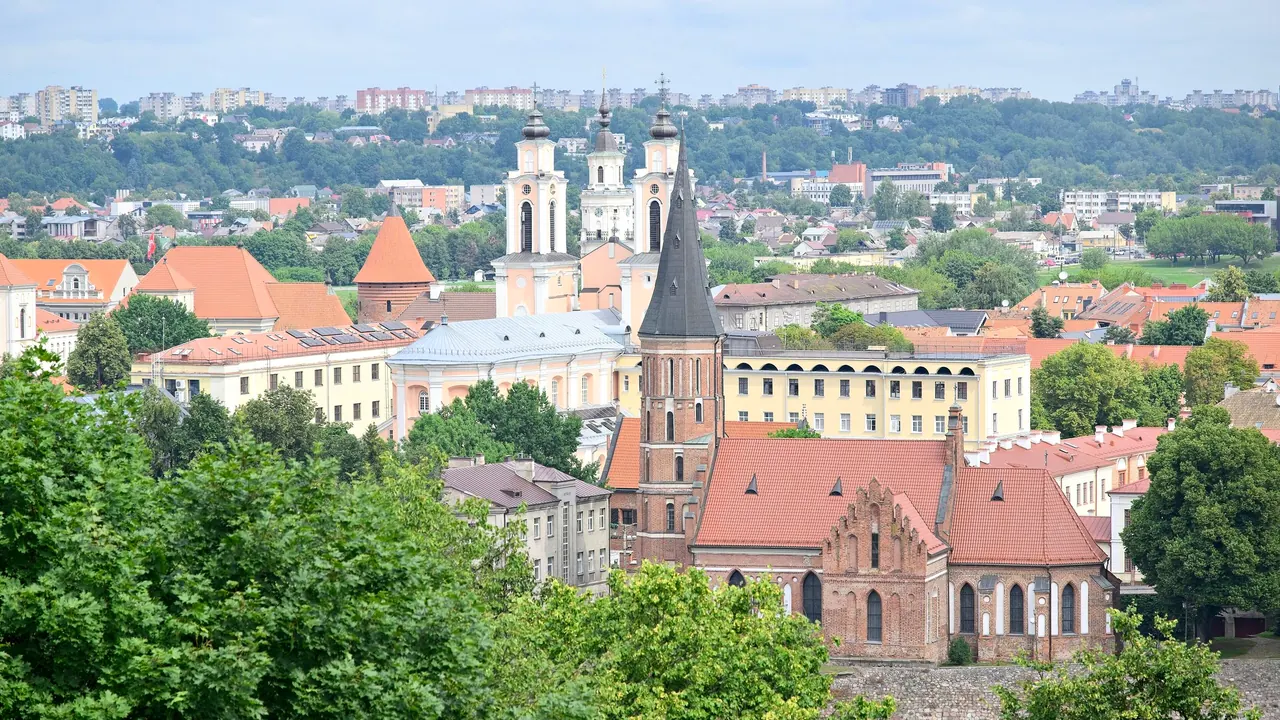
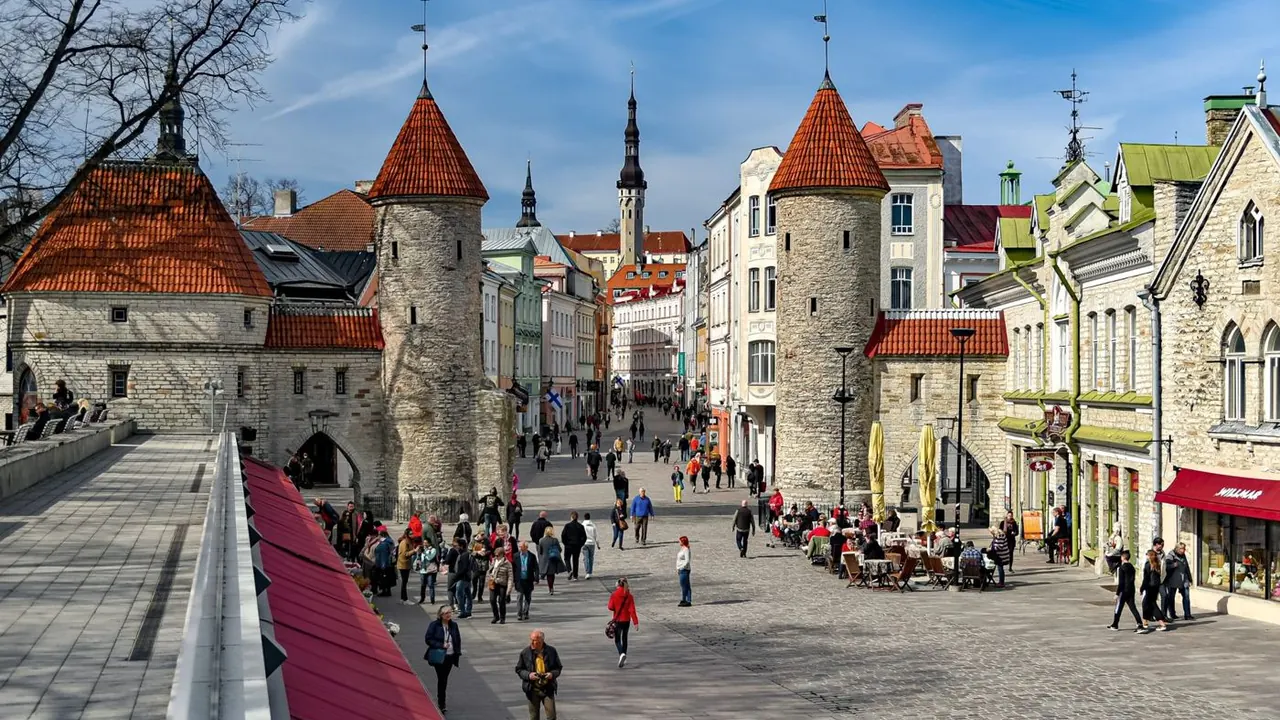
Photos: Kaunas by dave massie, CC BY 2.0, cropped; Tallinn by Jorge Franganillo, CC BY 2.0, cropped.
Kaunas or Tallinn?
Our verdict in twelve categories, each scored against the same fixed benchmark cities, and the climate month by month, so you can choose for your trip.
Choose Kaunas for
- prices
- day trips
Kaunas suits a traveller who wants a Baltic city at a gentle pace and a lower cost. Its interwar modernist centre is the stand-out, something few European cities can match, and Vilnius, Trakai and the Rumsiskes farmsteads are all within easy reach. Rooms, meals and taxis cost noticeably less than in Tallinn, so the money goes further on a slow few days of architecture, potato dumplings and cellar bars.
Choose Tallinn for
- families
- nightlife
- culture and sights
Tallinn is the stronger choice for most other trips. The medieval Old Town and Toompea give it the more striking sights, and the kitchens in Telliskivi and Kalamaja give it better food. It also does more for children, has livelier evenings and a real sauna culture, and the ferry to Helsinki is a short walk from the walls. The trade-off is price: expect to pay close to Western European rates.
Scoreboard
Twelve categories on one fixed scale from 0 to 100. The shaded stretch is the gap between the two.
Your match
Pick a travel style or drag the sliders, and both match scores follow your weighting.
Wins on prices and day trips with your weighting.
Wins on families and nightlife with your weighting.
What matters to you?
Category by category
What the scores mean for a trip.
Beaches & swimming
Neither city is a beach destination, but Tallinn at least has the sea, with sandy Pirita and Stroomi beaches a bus ride from the centre and pine forest behind the sand. The water in the Gulf of Finland stays cool even in high summer.
Kaunas is inland, so swimming means the reservoir, the Nemunas at Panemune or small lakes such as Lampedziai, in a setting closer to a park lido. These lakes and rivers can actually feel a touch warmer than the Baltic in a hot July.
Food & drink
Tallinn is the better place to eat out. Its modern Estonian kitchens in Telliskivi, Rotermann and Kalamaja cook Baltic fish, berries and game in a light Nordic style, and a few go as far as full tasting menus. The Baltic Station Market adds smoked fish and quick lunches.
Kaunas eats more simply and more heavily: cepelinai, cold pink beetroot soup and rye bread along Laisves aleja, with only a handful of modern Baltic cooks. Mead and herbal bitters are its local curiosities, and a food-focused visitor will cover the best of it sooner.
Culture & sights
Tallinn has the more complete set of sights. Its walled Hanseatic Old Town, with the towers, St Olaf's spire and the views from Toompea, is the main draw, and KUMU, Kadriorg Palace and the Seaplane Harbour add depth beyond the walls.
Kaunas is a different kind of place to visit. Its brick castle and Gothic Perkunas House are modest, but its UNESCO-listed interwar centre of functionalist and Art Deco buildings is unusual. Add the Ciurlionis museum and the Ninth Fort memorial, and it rewards visitors interested in twentieth-century history and design.
Nightlife
Tallinn offers more choice after dark. There are cellar cocktail bars in the Old Town, craft beer in converted factories around Telliskivi and Kalamaja, and in June the light evenings keep people outdoors late.
Kaunas runs on its students, so a Saturday in the vaulted bars off Laisves aleja can be lively. Midweek and during the summer break it goes quiet, and evenings tend to mean dinner and a few beers rather than a late night.
Nature & outdoors
Both sit in flat, green country, but Tallinn has more variety close by. There are limestone cliffs along the coast, the Keila-Joa waterfall, and Lahemaa National Park about an hour away, with its boulder-strewn shores and boardwalks over raised bogs.
Kaunas offers gentler river scenery. The Azuolynas oak wood is right in town, cycle paths run around the reservoir regional park, and the Nemunas Loops are good for a day of canoeing. There is less here that feels wild.
Day trips
Both are good bases for day trips, but the trips differ. From Kaunas the best options are inland: Vilnius's baroque old town about an hour away by train, Trakai's island castle, the farmsteads at Rumsiskes and manor houses along the Nemunas, all within easy reach.
Tallinn's highlight is across the water: Helsinki, about two hours away by fast ferry. Closer in are the manors and fishing villages of Lahemaa. Beyond those the choice thins out, and Tartu and Pärnu are better done with an overnight stay.
Good for families
Tallinn is clearly easier with children. The submarine and hands-on exhibits at the Seaplane Harbour, the Energy Discovery Centre, a large zoo and playgrounds in Kadriorg will keep a family busy for days, and the walled Old Town looks like something from a storybook.
Kaunas is calm and safe but offers less. The funicular rides, the carved figures at the Devils' Museum and a small zoo in the oak grove are fun for a couple of days. It works best as a short summer visit with children.
Getting around
Both are compact, but Tallinn is a little easier. The Old Town, the harbour, Telliskivi and Kalamaja are all within about twenty minutes' walk of each other, trams run out to Kadriorg and the airport, which is close to the centre, and the Helsinki ferries leave a short walk from the walls.
Kaunas is built along one line: the pedestrian Laisves aleja links the modernist centre to the Old Town. Trolleybuses cover the rest, but you will need a bus or a short drive for Pazaislis and the Ninth Fort. Both cities have cobbles and hills that will tire walkers.
Shopping & style
Tallinn is the more rewarding place to browse. Glass, ceramic and knitwear workshops line St Catherine's Passage, and studios in Telliskivi and Rotermann sell work by Estonian designers.
In Kaunas, shopping is mostly practical: high-street chains on Laisves aleja and malls at the edge of the centre. The best things to take home are amber, linen, woven sashes and rye bread from the market.
Affordability
Kaunas is clearly cheaper. Central hotels cost less than in Vilnius, never mind Tallinn, and lunches, local beer, taxis and museum entry are all modestly priced.
Tallinn charges close to Western European rates in the centre, and the Old Town restaurants add a premium for the setting. Visiting outside the summer peak and eating lunch in Kalamaja or Telliskivi keeps costs down, but it still won't match Kaunas.
Live music & performing arts
The two are broadly level, but their strengths differ. In Tallinn the national opera and ballet at the Estonia Theatre and the organ and choral concerts in Old Town churches suit visitors who don't speak Estonian, and Arvo Pärt's music is often on the programme.
Kaunas leans towards operetta and musicals at the State Musical Theatre, alongside respected drama and a philharmonic. Its summer festival is held in the setting of Pazaislis Monastery. In both cities most theatre is in the local language, and both hold a long-running spring jazz festival.
Wellness & relaxation
Tallinn makes more of the sauna. There are old public saunas in Kalamaja, seaside saunas where the cold plunge is into the Baltic, and spa hotels with pools near the harbour, all within the city.
Kaunas has its own wood-fired pirtis with birch whisks and well-priced hotel spas. For a proper spa stay, though, you need to go to Birstonas, a mineral-spring resort about 40 minutes away, which Tallinn has no equivalent of.
When should you go?
Pick your month. The climate figures are measured averages, not a forecast.
Kaunas in July
Tallinn in July
Daytime high, °C
Rainfall in the month, mm
Temperature and rainfall are climate normals, averaged over the years shown. Kaunas: 1991-2020 normals, Kaunas (6.7 km from centre). Tallinn: 1991-2020 normals, Tallin / Harku (10.9 km from centre).
Both cities have long, dark winters with highs around freezing from December to February, so the season that counts runs from May to September. Kaunas lies further south and inland, so its summer is a little warmer, with July and August highs near 24°C against about 22°C in Tallinn. May and September are mild in both and good for walking. Summer is also the wettest time in both cities, with showers peaking in July at around 85mm in Kaunas, though the long sunny days make up for it.
Tallinn has a slight edge in sunshine in midsummer, and it has the sea, which only warms to about 17°C in August, so a swim there is brief and bracing. Autumn turns grey sooner on the Estonian coast, where October brings around 83mm of rain, while Kaunas stays drier and a degree or two milder into early autumn.
Which traveller are you?
On a trip on a tight budget, Kaunas is clearly the better pick. Hotels cost well below capital-city rates, hearty Lithuanian lunches and local beer are cheap, and museum entry stays low. In Tallinn, eating and drinking in the centre cost close to Western European levels.
On a family trip with children, Tallinn has much more to offer. The Seaplane Harbour lets children climb inside a real submarine, and there are hands-on science centres, a large zoo and city beaches. Kaunas is calm and safe but has only a small zoo and its funiculars.
For a culture and arts trip, Tallinn has the greater draw: an intact Hanseatic Old Town, KUMU and Kadriorg Palace, and organ and choral concerts in its churches. Kaunas makes a worthwhile alternative for travellers who are particularly drawn to interwar modernist architecture.
Before you go
| Measure | Kaunas | Tallinn |
|---|---|---|
| Official language | Lithuanian | Estonian |
| Currency | Euro (EUR) | Euro (EUR) |
| Sockets | CF220 V, 50 Hz | CF230 V, 50 Hz |
| Driving side | Right | Right |
| Time zone | UTC+2, UTC+3 in summer | UTC+2, UTC+3 in summer |
| Emergency number | 112 | 112 |
| Elevation | 48 m | 28 m |
| Main airport | Kaunas International Airport (KUN)12 km from centre30 non-stop destinations | Lennart Meri Tallinn Airport (TLL)6 km from centre56 non-stop destinations |
| Public holidays this year | 14 days | 12 days |
By the numbers
| Measure | Kaunas | Tallinn |
|---|---|---|
| City population | 305,120 | 457,572 |
| People per km² | 1,943 | 2,871 |
| Museums within 10 km | 19 | 16 |
| UNESCO World Heritage sites within 50 km | 1 | 1 |
| Swim season, months above 21 °C | - | None |
Where else could you go?
Every comparison below shares a destination with this one, so you can follow Kaunas or Tallinn somewhere new.