Estonia
Tartu
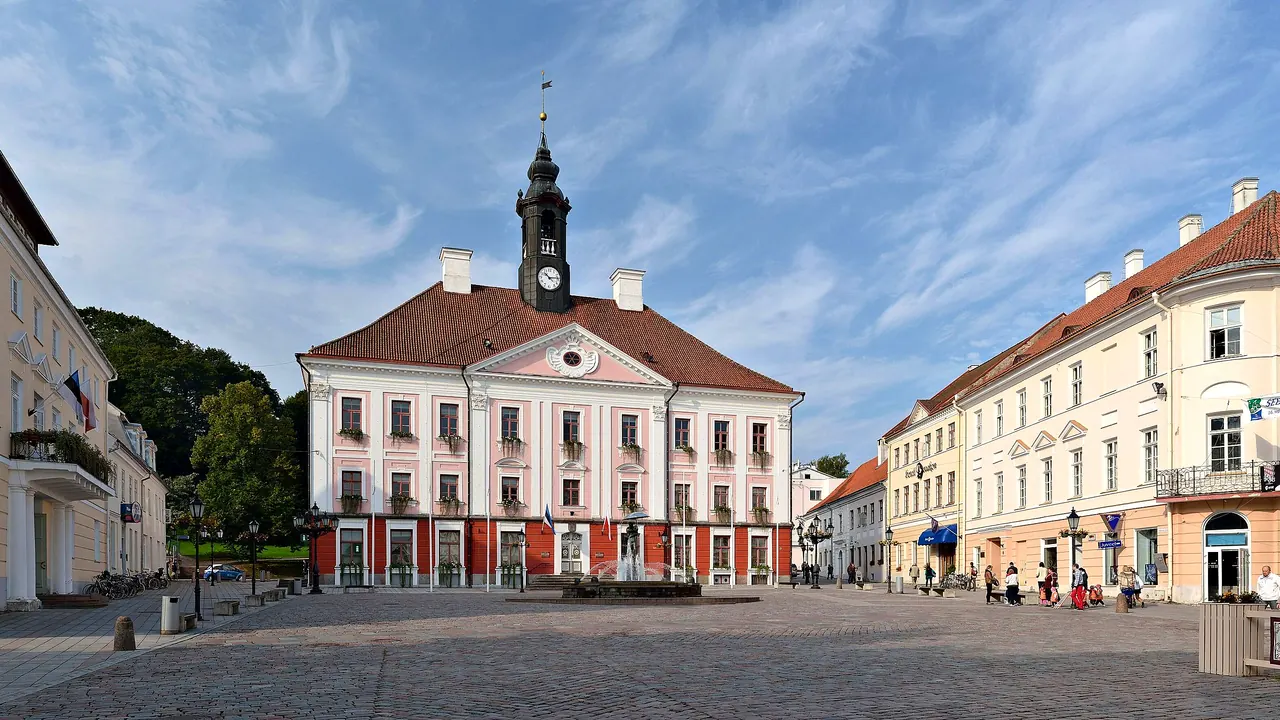
The town hall on Town Hall Square
- Getting around70
- Affordable cities60
- Nature & outdoors50
Photo: Ivar Leidus, CC BY-SA 3.0 EE, cropped
Match
44
Every category weighted equally
- Beach & sun42
- Culture & arts46
- Food & nightlife43
- Family trip46
- Outdoors45
- Relax & unwind43
- Shopping & style43
- On a budget45
Tartu in twelve categories
Our verdict on each, scored 0 to 100 against the same fixed benchmark cities, so a score means the same thing on every page.
Beaches & swimming. Scores 20 out of 100.
Food & drink. Scores 38 out of 100.
Culture & sights. Scores 45 out of 100.
Nightlife. Scores 35 out of 100.
Nature & outdoors. Scores 50 out of 100.
Day trips. Scores 46 out of 100.
Good for families. Scores 50 out of 100.
Getting around. Scores 70 out of 100.
Shopping & style. Scores 25 out of 100.
Affordability. Scores 60 out of 100.
Live music & performing arts. Scores 40 out of 100.
Wellness & relaxation. Scores 44 out of 100.
Tartu category by category
Beaches & swimming
20Tartu is an inland river town, so beach life is a small summer extra. The main bathing spot is Anne Kanal, a sandy beach on a calm side channel of the Emajõgi river on the east bank, where students and families spend warm afternoons. About 40 minutes south, Pühajärve lake at Otepää has a popular bathing beach surrounded by woods.
Lake Peipus is the bigger outing. The western shore around Kallaste, about 45 minutes away by car, has sandy beaches under low red sandstone cliffs. The long sandy beaches of the northern shore are further, at well over an hour's drive. The lake is so wide you cannot see the far side, and its shallow water reaches about 20°C on good days. The season runs from late June to August, many summer days are too cool to swim, and nobody chooses Tartu for a beach.
Food & drink
38Eating out in Tartu is pleasant but small. The old town and the streets around the university have student cafés, bakeries and a few ambitious restaurants cooking modern Estonian food: rye bread, smoked fish, forest mushrooms, game and berries, served at an unhurried pace. The covered market hall by the river is the best place to see what the region produces, and the city has a long brewing history.
The food worth looking for is just outside town. Along the Lake Peipus shore, Old Believer villages sell smoked fish and the famous Peipus onions from roadside stalls. In the city itself the range is narrow. Food lovers will eat well, but it will not be a reason to come.
Culture & sights
45Tartu is Estonia's university city, and its look comes from that. The pale neoclassical main building of the university, from the early nineteenth century, sets the tone for a small old town that is mostly classical. Town Hall Square slopes down to the river, with its fountain of kissing students and a well-known leaning house that holds the art museum. Behind it rises Toome Hill, a wooded park with the brick ruins of the medieval cathedral, an old observatory and monuments to professors.
The Estonian National Museum, in a striking long building on a former airfield, tells the country's story well. Other stops include St John's Church with its medieval terracotta figures and the former KGB cells. The heritage is real but small, and two days covers it comfortably.
Nightlife
35Going out in Tartu follows the university year. In term time the streets around the university and Rüütli street fill with students in pubs, cider and craft beer bars and a few small clubs, and weeknights can be busier than you would expect in a city this size. Student traditions and spring celebrations add some rowdy nights.
In summer many students go home, and evenings move to riverside terraces under the long light. The scene is friendly and cheap rather than deep. There are a handful of places to dance late and little for anyone looking for a big club night.
Nature & outdoors
50The country around Tartu is gentle: pine and birch forest, farmland, rivers and wide wetlands. In the city, the Emajõgi river is good for canoeing and SUP, and riverside paths lead out into floodplain meadows. About half an hour south-east, the Ahja river cuts through red sandstone cliffs at Taevaskoja, a lovely short forest walk.
The rolling Otepää uplands, about 40 minutes south, are Estonia's winter sports area, with famous cross-country ski trails, lakes and hiking in summer. Further out are the Haanja hills, with the country's highest point, and the bogs and spring floods of Soomaa. Lake Peipus brings big skies and birdlife. There are no mountains, and winters are dark, but cyclists and walkers have plenty of room.
Day trips
46The best day trip is Tallinn, whose medieval walled old town is about two hours away by train. That makes for a long but worthwhile day. Closer to Tartu, the outings are quieter. Viljandi, about an hour west, is a pretty hill town with castle ruins above a lake and a strong folk music tradition. Along the Lake Peipus shore, Russian Old Believer villages have painted wooden houses, onion fields and small churches, and nearby Alatskivi Castle is a white manor modelled on a Scottish castle.
To the south are the small towns of Otepää and Võru and the farm country of Võromaa, known for its smoke sauna tradition. Most of these places are easiest by car. Buses reach the towns but not the villages.
Good for families
50Tartu is an easy, safe and quiet city to visit with children. The highlight is the AHHAA science centre, a large hands-on centre with a planetarium. It can fill a whole day. There is also a toy museum in an old wooden house, and the Estonian National Museum has interactive displays that keep older children busy.
Distances are short, traffic is light and the parks on Toome Hill and along the river are good for running around. In summer, the Anne Kanal beach and a large indoor water centre add swimming. There is no zoo or theme park, so a family will run out of attractions after two or three days.
Getting around
70Central Tartu is small and flat. The old town, Toome Hill, the university and the riverbanks are all a few minutes' walk apart. Town buses cover the rest, and a city-wide bike-share system with electric bikes is the handiest way to reach the national museum or the beach. The centre is calm and easy to walk at night.
Trains run to Tallinn and a few other towns, and long-distance buses link the main towns of the region. To reach Peipus villages, manors or forest trails, though, a hire car makes a big difference. In winter, snow and ice make walking slower.
Shopping & style
25Shopping in Tartu covers everyday needs and little more. The centre has a department store, a couple of malls and a short run of shops near Town Hall Square. A few small boutiques sell Estonian design, linen, woollens and handmade ceramics. The market hall and the outdoor market are good for honey, smoked fish and berries in season. Visitors looking for fashion or luxury will find almost nothing here.
Affordability
60Tartu is noticeably cheaper than the Estonian capital, and much cheaper than the Nordic cities across the Baltic. Rooms in central guesthouses and mid-range hotels are reasonable, student cafés and lunch menus keep daytime eating affordable, and city buses and bikes cost little. Dinner in the better restaurants and drinks in bars are priced at an ordinary Western European level, so this is a moderately priced city rather than a budget one. Museums and the science centre are fairly priced.
Live music & performing arts
40Tartu has a stronger stage life than its size suggests. The Vanemuine, the first theatre to perform in Estonian, still puts on opera, ballet, drama and musicals across the season. A concert hall hosts the university and visiting orchestras, and a small independent theatre scene plays in converted spaces. The first Estonian Song Festival was held here in 1869, and choral singing is still part of local life.
Visitors who do not speak Estonian should look to opera, dance and concerts. Student bands and small venues add live music in term time, and summer brings open-air concerts and festivals.
Wellness & relaxation
44Tartu is calm by nature, with leafy hills, river walks and quiet evenings. The sauna is the main way people unwind. The city has a large indoor water centre with saunas, a few hotel spas and a summer sauna culture by the river. The deeper experience is out in Võromaa, about an hour south, where farm smoke saunas carry on a tradition passed down for generations. A session ends with a plunge in a pond or a roll in the snow.
There are no thermal springs or grand bathhouses. Visitors come away rested by the quiet pace and the sauna, not by any spa.
When should you go?
Pick a month to see what it is like. The climate figures are measured averages, not a forecast.
Tartu in July
Daytime high, °C
Rainfall in the month, mm
The whole year
Shaded against this city’s own year: the deepest cell is its best month for that figure and the palest its weakest.
Temperature and rainfall are climate normals, averaged over the years shown. Tartu: 1991-2020 normals, Tartu (8.9 km from centre).
Before you go
| Measure | Tartu |
|---|---|
| Official language | Estonian |
| Currency | Euro (EUR) |
| Sockets | CF230 V, 50 Hz |
| Driving side | Right |
| Time zone | UTC+2, UTC+3 in summer |
| Emergency number | 112 |
| Elevation | 79 m |
| Main airport | Tartu Airport (TAY)8 km from centre1 non-stop destination |
| Public holidays this year | 12 days |
By the numbers
| Measure | Tartu |
|---|---|
| City population | 97,759 |
| People per km² | 2,507 |
| Museums within 10 km | 4 |
| UNESCO World Heritage sites within 50 km | 1 |
Compare Tartu with
Every comparison with a written verdict behind it.