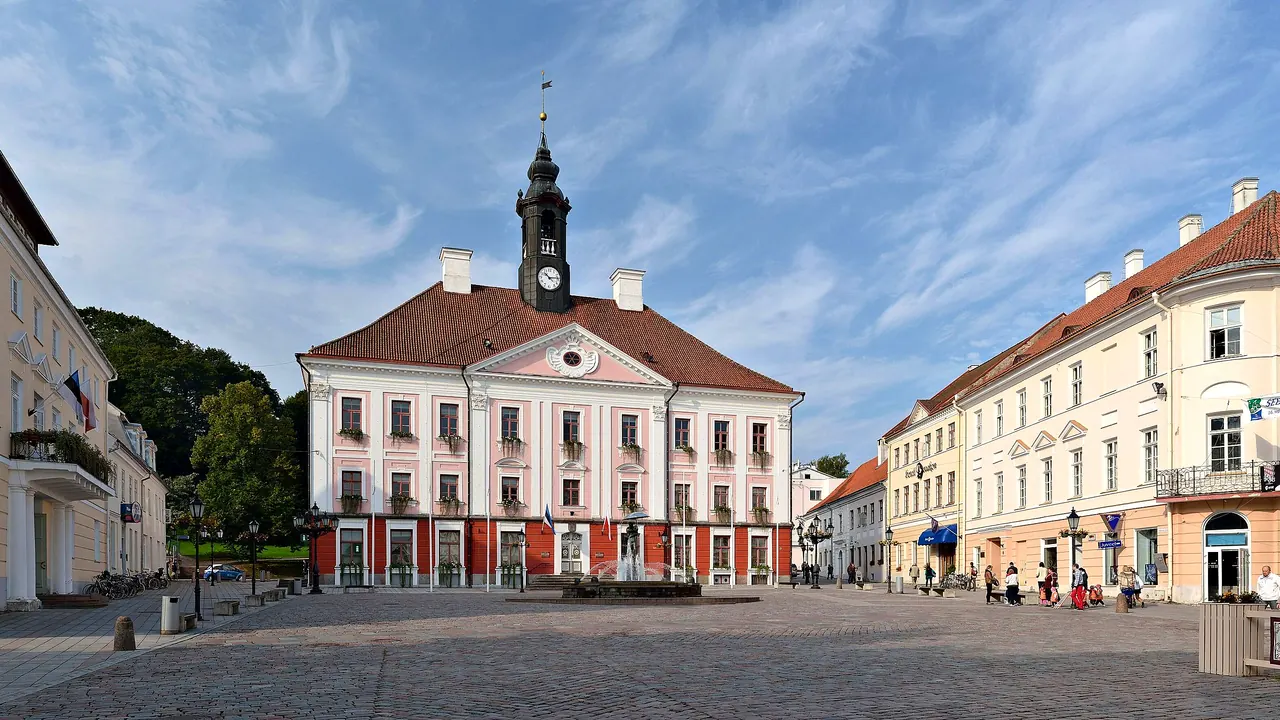
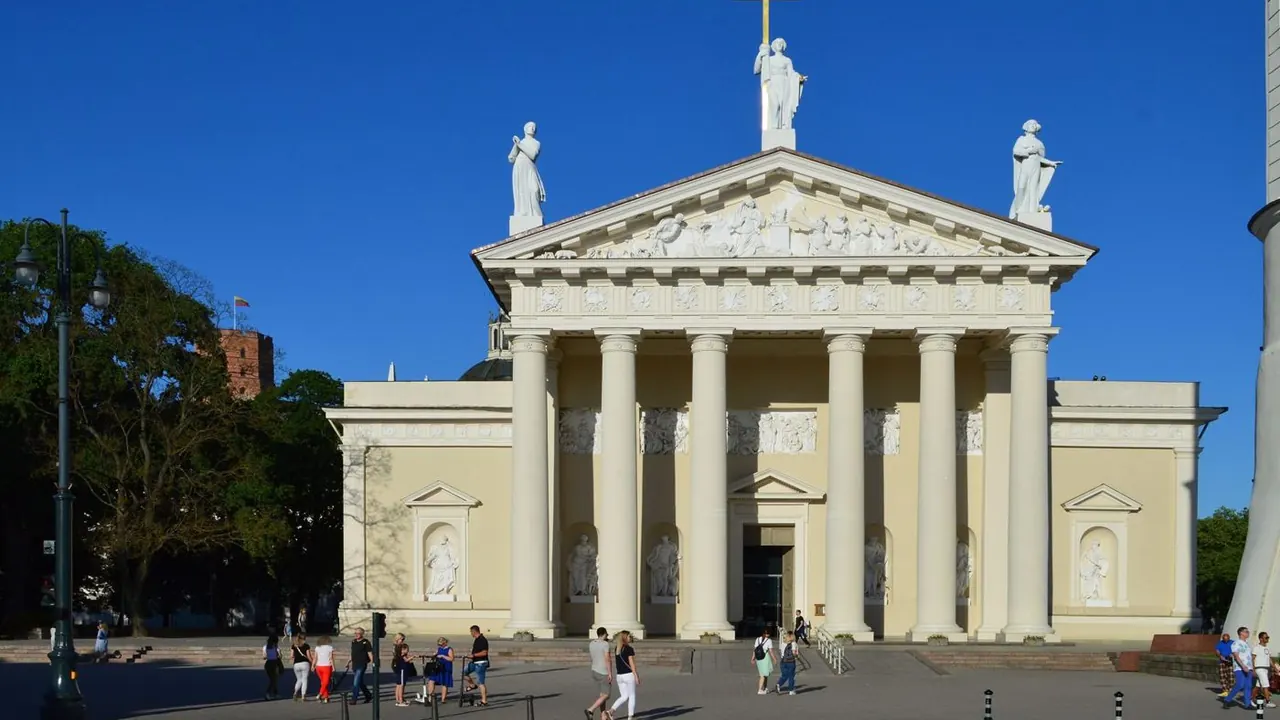
Photos: Tartu by Ivar Leidus, CC BY-SA 3.0 EE, cropped; Vilnius by Scotch Mist, CC BY-SA 4.0, cropped.
Tartu or Vilnius?
Our verdict in twelve categories, each scored against the same fixed benchmark cities, and the climate month by month, so you can choose for your trip.
Choose Tartu for
- wellness
- families
- beaches
Tartu suits a slower, smaller trip. It is a university town where the old town, Toome Hill and the river are a few minutes apart on flat streets, and a couple of days covers the sights. Families have the AHHAA science centre, and adults who want quiet can end the day in a riverside sauna or drive south to a farm smoke sauna in Võromaa. Pick it for rest and ease rather than a full sightseeing list.
Choose Vilnius for
- culture and sights
- day trips
- live music and the arts
Travellers who want plenty to see will do better in Vilnius. Its UNESCO-listed baroque Old Town is on a far grander scale than Tartu's, the opera, philharmonic and theatre are stronger, and weekend nights out have more energy. Trakai's island castle and the city of Kaunas are easy outings by train. It also has the more distinctive food and more worth taking home, from amber to linen.
Scoreboard
Twelve categories on one fixed scale from 0 to 100. The shaded stretch is the gap between the two.
Your match
Pick a travel style or drag the sliders, and both match scores follow your weighting.
Wins on wellness and families with your weighting.
Wins on culture and sights and day trips with your weighting.
What matters to you?
Category by category
What the scores mean for a trip.
Beaches & swimming
Neither city has a beach worth travelling for, but they swim in different places. Tartu has a sandy beach in town at Anne Kanal, on a calm channel of the Emajõgi. Its bigger outing is Lake Peipus, which is so wide you cannot see the far side and has sandy beaches under low red cliffs, about 45 minutes away by car.
In Vilnius, swimming means lakes in the pine woods. The Green Lakes are on the edge of the city and the Trakai shores are half an hour out, so a swim fits easily into an afternoon without a car. In both places the water reaches about 20°C on good summer days.
Food & drink
Vilnius gives food lovers more to seek out. Lithuanian cooking is distinctive, with cepelinai dumplings, cold pink beetroot soup and Karaim kibinai. Halės market sits in its old iron hall, and the modern restaurants are joined by craft beer and good coffee.
Tartu eats well on a smaller scale. It has student cafés, bakeries and a few restaurants cooking rye, smoked fish, game and berries. Its most memorable food is out of town, at the roadside stalls of the Peipus shore selling smoked fish and onions.
Culture & sights
Vilnius has much more heritage to explore. Its Old Town is one of the largest medieval and baroque centres in this part of Europe. You walk from the Gate of Dawn and Gothic St Anne's to the Cathedral and the rebuilt palace of the grand dukes. The Museum of Occupations, in the old KGB building, and the traces of the "Jerusalem of the North" add a strong twentieth-century story.
Tartu's old town is small and mostly classical, shaped by the university's pale main building, the sloping Town Hall Square and the cathedral ruins on Toome Hill. Its standout is the Estonian National Museum, but the whole town takes about two days, where Vilnius rewards three.
Nightlife
Vilnius is the better night out. Cocktail bars and craft beer pubs fan out from Vokiečių and Pylimo streets, and an electronic scene runs in old industrial spaces, with the bigger clubs open until dawn at weekends.
Nights in Tartu follow the student year. Pubs and cider bars around Rüütli street are busy in term time, even on weeknights, but there are only a few places to dance late. In summer the students leave and evenings move to quiet riverside terraces.
Nature & outdoors
Both have gentle country of forest, rivers and lakes, but you reach it differently. Around Vilnius, the wild is close: pine forest comes almost into the centre, and the steep trails of Pavilniai and Verkiai are a bus ride away. In summer, hot-air balloons cross the Old Town, and Aukštaitija's chains of lakes suit a canoe trip.
Tartu's highlights are mostly reached by car. These include the red sandstone cliffs at Taevaskoja, the Otepää uplands with Estonia's best cross-country ski trails, the bogs of Soomaa and the birdlife of Peipus. Within the city, the Emajõgi is good for canoeing and paddleboarding.
Day trips
Vilnius has the stronger and easier choice of outings. The island castle at Trakai is half an hour away, Kaunas and its interwar modernist district are an hour by train, and the old hill-fort capital at Kernavė is close too. None of them needs a car.
From Tartu, the big trip is Tallinn's walled old town, a long day with two hours on the train each way. The quieter outings are charming but mostly need a car. These include Viljandi's castle ruins, the Old Believer villages along Peipus and the white Alatskivi manor.
Good for families
Tartu is the easier city with children, mainly because of the AHHAA science centre and planetarium, which can fill a whole day. Add the toy museum, the parks on Toome Hill, the beach and the water centre, and short distances on flat, quiet streets make it simple.
Vilnius has a funicular up to Gediminas Tower, rowing boats at Trakai and an Energy and Technology Museum. Most of its main sights, though, are churches and history museums, and the Old Town's cobbles are hard going with a pushchair.
Getting around
Both centres are easy to walk, but in different ways. Tartu is tiny and flat, and its electric bike-share reaches the national museum and the beach. To reach the countryside you will want a hire car.
Vilnius is hillier and cobbled, so good shoes matter, and buses and trolleybuses cover the rest of the city. The airport is close to the centre, and the trains to Trakai and Kaunas mean most visitors never need to drive.
Shopping & style
Vilnius gives more reasons to shop. Baltic amber, linen, woven sashes and wooden crafts come from Old Town and Užupis workshops, and Gediminas Avenue has the high-street chains. In March the Kaziukas folk fair fills the streets. Choose amber carefully on Pilies Street.
Tartu covers everyday needs with a department store and a couple of malls. For something to take home, a few small boutiques sell Estonian design, woollens and ceramics, and the market sells honey and berries. Neither city has luxury shopping.
Affordability
Costs are similar in both, a moderate spend rather than a true budget trip. Vilnius is cheap for a capital, with cheap traditional lunches and local beer, though Old Town hotels cost more on summer weekends.
Tartu is clearly cheaper than Tallinn, with reasonable guesthouses and student lunch menus. Dinner in its better restaurants and drinks in its bars, however, cost about what they would in Western Europe.
Live music & performing arts
Vilnius has more on stage. The National Opera and Ballet and the National Philharmonic run full seasons, and the country's avant-garde theatre directors are well known, though most plays are in Lithuanian. The Vilnius Jazz festival is held each autumn, and summer brings concerts in courtyards and churches.
Tartu does well for its size. The Vanemuine, the first theatre to perform in Estonian, stages opera, ballet and musicals, and a concert hall hosts orchestras. The town where Estonia's Song Festival began in 1869 still has a strong choral tradition.
Wellness & relaxation
Tartu is the better place to unwind, because the sauna is everyday life there. There are riverside saunas in summer and a large water centre all year. An hour south in Võromaa, farm smoke saunas end with a pond plunge or a roll in the snow.
In Vilnius, the wood-fired pirtis is mostly found at lakeside guesthouses outside the city, and a real spa stay means going to Druskininkai. In town, the calm comes from quiet courtyards and slow mornings in Užupis cafés.
When should you go?
Pick your month. The climate figures are measured averages, not a forecast.
Tartu in July
Vilnius in July
Daytime high, °C
Rainfall in the month, mm
Temperature and rainfall are climate normals, averaged over the years shown. Tartu: 1991-2020 normals, Tartu (8.9 km from centre). Vilnius: 1991-2020 normals, Vilnius (13 km from centre).
Tartu and Vilnius have almost the same climate, so the best months are much the same in both. Summer runs from late May to early September, and the streets are comfortable for walking then. In July, highs reach about 23°C in Tartu and a degree more in Vilnius. The lakes are warm enough to swim in from late June to August. This is also the wettest part of the year. The rain peaks in June in Tartu and in July in Vilnius, at close to 90mm. The sunshine builds from May, and July is the sunniest month in both cities, with around 270 hours.
Spring comes slightly earlier to Vilnius, and autumn stays mild there a little longer, so April and September are a bit better for sightseeing than in Tartu. From November to March both cities are dark and cold, with daytime highs near freezing, and January in Tartu sits at about -2°C. With icy pavements and short days, a winter visit means brief walks between museums. Tartu does have cross-country skiing within reach in the Otepää uplands.
Which traveller are you?
On a culture and arts trip, Vilnius is the clear choice. Its Old Town of churches, the Palace of the Grand Dukes and the Jewish quarter gives days of sightseeing, and the evenings bring the National Opera and the Philharmonic, both far beyond what Tartu offers.
On a family trip with children, Tartu works better. The AHHAA science centre can fill a whole day, the toy museum and the Estonian National Museum's interactive displays keep children busy, and the flat, quiet centre is easy with a pushchair, unlike the steep cobbles of Vilnius.
For a relaxing and wellness trip, Tartu has the edge. Sauna is part of daily life there, by the river in summer and at the water centre all year, and the old smoke saunas of Võromaa are an hour away. In Vilnius the countryside pirtis is harder to reach.
Before you go
| Measure | Tartu | Vilnius |
|---|---|---|
| Official language | Estonian | Lithuanian |
| Currency | Euro (EUR) | Euro (EUR) |
| Sockets | CF230 V, 50 Hz | CF220 V, 50 Hz |
| Driving side | Right | Right |
| Time zone | UTC+2, UTC+3 in summer | UTC+2, UTC+3 in summer |
| Emergency number | 112 | 112 |
| Elevation | 79 m | 98 m |
| Main airport | Tartu Airport (TAY)8 km from centre1 non-stop destination | Vilnius International Airport (VNO)6 km from centre82 non-stop destinations |
| Public holidays this year | 12 days | 14 days |
By the numbers
| Measure | Tartu | Vilnius |
|---|---|---|
| City population | 97,759 | 619,405 |
| People per km² | 2,507 | 1,545 |
| Museums within 10 km | 4 | 31 |
| UNESCO World Heritage sites within 50 km | 1 | 3 |
Where else could you go?
Every comparison below shares a destination with this one, so you can follow Tartu or Vilnius somewhere new.