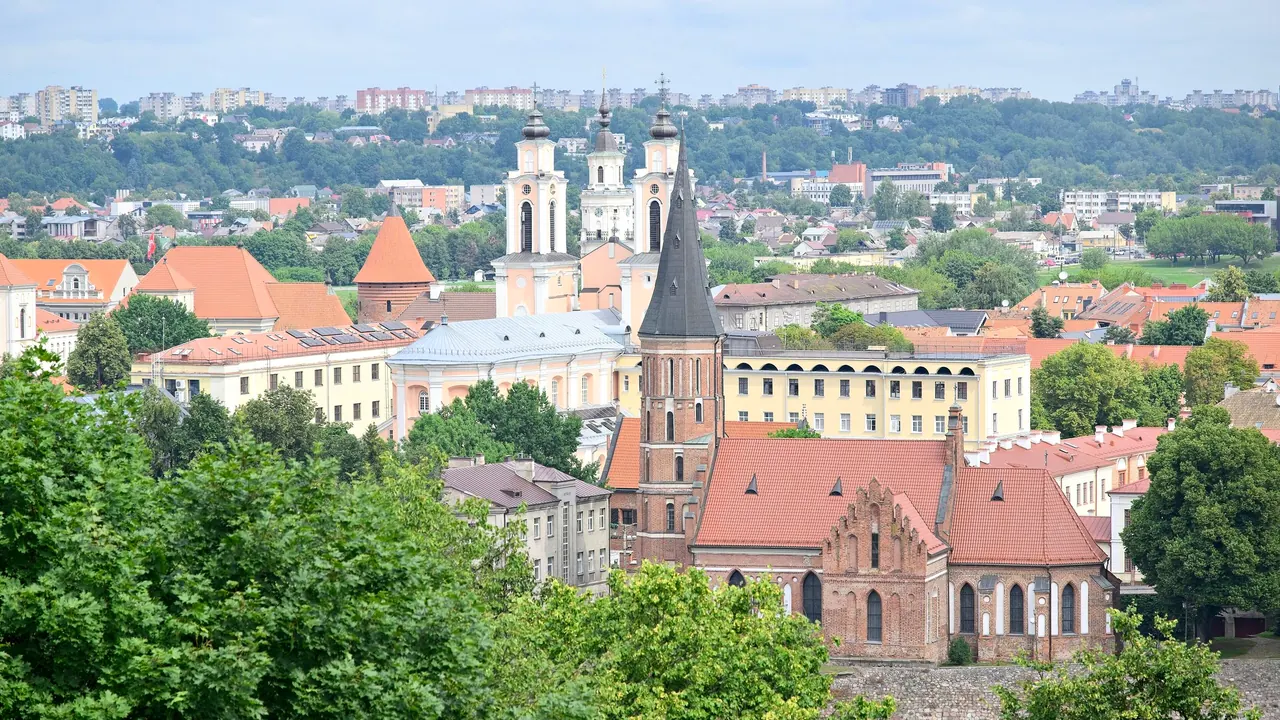
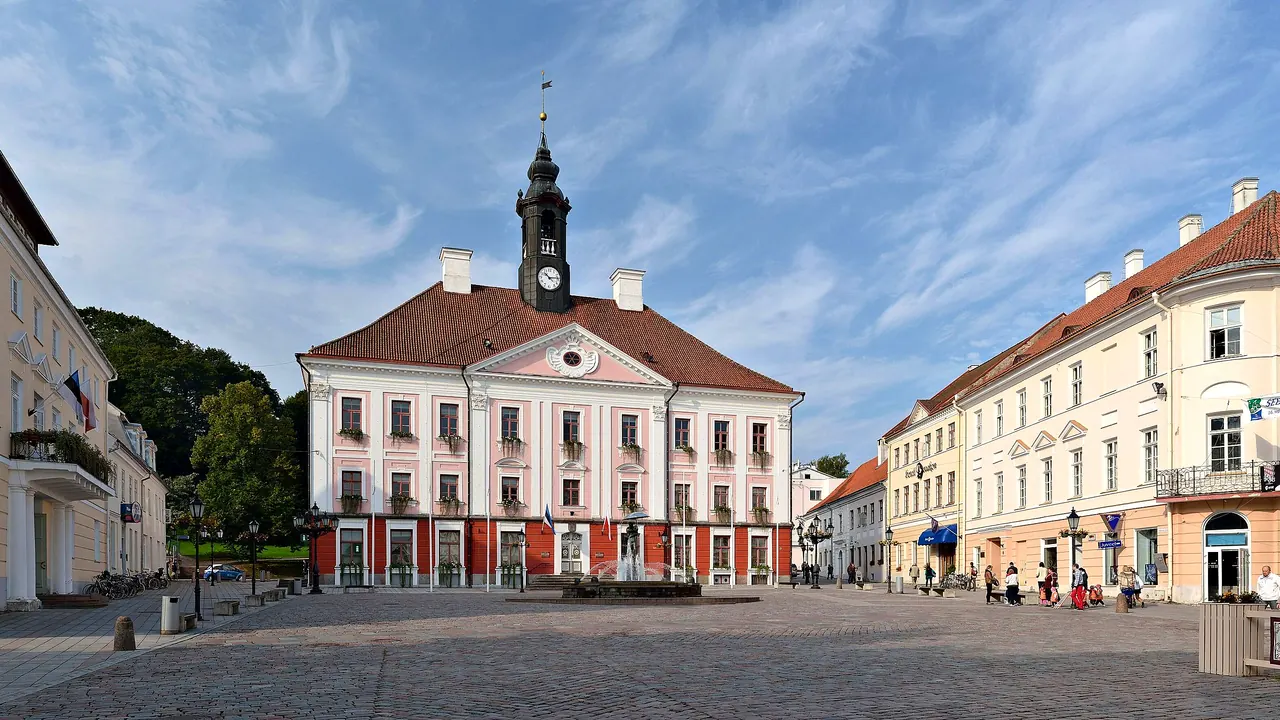
Photos: Kaunas by dave massie, CC BY 2.0, cropped; Tartu by Ivar Leidus, CC BY-SA 3.0 EE, cropped.
Kaunas or Tartu?
Our verdict in twelve categories, each scored against the same fixed benchmark cities, and the climate month by month, so you can choose for your trip.
Choose Kaunas for
- day trips
- culture and sights
- prices
Kaunas suits the traveller who wants more to see and more places to go. Its interwar modernist centre and brick Old Town give a richer few days of sightseeing, Vilnius and Trakai are each about an hour away, and hotels, hearty lunches and taxis all cost less. Choose it for a culture-led city break on a modest budget.
Choose Tartu for
- families
- getting around
- nature and the outdoors
Families and people who like the outdoors will get more from Tartu. The AHHAA science centre can fill a whole day with children, and the small, flat centre is easy to cover on foot or by e-bike. The Emajõgi river, the Otepää uplands and the Lake Peipus shore are all within reach for canoeing, walking and cycling. It is the quieter, greener choice, and a car helps for the best of the countryside.
Scoreboard
Twelve categories on one fixed scale from 0 to 100. The shaded stretch is the gap between the two.
Your match
Pick a travel style or drag the sliders, and both match scores follow your weighting.
Too close to call, 2 points apart
Wins on day trips and culture and sights with your weighting.
Wins on families and getting around with your weighting.
What matters to you?
Category by category
What the scores mean for a trip.
Beaches & swimming
Neither city is a beach destination, and swimming in both means fresh water in a short July and August season. In Kaunas you swim close to town, at sandy spots on the reservoir, on the Nemunas at Panemune or at small lakes like Lampedziai. The Baltic coast is too far away for an easy day.
Tartu has the Anne Kanal beach in the city, but its bigger draw is a drive away. The wide, shallow Lake Peipus has sandy beaches under red sandstone cliffs near Kallaste, and the wooded Pühajärve lake is at Otepää.
Food & drink
Kaunas gives you more to eat, and it is easier to find. Cepelinai, cold pink beetroot soup and smoked meats are served all along the Old Town and Laisves aleja. You can wash them down with mead, herbal bitters and local craft beer, and a few kitchens cook modern Baltic food.
Tartu's choice in town is narrower. There are student cafés, the riverside market hall and a handful of modern Estonian restaurants. Its most memorable food is out on the Peipus shore, where Old Believer villages sell smoked fish and onions from roadside stalls.
Culture & sights
Kaunas has two distinct layers to explore. One is the Old Town where the rivers meet, with its castle, Perkunas House and Town Hall. The other is the UNESCO-listed interwar centre of functionalist and Art Deco buildings, crowned by Christ's Resurrection Church. The Ciurlionis museum, the Ninth Fort and Pazaislis Monastery add plenty for a third day.
Tartu's heritage is smaller and gentler. It centres on the neoclassical university, the sloping Town Hall Square and the cathedral ruins on Toome Hill. Its standout is the Estonian National Museum, which is well worth half a day.
Nightlife
Both are student towns with a modest, inexpensive night out, but the rhythm differs. Kaunas is a weekend city: vaulted cellar bars and a few clubs around the Old Town and Laisves aleja fill on Fridays and Saturdays, then go quiet midweek.
In Tartu, term-time weeknights around Rüütli street can be surprisingly busy, with cider and craft beer bars and student traditions. In summer the evenings move out to riverside terraces in the long light.
Nature & outdoors
Tartu has more variety close at hand. You can canoe or paddleboard on the Emajõgi in town, take a forest walk past the sandstone cliffs at Taevaskoja, or head for the lakes and ski trails of the Otepää uplands. The Haanja hills, the Soomaa bogs and the birdlife of Lake Peipus are further out.
Kaunas is flatter and more about parks. It has the Azuolynas oak grove, river paths and the pine-lined reservoir park. The wooded Nemunas Loops make the best full day out.
Day trips
Kaunas is the much better base. Vilnius is about an hour away by train, and Trakai's island castle and the Kernave hill forts are close by. The Rumsiskes open-air museum, the manors along the Nemunas and the Hill of Crosses all make a full week of outings.
From Tartu, Tallinn is a long day of about two hours each way. The nearer trips, to Viljandi, the Old Believer villages and Alatskivi Castle, are quieter and mostly need a car.
Good for families
Kaunas offers children a series of short outings rather than one big attraction. The small Lithuanian Zoo in the oak grove, the two interwar funicular rides up to viewpoints over the rivers and the carved devils at the Devils' Museum each make an easy couple of hours, and the zoological and aviation museums cover a wet morning. It has no science centre, aquarium or theme park.
Tartu has the science centre that Kaunas lacks. At AHHAA children can press, pull and test the exhibits for themselves, and there is a planetarium dome under the same roof. Kaunas has the zoo that Tartu lacks, but Tartu still makes the easier family base, with the parks on Toome Hill, the Anne Kanal beach in summer and light traffic in the streets.
Getting around
Tartu's centre is small and flat, so the old town, Toome Hill and the river are minutes apart. A city-wide e-bike share takes you out to the national museum and the beach. For the Peipus villages and the forests, though, you will want a hire car.
Kaunas strings its sights along the long, straight Laisves aleja, and trolleybuses and cheap taxis cover the rest. Cobbles and the hills on either side make walking harder. The Ninth Fort and Pazaislis need a bus ride.
Shopping & style
Neither city is a place to shop, but Kaunas has a little more. Laisves aleja has high-street chains and some local designers, larger malls carry the international brands, and there is Baltic amber to take home.
Tartu has a department store, a couple of malls and a few boutiques selling Estonian woollens, linen and ceramics. Its market is good for honey and smoked fish.
Affordability
Kaunas is the cheaper of the two. Central rooms cost noticeably less than in either capital, and everyday meals, coffee, beer and taxis stay modest. Tartu is easy on the wallet at lunchtime and on the buses, but dinner in its better restaurants and bar drinks are priced at Western European levels, so a stay there costs a bit more.
Live music & performing arts
The two cities have similar stage seasons with a different emphasis. Kaunas leans towards operetta and musicals at the State Musical Theatre, and it adds a long-established spring jazz festival and summer concerts in Pazaislis Monastery.
Tartu's Vanemuine stages opera and ballet, which work well for visitors who speak no Estonian. The town also has a proud choral history from the first Song Festival of 1869, and student bands play in small venues during term.
Wellness & relaxation
Both cities unwind in the sauna, but they lead to different trips. From Kaunas you can make a proper spa stay in Birstonas, an old mineral-spring resort with sanatoriums about 40 minutes down the Nemunas. The city also has wood-fired pirtis saunas by its lakes.
Tartu has no spa resort nearby. Its draw is the farm smoke saunas of Võromaa, about an hour south, which end with a plunge in a pond or a roll in the snow.
When should you go?
Pick your month. The climate figures are measured averages, not a forecast.
Kaunas in July
Tartu in July
Daytime high, °C
Rainfall in the month, mm
Temperature and rainfall are climate normals, averaged over the years shown. Kaunas: 1991-2020 normals, Kaunas (6.7 km from centre). Tartu: 1991-2020 normals, Tartu (8.9 km from centre).
The two cities share a northern rhythm. Both are at their best from late May to early September, when long, bright days make walking easy and July and August are just warm enough for a lake or river swim. Kaunas runs a degree or so warmer through summer, reaching about 24°C in July and August, and it also gets slightly more sun. Summer is the wettest season in both, so expect showers. Kaunas peaks at about 85mm in July and Tartu at about 87mm in June.
Winters are cold and very dark in both cities, and Tartu is the harsher of the two, staying below freezing through January and February. In Kaunas the cold lifts a little earlier in spring. September is still pleasant for sightseeing in Kaunas, at around 18°C, while Tartu cools faster into autumn. From October to January Tartu also has noticeably fewer hours of sun, so the dark months there suit saunas and museums better than walks along the river.
Which traveller are you?
For a culture and arts trip, Kaunas is the stronger pick. It pairs a UNESCO-listed modernist centre and a medieval Old Town with the Ciurlionis museum and the Ninth Fort. Vilnius's baroque old town is an hour away by train.
On a family trip with children, Tartu does better. The AHHAA science centre and its planetarium can fill a whole day, and there are an indoor water centre and a toy museum. The flat, compact centre keeps short legs and pushchairs happy.
On a trip on a tight budget, Kaunas makes the money last longer. Rooms cost well below capital-city levels, and cepelinai lunches, local beer and taxis are cheap. In Tartu, dinners and bar drinks are closer to ordinary Western European prices.
Before you go
| Measure | Kaunas | Tartu |
|---|---|---|
| Official language | Lithuanian | Estonian |
| Currency | Euro (EUR) | Euro (EUR) |
| Sockets | CF220 V, 50 Hz | CF230 V, 50 Hz |
| Driving side | Right | Right |
| Time zone | UTC+2, UTC+3 in summer | UTC+2, UTC+3 in summer |
| Emergency number | 112 | 112 |
| Elevation | 48 m | 79 m |
| Main airport | Kaunas International Airport (KUN)12 km from centre30 non-stop destinations | Tartu Airport (TAY)8 km from centre1 non-stop destination |
| Public holidays this year | 14 days | 12 days |
By the numbers
| Measure | Kaunas | Tartu |
|---|---|---|
| City population | 305,120 | 97,759 |
| People per km² | 1,943 | 2,507 |
| Museums within 10 km | 19 | 4 |
| UNESCO World Heritage sites within 50 km | 1 | 1 |
Where else could you go?
Every comparison below shares a destination with this one, so you can follow Kaunas or Tartu somewhere new.