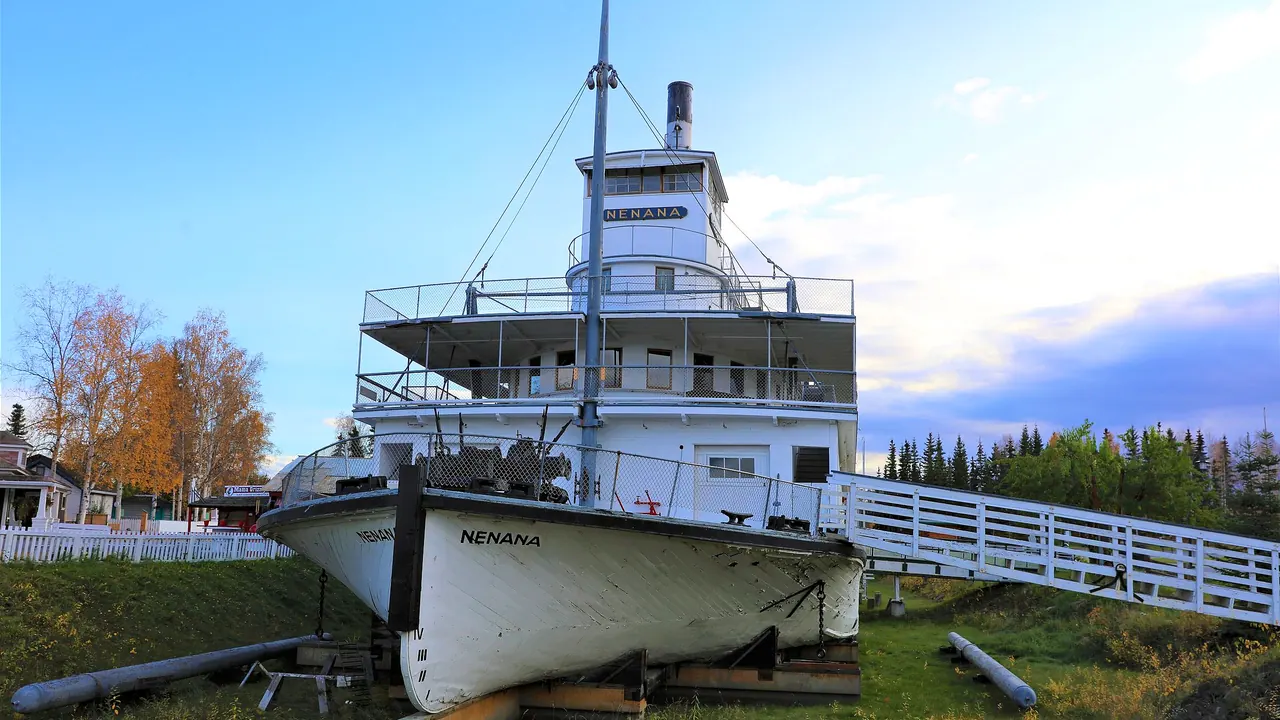
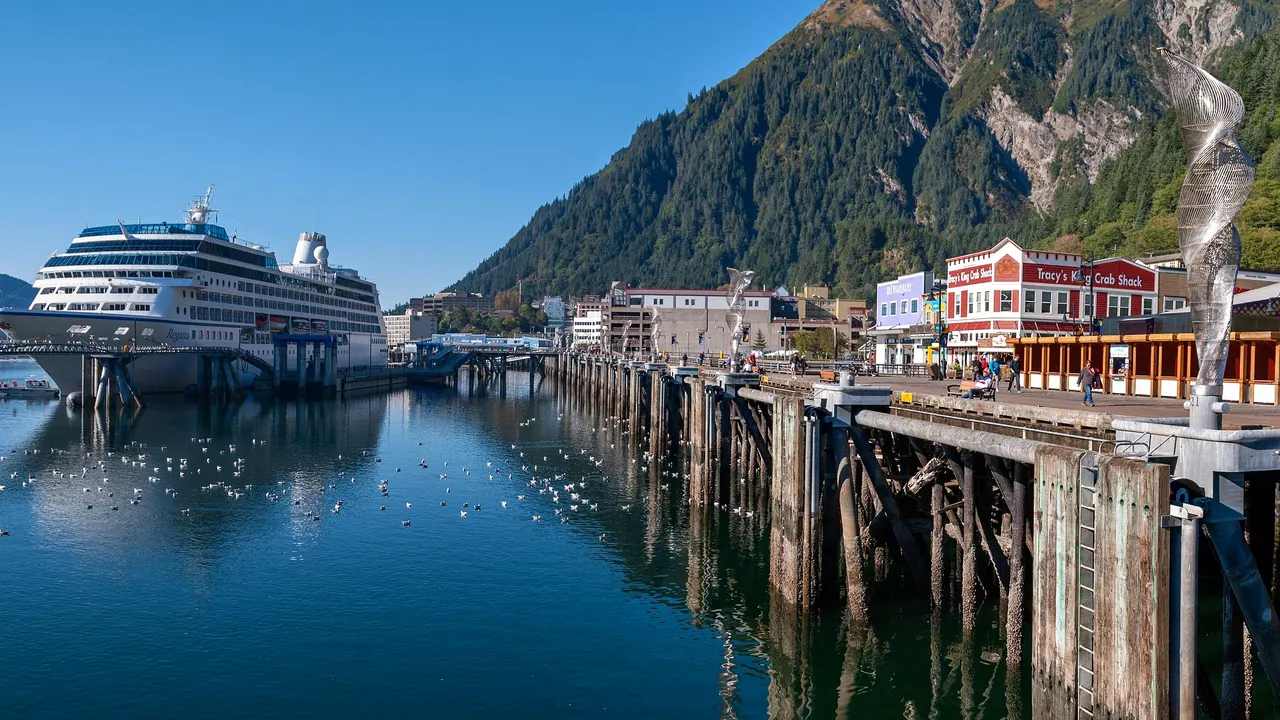
Photos: Fairbanks by Enrico Blasutto, CC BY-SA 4.0, cropped; Juneau by Gordon Leggett, CC BY 4.0, cropped.
Fairbanks or Juneau?
Our verdict in twelve categories, each scored against the same fixed benchmark cities, and the climate month by month, so you can choose for your trip.
Choose Fairbanks for
- wellness
- prices
Fairbanks is the choice for a winter trip built around the northern lights, with a night in the outdoor pool at Chena Hot Springs to make up for the cold. It also suits travellers heading on to Denali by road or rail, and it costs a little less to stay. You will need a hire car to see anything beyond its small downtown.
Choose Juneau for
- getting around
- nature and the outdoors
- food and drink
Juneau suits travellers who want glaciers, whales and bears in one summer week. Mendenhall Glacier, the Mount Roberts Tramway and boat trips into Tracy Arm are all close to a centre you can walk. Its museums, Tlingit art and seafood are a notch stronger too, as long as you come prepared for rain and for a bigger bill for tours.
Scoreboard
Twelve categories on one fixed scale from 0 to 100. The shaded stretch is the gap between the two.
Your match
Pick a travel style or drag the sliders, and both match scores follow your weighting.
Too close to call, 2 points apart
Wins on wellness and prices with your weighting.
Wins on getting around and nature and the outdoors with your weighting.
What matters to you?
Category by category
What the scores mean for a trip.
Beaches & swimming
Neither town is a place to swim, but the shores differ. Fairbanks is landlocked, yet on a hot summer day the sandy swimming area at Chena Lakes or the water at Harding Lake makes a decent freshwater dip. Juneau has the sea on its doorstep, but the water stays cold, and Sandy Beach and Eagle Beach are for walks, fires and watching eagles at low tide rather than for going in.
Food & drink
Juneau eats better, thanks to its harbour. Salmon, halibut, crab and spot prawns come off local boats and are served simply at fish-and-chips shacks by the water and at a short list of serious restaurants downtown.
Fairbanks is plainer and further from its ingredients: reindeer sausage, sourdough pancakes, wild blueberries in late summer and a surprising number of Thai kitchens, with diners and chains for the rest. Both have summer salmon bakes and local brewing, and neither offers much range beyond that.
Culture & sights
Juneau has a little more to see. The Alaska State Museum and the Walter Soboleff Building go into real depth on Tlingit, Haida and Tsimshian art. The onion-domed Russian Orthodox church, the Capitol and the Treadwell mine ruins add a short walk through the town's history.
Fairbanks rests mainly on the Museum of the North, a strong collection in a striking building, along with Pioneer Park and a close look at the Trans-Alaska Pipeline. The town itself is less rewarding to wander, and in both a day or two covers the sights.
Nightlife
Nights out are equally low-key, and the difference is mostly in who you drink with. In Fairbanks it is brewery taprooms, pool tables and dive bars kept busy by university students at weekends, and in winter the main event of the night is often the aurora rather than a bar. In Juneau the saloons and brewpubs cluster on South Franklin Street, with sawdust floors, a winter crowd of legislators and fishermen, and an early finish.
Nature & outdoors
Both are superb, but Juneau fits more into a short stay. Mendenhall Glacier is about 20km from downtown and trails start almost from the streets. Humpback whales, black bears and the fjord of Tracy Arm are each an easy day out, though the price is heavy rain.
Fairbanks offers a different kind of wild country: boreal forest, wide rivers, the granite tors at Angel Rocks and, above all, the northern lights from late August to April. Winter adds dog mushing and skiing in deep cold, and Denali is close enough for an overnight trip.
Day trips
Neither town is a base for visiting other towns, and the real difference is how you leave. From Fairbanks you drive, to Christmas-themed North Pole, the river town of Nenana or the restored roadhouse at Big Delta, all small but easy to reach by car. Juneau has no road out at all, so Skagway's gold-rush main street and quieter Haines mean a short flight or a long day on the ferry, and most days go on glacier and fjord outings instead.
Good for families
Both suit school-age children better than toddlers, and Juneau is slightly ahead in summer. Whales seen from a boat, bears at the glacier creek, the tram and the touch tanks at the Macaulay hatchery make for memorable days, though the rain and the cost of tours are the catch.
Fairbanks offers closer, calmer encounters: musk oxen and reindeer at the research station, sled-dog kennels and the small train at Pioneer Park. Summer is easy, with light around the clock, but late aurora nights in bitter winter cold are hard going with children.
Getting around
Juneau is far easier without a car. The docks, museums, Capitol and tramway are a short walk apart, though a steep one, and a local bus reaches Auke Bay and the Mendenhall Valley. You will still need a shuttle or taxi for the last stretch to the glacier.
Fairbanks is built around the car, with sights spread along highways and only the small downtown pleasant on foot. A hire car is close to essential, and in winter that means icy roads in the dark and plugging in an engine heater overnight. In summer the Alaska Railroad links the town with Denali.
Shopping & style
Shopping is brief in both towns, and in each the best buys are Alaska Native art. Fairbanks has beadwork, birch-bark baskets and fur mittens made for real cold, sold at the cultural centre and the museum shop. Juneau has Tlingit and Haida carving, prints and weaving, plus smoked salmon and rain gear, while its South Franklin Street run of jewellery and souvenir shops follows the cruise season.
Affordability
Neither is cheap, but Fairbanks is easier on the wallet. Winter rooms cost less outside the busiest aurora weeks and the museums and parks are modestly priced, so the main costs are the hire car and guided tours.
Juneau costs more to stay in, with few hotels and heavy demand for them in summer. The things people come for, from helicopter landings on the glacier to floatplane flights and whale trips, are expensive. Free trails and the local bus help only a little.
Live music & performing arts
Juneau has the fuller arts calendar for its size. A professional theatre company across the channel in Douglas stages a full season, the free Alaska Folk Festival fills the town each spring, and the biennial Celebration brings Tlingit, Haida and Tsimshian dancers together in large numbers.
Fairbanks is mostly community-run, with a symphony, a light opera company, outdoor Shakespeare in summer, the university's Festival of Native Arts and an Athabascan fiddle festival in November. In both towns a casual visitor will find most evenings bring nothing in particular to attend.
Wellness & relaxation
Fairbanks has a real draw in Chena Hot Springs, an hour and a half east, where people have bathed since the early 1900s. Its outdoor rock pool is at its best on a winter night, and many visitors stay over. The long winter nights and summer light also give the town a slow pace.
Juneau has no bathing tradition, only small day spas and public pools, and downtown is anything but calm on ship days. Its quiet pleasures are rainforest walks and the hush that settles once the ships have sailed.
When should you go?
Pick your month. The climate figures are measured averages, not a forecast.
Fairbanks in July
Juneau in July
Daytime high, °C
Rainfall in the month, mm
Temperature and rainfall are climate normals, averaged over the years shown. Fairbanks: 1991-2020 normals, Fairbanks Airport (8.3 km from centre). Juneau: 1991-2020 (sunshine 1961-1990) normals, Juneau International Airport (10.1 km from centre).
Fairbanks has the sharper seasons. June and July are warm, with highs around 23°C, and midsummer is also when its modest rainfall peaks, with July and August the wettest months. Even then July brings only about 58mm. This is the time for the lake swimming areas, hiking and canoeing on the Chena. From October it turns hard, and by January daytime highs sit around -17°C, far too cold for comfortable walking. Clear nights are the draw then, since the aurora season runs from late August to April, and late winter and spring are the driest part of the year.
Juneau stays milder and much wetter all year. Even its driest month gets more rain than Fairbanks gets in its wettest. Summer highs reach only the high teens and winters stay just above freezing, so the real change from month to month is the rain. May has the most sunshine and is among the drier months. September brings about 232mm, and autumn stays soaked. Late May to July is the best window for glacier walks and whale trips. Choose Fairbanks if you want real summer warmth or deep, clear winter.
Which traveller are you?
For a relaxing and wellness trip, Fairbanks is the easier pick. Chena Hot Springs has an outdoor rock pool at the end of a forest road east of town, best on a frosty night. Juneau has only a few day spas, and its docks are crowded on ship days.
For a short city break, Juneau works far better. The museums, Capitol, Russian church and tramway all lie within a short walk of the docks, so two days need no car. Fairbanks spreads out along highways and leaves you driving between sights.
For travellers chasing the northern lights, Fairbanks is the place. It lies under the auroral oval, and clear nights from late August to April bring displays you can often see from the edge of town. Juneau's frequent cloud and rain make it a much poorer bet.
Before you go
| Measure | Fairbanks | Juneau |
|---|---|---|
| Currency | US Dollar (USD) | US Dollar (USD) |
| Sockets | AB120 V, 60 Hz | AB120 V, 60 Hz |
| Driving side | Right | Right |
| Time zone | UTC-9, UTC-8 in summer | UTC-9, UTC-8 in summer |
| Emergency number | 911 | 911 |
| Elevation | 137 m | 17 m |
| Main airport | Fairbanks International Airport (FAI)7 km from centre15 non-stop destinations | Juneau International Airport (JNU)11 km from centre7 non-stop destinations |
| Public holidays this year | 12 days | 12 days |
By the numbers
| Measure | Fairbanks | Juneau |
|---|---|---|
| City population | 32,515 | 32,255 |
| People per km² | 386 | - |
| Museums within 10 km | 2 | 3 |
| UNESCO World Heritage sites within 50 km | 0 | 0 |
Where else could you go?
Every comparison below shares a destination with this one, so you can follow Fairbanks or Juneau somewhere new.
- Anchoragevs Fairbanks
- Anchoragevs Juneau
- Tofinovs Juneau
- Vancouvervs Juneau
- Victoriavs Juneau
- Seattlevs Juneau