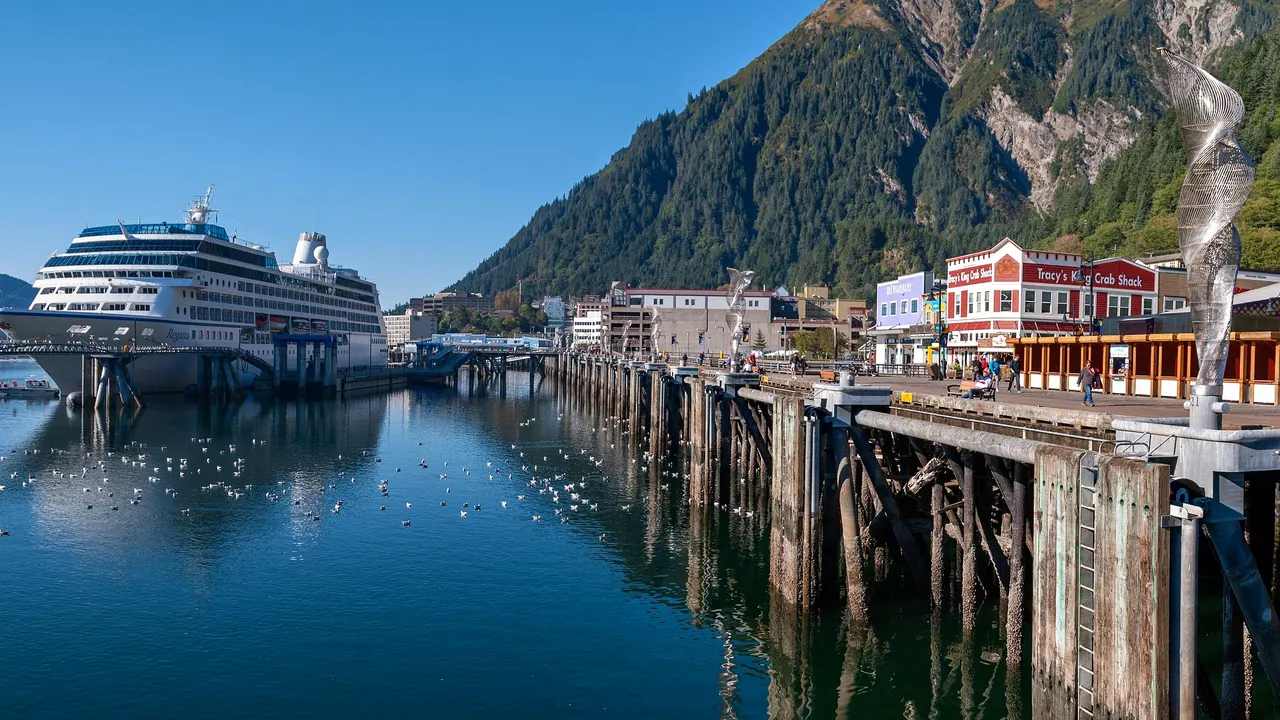
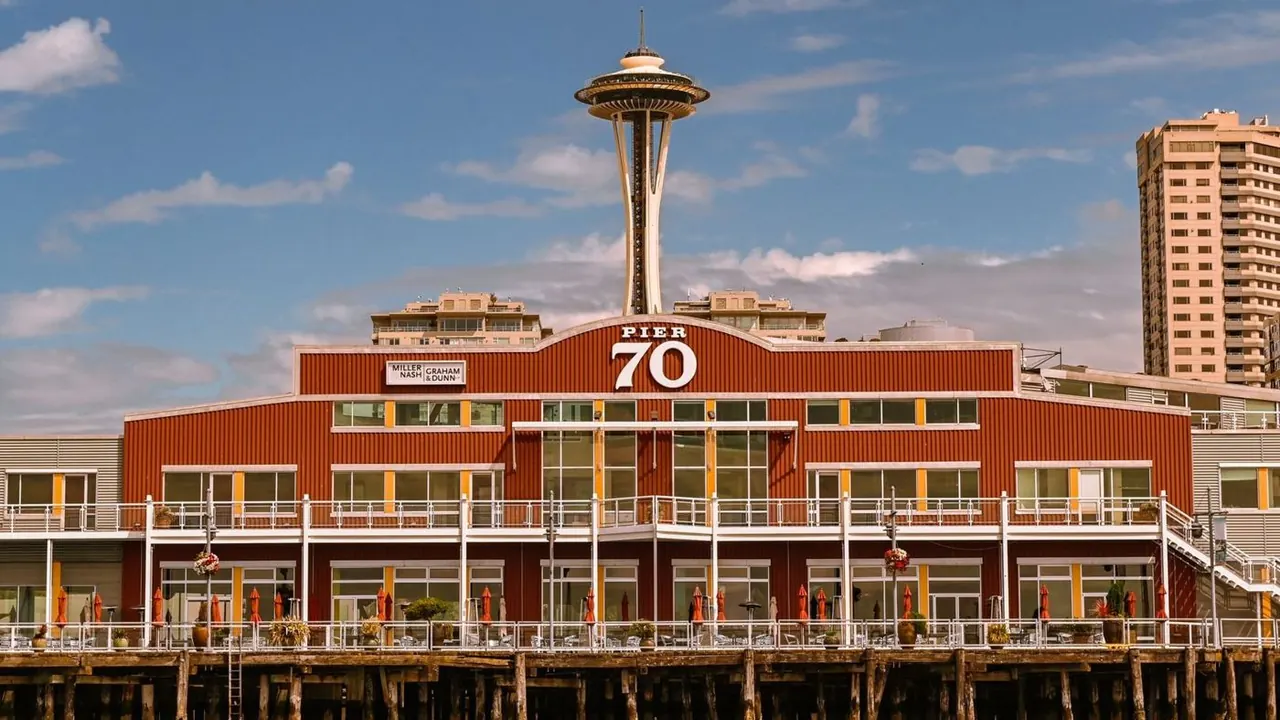
Photos: Juneau by Gordon Leggett, CC BY 4.0, cropped; Seattle by Caio, Pexels License.
Juneau or Seattle?
Our verdict in twelve categories, each scored against the same fixed benchmark cities, and the climate month by month, so you can choose for your trip.
Choose Juneau for
- nature and the outdoors
Juneau is for the traveller who wants wild Alaska with almost no effort spent getting to it. Glaciers, feeding humpbacks and bears fishing in a creek are all a short ride from the cruise docks, and the town itself is small, safe and quickly seen. Come for a few days of boats, trails and helicopters, bring waterproofs and a generous budget, and don't expect much once the day's outings are over.
Choose Seattle for
- day trips
- live music and the arts
- nightlife
Seattle suits a fuller, more varied trip. You get Pike Place and an Asian food scene, an opera, a leading ballet and live bands most nights, Capitol Hill bars, museums good enough to fill a rainy day, and ferries to the islands. The mountains and national parks are still within reach, but you'll need a car, and you get a proper city to come back to in the evening.
Scoreboard
Twelve categories on one fixed scale from 0 to 100. The shaded stretch is the gap between the two.
Your match
Pick a travel style or drag the sliders, and both match scores follow your weighting.
Wins on nature and the outdoors with your weighting.
Wins on day trips and live music and the arts with your weighting.
What matters to you?
Category by category
What the scores mean for a trip.
Beaches & swimming
Neither city is a beach destination, but Seattle at least gives you somewhere to swim in summer. Alki Beach and Golden Gardens are real sandy strips for bonfires and sunsets over the Olympics. In July and August Lake Washington warms enough for the city to staff lifeguarded beaches at Madison Park and Matthews Beach.
Juneau's shore is gravel, rock and tidal flats, so the sea is out of the question for swimming. Sandy Beach and Eagle Beach are good for a walk at low tide with eagles overhead, but anyone who wants to swim will end up in an indoor pool.
Food & drink
Both cities eat from cold northern water, and wild salmon and Dungeness crab turn up in each. Juneau serves its catch close to the boats, in fish-and-chips shacks by the harbour and at outdoor salmon bakes, with halibut and spot prawns in summer. Beyond that the choice narrows quickly, and some waterfront places close for winter.
Seattle turns the same ingredients into a much wider table. Pike Place Market's fishmongers and counters, oysters from the Sound and geoduck are only the start. Neighbourhood coffee roasters, Washington wines and the Vietnamese, Korean and Japanese cooking of the International District can carry a week of eating.
Culture & sights
Each city has a good way into Northwest Coast Indigenous art. Juneau's Sealaska Heritage Institute and the Alaska State Museum cover it close to its source, alongside the Russian Orthodox church and the Treadwell mine ruins. That is a satisfying day or two, and then it's done.
Seattle has much more to see. It has the Space Needle grounds with Chihuly's glass and the Museum of Pop Culture, the Seattle Art Museum, the Burke Museum, and the Museum of Flight with one of the world's largest aviation collections. Pioneer Square's rebuilt brick blocks add some history to what is mostly a modern city.
Nightlife
An evening in Juneau means a beer in a sawdust-floored saloon on South Franklin Street, and most places close well before late. It's pleasant after a day on the water, but it doesn't add up to a night out.
Seattle has an actual scene. Capitol Hill's Pike and Pine strip is full of cocktail bars, dives and dance floors, and it's the centre of the city's LGBTQ+ life. Belltown draws a club crowd and Ballard has a run of brewery taprooms. The night still ends at a 2am last call.
Nature & outdoors
This is the one area where the two are evenly matched, but the scenery works very differently. In Juneau the wilderness starts at the edge of town. Mendenhall Glacier is about 20km from downtown, helicopters land on the icefield, trails start almost in the streets, and boats head out to whales and to the ice-filled fjord of Tracy Arm.
Seattle's big landscapes are further off but more varied. The Cascades and the ski areas at Snoqualmie Pass are under an hour away, Mount Rainier is about two, and the Olympic rainforest lies across the Sound, though you'll want a car for all of them. In town you can kayak on Lake Union or walk the bluffs of Discovery Park, and summers are far drier than Juneau's rainforest.
Day trips
With no road out of Juneau, other towns mean a small plane or a long ferry ride. Skagway's gold-rush main street and quiet Haines are the options. Most people treat glaciers and fjords as their excursions instead.
Seattle gives you easy, varied days out. The half-hour ferry to Bainbridge Island is the classic one, Woodinville's tasting rooms and Tacoma's Museum of Glass are both close, and Port Townsend's Victorian seaport makes a longer outing by water.
Good for families
Children are better served in Seattle, mainly because it has things to do on a wet day. Woodland Park Zoo, the waterfront aquarium, the Pacific Science Center and the space shuttle trainer at the Museum of Flight are all good bets, and the monorail and ferries count as outings in themselves.
Juneau can be thrilling for older children, with whales, bears below the glacier, the Mount Roberts tram and touch tanks at the hatchery. Toddlers fare worse, because the best experiences are long tours and the town has little made for children when it rains.
Getting around
Both have compact, hilly downtowns you can walk. Past Juneau's docks and Capitol, everything strings out along one road north. The bus stops short of Mendenhall Glacier, so most visitors rely on tour shuttles or taxis.
Seattle has real transit. Link light rail runs from the airport through downtown to Capitol Hill, and one tap card also covers buses, the monorail and the water taxis. Buses to Ballard or Alki are slow, and the national parks still need a car.
Shopping & style
Juneau's shops serve the cruise ships: jewellery and souvenir stores on South Franklin Street that close for winter. The buys worth making are Tlingit and Haida carving and prints from the Sealaska Heritage shop, along with smoked salmon and good rain gear.
Seattle is better for a browse. The large outdoor gear stores show the city's mountain habit, Capitol Hill has vintage clothing and record shops, Fremont has its Sunday market and Ballard has design shops. The department stores are downtown, and there's more luxury across the lake in Bellevue.
Affordability
Both are expensive, and neither comes out clearly cheaper. The difference is where the money goes. In Juneau, food and rooms cost more because nearly everything is shipped in, but the real expense is the tours: whale-watching, glacier landings and floatplanes are why most people come.
Seattle's costs are in hotels, restaurant bills with tax and tipping added, and high museum admissions. It also gives you more ways to save. Rooms near the light rail in outer neighbourhoods are cheaper, and teriyaki shops and the Pike Place counters make for inexpensive meals.
Live music & performing arts
Seattle has a proper big-city stage calendar. Seattle Opera and Pacific Northwest Ballet share McCaw Hall, the symphony plays at Benaroya Hall, and touring musicals fill the 5th Avenue and the Paramount. In the city of Hendrix and grunge, clubs in Belltown and Capitol Hill have bands most nights.
Juneau's arts are lively for a small town but mostly happen out of season: a professional theatre in Douglas, the spring Alaska Folk Festival and the biennial Celebration of Native dance. A summer visitor will mostly see Native dance performances.
Wellness & relaxation
Neither city has a bathing tradition, but Seattle has more on offer. Korean-style bathhouses in the suburbs offer steam rooms and scrubs, and the Japanese Garden, the Arboretum and long coffee-house mornings give the city a slow pace for unwinding.
Juneau has little beyond a few small day spas and hotel treatments. The restful part is the quiet of a rainforest trail, since downtown on a busy ship day is anything but calm.
When should you go?
Pick your month. The climate figures are measured averages, not a forecast.
Juneau in July
Seattle in July
Daytime high, °C
Rainfall in the month, mm
Temperature and rainfall are climate normals, averaged over the years shown. Juneau: 1991-2020 (sunshine 1961-1990) normals, Juneau International Airport (10.1 km from centre). Seattle: 1991-2020 (sunshine 1981-2010) normals, Seattle-Tacoma Airport (17.3 km from centre).
The two run on different calendars. Juneau stays cool even at its warmest, peaking at about 18°C in July. Its sunniest, driest stretch is late spring, from April to June. Rain builds again from August and is heaviest in September, and October is cool, wet and gloomy. From November to March the days are short and dark, with highs close to freezing. For most people that makes Juneau a summer-only destination, and early summer is the safer half.
Seattle has a long, dry summer. July and August reach about 25°C with only 15mm to 25mm of rain, and they get more sunshine than any month in either city. That makes them ideal for walking the city and heading into the mountains. The Sound stays near 12°C, so on warm days people swim in the lakes instead. From late October to March Seattle turns grey and wet as well, but it stays much milder than Juneau, and in winter the museums and theatres are still worth the trip.
Which traveller are you?
For a food and nightlife trip, Seattle is the clear choice. Pike Place Market, the oyster bars, the International District's Asian kitchens and serious coffee fill the days, and Capitol Hill's cocktail bars and Ballard's taprooms keep evenings going. Juneau has seafood and a few saloons.
On a culture and arts trip, Seattle has far more to offer. It has the Museum of Flight, Chihuly's glass and the Seattle Art Museum, plus opera, ballet, a symphony and the clubs where grunge began. Juneau's state museum and Tlingit art fill a day or two.
Wildlife watchers should go to Juneau. Humpbacks feed in Auke Bay through the summer, black bears fish at Steep Creek below Mendenhall Glacier, and bald eagles are everywhere. Seattle's ferries sometimes pass orcas, but nothing there compares with that concentration of animals.
Before you go
| Measure | Juneau | Seattle |
|---|---|---|
| Currency | US Dollar (USD) | US Dollar (USD) |
| Sockets | AB120 V, 60 Hz | AB120 V, 60 Hz |
| Driving side | Right | Right |
| Time zone | UTC-9, UTC-8 in summer | UTC-8, UTC-7 in summer |
| Emergency number | 911 | 911 |
| Elevation | 17 m | 40 m |
| Main airport | Juneau International Airport (JNU)11 km from centre7 non-stop destinations | Seattle–Tacoma International Airport (SEA)18 km from centre136 non-stop destinations |
| Public holidays this year | 12 days | 11 days |
By the numbers
| Measure | Juneau | Seattle |
|---|---|---|
| City population | 32,255 | 737,015 |
| People per km² | - | 1,996 |
| Museums within 10 km | 3 | 28 |
| UNESCO World Heritage sites within 50 km | 0 | 0 |
| Swim season, months above 21 °C | - | None |
Where else could you go?
Every comparison below shares a destination with this one, so you can follow Juneau or Seattle somewhere new.
- Victoriavs Seattle
- Vancouvervs Seattle
- Portlandvs Seattle
- Whistlervs Seattle
- Tofinovs Seattle
- Kelownavs Seattle