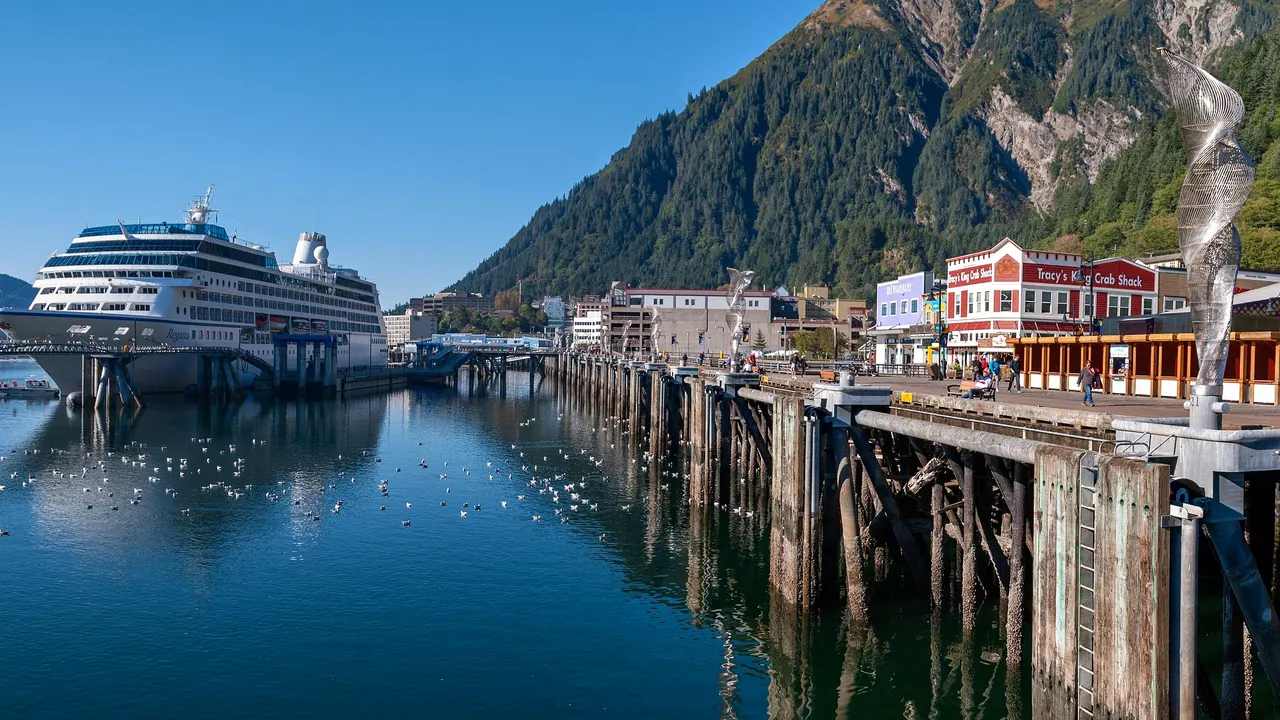
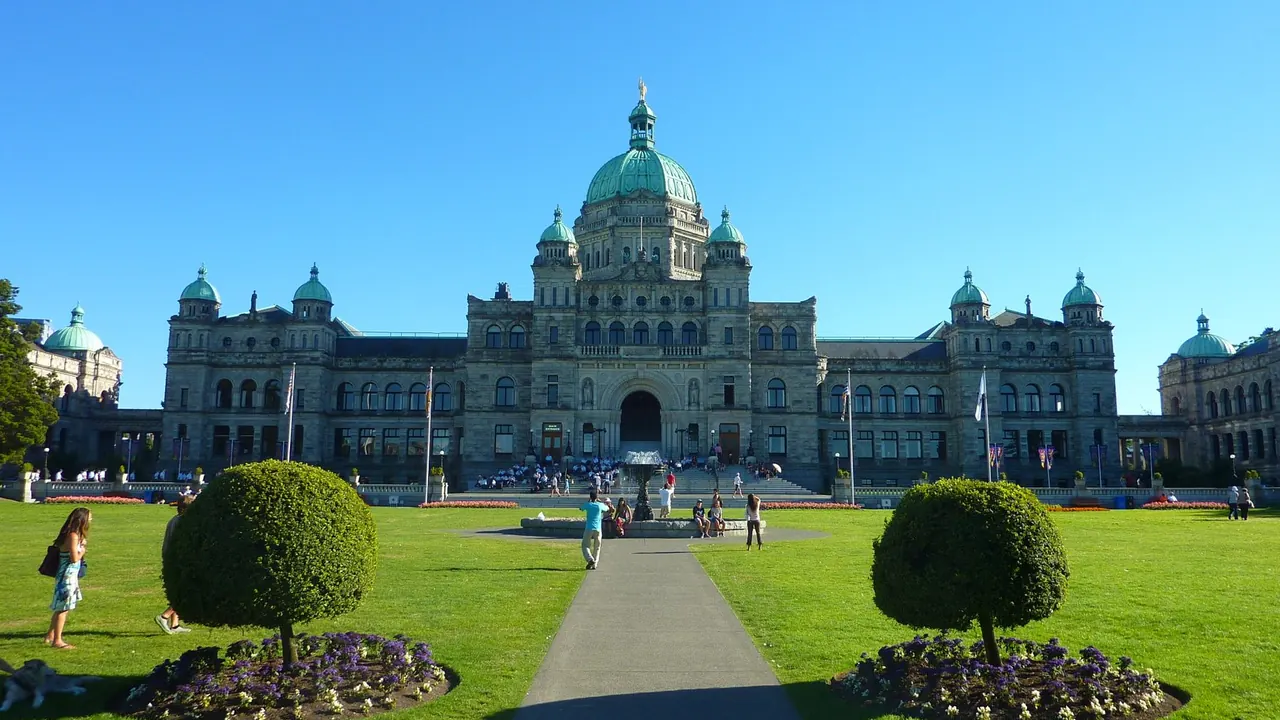
Photos: Juneau by Gordon Leggett, CC BY 4.0, cropped; Victoria by Guilice, CC BY-SA 3.0, cropped.
Juneau or Victoria?
Our verdict in twelve categories, each scored against the same fixed benchmark cities, and the climate month by month, so you can choose for your trip.
Choose Juneau for
- nature and the outdoors
Juneau is for travellers who want wild Alaska right next to town. Mendenhall Glacier, humpbacks in Auke Bay, bears at Steep Creek and helicopter landings on the icefield are all close by, and they make up the whole point of the trip. Come ready for rain, expensive tours and a small town with little to do once the day's excursion is over.
Choose Victoria for
- day trips
- wellness
- getting around
Victoria is the gentler and more rounded choice. It is easy to walk, mild all year and has more going on around the edges: the Inner Harbour and its museum, afternoon tea, pubs, gardens, a proper theatre season and day trips to Butchart Gardens and the Cowichan Valley. The nature is good, but it sits alongside a real city. It suits couples, families and anyone who wants a slower, more comfortable stay.
Scoreboard
Twelve categories on one fixed scale from 0 to 100. The shaded stretch is the gap between the two.
Your match
Pick a travel style or drag the sliders, and both match scores follow your weighting.
Wins on nature and the outdoors with your weighting.
Wins on day trips and wellness with your weighting.
What matters to you?
Category by category
What the scores mean for a trip.
Beaches & swimming
Neither city is a swimming destination, and Juneau is the less suited of the two. Its shore is gravel, rock and tidal flats, where the best you can do is walk or watch eagles at Eagle Beach.
Victoria at least has the sheltered sand of Willows Beach for paddling. On hot days, Thetis Lake and the Sooke Potholes offer proper freshwater swims, which Juneau has no equivalent for.
Food & drink
Both cities cook from the same cold waters, with salmon, Dungeness crab and spot prawns. Juneau serves it plainly at harbour fish shacks and salmon bakes, and the choice narrows quickly beyond that, especially in winter.
Victoria builds a wider table around the same seafood. It adds produce and wine from the Saanich Peninsula and Cowichan Valley, serious brunch and coffee, afternoon tea at the Empress and Canada's oldest Chinatown, so it holds up for a longer stay.
Culture & sights
Both cities are strong on Northwest Coast Native culture. In Juneau you see it through the Alaska State Museum and the Sealaska Heritage Institute's carved panels, alongside gold-rush ruins at Treadwell. It makes for a day or two of interest.
Victoria has more to look at. The Inner Harbour pairs the Parliament Buildings with the Empress, the Royal BC Museum and Thunderbird Park sit next door, and Craigdarroch Castle and Emily Carr's legacy add a few more days.
Nightlife
Neither city stays up late. A night out in Juneau means a gold-rush saloon on South Franklin Street, and that is about the extent of it. Victoria has more choice, with British-style pubs, brewery taprooms and a few cocktail bars in the old brick streets around Wharf and Yates, plus a small student club scene at weekends.
Nature & outdoors
The real difference is scale. Juneau sits under an icefield and a wall of coastal mountains, so a morning walk from town can end in alpine meadow. A boat or floatplane takes you into glacier and fjord country that no road reaches. Whales and eagles are an ordinary part of a summer day rather than a lucky sighting. The price is the weather. This is rainforest that stays wet in every month, and low cloud can ground the flights and hide the peaks you came to see.
Victoria's outdoors are tamer but much easier to fit into a stay. Clifftop paths, car-free cycle trails through farmland and calm water for first-time kayakers all start at the edge of downtown, and old-growth forest and a rugged coast lie a short drive west. Its milder, drier climate means you can be outside on most days of the year, but nothing nearby comes close to Juneau's height, ice or sense of wilderness.
Day trips
With no road out of Juneau, other towns mean a flight or a long ferry day. Skagway and Haines are the options, and most excursions head into the wild instead.
Victoria has far more within reach. Butchart Gardens is half an hour away, the wineries and murals of the Cowichan Valley are about an hour, and there is Salt Spring Island by ferry and Vancouver by floatplane. Ferries do stretch the timings.
Good for families
Juneau works for school-age children who will love whales, bears and the Macaulay hatchery touch tanks. It has little for toddlers or for the many wet days.
Victoria is the easier family base. Beacon Hill Park has a petting farm and playgrounds, the Royal BC Museum has a replica old town, and seaplanes and little ferries keep the harbour entertaining. Short distances make the whole stay simpler with young children.
Getting around
Both centres are easy on foot, though Juneau's downtown climbs a steep hillside while Victoria's main sights sit within an easy stroll of the harbour. The gap opens once you leave the core. Juneau's best sights are spread along a single road out of town, and the bus gives out before the glacier, so most visitors rely on tour transfers, cabs or a rental car. Arriving and leaving means flying or sailing, because no highway links the town to anywhere else.
Victoria lets you go much further without a car. Small ferries cross the harbour, separated bike lanes run through downtown and long trails take cyclists well into the countryside. Buses reach the university and Butchart Gardens. A car is only worth having for the wilder coast beyond Sooke and the Cowichan Valley wineries.
Shopping & style
Juneau's shopping is largely cruise-ship jewellery and souvenir shops, and the real finds are Tlingit and Haida art and smoked salmon. Victoria has more to browse. The independent labels on Lower Johnson Street, Market Square, second-hand bookshops and Cowichan sweaters sit alongside First Nations galleries.
Affordability
Both are costly, but Juneau hits the wallet harder. Food is shipped in, there are few hotels in summer, and the trip revolves around pricey helicopter, floatplane and whale tours.
Victoria is still expensive in high season, but it gives you more ways to save. The free waterfront and parks, a walkable centre, cheaper Chinatown and pub meals, and much lower room rates from November to March all help.
Live music & performing arts
Juneau's arts life mostly runs in winter and spring, with the Douglas theatre company, the Alaska Folk Festival and the biennial Celebration of Native dance. Summer visitors see little of it beyond dance performances.
Victoria offers more for a visitor in season. The symphony, opera and ballet play in historic downtown theatres, there is new Canadian work at the Belfry, and summer brings the jazz and Fringe festivals plus the free symphony concert on a barge in the harbour.
Wellness & relaxation
On big ship days, Juneau's downtown is crowded and far from restful. You find calm on a rainforest trail or in the evening once the ships have sailed. For treatments there are only a few small day spas and hotel treatment rooms.
Victoria is made for slowing down, with flower gardens everywhere, unhurried streets in Oak Bay and James Bay and early walks along the seafront. Neither city has thermal springs or a bathing tradition. In Victoria, though, the grand harbour hotels have proper spas, and waterfront resorts in Sooke and on the Saanich Peninsula offer quieter retreats.
When should you go?
Pick your month. The climate figures are measured averages, not a forecast.
Juneau in July
Victoria in July
Daytime high, °C
Rainfall in the month, mm
Where the figures come from
Victoria's sunshine is measured 87 km from the centre, at Vancouver International Airport.
Temperature and rainfall are climate normals, averaged over the years shown. Juneau: 1991-2020 (sunshine 1961-1990) normals, Juneau International Airport (10.1 km from centre). Victoria: 1991-2020 normals, Victoria Gonzales CS (3.6 km from centre).
Juneau has a short season. June to August are the only mild months, peaking around 18°C, and May is often the sunniest. Late summer brings more rain, and September is the wettest month at about 232mm. From November to March daytime highs sit only just above freezing and the days are dark, so it is no time for sightseeing.
Victoria is warmer and much drier. July and August reach about 21°C with almost no rain, around 11mm in July, and long sunny days for walking and cycling. The sea only gets to about 12°C, so it is too cold to swim at any time of year. Winter there is grey and wet rather than cold, which keeps the streets walkable all year in a way Juneau's are not. For both cities, June to early September is the time to go, and Victoria also has a usable spring and autumn either side.
Which traveller are you?
For an outdoors trip, Juneau is the stronger pick. Glacier trails start almost from town, whales feed close in through the summer, and floatplanes, kayaks and helicopters reach icefields and fjords on a scale that Victoria's coastal paths and cycle routes cannot match.
On a relaxing and wellness trip, Victoria wins easily. It has gardens, harbour hotel spas, long afternoon teas and seafront walks in a mild climate. In Juneau, downtown is crowded on ship days and there is no spa tradition beyond a few small day spas.
For a short city break, Victoria works far better. The harbour, museum, Chinatown and Old Town are all close together on foot, the evenings bring pubs and theatre, and Juneau's sights only stretch to a day or so.
Before you go
| Measure | Juneau | Victoria |
|---|---|---|
| Official language | - | French, English |
| Currency | US Dollar (USD) | Canadian Dollar (CAD) |
| Sockets | AB120 V, 60 Hz | AB120 V, 60 Hz |
| Driving side | Right | Right |
| Time zone | UTC-9, UTC-8 in summer | UTC-8, UTC-7 in summer |
| Emergency number | 911 | 911 |
| Elevation | 17 m | 23 m |
| Main airport | Juneau International Airport (JNU)11 km from centre7 non-stop destinations | Victoria International Airport (YYJ)25 km from centre16 non-stop destinations |
| Public holidays this year | 12 days | 11 days |
By the numbers
| Measure | Juneau | Victoria |
|---|---|---|
| City population | 32,255 | 91,867 |
| People per km² | - | 4,711 |
| Museums within 10 km | 3 | 6 |
| UNESCO World Heritage sites within 50 km | 0 | 0 |
| Swim season, months above 21 °C | - | None |
Where else could you go?
Every comparison below shares a destination with this one, so you can follow Juneau or Victoria somewhere new.
- Vancouvervs Victoria
- Seattlevs Victoria
- Whistlervs Victoria
- Tofinovs Victoria
- Portlandvs Victoria
- Kelownavs Victoria