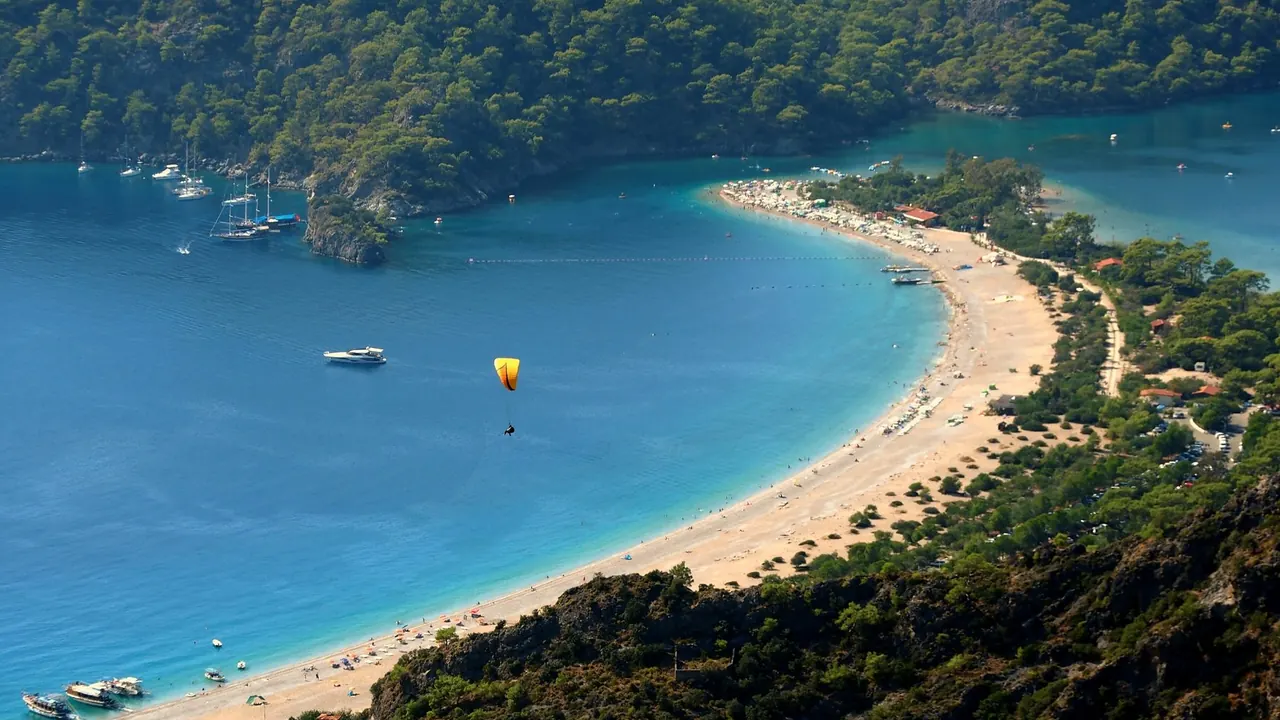
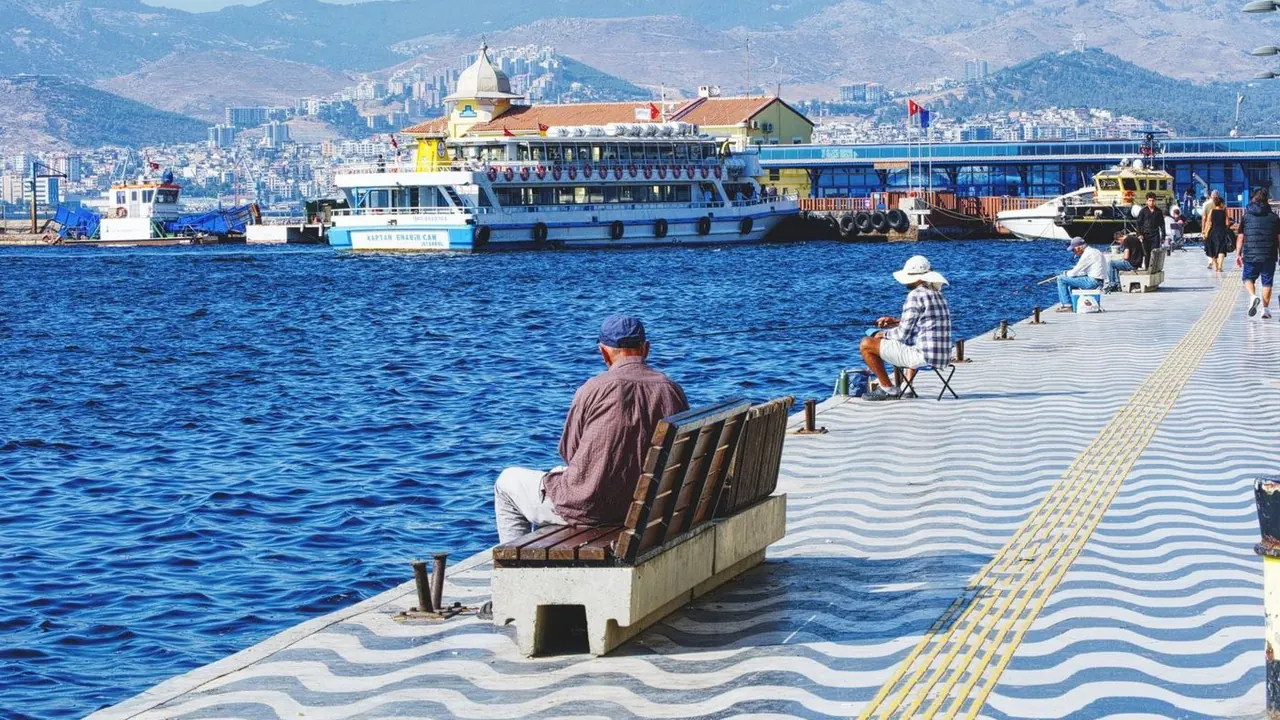
Photos: Fethiye by rheins, CC BY 3.0, cropped; Izmir by Toygar Par, Pexels License.
Fethiye or Izmir?
Our verdict in twelve categories, each scored against the same fixed benchmark cities, and the climate month by month, so you can choose for your trip.
Choose Fethiye for
- beaches
- nature and the outdoors
- families
Fethiye is the pick for a vacation built around the sea and the mountains. The lagoon at Oludeniz, boat days to island coves, paragliding off Babadag and cliff walks on the Lycian Way are all close by, and the town's harbour and rock tombs make a gentle base between them. It suits couples and families who want long days outdoors and quiet evenings, and who don't mind that the food and going out are simple.
Choose Izmir for
- live music and the arts
- food and drink
- culture and sights
Izmir rewards travellers who want a real Turkish city rather than a resort. It eats better, with Aegean meze, boyoz at breakfast and raki on the Kordon, it goes out later in Alsancak, and it has an opera, a symphony and the Kemeraltı bazaar. On top of that it is the natural base for Ephesus and Pergamon. The beaches are an outing rather than the point of the stay, so choose it for food, ruins and city life.
Scoreboard
Twelve categories on one fixed scale from 0 to 100. The shaded stretch is the gap between the two.
Your match
Pick a travel style or drag the sliders, and both match scores follow your weighting.
Wins on beaches and nature and the outdoors with your weighting.
Wins on live music and the arts and food and drink with your weighting.
What matters to you?
Category by category
What the scores mean for a trip.
Beaches & swimming
Fethiye is a beach destination, and Izmir is a city with beaches an hour away. From Fethiye a short minibus ride brings you to the turquoise lagoon at Oludeniz, and beyond it lie Kidrak's sandy cove, Butterfly Valley by boat, Kabak's quiet shingle and island coves on day cruises. The water is clear and warmer through the summer.
Izmir's own gulf isn't for swimming, so beach days mean heading west to Ilica's shallow sand or the wilder coves of the Cesme peninsula, or south to the long family strips at Gumuldur. These are good beaches, but they are day outings rather than something you step out to each morning.
Food & drink
A meal in Fethiye is at its best as a ritual: you choose fish at the stalls of the town market, and a restaurant on the square cooks it and serves it with meze. The weekly canal market is good for gozleme and honey. In Hisaronu and Oludeniz, though, menus drift towards English breakfasts and pizza.
Izmir eats far better. It has a cooking style of its own, built on olive oil, wild greens and herbs. Boyoz with a boiled egg and the kumru sandwich belong to the city, and gevrek is its local name for the sesame ring sold from carts. Long meze dinners by the water, Kemeraltı's market lanes and the wines of Urla round it out.
Culture & sights
Izmir has more to see, though neither city is a great sightseeing destination in its own right. Both lost their old centres, Izmir to the fire of 1922 and Fethiye to the earthquake of 1957. Izmir still has the Roman Agora, the walls of Kadifekale above the gulf, the Clock Tower, Kemeraltı's Ottoman hans and synagogues, and archaeology and ethnography museums worth a few hours.
Fethiye's sights are fewer and more concentrated: the Lycian rock tombs lit up at sunset, a Roman theatre by the harbour, sarcophagi standing in the streets and the abandoned village of Kayakoy over the ridge. It is affecting, but you can see it in a day or two.
Nightlife
Izmir has the livelier and more grown-up night out. Evenings start with a drink on the Kordon at sunset and move into the crowded bar lanes of Alsancak, where rock bars and pubs fill the street until late. In summer, the beach clubs of Alaçatı are within reach.
Fethiye offers either a relaxed drink under the lights in Paspatur or the loud karaoke-and-clubs strip at Hisaronu built for package visitors. Much of that shuts between November and April, whereas Izmir's bars keep going all year.
Nature & outdoors
Fethiye has the more dramatic outdoors, with mountains falling straight into the sea. You can paraglide from Babadag down to the lagoon, walk the cliff paths of the Lycian Way past Faralya and Kabak, wade upstream through Saklikent Gorge, or take a kayak or dive in the bay.
Izmir's nature is gentler and more spread out. There are flamingos in the Gediz Delta, olive-grove coast on the Karaburun peninsula and forest walks on Spil Mountain. What it has that Fethiye lacks is the steady wind at Alaçatı, among the best windsurfing in the Mediterranean, plus winter skiing on Bozdağ.
Day trips
Both cities are surrounded by ancient sites, but Izmir's are the bigger names. Ephesus is an easy train ride away, and Pergamon, Sardis, Priene and Didyma all make full days. Şirince, Alaçatı and Old Foça add villages and harbours to the mix.
Fethiye's Lycian ruins are quieter and full of character: Tlos on its hilltop, the tomb cliff at Pinara, Xanthos and Letoon, and Patara behind its dunes. It also has two things Izmir cannot match, a summer ferry to medieval Rhodes and the coast road to Kas and Kalkan.
Good for families
The two are about equal for families but suit different trips. Fethiye works best for a beach vacation with small children, with the sheltered, shallow lagoon at Oludeniz, pool hotels in Ovacik and boat trips with swimming stops.
Izmir works better for a mixed city stay. Children can ride scooters on the Kordon, see the animals at the Sasalı Wildlife Park and take the ferries across the bay. Its beach days are at Ilica, a drive away. Neither city has a theme park, and both are very hot in high summer.
Getting around
Izmir is the easier place to get around without a car. Its metro, İZBAN suburban railway, trams and bay ferries all run on one card, and trains reach Selçuk for Ephesus. The catch is distance, since the city wraps a long way round the gulf and the coast roads clog at rush hour.
Fethiye's walkable centre and its dolmus minibuses cover Oludeniz, Hisaronu and Kayakoy well. There is no rail line, though, and Tlos, Pinara and Saklikent are awkward to reach without a hire car or a tour.
Shopping & style
Fethiye's shopping is the weekly canal market, the carpet, leather and ceramics lanes of Paspatur, and resort shops full of beachwear and copy brands. That is enough for a few peshtemal towels and gifts, but not for a shopping trip.
Kemeraltı is what puts Izmir ahead. It is a working bazaar of old hans and courtyards where locals buy copperware, fabrics and olive oil soaps, and there are few souvenir stalls. Alsancak adds boutiques, and the city has several large malls.
Affordability
Costs are much the same in both cities, and in each one they depend on where you are. In Fethiye, staying in town and eating in lokantas is cheap, while Oludeniz's beachfront and extras like paragliding and cruises push the bill up. In Izmir, street breakfasts, transport and cheap ferry rides keep daily costs low, but seafood meyhanes, Cesme in summer and the entry fees at Ephesus add up.
Live music & performing arts
This is the widest gap between the two. Izmir has a state opera and ballet in the historic Elhamra theatre, a symphony orchestra at the Saygun Arts Centre and an international summer festival that stages concerts at Ephesus. Theatre is in Turkish, but music and dance don't need translation.
Fethiye has no season at all. Live music there means a saz player in a meyhane or a cover band in Hisaronu.
Wellness & relaxation
Both are equally good for relaxing, but they offer different kinds of rest. Fethiye has a historic Ottoman hammam in Paspatur and, down the coast, small yoga retreats on the terraces above Kabak and Faralya, with sea views and little else to do.
Izmir's draw is warm water from the ground: the thermal springs at Balçova, known in antiquity as the Baths of Agamemnon, and the springs at Ilıca. Add the slow rhythm of tea and meze on the Kordon, and the city has a calm that suits an unhurried stay.
When should you go?
Pick your month. The climate figures are measured averages, not a forecast.
Fethiye in July
Izmir in July
Daytime high, °C
Rainfall in the month, mm
Where the figures come from
Fethiye's temperatures are measured 31 km from the centre, at Dalaman.
Fethiye has no rain gauge within 25 km of the centre, so its rainfall comes from a gridded climate dataset read at the city rather than from a gauge further away.
Temperature and rainfall are climate normals, averaged over the years shown. Fethiye: 2000-2020 (rainfall 1991-2020) normals, Dalaman (30.8 km from centre). Izmir: 1991-2020 normals, Izmir (3.4 km from centre).
Both cities have long, dry summers and wet winters, but they feel different at either end. Fethiye's sea is the warmer of the two, reaching 27°C in August, and stays pleasant for swimming from late May well into October, while Izmir's gulf peaks a few degrees cooler and the northerly winds on the Cesme peninsula make it feel fresher still. Izmir gets the hotter summer, with highs around 34°C in July and August that make walking the streets and ruins hard work after mid-morning. Its summer sunshine is close to unbroken.
Spring and autumn are the best time for both if you want to walk. April, May and October are warm and mostly dry, ideal for the Lycian Way and the hills around Fethiye and for Ephesus and Pergamon from Izmir. Winter is mild but wet, and wetter in Fethiye, which takes about 187mm in January against noticeably less in Izmir. That makes Izmir, with its museums, bazaar and meyhanes, the easier choice for a cool-season city break.
Which traveller are you?
For a beach and sun trip, Fethiye is the clear choice. The shallow lagoon at Oludeniz, Kidrak's sandy cove and boat trips to Butterfly Valley are all close by, and the sea is warmer. From Izmir, the beaches at Urla, Gumuldur or Cesme always mean a drive.
On a culture and arts trip, Izmir offers far more. Fethiye's rock tombs and Kayakoy are moving but few. Izmir has the Roman Agora, Kemeraltı's caravanserais, Ephesus and Pergamon within a day, and a state opera, ballet and symphony orchestra.
For a food and nightlife trip, Izmir wins easily. Fethiye has its fish market and the package-resort strip at Hisaronu. Izmir has Aegean meze, boyoz at breakfast, and evenings that begin on the Kordon and spill through the crowded bar lanes of Alsancak.
Before you go
| Measure | Fethiye | Izmir |
|---|---|---|
| Official language | Turkish | Turkish |
| Currency | Turkish Lira (TRY) | Turkish Lira (TRY) |
| Sockets | CF230 V, 50 Hz | CF230 V, 50 Hz |
| Driving side | Right | Right |
| Time zone | UTC+3 | UTC+3 |
| Emergency number | 112 | 112 |
| Elevation | 0 m | 2 m |
| Main airport | Dalaman International Airport (DLM)30 km from centre61 non-stop destinations | Adnan Menderes International Airport (ADB)13 km from centre120 non-stop destinations |
| Public holidays this year | 14 days | 14 days |
By the numbers
| Measure | Fethiye | Izmir |
|---|---|---|
| City population | 182,200 | 4,493,242 |
| People per km² | - | 4,760 |
| Museums within 10 km | 1 | 29 |
| UNESCO World Heritage sites within 50 km | 1 | 0 |
| Swim season, months above 21 °C | 6 months | 5 months |
Where else could you go?
Every comparison below shares a destination with this one, so you can follow Fethiye or Izmir somewhere new.