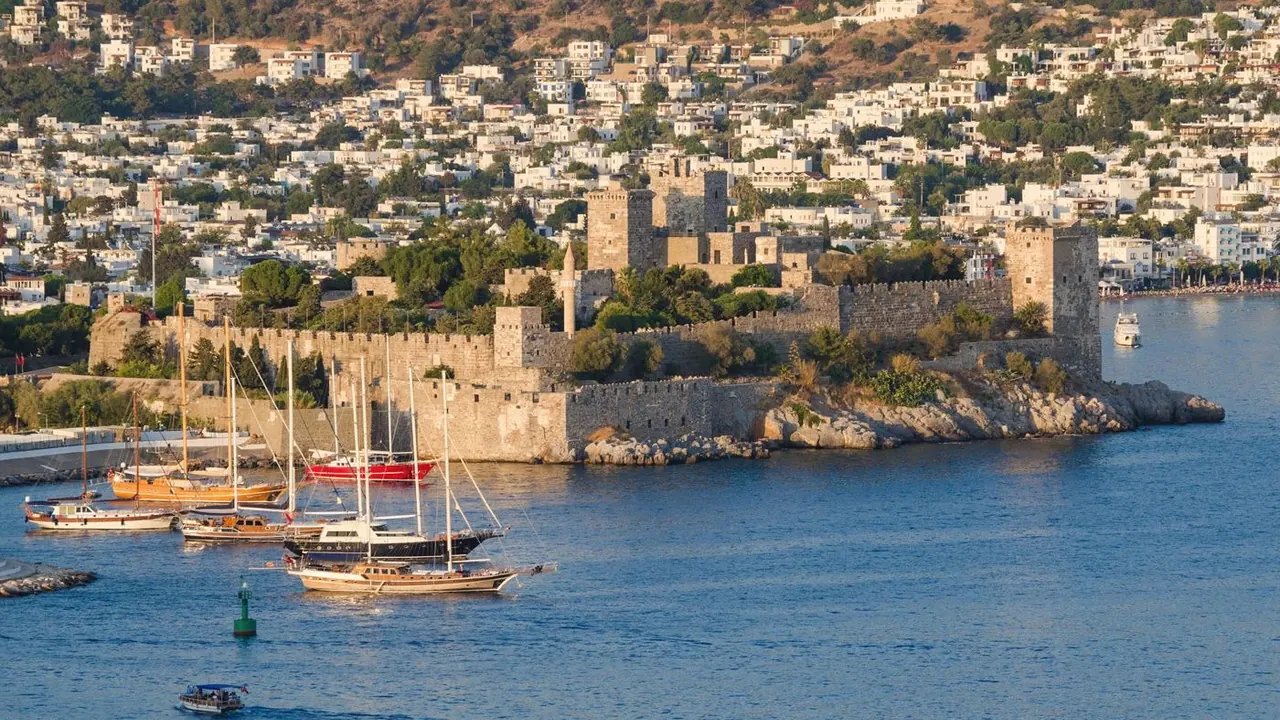
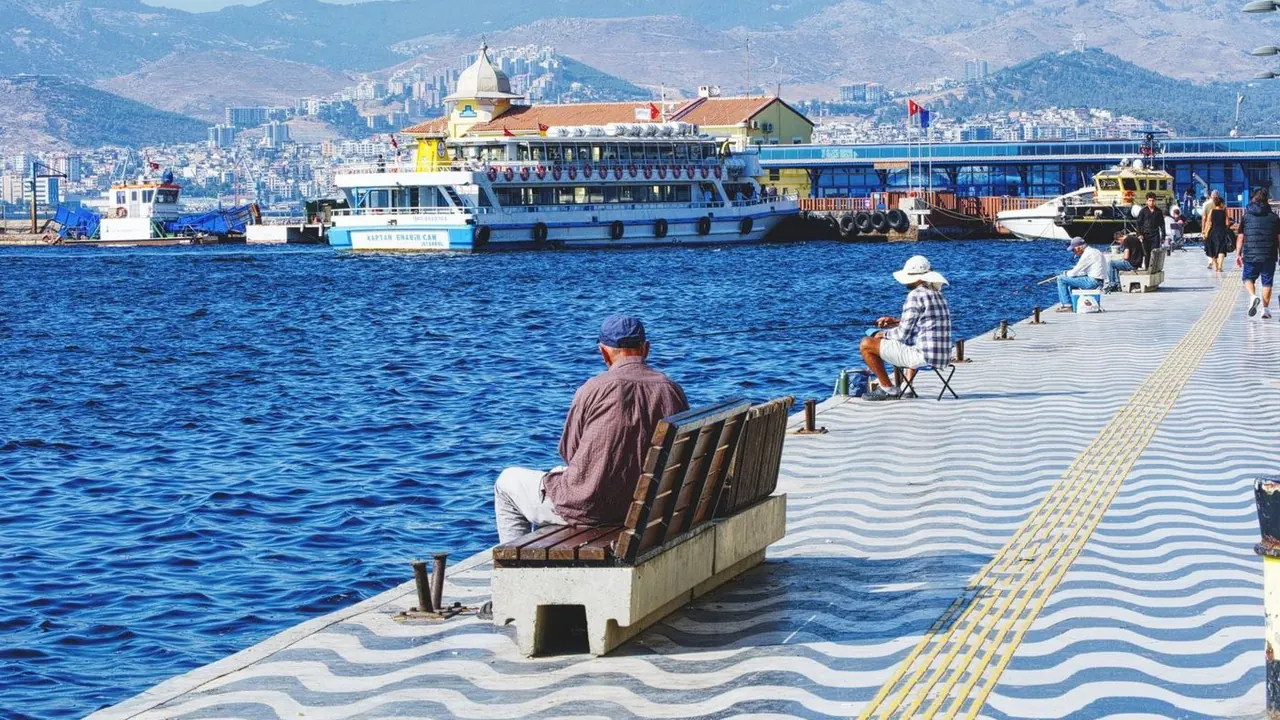
Photos: Bodrum by Serhio Magpie, CC BY 4.0, cropped; Izmir by Toygar Par, Pexels License.
Bodrum or Izmir?
Our verdict in twelve categories, each scored against the same fixed benchmark cities, and the climate month by month, so you can choose for your trip.
Choose Bodrum for
- beaches
- families
- nightlife
Bodrum is the choice for a vacation built around the water. The peninsula's bays are the reason to go, from the shallow shores of Bitez to the jetties of the north coast, along with boat days out to the islands, family resorts with pools and water parks, and summer nights that last until dawn. It suits travellers who are happy to stay by the sea and pay resort prices for it in high season.
Choose Izmir for
- prices
- getting around
- live music and the arts
Travellers who want a real city with the Aegean on its doorstep will do better in Izmir. It costs noticeably less and eats better, with boyoz and kumru on the street and long meze dinners along the Kordon. It also puts Ephesus, Pergamon and Sardis within reach as day trips. The nearest good beaches are an hour away on the Cesme peninsula, so pick Izmir for sightseeing and city life rather than lazy days on the sand.
Scoreboard
Twelve categories on one fixed scale from 0 to 100. The shaded stretch is the gap between the two.
Your match
Pick a travel style or drag the sliders, and both match scores follow your weighting.
Wins on beaches and families with your weighting.
Wins on prices and getting around with your weighting.
What matters to you?
Category by category
What the scores mean for a trip.
Beaches & swimming
Bodrum is the beach destination of the two. Its whole peninsula is ringed with bays, each its own kind of shore: Bitez and Ortakent have shallow water, Türkbükü and Yalıkavak have decks and jetties, the western shore around Akyarlar is windier, and some coves can only be reached by boat. The drawbacks are coarse sand and beach clubs holding the best stretches.
In Izmir the city waterfront is not for swimming, so a beach means a day out. Ilica's shallow sand on the Cesme peninsula is about an hour away, and Gumuldur and Ozdere have long sandy strips. Each swim takes more planning than in Bodrum, where a bay is always close by.
Food & drink
Both cook the same Aegean food of olive oil, wild greens, grilled fish and meze with rakı, but Izmir has more dishes of its own. Bodrum has nothing like its street food: boyoz with a boiled egg, gevrek sold from carts and the kumru sandwich. Kemeraltı's market lanes, Alsancak's bistros and the wines of Urla give Izmir depth all year.
In Bodrum the best meals are as much about the setting as the food. You can choose fish at the market and have it cooked beside it, eat slowly at Gümüşlük's waterfront tables or sit down to a village breakfast in the hills. Beyond those, much of what is on offer is tourist menus, and the choice thins out of season.
Culture & sights
Neither city has much of its ancient past still standing, but Izmir has more to fill the days. The Roman Agora, Kadifekale above the gulf, the Clock Tower on Konak Square, Kemeraltı's caravanserais and synagogues, and two museums add up to several days of sightseeing, even though the 1922 fire left the centre mostly modern.
Bodrum really has one strong sight: the Castle of St Peter, with its Museum of Underwater Archaeology and raised shipwrecks. The Mausoleum site is little more than low foundations, and with the theatre and the Myndos Gate added, two days covers the town.
Nightlife
Both are good places to go out, but in different ways. Bodrum is a summer party resort, with the bar street behind the harbour, cheaper clubs in Gümbet and glamorous beach clubs at Türkbükü and Yalıkavak that go on until sunrise from June to early September. From late autumn to Easter most of it shuts.
Izmir is a city of bars rather than clubs, and it keeps going all year. Evenings start with drinks on the Kordon at sunset and move on to the packed back lanes of Alsancak. For big club nights, the city heads an hour west to Alaçatı and Çeşme.
Nature & outdoors
Izmir has a little more variety. There are the rugged Karaburun and Cesme coasts and Alaçatı's well-known windsurfing and kitesurfing. Inland and along the delta there are flamingos on the Gediz wetlands, pine forest in Spil Mountain National Park, and Bozdağ, over 2,000m high, with skiing in winter.
Bodrum's nature is mostly the sea. You can take gulet days among the islands, sail into the greener Gulf of Gökova, dive and snorkel in clear water, or windsurf at Bitez. On land there are village paths and stretches of the Carian Trail, best walked outside midsummer.
Day trips
Izmir is the better base for the ancient Aegean. Ephesus is about an hour away by train, with Şirince close by, and Pergamon and Sardis are about two hours each. The Cesme peninsula, Urla and Foça add harbour towns and vineyards.
From Bodrum, Ephesus is a long day and better with a night away. What Bodrum does have is Didyma, Miletus and Priene within a day's reach, quieter Carian sites such as Euromos, Iasos and Herakleia on Lake Bafa, and the Greek island of Kos less than an hour away by ferry.
Good for families
Both share the Turkish warmth towards children, but Bodrum is easier if the plan is a beach stay. It has shallow, calm water at Bitez and Ortakent, family hotels with pools and kids' clubs, and large water parks. Beyond the castle's shipwrecks there is little else for children, and families do best away from the noise of Gümbet.
Izmir has more city outings, such as the Wildlife Park at Sasalı, Kültürpark's fun fair, ferry rides across the bay and scooter rides along the flat Kordon. Its sandy beaches are an hour away at Ilica, though, and its summer heat is harder on small children.
Getting around
Izmir is much easier to get around. The centre, from Konak to Alsancak, is a flat walk, and the metro, the İZBAN railway along the gulf, trams, buses and the bay ferries all run on one card. Only Cesme and the more distant ruins really call for a car.
Bodrum's compact, hilly centre can be walked, but everything beyond it depends on dolmuş minibuses that route through town and thin out at night. Summer traffic and costly taxis lead many visitors to hire a car or a scooter.
Shopping & style
Izmir's Kemeraltı is the stronger place to shop. It is a large, working bazaar of hans and courtyards where locals buy fabrics, copperware, spices and olive oil soap, and Alsancak's boutiques and the big malls cover fashion.
Bodrum's best buy is a pair of made-to-measure leather sandals, and its weekly markets are lively, but its bazaar relies heavily on copies and souvenirs. The luxury boutiques at Yalıkavak marina are the one thing Izmir doesn't have.
Affordability
Izmir is clearly the cheaper stay. Street breakfasts, lokanta meals, public transport and mid-range hotels cost little. Bills climb mainly at meyhanes, at the ancient sites and on the Cesme peninsula in summer.
Bodrum is Türkiye's most expensive resort area, and in midsummer the north-coast bays, beach clubs, taxis and sunbeds add up quickly. A budget can still work if you stay in Gümbet or Turgutreis, travel by dolmuş and eat pide, and May, June and late September cost noticeably less.
Live music & performing arts
Izmir has a stage life that runs beyond summer, which Bodrum lacks. The State Opera and Ballet performs at the Elhamra, the State Symphony plays at the Ahmed Adnan Saygun Arts Centre, and the International Izmir Festival takes concerts to the ancient theatre at Ephesus each summer. Its drama, though, is in Turkish.
Bodrum's performances belong to summer and fine outdoor settings: concerts in the ancient theatre and the castle, a ballet festival and chamber music in a stone quarry at Gümüşlük. Little happens outside the season.
Wellness & relaxation
The two are close, and the difference is in the kind of rest. Izmir has a real bathing tradition: the Balçova hot springs, known in antiquity as the Baths of Agamemnon, the warm springs at Ilıca and old neighbourhood hammams in Kemeraltı. Its slow evenings on the Kordon help too.
Bodrum's wellness is found in resort spas, at their most elaborate in the luxury hotels of Türkbükü and Yalıkavak. For real calm, choose Gümüşlük or the western villages, or come in May, June or late September.
When should you go?
Pick your month. The climate figures are measured averages, not a forecast.
Bodrum in July
Izmir in July
Daytime high, °C
Rainfall in the month, mm
Where the figures come from
Bodrum's temperatures are measured 43 km from the centre, at Kos Airport.
Bodrum has no rain gauge within 25 km of the centre, so its rainfall comes from a gridded climate dataset read at the city rather than from a gauge further away.
Temperature and rainfall are climate normals, averaged over the years shown. Bodrum: 1993-2020 (rainfall 1991-2020) normals, Kos Airport (42.7 km from centre). Izmir: 1991-2020 normals, Izmir (3.4 km from centre).
Both cities follow the same Aegean pattern of dry, hot summers and wet winters, with almost no rain from June to August. Bodrum is the milder of the two in high summer, with highs of about 31°C. Its sea is warm enough for long swims from June into October and reaches about 25°C in August. Rain comes back in November, and the winter months are cool and wet, so beach trips belong to the summer half of the year.
Izmir's streets get hotter, around 34°C in July and August, which makes sightseeing on foot hard work in the middle of the day. May and late September into October are more comfortable for walking the bazaar and the ruins. Its summers are long and very sunny, and its sea warms almost as much as Bodrum's, a degree cooler at most. December is the wettest month in Izmir, and January is in Bodrum.
Which traveller are you?
On a beach and sun trip, Bodrum is the clear pick, with a different bay for each day and gulet trips out to Kara Ada. Izmir's nearer beaches at Urla and Seferihisar are small, and its best sand, at Ilica, is an hour west.
On a trip on a tight budget, Izmir goes further because its best moments cost little: sunset on the Kordon, gevrek from a cart, a ferry across the bay, an afternoon in Kemeraltı. In Bodrum, saving money means staying in Gümbet or Turgutreis or coming in the quieter months.
For a culture and arts trip, choose Izmir. Ephesus is an hour away by train, Pergamon and Sardis make day trips, and the Agora and Kemeraltı's old hans are in the centre. The state opera and symphony also perform after summer, when Bodrum's stages go quiet.
Before you go
| Measure | Bodrum | Izmir |
|---|---|---|
| Official language | Turkish | Turkish |
| Currency | Turkish Lira (TRY) | Turkish Lira (TRY) |
| Sockets | CF230 V, 50 Hz | CF230 V, 50 Hz |
| Driving side | Right | Right |
| Time zone | UTC+3 | UTC+3 |
| Emergency number | 112 | 112 |
| Elevation | 10 m | 2 m |
| Main airport | Milas Bodrum International Airport (BJV)32 km from centre83 non-stop destinations | Adnan Menderes International Airport (ADB)13 km from centre120 non-stop destinations |
| Public holidays this year | 14 days | 14 days |
By the numbers
| Measure | Bodrum | Izmir |
|---|---|---|
| City population | 175,000 | 4,493,242 |
| People per km² | 314 | 4,760 |
| Museums within 10 km | 4 | 29 |
| UNESCO World Heritage sites within 50 km | 0 | 0 |
| Swim season, months above 21 °C | 5 months | 5 months |
Where else could you go?
Every comparison below shares a destination with this one, so you can follow Bodrum or Izmir somewhere new.