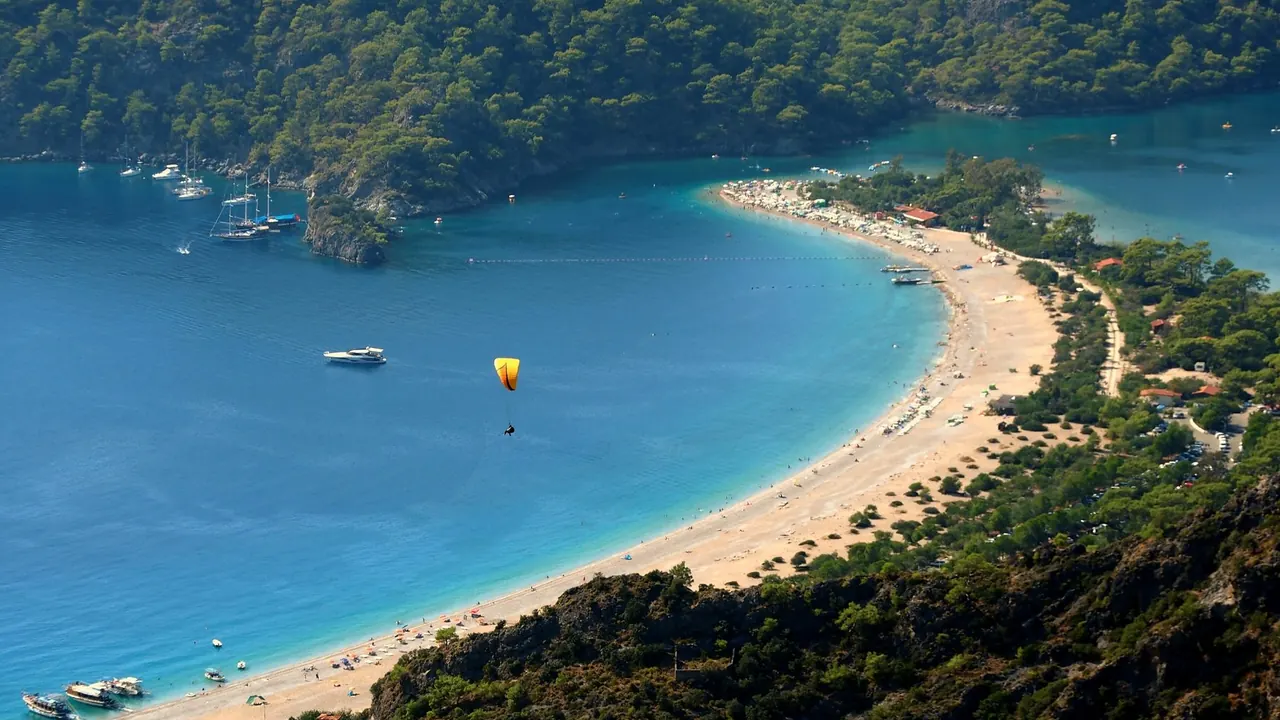
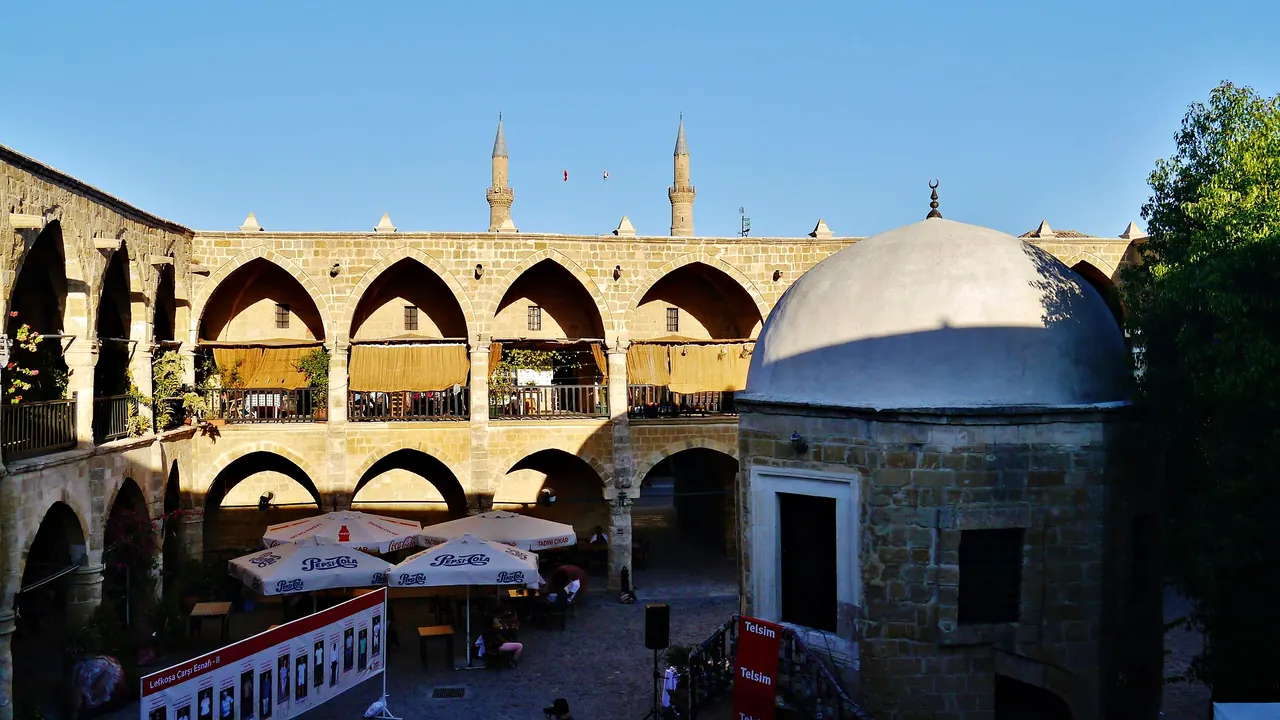
Photos: Fethiye by rheins, CC BY 3.0, cropped; Nicosia by Zairon, CC BY-SA 4.0, cropped.
Fethiye or Nicosia?
Our verdict in twelve categories, each scored against the same fixed benchmark cities, and the climate month by month, so you can choose for your trip.
Choose Fethiye for
- beaches
- nature and the outdoors
- families
Fethiye is the choice for a sun-and-sea vacation with an active streak. The lagoon at Oludeniz, coves reached by boat, the cliff paths of the Lycian Way and paragliding off Babadag put a beach and the mountains within reach of one base. Shallow water and pool hotels also make it easy with children.
Choose Nicosia for
- culture and sights
- live music and the arts
- food and drink
Pick Nicosia if you would rather spend your days in museums and old streets than on a sunbed. The walled old town split by the Green Line, the Cyprus Museum and the Selimiye Mosque give it a depth of history Fethiye cannot match. The meze tables are better too, and there is a small season of concerts and theatre. The sea is a drive away, so it suits a city break or a touring trip by car.
Scoreboard
Twelve categories on one fixed scale from 0 to 100. The shaded stretch is the gap between the two.
Your match
Pick a travel style or drag the sliders, and both match scores follow your weighting.
Wins on beaches and nature and the outdoors with your weighting.
Wins on culture and sights and live music and the arts with your weighting.
What matters to you?
Category by category
What the scores mean for a trip.
Beaches & swimming
Fethiye is a beach destination and Nicosia is not. A minibus from town reaches the Oludeniz lagoon in under half an hour. Beyond it lie the sandy cove of Kidrak, the shingle at Kabak and Butterfly Valley by boat, all with clear water, and even Calis, the town's own shore, is fine for a swim.
Nicosia has no shore at all. The sea at Larnaca or around Kyrenia is just as warm, but each trip there takes about 45 minutes each way, and on ordinary days a pool is the only way to cool off.
Food & drink
Nicosia is the better place to eat. Start with a long meze at a taverna in the lanes around Faneromeni, with souvla from the charcoal grill. Then walk across the Green Line for kebab, lahmacun and syrupy pastries near the Bandabulya market, which gives you two kitchens in one afternoon, with Commandaria and Troodos wines to follow.
Fethiye's best meal is the fish market ritual: you buy your fish at the stalls and a restaurant on the square cooks it, followed by rakı on the harbour. In town there are also lokantas and the canal market, but the resort strips at Hisaronu and Oludeniz mostly serve package-menu staples.
Culture & sights
Fethiye has a few striking sights. The Lycian rock tombs are carved into the cliff above town and glow at sunset. A Roman theatre lies by the harbour, and stone sarcophagi stand in ordinary streets. Over the ridge, the roofless houses and churches of Kayakoy, emptied in 1923, are the most affecting of all. Most of the town was rebuilt after the 1957 earthquake, so a day covers it.
Nicosia has far more to see. Inside the Venetian walls, with the Green Line running through them, the Archbishop's Palace holds Byzantine icons. Across the checkpoint stand the Selimiye Mosque and the Büyük Han caravanserai, with Lusignan, Ottoman and British buildings side by side. Just outside the walls near the Paphos Gate, the Cyprus Museum holds the island's best antiquities, and together they fill two or three days.
Nightlife
Neither is a nightlife destination, but evenings out feel quite different. In Fethiye they split between relaxed cocktail bars and rooftops in the Paspatur quarter and the loud Hisaronu strip of karaoke and late clubs aimed at package visitors. Much of that strip shuts from November to April.
Nicosia's nights belong to locals: students and young professionals drink on the pavements around Faneromeni Square, the bars filling only towards midnight, and a few clubs on the avenues stay open later. It goes on all year, though the island's big clubs are on the coast.
Nature & outdoors
Fethiye is far stronger for the outdoors. Babadag rises almost 1,970m straight behind the Oludeniz lagoon, and the Lycian Way follows cliff paths past Faralya and Kabak. Saklikent Gorge, sea kayaking and diving fill the rest of a week.
Nicosia sits on a flat plain that bakes brown in summer, and the moat gardens are its main green space. The good walking is a drive away, on the Kyrenia ridge or in the pine-covered Troodos, which at least stay cool in high summer.
Day trips
Both are good bases for day trips, of different kinds. Most outings from Fethiye go to ancient Lycia: Tlos, Pinara, Xanthos and Patara, plus the river tombs at Dalyan and the harbour towns of Kas and Kalkan. In season, a ferry with a passport check takes you to the medieval Old Town of Rhodes.
From Nicosia the whole island is in range: Kyrenia's harbour, Bellapais and St Hilarion to the north, Famagusta and Salamis to the east, and the painted churches of the Troodos to the south-west. In both places, a hire car or a tour makes the inland sites far easier.
Good for families
Fethiye is much the easier choice with children. The shallow, sheltered lagoon at Oludeniz suits small swimmers, and pool hotels around Hisaronu and Ovacik have family rooms. Boat trips with swimming stops, a small water park and the paragliders overhead keep older children busy.
Nicosia is welcoming and safe, and families eat out together late, but it has little built for children and no beach without a car. Summer days are often above 35°C, so most families are better off staying on the coast and visiting Nicosia for a day.
Getting around
Fethiye is a little simpler. Its centre and harbour are flat and walkable, dolmus minibuses run often to Oludeniz, Hisaronu, Calis and Kayakoy, and water taxis cross the bay. Only the inland ruins and Saklikent really need a car or a tour.
Nicosia's walled old town is easy on foot, and the Ledra Street crossing takes you to the north in minutes after an ID check. Beyond the walls the city is built around the car and buses are of little use to visitors, so most day trips mean hiring one and driving on the left.
Shopping & style
Neither is worth a shopping trip, but the browsing differs. Fethiye means markets and bazaars: the long weekly market by the canal for spices, honey and peshtemal towels, and the Paspatur lanes for carpets, leather, ceramics and lamps. The resorts sell mostly imitation goods.
Nicosia has ordinary high-street shopping on Ledra and Onasagorou streets and designer brands on the avenues outside the walls. The Cyprus Handicraft Centre sells Lefkara lace, and across the line the Bandabulya market has copperware and Turkish delight.
Affordability
Fethiye makes a budget go a little further, as long as you stay in town, eat in lokantas and ride the dolmus. The resort strips, paragliding, cruises and diving push costs up quickly, and alcohol is heavily taxed.
In Nicosia, meze and coffee are good value and the museums charge little. Hotels, though, are mid-range business rooms, and the real extra is the hire car most visitors need. Eating and shopping in the northern half cost noticeably less.
Live music & performing arts
Nicosia is the one with a season. As the capital it has the Cyprus Symphony Orchestra, a state theatre company and summer concerts in the moat, plus rebetiko, folk and jazz in the old-town bars, though most plays are in Greek.
In Fethiye, live music usually means a saz player in a meyhane or a cover band in Hisaronu, with the odd concert at the modest cultural centre.
Wellness & relaxation
Both have Ottoman baths, but Fethiye offers more ways to unwind. The historic hammam in the Paspatur quarter gives you the full ritual of scrubbing and foam massage, and the larger hotels have spas. Yoga retreats on the slopes above Kabak and Faralya offer slow stays with sea views, best in spring and autumn and away from the resort strips.
Nicosia has the domed Omeriye Hammam, the Büyük Hamam in the north and a slow pace in the old town, with coffee in shaded squares and a quiet lull on summer afternoons. For real rest, though, people head out to the Troodos villages.
When should you go?
Pick your month. The climate figures are measured averages, not a forecast.
Fethiye in July
Nicosia in July
Daytime high, °C
Rainfall in the month, mm
Where the figures come from
Fethiye's temperatures are measured 31 km from the centre, at Dalaman.
Fethiye has no rain gauge within 25 km of the centre, so its rainfall comes from a gridded climate dataset read at the city rather than from a gauge further away.
Nicosia's temperatures are measured 40 km from the centre, at Larnaca Airport.
Nicosia's station stands 218 m below the city centre, so the centre is likely a little cooler than the figures say.
Nicosia has no rain gauge within 25 km of the centre, so its rainfall comes from a gridded climate dataset read at the city rather than from a gauge further away.
Temperature and rainfall are climate normals, averaged over the years shown. Fethiye: 2000-2020 (rainfall 1991-2020) normals, Dalaman (30.8 km from centre). Nicosia: 1991-2020 normals, Larnaca Airport (40.4 km from centre).
Fethiye's beach season runs from late May into October, and in August the sea reaches about 27°C. July and August are hot at around 32°C, which pushes walks and ruin visits to the early morning. May, June and late September strike the best balance between warm water and bearable heat. Winter is wet, with close to 190mm of rain in January, and the sea is then too cool for most swimmers.
Nicosia is a degree or so hotter through the summer, with highs of 33°C on an inland plain that holds the heat, so July and August are hard going for walking the old town. Its winters are milder and far drier than Fethiye's, with plenty of sunshine even in mid-winter, so November to April works well for sightseeing and spring is best of all. The coast within reach stays swimmable from June well into autumn, but every swim means a drive.
Which traveller are you?
For a beach and sun trip, Fethiye wins easily. Oludeniz's shallow turquoise lagoon is a short minibus ride from town, and boat cruises stop at island coves and Butterfly Valley. From Nicosia, every beach day starts with a drive of most of an hour.
On a culture and arts trip, Nicosia is the better base. Its Venetian walls, the antiquities in the Cyprus Museum, the Selimiye Mosque and a symphony orchestra season add up to far more than Fethiye's rock tombs, Roman theatre and Kayakoy.
For an outdoors trip, Fethiye has mountains falling straight into the sea: the cliff paths of the Lycian Way, paragliding from Babadag, wading through Saklikent Gorge, plus kayaking and diving. Nicosia's plain is flat and scorched in summer, and its hills are a drive away.
Before you go
| Measure | Fethiye | Nicosia |
|---|---|---|
| Official language | Turkish | Turkish, Greek, Modern Greek |
| Currency | Turkish Lira (TRY) | Euro (EUR) |
| Sockets | CF230 V, 50 Hz | G240 V, 50 Hz |
| Driving side | Right | Left |
| Time zone | UTC+3 | UTC+2, UTC+3 in summer |
| Emergency number | 112 | 112 |
| Elevation | 0 m | 220 m |
| Main airport | Dalaman International Airport (DLM)30 km from centre61 non-stop destinations | Larnaca International Airport (LCA)41 km from centre112 non-stop destinations |
| Public holidays this year | 14 days | 17 days |
By the numbers
| Measure | Fethiye | Nicosia |
|---|---|---|
| City population | 182,200 | 56,848 |
| People per km² | - | 1,112 |
| Museums within 10 km | 1 | 19 |
| UNESCO World Heritage sites within 50 km | 1 | 2 |
| Swim season, months above 21 °C | 6 months | 6 months |
Where else could you go?
Every comparison below shares a destination with this one, so you can follow Fethiye or Nicosia somewhere new.