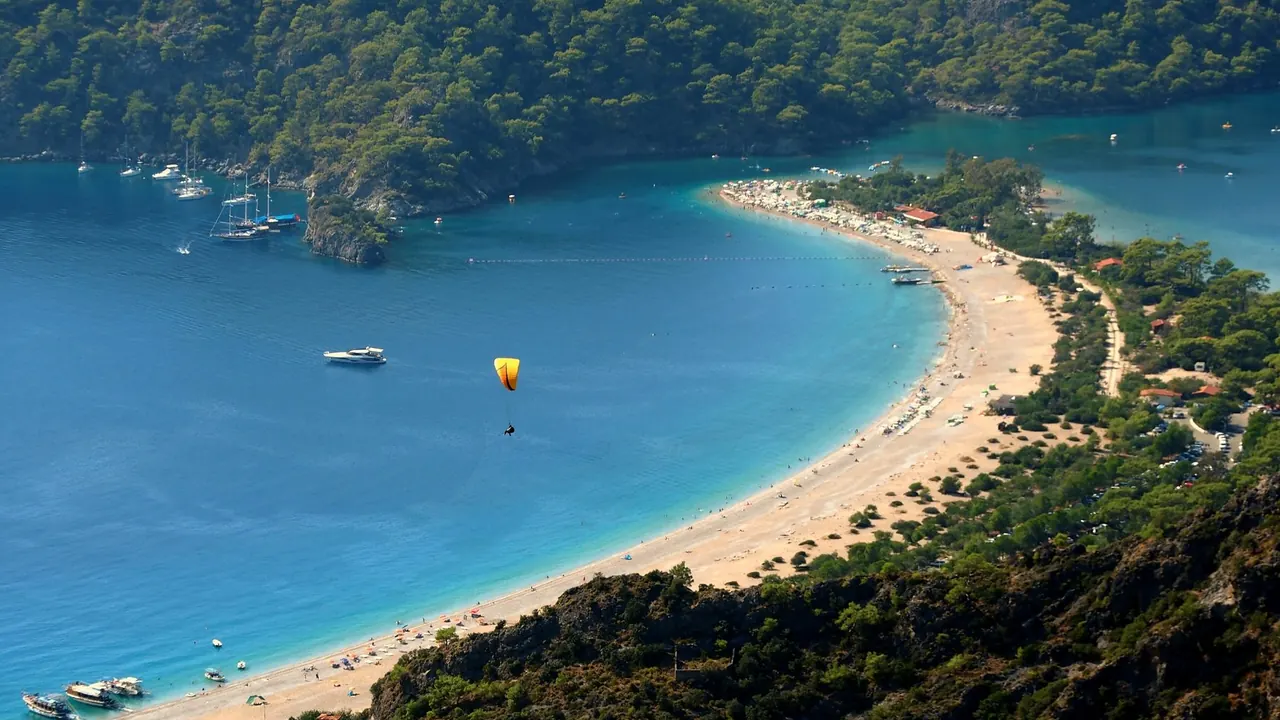
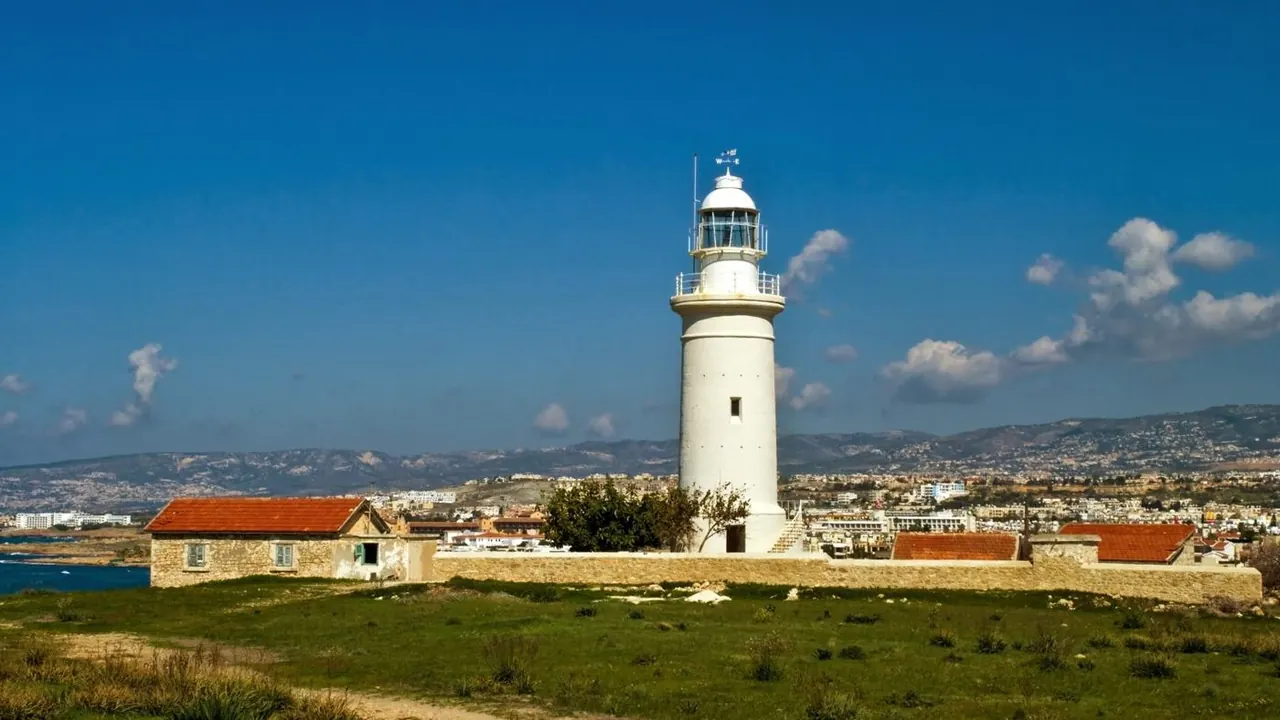
Photos: Fethiye by rheins, CC BY 3.0, cropped; Paphos by Nikodem Nijaki, CC BY-SA 3.0, cropped.
Fethiye or Paphos?
Our verdict in twelve categories, each scored against the same fixed benchmark cities, and the climate month by month, so you can choose for your trip.
Choose Fethiye for
- nature and the outdoors
- shopping
- wellness
Fethiye suits travellers who want the sea and the mountains in one place. You get the Oludeniz lagoon, paragliding off Babadag, the cliff paths of the Lycian Way and the canyon at Saklikent, with Lycian ruins and a boat to Rhodes for days out. It is also easier to get around without a car, cheaper if you stay in town and eat where locals do, and better for slowing down, with a historic hammam and yoga retreats above Kabak.
Choose Paphos for
- culture and sights
- families
- live music and the arts
If history matters as much as the beach, choose Paphos. The Roman mosaics in its archaeological park and the Tombs of the Kings give it far more to see in town than Fethiye's rock tombs and theatre. Families get Coral Bay's shallow sand, kids' clubs, a zoo and a water park. Winters are milder and much drier too, though you will almost certainly want a hire car.
Scoreboard
Twelve categories on one fixed scale from 0 to 100. The shaded stretch is the gap between the two.
Your match
Pick a travel style or drag the sliders, and both match scores follow your weighting.
Wins on nature and the outdoors and shopping with your weighting.
Wins on culture and sights and families with your weighting.
What matters to you?
Category by category
What the scores mean for a trip.
Beaches & swimming
Fethiye has the more memorable coast. The shallow turquoise lagoon at Oludeniz sits behind a shingle spit, there is the cliff-walled cove of Butterfly Valley, and boats run to coves on the islands of the bay. Together these give it a variety Paphos cannot quite match, even though the town's own beach at Calis is coarse and windy.
Paphos has a similar weakness in town, with short, rocky strips along the Kato Paphos promenade, so the good beaches are Coral Bay's sandy crescent and wild Lara Bay, both a drive away. The water is equally clear and warm at both, and Paphos stays swimmable into November.
Food & drink
Neither is a place to go for the food alone, and in both the resort strips serve English breakfasts and international menus to package visitors. The difference lies in what you go looking for.
In Fethiye it is the fish market, where you choose your fish at the stalls and a restaurant on the square cooks it, followed by rakı and meze on the harbour. In Paphos it is the long Cypriot meze of halloumi, sausage and kleftiko lamb, best in the tavernas of Ktima and the hill villages, with wine from the Laona slopes.
Culture & sights
Paphos is the clear choice for sightseeing. Its UNESCO-listed archaeological park holds Roman villas with some of the finest floor mosaics in the Mediterranean. With the Tombs of the Kings, the harbour castle and St Paul's Pillar, there is enough for two or three full days.
Fethiye's sights are striking but few: the Lycian rock tombs in the cliff above town, a Roman theatre by the harbour and sarcophagi standing in the streets. The emptied Greek village of Kayakoy over the ridge is the most moving of them. Beyond these, the town was largely rebuilt after an earthquake and has little else to see.
Nightlife
Both are summer resort scenes that go quiet in winter, and neither is a reason to pick one over the other. Fethiye lets you choose your mood: cocktail bars and rooftop terraces in the lit lanes of Paspatur, or the loud strip of karaoke bars and clubs at Hisaronu. Paphos puts its late nights on Bar Street in Kato Paphos and otherwise settles into long taverna dinners and drinks by the harbour.
Nature & outdoors
Fethiye's landscape is the more dramatic. Babadag rises almost 1,970m behind the lagoon and you can paraglide off its slopes. The cliff paths of the Lycian Way run past Butterfly Valley and Kabak, and at Saklikent you wade upstream through icy water between the canyon walls.
Paphos has good walking too, on the roadless Akamas peninsula, through Avakas Gorge and in the mouflon country of Paphos Forest. The Troodos add pine-forest hikes and a little skiing in winter. All of it involves more driving, though, and none of it has mountains falling straight into the sea in the same way.
Day trips
Fethiye sits in the heart of ancient Lycia, so a week fills easily with ruins: Tlos on its hilltop, the tomb cliff at Pinara, UNESCO-listed Xanthos and Letoon, and Patara behind its dunes. You can also take the river boat at Dalyan past temple tombs cut into the rock, visit Kas and Kalkan, and in season catch the ferry to the medieval Old Town of Rhodes, passport in hand.
Paphos has a solid list along the coast road, from Kourion's cliff-top site to Kolossi castle and Limassol. Inland are the painted Troodos churches, and further off is the walled capital, Nicosia. The range is narrower, though, and nearly all of it needs a car.
Good for families
Both work well for a beach vacation with children, but Paphos has more to fill the days around the beach. Coral Bay has shallow sand, there are hotels with kids' clubs, a zoo near Peyia and a large water park, and older children usually enjoy the mosaics. Tavernas are happy to have children until late in the evening.
Fethiye's best card is the sheltered, warm lagoon at Oludeniz, close to ideal for small swimmers. Beyond boat trips and a small water park, though, little is made for children, and midsummer is hotter.
Getting around
Fethiye is easier without a car. Dolmus minibuses run regularly from the compact town centre to Oludeniz, Hisaronu, Calis and Kayakoy, water taxis cross the bay, and intercity buses reach Dalyan and Kas. Tlos and Saklikent still need a car or a tour.
In Paphos you can walk the promenade, and buses run to Ktima and Coral Bay. But the hotels spread far along the coast, and reaching the gorges, villages and sites usually means hiring a car and driving on the left.
Shopping & style
Neither is a place for a shopping trip, but Fethiye gives you more to browse. Its big weekly market by the canal sprawls with spices, honey, cotton towels and textiles, and the lanes of Paspatur add carpets, leather, ceramics and lamps.
Paphos has the covered municipal market in Ktima and a seafront of beachwear and gift shops. The better buys there are lace, pottery, carob products and wine, bought in the villages where they are made.
Affordability
Money goes further in Fethiye as long as you stay in town, where lokantas, market food, dolmus fares and family-run guesthouses are all inexpensive. Paphos costs what you would expect of a eurozone resort, and the hire car you will almost certainly need adds to the bill, though meze dinners give a lot of food for the money. In both, prices climb sharply at seafront and lagoon-side hotels in July and August, and Fethiye's paragliding, cruises and heavily taxed alcohol soon add up.
Live music & performing arts
Neither has a season worth planning a trip around, but Paphos has one real occasion. The Aphrodite Festival stages open-air opera in front of the harbour castle in early autumn, and the ancient odeon hosts the odd concert. In Fethiye, live music mostly means a saz player in a meyhane or a cover band in Hisaronu.
Wellness & relaxation
Fethiye has a bathing tradition that Paphos lacks. The historic Ottoman hammam in Paspatur offers the full ritual of hot marble, scrubbing and foam massage, and the terraced retreats above Kabak and Faralya run yoga weeks with sea views.
Paphos relies on the spas of its resort hotels and an easy pace of promenade walks and village lunches. Both are calmest outside high summer, and in Fethiye rest also means staying away from the Hisaronu and Oludeniz strips.
When should you go?
Pick your month. The climate figures are measured averages, not a forecast.
Fethiye in July
Paphos in July
Daytime high, °C
Rainfall in the month, mm
Where the figures come from
Fethiye's temperatures are measured 31 km from the centre, at Dalaman.
Fethiye has no rain gauge within 25 km of the centre, so its rainfall comes from a gridded climate dataset read at the city rather than from a gauge further away.
Paphos has no rain gauge within 25 km of the centre, so its rainfall comes from a gridded climate dataset read at the city rather than from a gauge further away.
Temperature and rainfall are climate normals, averaged over the years shown. Fethiye: 2000-2020 (rainfall 1991-2020) normals, Dalaman (30.8 km from centre). Paphos: 1991-2020 normals, Paphos Airport (8.4 km from centre).
Summers are much alike, but the two part ways in autumn. Fethiye is a little hotter at the peak, with highs of 32°C in July and August that make walking in the middle of the day hard work. Its rains also come back early: October already brings about 73mm, and by January it reaches 187mm. Paphos is a degree or two cooler in midsummer and slightly milder from November to March. It gets roughly half Fethiye's rain in the wettest months and stays dry well into autumn, so it is the better choice for walking and sightseeing outside the summer.
The sea is warm enough to swim in at both from late May to October. In Fethiye the surest months for combining the beach with ruins and hikes are May, early June and September. October is still warm enough for a swim there, but rain is far more likely, so you are taking a chance on the weather. Paphos keeps a dry, mild October that suits the beach and the sights equally well, and its sea reaches about 28°C in August, a degree warmer than Fethiye's.
Which traveller are you?
On an outdoors trip, Fethiye is the stronger base. Babadag rises almost straight from the lagoon for tandem paragliding, the Lycian Way begins at Ovacik, and you can wade the icy canyon at Saklikent. Many of these places are close enough for a minibus or a short drive.
For a culture and arts trip, Paphos has far more. Its UNESCO-listed Roman mosaics, the Tombs of the Kings and the painted Troodos churches outweigh Fethiye's handful of sights. In early autumn there is also open-air opera below the harbour castle.
On a family trip with young children, Paphos has the edge. Coral Bay's shallow sand, resort kids' clubs, a zoo and a large water park give more variety. Still, Fethiye's sheltered lagoon at Oludeniz is just as good for small swimmers.
Before you go
| Measure | Fethiye | Paphos |
|---|---|---|
| Official language | Turkish | Turkish, Greek, Modern Greek |
| Currency | Turkish Lira (TRY) | Euro (EUR) |
| Sockets | CF230 V, 50 Hz | G240 V, 50 Hz |
| Driving side | Right | Left |
| Time zone | UTC+3 | UTC+2, UTC+3 in summer |
| Emergency number | 112 | 112 |
| Elevation | 0 m | 72 m |
| Main airport | Dalaman International Airport (DLM)30 km from centre61 non-stop destinations | Paphos International Airport (PFO)8 km from centre59 non-stop destinations |
| Public holidays this year | 14 days | 17 days |
By the numbers
| Measure | Fethiye | Paphos |
|---|---|---|
| City population | 182,200 | 35,961 |
| People per km² | - | 1,987 |
| Museums within 10 km | 1 | 4 |
| UNESCO World Heritage sites within 50 km | 1 | 2 |
| Swim season, months above 21 °C | 6 months | 6 months |
Where else could you go?
Every comparison below shares a destination with this one, so you can follow Fethiye or Paphos somewhere new.