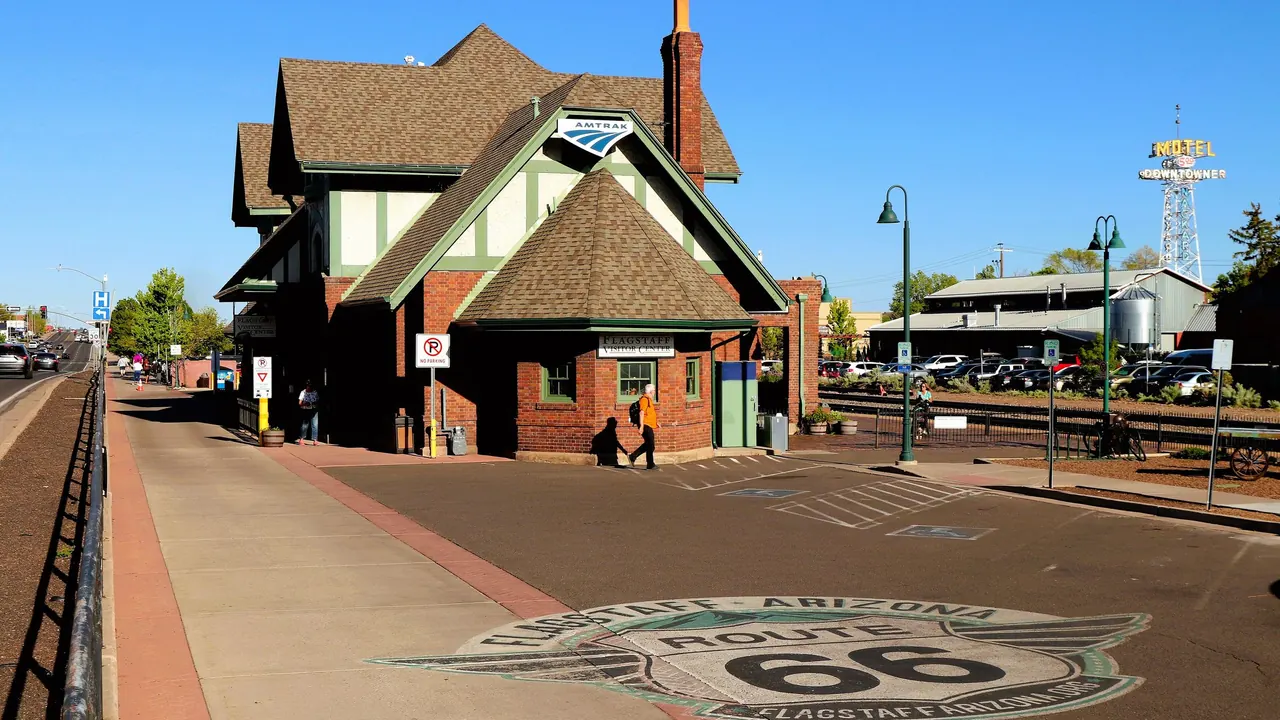
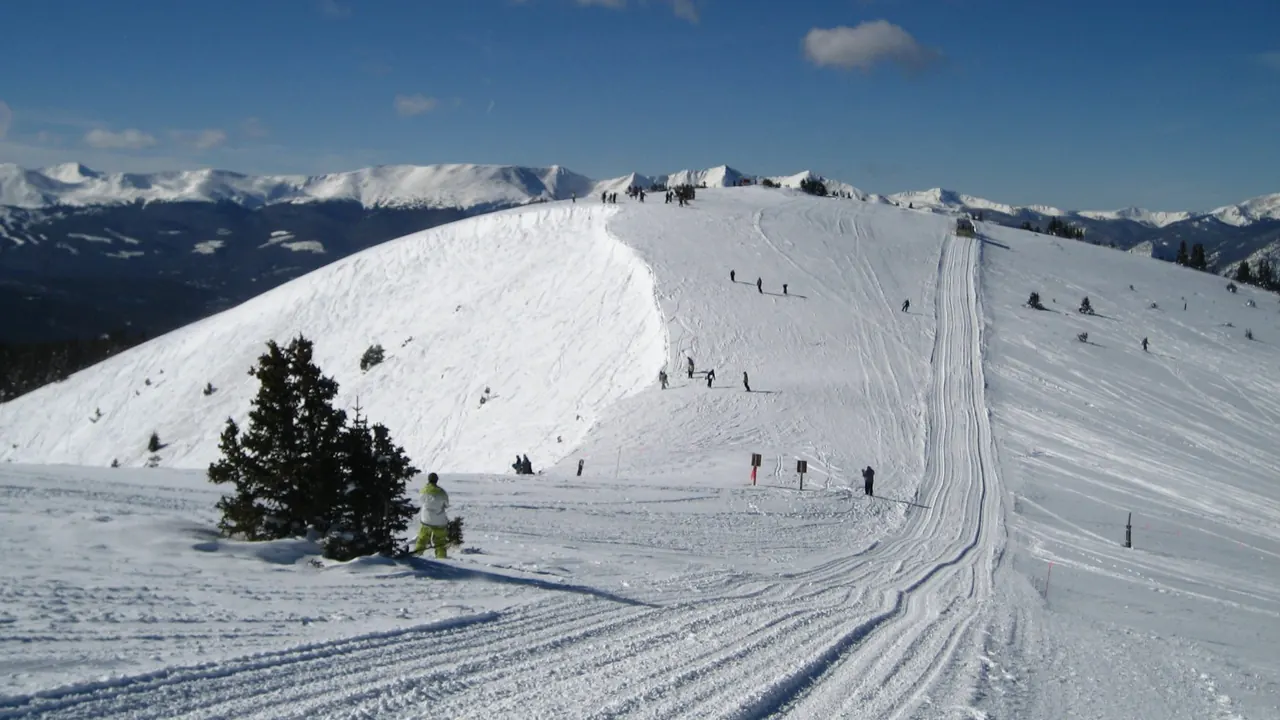
Photos: Flagstaff by Thank You (25 Millions) views, CC BY 2.0, cropped; Keystone by Rudi Riet, CC BY-SA 2.0, cropped.
Flagstaff or Keystone?
Our verdict in twelve categories, each scored against the same fixed benchmark cities, and the climate month by month, so you can choose for your trip.
Choose Flagstaff for
- prices
- culture and sights
- nightlife
Flagstaff suits a road trip through the American Southwest. It puts the South Rim of the Grand Canyon, Sedona's red rock and the old Sinagua and pueblo ruins within a day's drive. It is also a real town with things to do in the evening: brewery taprooms, an observatory where Pluto was found and a strong museum of Native American art. You need a car, but rooms and meals cost noticeably less, and it works as well in a warm June as in a snowy January.
Choose Keystone for
- getting around
- families
- nature and the outdoors
Keystone is for people whose vacation is about snow. Three peaks of its own, Arapahoe Basin up the road and Vail or Breckenridge within an hour make it a serious ski base. The ski school, condos with kitchens and free shuttles make it especially easy with children. Off the slopes there is little to see and the evenings are short, and the whole trip costs a good deal more.
Scoreboard
Twelve categories on one fixed scale from 0 to 100. The shaded stretch is the gap between the two.
Your match
Pick a travel style or drag the sliders, and both match scores follow your weighting.
Wins on prices and culture and sights with your weighting.
Wins on getting around and families with your weighting.
What matters to you?
Category by category
What the scores mean for a trip.
Beaches & swimming
Neither is a swimming destination, but Flagstaff at least has a summer dip within reach. The creek pools of Oak Creek Canyon, Slide Rock among them, are a short drive towards Sedona, though they are cold, slippery and crowded at weekends.
At Keystone, Dillon Reservoir looks tempting below the resort, but it is fed by snowmelt and mostly closed to swimmers. Here the water means a hotel pool or a hot tub.
Food & drink
Flagstaff gives you more to choose from. Its strength is the cluster of craft breweries downtown and in the Southside, backed by a university-town mix of diners, Mexican and New Mexican kitchens and regional touches such as Navajo tacos and green chile.
Keystone eats like a resort: slopeside grills, après-ski burgers and a few more ambitious rooms, one reached by gondola. Elk, lamb and trout add some local character, but the range is narrow, and many visitors cook in their condo or drive to Frisco or Breckenridge.
Culture & sights
There is a real gap here. Flagstaff's list is short but worth your time: the Lowell Observatory on Mars Hill, the Museum of Northern Arizona in the pines, the Arts and Crafts Riordan Mansion and a brick railroad-era downtown. That fills a day or two.
Keystone was built for skiing in the 1970s, and River Run Village is convenient rather than historic. The area's mining past survives only in the cabins and ruins up the Snake River valley, and for museums or old streets you have to leave the resort.
Nightlife
Flagstaff makes for the better evening out. Taprooms, cocktail bars and old Route 66 saloons sit a few minutes' walk apart downtown and in the Southside, and students liven up weekends in term time, although there are hardly any clubs.
Keystone's night peaks at après-ski on the River Run decks and is mostly over soon after dinner, because the resort fills with families and early risers. Anyone wanting more takes the bus to Breckenridge's Main Street.
Nature & outdoors
Both are first-class mountain bases, but the landscapes are very different. Flagstaff looks out over a desert plateau and its canyons: one of the largest ponderosa forests in the world, the volcanic San Francisco Peaks, the lava flows of Sunset Crater, Sedona's red rock and the Grand Canyon, all under famously dark night skies.
Keystone is high alpine country built around skiing. It has its own three peaks with bowls above 3,600m, Arapahoe Basin next door and several big resorts within an hour. In summer the same slopes turn to lift-served biking, with Colorado's 14,000ft summits and the tundra of Loveland Pass close by.
Day trips
The two are about level on day trips, but they reach back to different periods. Around Flagstaff the outings are ancient and scattered: Sinagua ruins at Walnut Canyon and Wupatki, the cliff dwellings of the Verde Valley, the Hopi mesas, plus Jerome and the railway from Williams to the canyon. All of them need a car.
From Keystone the theme is the 19th-century silver boom: Breckenridge, Georgetown with its loop railway, Leadville's opera house. Vail is close by, and Denver is within reach for a dose of city life.
Good for families
Keystone is the easier choice with children, because the whole resort is set up for them. It has a large ski school, gentle runs, tubing, a snow fort and the skating rink at Lakeside Village, with free shuttles between condos and lifts.
Flagstaff suits curious children more than sporty ones. Telescope nights at Lowell, dinosaurs at the museum, rope courses and winter sledding all work well, but the outings are far apart, and long drives wear on young travellers.
Getting around
Keystone is easier once you have arrived. Free shuttles link its three bases, and free county buses run to Dillon, Frisco and Breckenridge, so you can manage without a car. The catch is getting there: the drive or shuttle up I-70 from Denver can be slow in winter.
Flagstaff is easier to reach, with long-distance trains stopping downtown, and its centre is easy to walk or cycle. Beyond town, though, the mountain, the monuments, Sedona and the Grand Canyon all mean driving or booking a tour.
Shopping & style
Flagstaff has the more interesting browsing. Navajo rugs, Hopi kachina carvings, pottery and turquoise jewellery are sold in downtown galleries, the museum shop and trading posts, and buying from established dealers is the way to be sure of authentic work. Keystone has mostly ski gear and rental shops, and its one real draw is the outlet centre in Silverthorne, ten minutes away, for brand-name clothes.
Affordability
Flagstaff costs much less. Chain motels along Route 66 and brewery meals keep a stay reasonable, though a hire car, park entry fees and tipping add up, and rooms fill on summer weekends as the bed base for the Grand Canyon.
In ski season Keystone is expensive at every step: lift access, slopeside condos, equipment, ski school and resort meals. Free buses and self-catering from the Dillon and Silverthorne supermarkets soften the cost, and summer is gentler, but it never becomes cheap.
Live music & performing arts
Flagstaff has the steadier year-round calendar. The Flagstaff Symphony and the university music school play on campus, and the restored Orpheum downtown hosts touring folk and indie acts.
Keystone's offer is concentrated in summer, with village-stage festivals, concerts at Dillon's amphitheatre by the reservoir and Breckenridge's classical festival. In winter the main venue is the professional theatre company in Silverthorne.
Wellness & relaxation
Neither has a bathing culture of its own, but they relax you in different ways. Keystone's version is recovery after skiing, with resort spas and a hot tub under falling snow at nearly every lodge, and natural hot springs over the pass at Idaho Springs. Flagstaff's version is pine air, cool evenings and bright stars in a slow town, and anyone wanting proper spa treatments drives an hour down to Sedona.
When should you go?
Pick your month. The climate figures are measured averages, not a forecast.
Flagstaff in July
Keystone in July
Daytime high, °C
Rainfall in the month, mm
Where the figures come from
Flagstaff has no rain gauge within 25 km of the centre, so its rainfall comes from a gridded climate dataset read at the city rather than from a gauge further away.
Keystone's temperatures are measured 51 km from the centre, at Leadville / Stringtown.
Keystone's station stands 232 m above the city centre, so the centre is likely a little warmer than the figures say.
Keystone has no rain gauge within 25 km of the centre, so its rainfall comes from a gridded climate dataset read at the city rather than from a gauge further away.
Temperature and rainfall are climate normals, averaged over the years shown. Flagstaff: 1991-2020 normals, Flagstaff / Fort Tuthill (7.4 km from centre). Keystone: 2006-2020 (rainfall 1991-2020) normals, Leadville / Stringtown (50.8 km from centre).
Flagstaff is the warmer of the two all year. Summer days reach about 27°C, which is comfortable for walking at this altitude. June is almost completely dry at 6mm, and then the afternoon monsoon storms arrive in July and August, peaking at around 64mm. September and October are mild and settled, the best months for hiking and the canyon. Winters are cold with real snow, but daytime temperatures usually stay above freezing.
Keystone has a true alpine climate. From December to February daytime highs sit around -2°C, which keeps the snow dry for a season running from late autumn into spring. Even midsummer only reaches about 21°C, cool enough for long hikes on the tundra. Precipitation is spread evenly through the year, without Flagstaff's dry June or its monsoon peak.
Which traveller are you?
On a culture and arts trip, Flagstaff is the clear choice. Its sights are few but substantial, from astronomy history to Native American art, and ancient pueblo ruins are a short drive away. At Keystone, culture means leaving the resort.
For a trip on a tight budget, Flagstaff is the realistic choice. A careful traveller can plan around the cost of a car and park fees. Keystone is built for spending on the mountain and never turns cheap, even in summer.
On a family trip with children, Keystone has the edge. Children can learn to ski while their parents take the bigger runs, and the days work without a car. Flagstaff rewards curious children but means more hours on the road.
Before you go
| Measure | Flagstaff | Keystone |
|---|---|---|
| Currency | US Dollar (USD) | US Dollar (USD) |
| Sockets | AB120 V, 60 Hz | AB120 V, 60 Hz |
| Driving side | Right | Right |
| Time zone | UTC-7 | UTC-7, UTC-6 in summer |
| Emergency number | 911 | 911 |
| Elevation | 2,106 m | 2,796 m |
| Main airport | Flagstaff Pulliam Airport (FLG)7 km from centre2 non-stop destinations | Denver International Airport (DEN)116 km from centre231 non-stop destinations |
| Public holidays this year | 12 days | 12 days |
By the numbers
| Measure | Flagstaff | Keystone |
|---|---|---|
| City population | 76,831 | 1,369 |
| People per km² | 464 | 13 |
| Museums within 10 km | 1 | 0 |
| UNESCO World Heritage sites within 50 km | 0 | 0 |
Where else could you go?
Every comparison below shares a destination with this one, so you can follow Flagstaff or Keystone somewhere new.