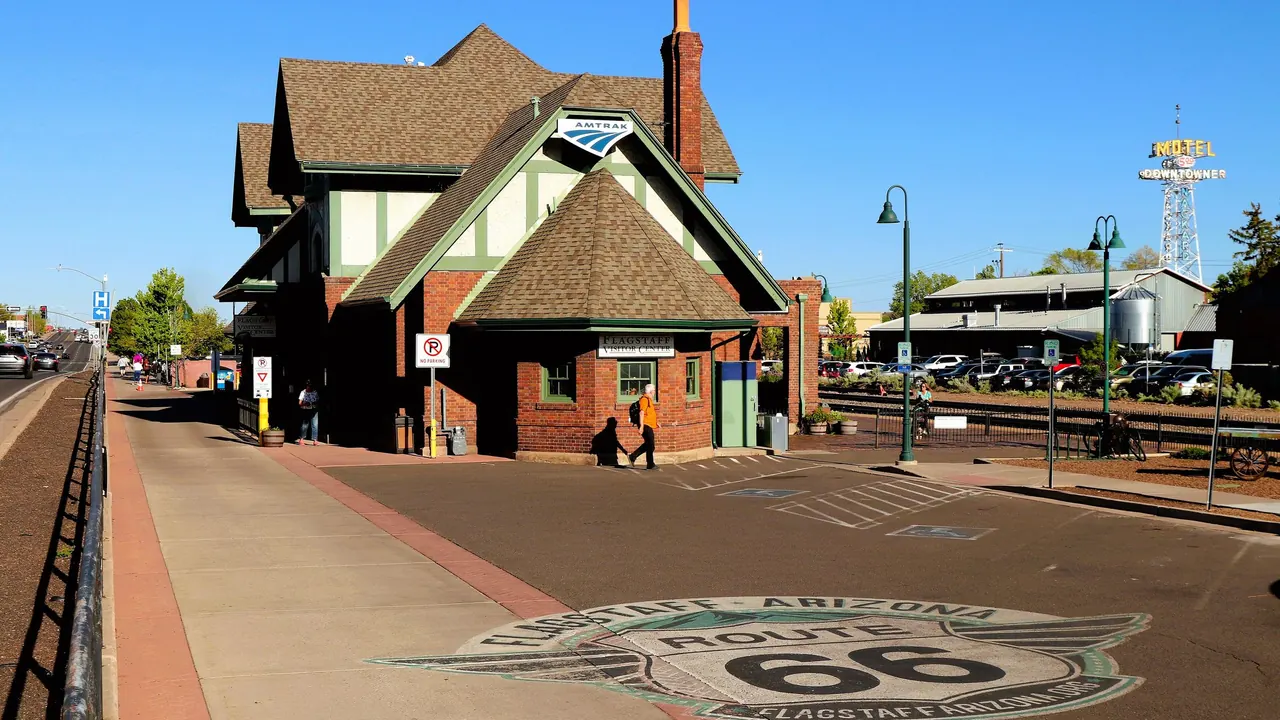
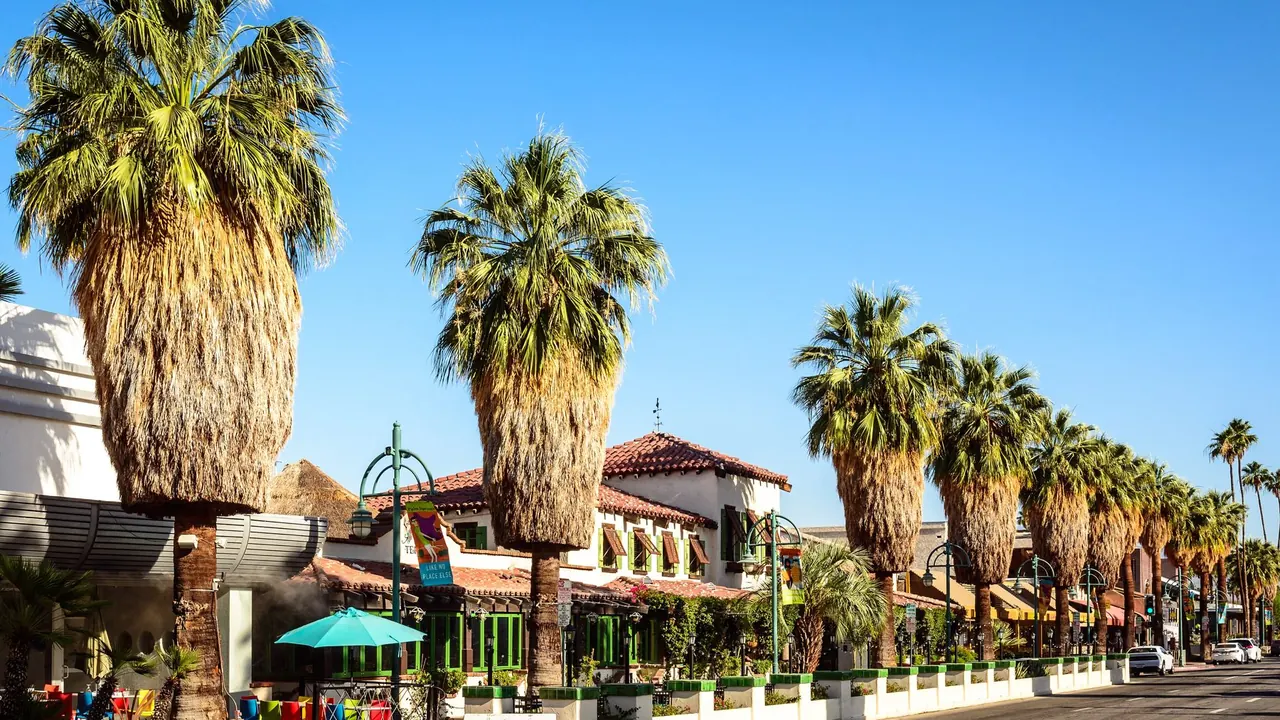
Photos: Flagstaff by Thank You (25 Millions) views, CC BY 2.0, cropped; Palm Springs by Domenico Convertini, CC BY-SA 2.0, cropped.
Flagstaff or Palm Springs?
Our verdict in twelve categories, each scored against the same fixed benchmark cities, and the climate month by month, so you can choose for your trip.
Choose Flagstaff for
- families
- day trips
- nature and the outdoors
Flagstaff is for travellers who want to be outdoors from morning to dusk. It sits in pine forest at altitude below the San Francisco Peaks, with the Grand Canyon, Sedona's red rock and a string of ancient pueblo ruins all within driving range. It also suits families, and anyone who wants a cheaper base for a road trip. The town itself is modest, so pick it for what lies around it rather than for its streets.
Choose Palm Springs for
- wellness
- shopping
- live music and the arts
Palm Springs suits a slower, more grown-up trip, built around hot mineral water, a pool and mid-century houses. It is the better choice for switching off, browsing vintage design and spending evenings on patios along Arenas Road. The mountains and Joshua Tree are close enough for a morning hike, but most visitors come here to rest rather than to cover ground.
Scoreboard
Twelve categories on one fixed scale from 0 to 100. The shaded stretch is the gap between the two.
Your match
Pick a travel style or drag the sliders, and both match scores follow your weighting.
Too close to call, 2 points apart
Wins on families and day trips with your weighting.
Wins on wellness and shopping with your weighting.
What matters to you?
Category by category
What the scores mean for a trip.
Beaches & swimming
Neither town is anywhere near the sea, so neither is a beach destination. The difference is in what replaces it. In Palm Springs the pool is the centre of the stay, and almost every hotel and rental is built around one, warm through a long season.
Flagstaff's alternative is outdoor and colder: the creek pools at Slide Rock in Oak Creek Canyon, which are slippery, chilly and busy at weekends. Otherwise you are left with a hotel or public pool, and at that altitude you will not spend afternoons lounging beside it.
Food & drink
Neither town is a reason to travel for food, and they fall short in different ways. Flagstaff's strength is its beer, with craft brewery patios downtown and in the Southside, plus Navajo frybread and green chile as regional touches. Palm Springs is about long patio brunches and poolside cocktails, with date shakes from the Indio groves and honest taquerias further down the valley as the things worth seeking out.
Culture & sights
Palm Springs has the more distinctive sightseeing, because the town itself is the exhibit. A day of driving or cycling past Frey and Neutra houses and the Alexander homes in Twin Palms shows off one of the densest collections of mid-century modern buildings anywhere. The art museum and the Agua Caliente Cultural Museum round it out.
Flagstaff's list is shorter but has real substance. It includes the observatory where Pluto was discovered, the Museum of Northern Arizona's Hopi, Navajo and Zuni collections and the Riordan Mansion. A day or two covers the town.
Nightlife
Both towns go quiet early, but Palm Springs has the livelier and more characterful evenings. Arenas Road is a long-established LGBTQ strip of patio bars and drag nights, and Palm Canyon Drive adds retro cocktail lounges. In spring, hotel pool parties carry the weekends.
Flagstaff's evenings are taprooms and old Route 66 saloons around downtown and the Southside, livened up by students in term time. Most visitors there are in bed early ahead of a dawn start for the canyon.
Nature & outdoors
Both towns sit under mountains, but Flagstaff is the more complete outdoor base. It is surrounded by an immense ponderosa forest, with the volcanic San Francisco Peaks and a ski area on its doorstep. Sedona, Meteor Crater and the Grand Canyon's South Rim are all within an easy drive, and its dark skies make stargazing a highlight.
Palm Springs has its own drama: the tramway lifts you from the desert floor to pine forest on San Jacinto, and the Indian Canyons hide palm oases. Joshua Tree is about an hour away. The catch is summer, when the heat restricts hiking to the first hour of daylight or the upper mountain.
Day trips
Flagstaff has much the richer spread of outings: the Grand Canyon by road or by the historic railway from Williams, Sedona and the hillside town of Jerome, the cliff dwellings at Montezuma Castle and the Hopi mesas. Each is a different kind of day.
From Palm Springs the trips are smaller and quirkier. You can visit the mountain village of Idyllwild, the old film set at Pioneertown, or Salvation Mountain and the abandoned resorts of the Salton Sea. Both towns need a car for all of it.
Good for families
Flagstaff works noticeably better with children. Kids enjoy the observatory telescopes, the museum's dinosaurs, rope courses in the pines, winter sledding and the train to the Grand Canyon. The things to plan around are the altitude for the first day or two and the long drives.
Palm Springs has good single outings, such as the Living Desert zoo, the tramway and the Air Museum. However, the town leans towards adults, with many adults-only hotels and midday heat from late spring. Families usually do better at the big resorts further down the valley.
Getting around
You need a car in both towns, but Flagstaff is a little easier without one. Its downtown and Southside are walkable, a paved urban trail network makes cycling practical, and long-distance trains stop in the centre.
In Palm Springs, the downtown strip is flat and easy on foot in the cooler months, but valley buses are slow and summer rules out walking at midday. Its real advantage is the airport, which sits on the edge of town.
Shopping & style
Palm Springs is the better place to shop, especially for design. The Uptown Design District is lined with mid-century furniture, lighting and vintage clothing. Beyond the town, El Paseo in Palm Desert and the large outlet centres at Cabazon cover mainstream shopping.
Flagstaff is small-scale, mostly outdoor gear and Route 66 souvenirs. Its one serious draw is Native American craft, such as Navajo rugs, Hopi kachina carvings and turquoise jewellery, best bought from established dealers or directly from artists.
Affordability
Flagstaff is the cheaper of the two. Chain motels along Route 66 keep a basic stay affordable, and staying there costs far less than staying in Sedona or at the canyon rim. Rooms do rise on summer weekends and during school breaks.
Palm Springs charges resort prices through its winter and spring high season, and festival weekends push them higher. The exception is summer, when rooms fall steeply for anyone who can bear the heat. In both towns, a hire car adds to the cost.
Live music & performing arts
Palm Springs and its valley offer more to see. Coachella and Stagecoach fill the Indio polo grounds each April, the McCallum Theatre hosts touring shows, and casinos book big-name acts. Drag cabaret and piano bars are the town's own speciality, although the programme largely stops in summer.
Flagstaff's calendar is modest. It has a symphony orchestra and university concerts, touring bands at the restored Orpheum Theater and summer concerts in the pines. These are pleasant for an evening out.
Wellness & relaxation
This is where Palm Springs pulls far ahead. The town was founded on the Agua Caliente hot spring, and its bathhouse lets you soak in the mineral water. In Desert Hot Springs, a short drive north, small spa motels fill their pools straight from the ground, and the slow pool-and-sunset rhythm does the rest.
Flagstaff has no hot springs and few spas. Its calm comes from cool pine-scented evenings and bright stars. Visitors after treatments drive down to Sedona.
When should you go?
Pick your month. The climate figures are measured averages, not a forecast.
Flagstaff in July
Palm Springs in July
Daytime high, °C
Rainfall in the month, mm
Where the figures come from
Flagstaff has no rain gauge within 25 km of the centre, so its rainfall comes from a gridded climate dataset read at the city rather than from a gauge further away.
Palm Springs has no rain gauge within 25 km of the centre, so its rainfall comes from a gridded climate dataset read at the city rather than from a gauge further away.
Temperature and rainfall are climate normals, averaged over the years shown. Flagstaff: 1991-2020 normals, Flagstaff / Fort Tuthill (7.4 km from centre). Palm Springs: 2006-2020 (rainfall 1991-2020) normals, Palm Springs (2.3 km from centre).
The two towns are at their best in opposite seasons. Flagstaff is a warm-weather destination. Late spring is its driest stretch, with May and June almost rainless, and by June the days are pleasantly warm for the trails. July and August are the warmest months, peaking around 27°C. They are also the wettest, with afternoon monsoon storms bringing about 64mm in August. September dries out as the monsoon fades, and October is drier still and crisp, good for walking. Winter is properly cold, with daytime highs around 5°C in January and snow. That is good for sledding and skiing but not for long days on foot.
Palm Springs turns this round. From November to April it is dry and pleasantly warm, with highs of about 20°C in December rising to the high twenties by March, which is perfect for the pool and for hiking. By June the heat passes 40°C and stays there until September, so walking the streets at midday is out of the question. Rain is scarce all year, and even the wettest winter months see very little.
Which traveller are you?
On an outdoors trip, Flagstaff is the stronger base. You get alpine trails on Humphreys Peak, Sunset Crater's lava flows and the Grand Canyon's South Rim within driving range. Palm Springs has fine canyons and Joshua Tree, but summer heat confines hiking to dawn.
For a relaxing and wellness trip, Palm Springs wins easily. Its hot mineral springs, the spa motels of Desert Hot Springs and its pool-centred days are built for unwinding. Flagstaff offers quiet pine-scented evenings but no bathing culture, and sends spa-seekers to Sedona.
On a family trip with children, Flagstaff is the easier choice. Telescope evenings at Lowell Observatory, dinosaur displays, snow play and the steam train to the Grand Canyon all suit kids. Palm Springs leans towards adults, with many adults-only hotels and a cocktail-led social life.
Before you go
| Measure | Flagstaff | Palm Springs |
|---|---|---|
| Currency | US Dollar (USD) | US Dollar (USD) |
| Sockets | AB120 V, 60 Hz | AB120 V, 60 Hz |
| Driving side | Right | Right |
| Time zone | UTC-7 | UTC-8, UTC-7 in summer |
| Emergency number | 911 | 911 |
| Elevation | 2,106 m | 146 m |
| Main airport | Flagstaff Pulliam Airport (FLG)7 km from centre2 non-stop destinations | Palm Springs International Airport (PSP)2 km from centre29 non-stop destinations |
| Public holidays this year | 12 days | 13 days |
By the numbers
| Measure | Flagstaff | Palm Springs |
|---|---|---|
| City population | 76,831 | 44,575 |
| People per km² | 464 | 181 |
| Museums within 10 km | 1 | 3 |
| UNESCO World Heritage sites within 50 km | 0 | 0 |
Where else could you go?
Every comparison below shares a destination with this one, so you can follow Flagstaff or Palm Springs somewhere new.