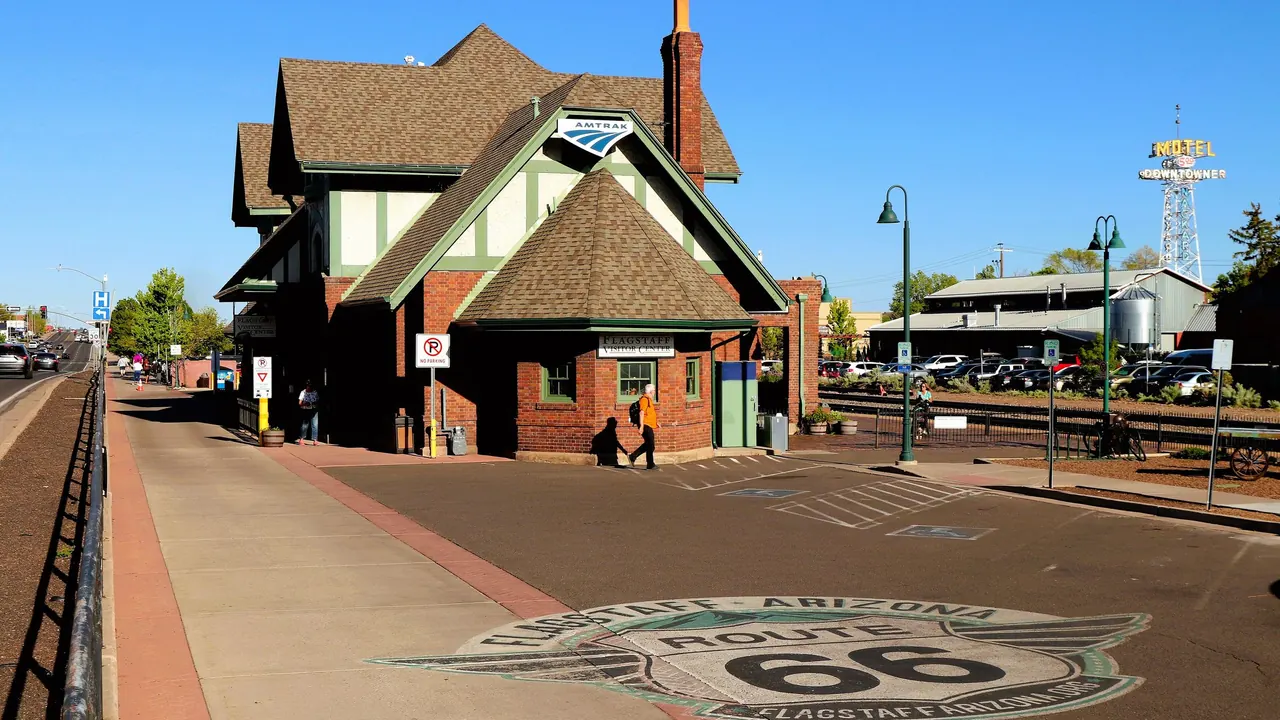
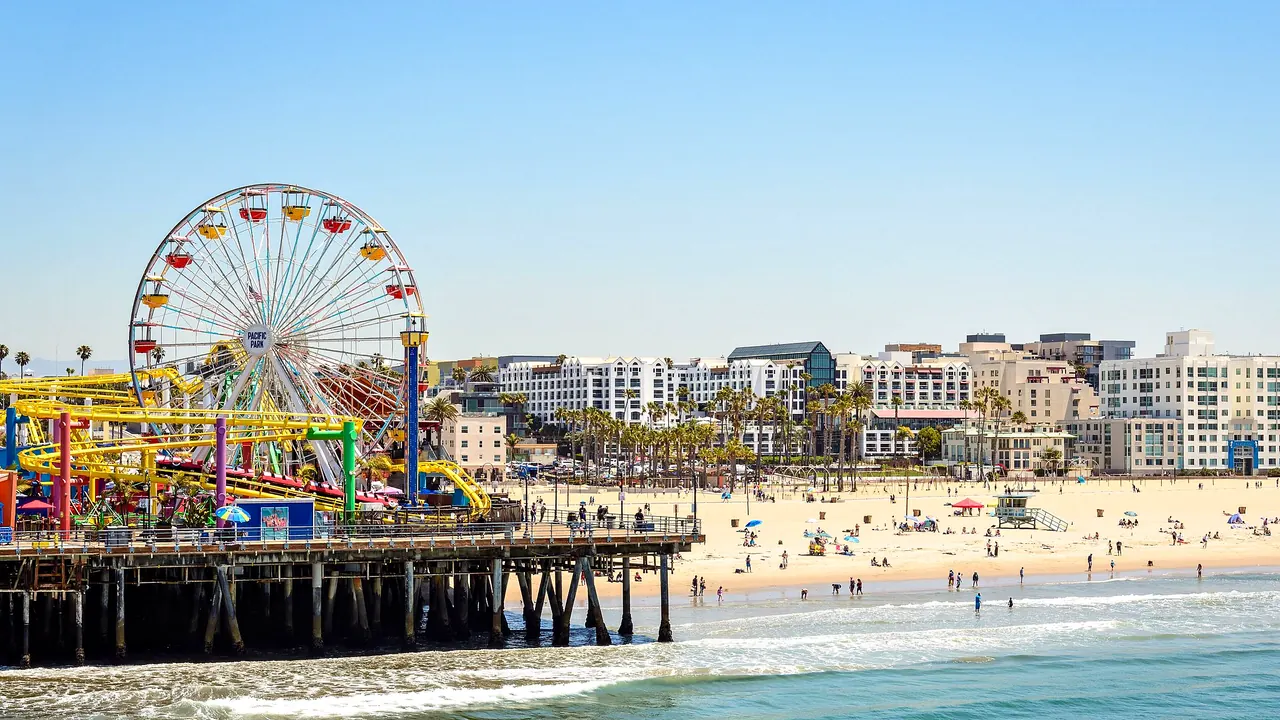
Photos: Flagstaff by Thank You (25 Millions) views, CC BY 2.0, cropped; Santa Monica by Domenico Convertini, CC BY-SA 2.0, cropped.
Flagstaff or Santa Monica?
Our verdict in twelve categories, each scored against the same fixed benchmark cities, and the climate month by month, so you can choose for your trip.
Choose Flagstaff for
- prices
- nature and the outdoors
Flagstaff is for travellers who want to spend their days outside. It has mountain trails in the pines, volcanic country on the edge of town, and the red rock around Sedona and the South Rim of the Grand Canyon within a morning's drive. It is far cheaper to stay in than the coast, and the evenings are quiet: a brewery patio or a look through a telescope rather than a night out. Come with a car and plenty of energy.
Choose Santa Monica for
- beaches
- shopping
- food and drink
Pick Santa Monica if you want sand and sun with some comfort around them. It has a wide lifeguarded beach, better restaurants and shops, mild weather in every month and a centre you can manage on foot and by bus. It costs a great deal more and the sea stays cool, but for families and anyone who wants the beach at the heart of the trip, it is the easier choice.
Scoreboard
Twelve categories on one fixed scale from 0 to 100. The shaded stretch is the gap between the two.
Your match
Pick a travel style or drag the sliders, and both match scores follow your weighting.
Wins on prices and nature and the outdoors with your weighting.
Wins on beaches and shopping with your weighting.
What matters to you?
Category by category
What the scores mean for a trip.
Beaches & swimming
Flagstaff is a mountain town at altitude, a long way from any coast. The only swimming nearby is in the cold, slippery creek pools of Oak Creek Canyon, such as Slide Rock, which are crowded at weekends.
Santa Monica is a proper beach town. A wide strip of pale sand runs past the pier with lifeguard towers along it, and the quieter coves of Malibu and Point Dume are a short drive north. The cool Pacific means many visitors wade more than swim.
Food & drink
Santa Monica eats noticeably better. Its restaurants draw on the downtown farmers market for seasonal Californian cooking, seafood and brunch, and Main Street, Montana Avenue and nearby Venice add plenty of neighbourhood places. Its gap is cheap immigrant food, which is a long drive east into Los Angeles.
Flagstaff's strength is beer. Craft breweries cluster downtown and in the Southside, around a plain mix of diners, Mexican kitchens and barbecue, with some Navajo frybread and green chile. It feeds a hungry hiker well, but it is not a reason to go.
Culture & sights
Neither town is a sightseeing destination, but their sights are very different. Flagstaff's are its own and closely tied to the region: the Lowell Observatory, where Pluto was discovered, the Hopi, Navajo and Zuni collections at the Museum of Northern Arizona, and ancient pueblo ruins a short drive away.
Santa Monica itself offers the pier and the galleries of Bergamot Station. Its real cultural pull is the two Getty museums just outside town, with European art and Roman antiquities. Old Route 66 links the two: it runs through Flagstaff's brick downtown and ends at Santa Monica's pier.
Nightlife
Neither has much of a club scene, but Santa Monica offers a little more choice. You can have sunset drinks on a hotel rooftop over the ocean, go to the pubs on Main Street or join the looser crowd in Venice. Hollywood is there for a big night, though it is a long ride away.
Flagstaff's evenings are a walk between brewery taprooms and old Route 66 saloons downtown. Students liven things up in term time, and the town is mostly asleep well before the small hours.
Nature & outdoors
This is where Flagstaff stands out. It sits below the volcanic San Francisco Peaks, with alpine trails, aspen groves and a ski area, and is surrounded by a huge ponderosa forest and the lava flows of Sunset Crater. The Grand Canyon and Sedona's red rock are within easy reach, and the dark night skies are a sight in themselves.
Santa Monica's outdoors are gentler but available every day of the year. There are chaparral and oak canyon trails in the Santa Monica Mountains, a 35km beach path for cycling, surf lessons, and whale-watching in winter and spring.
Day trips
Santa Monica has more substantial places within reach. You can drive to Santa Barbara's mission and wine country, Laguna Beach's coves or Ojai's quiet valley, take the ferry to Catalina's Avalon, or spend a full day in Pasadena or Hollywood. Traffic decides how far you get.
Flagstaff's outings are smaller and more spread out, but they reach much further back in history. They include the Sinagua ruins at Walnut Canyon and Wupatki, the cliff dwellings of the Verde Valley, the hillside town of Jerome and the ancient Hopi villages on the mesas. A car is essential for all of them.
Good for families
Santa Monica is the easier choice with children. It has a wide lifeguarded beach for digging, rides and a carousel on the pier, a small aquarium under the pier and flat paths for family bike rides, all in a compact town with mild weather. Theme parks mean a long day in traffic.
Flagstaff suits curious children too, with telescope evenings, dinosaur displays and snow play in winter. Parents should allow for the altitude, which tires small children for the first day or two, cold nights and long drives between outings.
Getting around
Santa Monica is far easier without a car. The pier, the Promenade and Main Street are within walking distance of each other, blue buses cover the town and the E Line light rail runs to downtown Los Angeles. Hollywood, the Getty and Malibu still mean ride-hailing or a rental car.
In Flagstaff, only the downtown and Southside are walkable. The mountain, the national monuments, Sedona and the Grand Canyon are all beyond public transport, so you will need a car or a tour, and winter ice can make the mountain roads difficult.
Shopping & style
Santa Monica has the bigger and more varied shopping. Chain flagships line the Third Street Promenade, Montana Avenue has upmarket boutiques, and Main Street and Abbot Kinney in Venice offer surf shops and design-led independents.
Flagstaff's shopping is small-scale, but it has one thing Santa Monica cannot match: Native American craft. Navajo rugs, Hopi kachina carvings and silver and turquoise jewellery are sold in its galleries and roadside trading posts.
Affordability
Flagstaff is clearly cheaper. Chain motels along old Route 66 and casual brewery meals keep a stay reasonable, although rooms rise on summer weekends and a hire car, fuel and park fees add up.
Santa Monica is expensive even for California. Hotels near the ocean cost a great deal and restaurant bills are high, with parking on top. The free beach, trails and bike path, along with cheap buses, soften this a little.
Live music & performing arts
Flagstaff's stage centres on the university. The symphony and the music school play in the campus concert hall, the restored Orpheum Theater downtown brings in touring folk and indie bands, and summer adds outdoor concerts in the pines. It makes for a pleasant evening, not a reason to go.
Santa Monica has a wider range of its own, with chamber music, dance and theatre at the Broad Stage, a long-standing folk and acoustic scene in small rooms and free summer concerts on the pier. Behind it lies Los Angeles, with the Philharmonic at Disney Hall and the Hollywood Bowl, though each means a long drive across the city.
Wellness & relaxation
Santa Monica offers more for unwinding. There is yoga on the sand, polished spas in the beachfront hotels, plenty of massage studios, and the evening habit of watching the sun set over the bay. Neither town has any bathing culture.
Flagstaff's restful side is the place itself: cool evenings, pine-scented air and bright stars, with just a handful of spas. Serious treatments are an hour's drive down to Sedona, and the altitude can disturb sleep for the first nights.
When should you go?
Pick your month. The climate figures are measured averages, not a forecast.
Flagstaff in July
Santa Monica in July
Daytime high, °C
Rainfall in the month, mm
Where the figures come from
Flagstaff has no rain gauge within 25 km of the centre, so its rainfall comes from a gridded climate dataset read at the city rather than from a gauge further away.
Temperature and rainfall are climate normals, averaged over the years shown. Flagstaff: 1991-2020 normals, Flagstaff / Fort Tuthill (7.4 km from centre). Santa Monica: 1991-2020 normals, Los Angeles Airport (13.4 km from centre).
Flagstaff has four real seasons. Winter is cold and snowy, with January highs around 5°C, which is good for skiing and sledding but too cold for lingering in town. May and June are the driest months and pleasant for hiking. Summer days reach about 27°C, but afternoon monsoon storms make July and August the wettest time of year, with close to 64mm of rain in August. September and October are clear and crisp, the best time for the trails.
Santa Monica barely changes through the year. Highs stay between the high teens and about 25°C, and from May to October there is almost no rain. The sea is warmest from July to September at about 20°C, which is still cool for long swims. Rain falls mainly from December to February, just when Flagstaff lies under snow. September and October suit both towns, with dry, warm days on the coast and clear, crisp ones in the mountains.
Which traveller are you?
On a beach and sun trip, Santa Monica is the only real option of the two. It has a broad lifeguarded beach, dry warm summers and the Malibu coves nearby. Flagstaff's nearest swimming is a cold, busy creek pool down Oak Creek Canyon.
For an outdoors trip, Flagstaff wins clearly. Alpine trails on the San Francisco Peaks, a huge pine forest, lava fields, winter skiing and the Grand Canyon within a drive give it a range the Santa Monica Mountains' canyon walks cannot match.
On a trip on a tight budget, Flagstaff is much easier on the wallet. Route 66 motels and brewery meals keep costs down. In Santa Monica, oceanside rooms, restaurant bills and parking add up fast, although its beach and trails are free.
Before you go
| Measure | Flagstaff | Santa Monica |
|---|---|---|
| Currency | US Dollar (USD) | US Dollar (USD) |
| Sockets | AB120 V, 60 Hz | AB120 V, 60 Hz |
| Driving side | Right | Right |
| Time zone | UTC-7 | UTC-8, UTC-7 in summer |
| Emergency number | 911 | 911 |
| Elevation | 2,106 m | 32 m |
| Main airport | Flagstaff Pulliam Airport (FLG)7 km from centre2 non-stop destinations | Los Angeles International Airport (LAX)11 km from centre177 non-stop destinations |
| Public holidays this year | 12 days | 13 days |
By the numbers
| Measure | Flagstaff | Santa Monica |
|---|---|---|
| City population | 76,831 | 93,076 |
| People per km² | 464 | 4,270 |
| Museums within 10 km | 1 | 19 |
| UNESCO World Heritage sites within 50 km | 0 | 1 |
| Swim season, months above 21 °C | - | None |
Where else could you go?
Every comparison below shares a destination with this one, so you can follow Flagstaff or Santa Monica somewhere new.