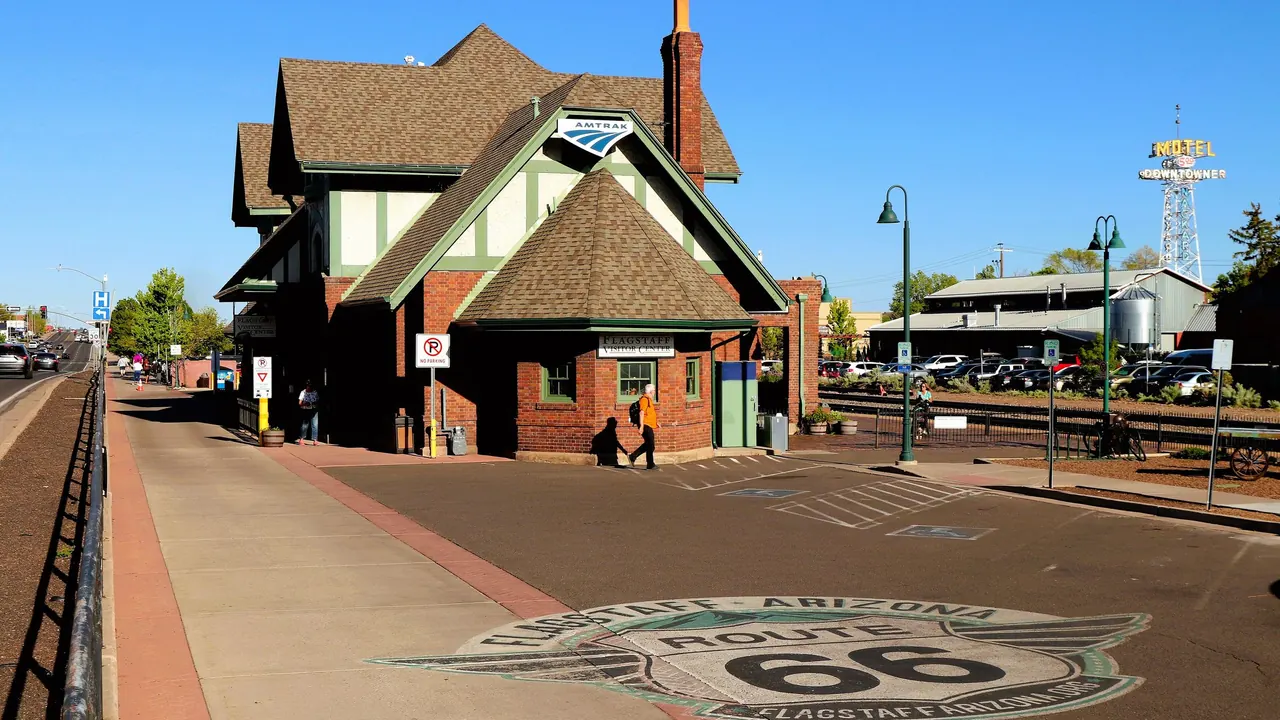
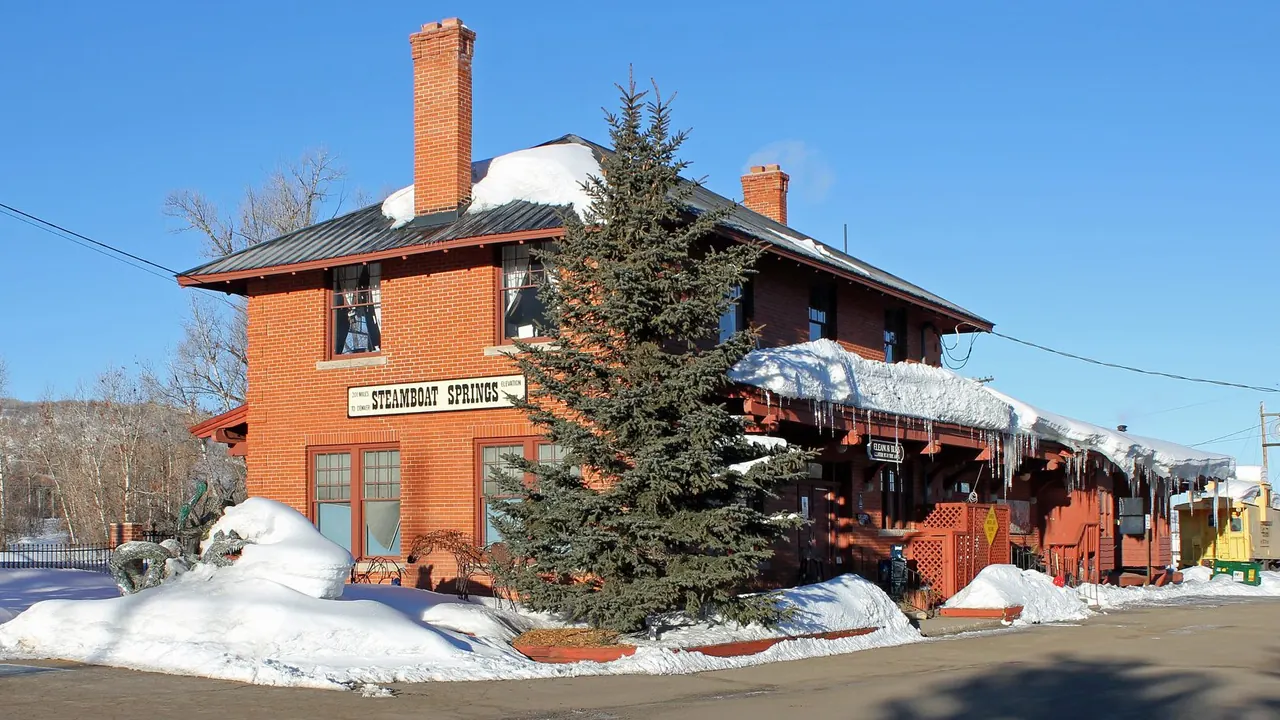
Photos: Flagstaff by Thank You (25 Millions) views, CC BY 2.0, cropped; Steamboat Springs by Jeffrey Beall, CC BY-SA 3.0, cropped.
Flagstaff or Steamboat Springs?
Our verdict in twelve categories, each scored against the same fixed benchmark cities, and the climate month by month, so you can choose for your trip.
Choose Flagstaff for
- day trips
- prices
- culture and sights
Flagstaff suits a road trip with a car and a wide itinerary. The Grand Canyon, Sedona's red rock and the Sinagua and Hopi sites all lie within reach, and the town itself adds an observatory and a serious museum. It is also the cheaper base, and its brewery taprooms and university crowd give it more life in the evening than its size suggests.
Choose Steamboat Springs for
- wellness
- getting around
- families
Pick Steamboat Springs when the mountain itself is the trip. The ski slopes and summer trails start at the edge of town, a bus links the two centres, and the hot springs give every evening something to look forward to. In return you pay resort prices and get very little to visit beyond the valley, so it rewards staying put rather than touring.
Scoreboard
Twelve categories on one fixed scale from 0 to 100. The shaded stretch is the gap between the two.
Your match
Pick a travel style or drag the sliders, and both match scores follow your weighting.
Wins on day trips and prices with your weighting.
Wins on wellness and getting around with your weighting.
What matters to you?
Category by category
What the scores mean for a trip.
Beaches & swimming
Neither town is anywhere near a coast, and in both the water is cold and the swimming season short. What differs is the kind of dip. In Flagstaff it means a drive down to the creek pools and natural rock slide of Oak Creek Canyon, crowded at weekends. In Steamboat the summer water time is tubing the Yampa straight through town or a chilly swim at Steamboat Lake or Stagecoach.
Food & drink
Neither is a food destination, and the gap is small. Flagstaff has slightly more variety: a cluster of craft breweries downtown and in the Southside, the coffee houses and Mexican kitchens of a university town, and regional touches such as Navajo frybread and green chile.
Steamboat's food is more ranch than campus, with steakhouses, Colorado lamb and beef and hearty western plates along Lincoln Avenue and at the ski base. It is satisfying after a day outdoors, but the range is narrower.
Culture & sights
Flagstaff has a short but real list of sights: the Lowell Observatory, where Pluto was discovered, the Museum of Northern Arizona's Native American art, the Riordan Mansion and a railroad-era downtown on Route 66. Add the cliff dwellings and pueblos within driving range, and a curious visitor can fill several days.
Steamboat's history is ranching and skiing. The Tread of Pioneers Museum tells that story, and you can see it in the western storefronts and on Howelsen Hill. An afternoon covers it.
Nightlife
Flagstaff is the livelier of the two, largely thanks to the university. Brewery taprooms, cocktail bars and old Route 66 saloons sit within a short walk of each other downtown and in the Southside, and term-time weekends have some energy.
In Steamboat, evenings revolve around après-ski at the gondola base, then a few saloons and brewpubs on Lincoln Avenue. They are busy in ski season and quiet early otherwise, and neither town has a club scene.
Nature & outdoors
Both are outstanding mountain bases, and the difference is in kind. Flagstaff's landscape is volcanic and vast: the San Francisco Peaks, an enormous ponderosa forest and Sunset Crater's lava flows. The red rock of Sedona and the Grand Canyon are within driving range, and the night skies are remarkably dark.
Steamboat is the better ski town, with its famous light powder and aspen glades right beside town, Nordic trails and backcountry terrain at Rabbit Ears Pass. In summer it turns to mountain biking, fly fishing on the Yampa and alpine lakes in the Mount Zirkel Wilderness, with elk and moose often seen.
Day trips
Here Flagstaff is far ahead. Within an hour or two lie Sedona, the hillside mining town of Jerome, the cliff dwellings at Montezuma Castle, the Sinagua ruins at Walnut Canyon and Wupatki, the historic railway from Williams to the Grand Canyon and the Hopi mesas.
Around Steamboat there are only small ranching towns, and Vail and Grand Lake are two hours of mountain driving away. Excursions there mean heading into the hills, not to another place.
Good for families
Both work well with children, in different ways. Flagstaff suits curious kids, with telescope evenings, dinosaur displays, rope courses in the pines and the steam-era train to the Grand Canyon, though the outings involve long drives.
Steamboat keeps everything close: a strong ski school, warm pools with slides in town and tubing on the Yampa. It has nothing like a museum for a rainy day, though. In both towns the altitude tires small children for the first day or two.
Getting around
For the core of a stay, Steamboat is the easier place to manage without a car. The town bus links Lincoln Avenue with the ski base through the day, and slopeside lodgings let skiers walk to the gondola. The hot springs up the valley and the passes still need a car.
Flagstaff's downtown and Southside are walkable, and the urban trails make cycling practical. But the motels are spread along Route 66, and almost everything worth the trip, from the Grand Canyon to Sedona, lies beyond public transport, so plan on hiring a car or booking tours.
Shopping & style
Neither is a shopping destination, but Flagstaff gives you a real reason to buy. Navajo rugs, Hopi kachina carvings, pottery and turquoise jewellery are sold in galleries and trading posts, and are best bought from established dealers or from the artists themselves. Steamboat's equivalent is western wear on Lincoln Avenue, boots, hats and saddle-blanket goods from a long-established family outfitter, plus ski shops and a few galleries.
Affordability
Flagstaff is clearly the cheaper base, and the two are expensive at opposite times of year. Flagstaff's dearest weeks come in summer and the school breaks, when it fills up as the bed base for the Grand Canyon. Even then, a motel on old Route 66 costs well below a room in Sedona or at the canyon rim. Neither town is cheap for an international visitor, though. Both add tipping to every bill and need a car for most outings, and in Flagstaff the park and monument fees soon add up.
Steamboat costs most in winter, just when Flagstaff is at its easiest, and on a ski week lift passes and equipment hire are added to resort-priced lodging. Its summer is gentler and its shoulder months cheaper still, so a self-catering condo outside ski season narrows the gap. It never closes it, and Steamboat stays the more expensive stay in every month.
Live music & performing arts
Both towns have a modest, pleasant calendar, but at different times of year. Flagstaff's runs all year, with the symphony orchestra and university concerts on campus and touring bands at the restored Orpheum Theater downtown. Steamboat comes into its own in summer, when the Strings Music Festival fills its pavilion with chamber music, jazz and bluegrass and Perry-Mansfield stages student theatre and dance, while in winter it is mostly down to bar bands.
Wellness & relaxation
This is Steamboat's clearest advantage. The town grew up around mineral springs, and soaking is part of daily life, from the spring-fed pools in town that locals use all year to the rock-lined pools of Strawberry Park, about 11km up a mountain road and at their best on a snowy evening.
Flagstaff has no hot springs and only a few spas. Its calm comes from pine-scented air, cool evenings and bright stars, and anyone who wants treatments drives down to the resort spas of Sedona.
When should you go?
Pick your month. The climate figures are measured averages, not a forecast.
Flagstaff in July
Steamboat Springs in July
Daytime high, °C
Rainfall in the month, mm
Where the figures come from
Flagstaff has no rain gauge within 25 km of the centre, so its rainfall comes from a gridded climate dataset read at the city rather than from a gauge further away.
Steamboat Springs has no rain gauge within 25 km of the centre, so its rainfall comes from a gridded climate dataset read at the city rather than from a gauge further away.
Temperature and rainfall are climate normals, averaged over the years shown. Flagstaff: 1991-2020 normals, Flagstaff / Fort Tuthill (7.4 km from centre). Steamboat Springs: 2011-2025 (rainfall 1991-2020) normals, Steamboat Springs / Steamboat Ii (5.5 km from centre).
Both towns sit above 2,000m, so the weather is mountain weather rather than desert heat. Summer highs are close, around 27°C in Flagstaff and 28°C in Steamboat in July. That is warm enough for a creek pool or a cold reservoir, and rarely too hot for walking. The difference is the rain. Flagstaff's June is almost dry, then the monsoon brings afternoon storms through July and August, its wettest months. In Steamboat, rain and snow are spread fairly evenly through the year, with no single wet season.
Winter is where the two part ways. Steamboat stays around or below freezing by day from December to February, with January highs near -3°C, which suits skiers. Flagstaff is milder, around 5°C in January, with real snow but more days pleasant enough for the downtown streets. For hiking and walking, late May to June and September to early October suit both, and spring warms up a few weeks sooner in Flagstaff.
Which traveller are you?
On a relaxing and wellness trip, Steamboat Springs is the clear choice. There are spring-fed pools in town, and a soak in the rock-lined pools of Strawberry Park, up a wooded creek valley, is something you remember. Flagstaff has no hot springs and sends spa-seekers down to Sedona.
For a trip on a tight budget, Flagstaff makes your money go much further. Chain motels along Route 66 and casual brewery meals keep costs manageable. Steamboat charges resort prices in every season, above all in ski weeks, when lift passes and equipment hire are added.
On a culture and arts trip, Flagstaff gives you far more to fill the days. Lowell Observatory, the Museum of Northern Arizona's Hopi, Navajo and Zuni collections and the ancient pueblo sites nearby easily outweigh Steamboat's single pioneer museum and its historic ski hill.
Before you go
| Measure | Flagstaff | Steamboat Springs |
|---|---|---|
| Currency | US Dollar (USD) | US Dollar (USD) |
| Sockets | AB120 V, 60 Hz | AB120 V, 60 Hz |
| Driving side | Right | Right |
| Time zone | UTC-7 | UTC-7, UTC-6 in summer |
| Emergency number | 911 | 911 |
| Elevation | 2,106 m | 2,052 m |
| Main airport | Flagstaff Pulliam Airport (FLG)7 km from centre2 non-stop destinations | Yampa Valley Airport (HDN)33 km from centre17 non-stop destinations |
| Public holidays this year | 12 days | 12 days |
By the numbers
| Measure | Flagstaff | Steamboat Springs |
|---|---|---|
| City population | 76,831 | 13,224 |
| People per km² | 464 | 503 |
| Museums within 10 km | 1 | 0 |
| UNESCO World Heritage sites within 50 km | 0 | 0 |
Where else could you go?
Every comparison below shares a destination with this one, so you can follow Flagstaff or Steamboat Springs somewhere new.