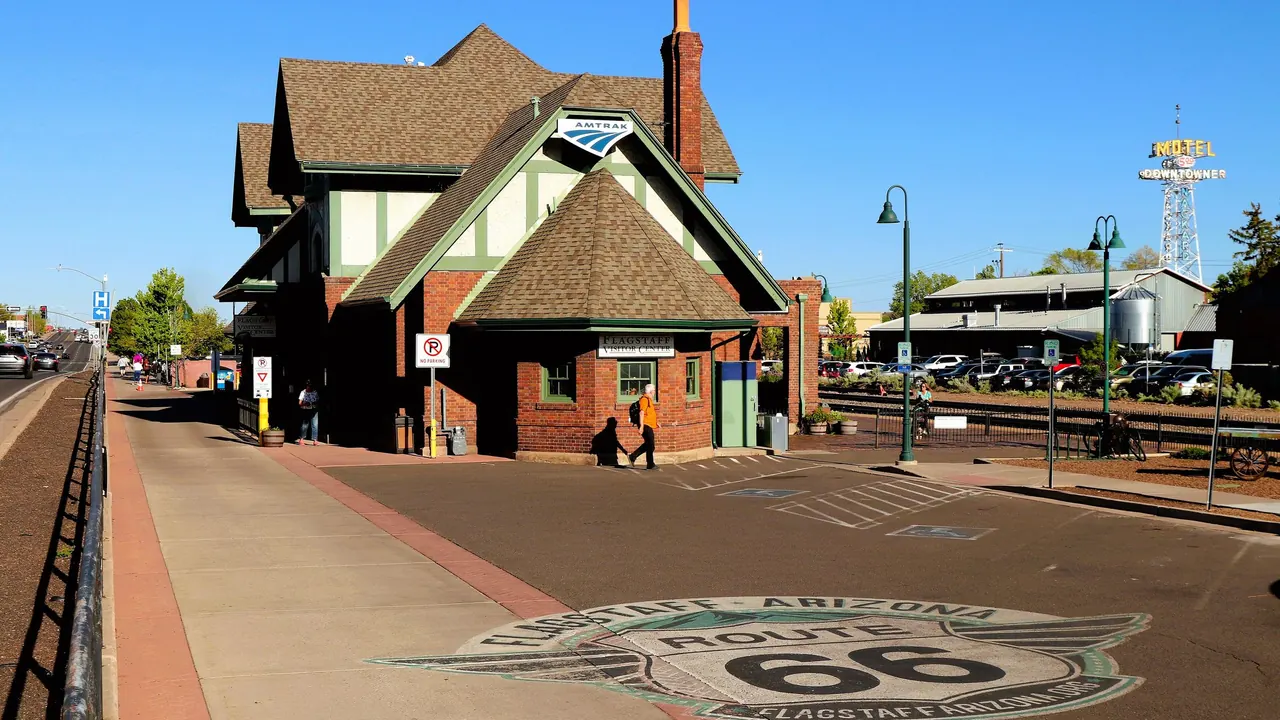
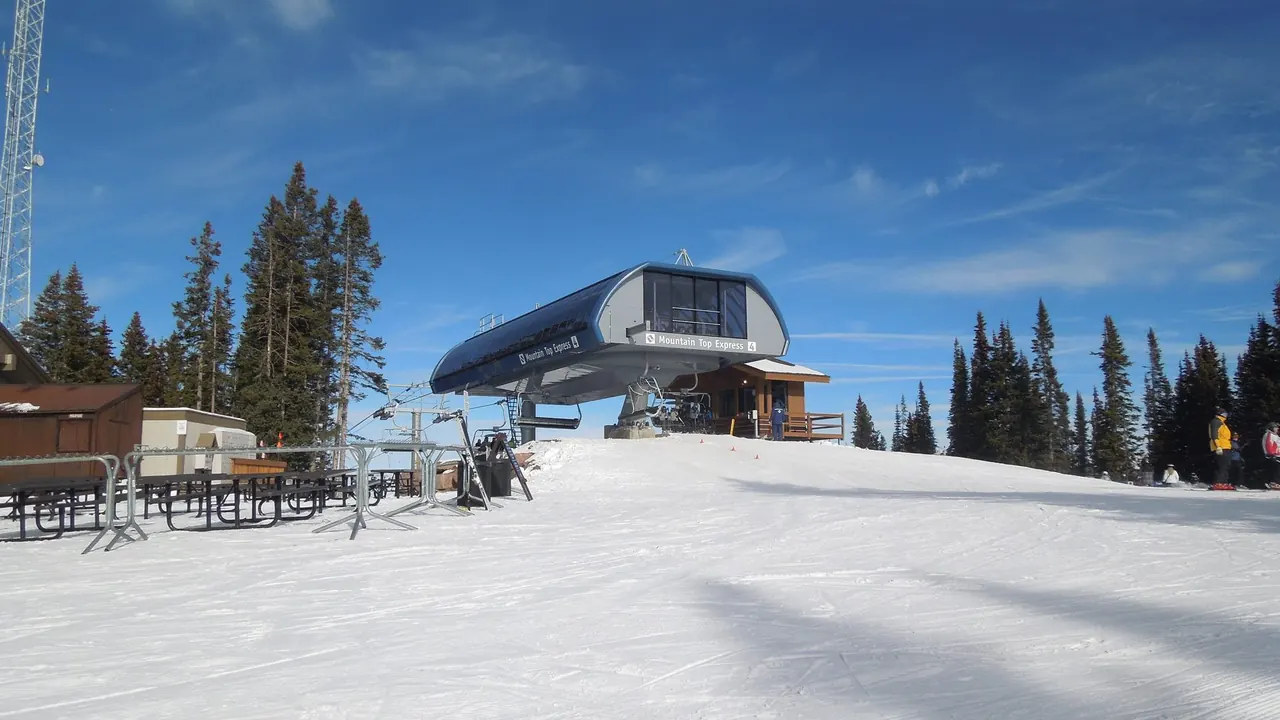
Photos: Flagstaff by Thank You (25 Millions) views, CC BY 2.0, cropped; Vail by DReifGalaxyM31, CC BY 3.0, cropped.
Flagstaff or Vail?
Our verdict in twelve categories, each scored against the same fixed benchmark cities, and the climate month by month, so you can choose for your trip.
Choose Flagstaff for
- prices
- culture and sights
- day trips
Flagstaff suits the traveller who wants a practical, reasonably priced base for the American Southwest. The Grand Canyon, Sedona's red rock, cliff dwellings and volcanic landscapes are all within a drive, and the town adds an observatory and a museum of Native art of its own. It works best for road-trippers with a hire car who would rather spend their money on seeing a lot than on where they sleep.
Choose Vail for
- getting around
- wellness
- live music and the arts
Vail is the choice when the mountain itself is the trip and comfort matters more than cost. Its huge ski area starts from a car-free village, the hotel spas are waiting when the lifts close, and summer brings first-rate orchestras and dancers to an open-air stage. Expect to pay heavily for all of this, and don't expect much history or variety beyond the resort.
Scoreboard
Twelve categories on one fixed scale from 0 to 100. The shaded stretch is the gap between the two.
Your match
Pick a travel style or drag the sliders, and both match scores follow your weighting.
Too close to call, 1 point apart
Wins on prices and culture and sights with your weighting.
Wins on getting around and wellness with your weighting.
What matters to you?
Category by category
What the scores mean for a trip.
Beaches & swimming
Neither town is anywhere near a coast, and in both swimming mostly means a hotel pool. Flagstaff does have the livelier summer option: the creek pools at Slide Rock in Oak Creek Canyon, on the road down to Sedona, where families slide over slippery rock into cold water. Vail has only small mountain lakes and reservoirs, better for paddling and lying in the sun than for a proper swim.
Food & drink
Neither town is worth the trip for its food, but they fall short in different ways. Flagstaff is casual: craft breweries downtown and in the Southside, diners, Mexican and New Mexican cooking, and now and then a Navajo taco or a green chile dish. Because it is a university town rather than a resort, its breweries and restaurants don't shut down for a season.
Vail is all polish and has no cheap end. Expect steak and game houses, fondue rooms, elk and Colorado lamb, long wine lists in hotel dining rooms and lunch in lodges up on the mountain. In the quiet spring and autumn weeks many of its kitchens close, which leaves visitors at those times with little choice.
Culture & sights
Flagstaff has real sights, though not many. Pluto was discovered at the Lowell Observatory, which still runs night viewings through its historic telescopes, and the Museum of Northern Arizona holds serious Hopi, Navajo and Zuni collections. Add the Riordan Mansion and the brick railroad-era downtown on Route 66.
Vail was built from scratch as a ski resort, and its Tyrolean-style village is an imitation rather than a historic place. The Colorado Snowsports Museum, which tells the story of the Tenth Mountain Division's wartime ski troops, and the Betty Ford Alpine Gardens make a pleasant afternoon, and that is about all.
Nightlife
A night out in Flagstaff is something you do on foot. Brewery taprooms, a few cocktail bars and old Route 66 saloons are a few minutes' walk apart downtown and in the Southside. On term-time weekends the university crowd makes them busier than you would expect in a town this size. There is little in the way of clubs, and most places wind down early, which suits anyone setting off at dawn for the Grand Canyon.
In Vail the evening starts at the foot of the slopes. Après-ski fills the terraces and slopeside bars of Vail Village and Lionshead as the lifts close, and the crowd is well off, in a mood more festive than wild. On winter weekends a few bars and a small club stay open past midnight, but summer evenings are far calmer.
Nature & outdoors
Both are outstanding mountain bases, so the choice comes down to the kind of landscape you want. Flagstaff gives you range: the volcanic San Francisco Peaks, a vast ponderosa forest, the lava flows of Sunset Crater, Sedona's red rock and the South Rim of the Grand Canyon, all under some of the darkest skies anywhere.
Vail is higher and more alpine. It has a far bigger ski mountain, wilderness hiking among lakes and peaks above 4,000m in the Gore Range and Holy Cross areas, fly fishing on Gore Creek and rafting rivers within reach.
Day trips
Flagstaff has the better spread of outings. The Grand Canyon, Sedona and the hillside mining town of Jerome are all within reach, along with cliff dwellings at Montezuma Castle, Sinagua ruins at Walnut Canyon and Wupatki, the historic railway from Williams and the ancient villages of the Hopi mesas.
From Vail, most outings lead to other resorts, such as Beaver Creek, Breckenridge's Victorian main street and the silver town of Leadville. Glenwood Springs is the most rewarding day out. Both places need a car for almost all of this.
Good for families
These two are close, with Flagstaff slightly more varied for curious children. It offers telescope evenings at the observatory, dinosaur displays, snow play in winter, a drive-through wildlife park and the steam-era train to the Grand Canyon, though the drives between them are long.
Vail is built around children learning to ski. It has big ski schools, a safe car-free village, and in summer a mountain coaster and tubing at the top of the gondola. Beyond the mountain there is little for children, and in both places the altitude tires small children for the first day or two.
Getting around
Vail is far easier once you have arrived. The village and Lionshead are pedestrian, the lifts start in town and a free bus runs the length of the valley, so a week without a car is realistic. Getting there is the harder part: there is no rail, and the pass can close in heavy snow.
Flagstaff is easier to reach, with long-distance trains stopping downtown, but it is harder to get around. The centre is walkable and the urban trails are good for cycling, but the motels are spread out and almost everything worth seeing lies beyond the local buses.
Shopping & style
Vail has the more polished shopping, along pedestrian lanes of upmarket ski clothing, Western boots and hats, jewellery and landscape galleries, though all of it is narrow in range and pricey. Flagstaff's shops are plainer, but it has something Vail does not: Navajo rugs, Hopi kachina carvings and turquoise jewellery from downtown galleries and trading posts. Buy from established dealers or directly from the artists.
Affordability
The gap here is wide. Flagstaff is moderately priced by American standards, and its Route 66 chain motels are a cheaper base than Sedona or the canyon rim, though a hire car, fuel and park fees add up.
Vail is among the most expensive places to vacation in North America. Lift tickets, ski school, slopeside rooms and resort meals all cost far more than usual. Summer and the off-season, or a room further down the valley, ease the cost only a little.
Live music & performing arts
Vail has the bigger occasions, but only in summer. Bravo! Vail brings major orchestras to the open-air Gerald R. Ford Amphitheater, with picnics on the lawn, and dance and jazz festivals follow. In winter there is little beyond après-ski bands.
Flagstaff's calendar is smaller but runs all year: the symphony and university concerts, touring folk and indie acts at the restored Orpheum, community theatre and weekend bands in the breweries.
Wellness & relaxation
Vail is the better place to unwind in comfort. Its large hotels have spas with saunas, steam rooms and outdoor hot tubs facing the peaks, and the historic mineral pools and vapour caves of Glenwood Springs are about an hour away.
Flagstaff has only a few day spas. Its calm comes from cool pine evenings and bright stars, and anyone wanting treatments or a retreat drives an hour down to Sedona.
When should you go?
Pick your month. The climate figures are measured averages, not a forecast.
Flagstaff in July
Vail in July
Daytime high, °C
Rainfall in the month, mm
Where the figures come from
Flagstaff has no rain gauge within 25 km of the centre, so its rainfall comes from a gridded climate dataset read at the city rather than from a gauge further away.
Vail's temperatures are measured 47 km from the centre, at Kremmling.
Vail's station stands 186 m below the city centre, so the centre is likely a little cooler than the figures say.
Vail has no rain gauge within 25 km of the centre, so its rainfall comes from a gridded climate dataset read at the city rather than from a gauge further away.
Temperature and rainfall are climate normals, averaged over the years shown. Flagstaff: 1991-2020 normals, Flagstaff / Fort Tuthill (7.4 km from centre). Vail: 2006-2025 (rainfall 1991-2020) normals, Kremmling (46.5 km from centre).
Neither town is a beach destination, so the climate question is about skiing, hiking and walking. Flagstaff's winters are cold, with highs around 5°C in January and real snow, but they are milder than Vail's. Its driest and most settled weather comes in May and June, when June sees only about 6mm of rain. July and August are warm, but afternoon monsoon storms bring the wettest weeks of the year, up to 64mm, so plan to hike early. September and October are a calm, golden time for trails and day trips.
Vail is the colder of the two in winter, with January highs near -4°C, and that is exactly what keeps the powder dry through the long ski season. Its rain and snow are spread fairly evenly over the year rather than coming in a monsoon. Summer days reach about 29°C in July, which is ideal for high trails and the outdoor concert season. Late spring and late autumn are in-between months in both places, but in Vail they are noticeably quieter.
Which traveller are you?
On a trip on a tight budget, Flagstaff is clearly the better choice. Chain motels along old Route 66 and brewery meals keep costs manageable, and it is a cheap bed base for the Grand Canyon. Vail is expensive at every level, from lodging to lift tickets.
For a relaxing and wellness trip, Vail has more to offer. Polished hotel spas with outdoor hot tubs under the peaks are part of resort life, and the mineral pools at Glenwood Springs are about an hour away. Flagstaff offers pine-scented quiet but very few treatments.
For skiers, Vail is the obvious pick. Its vast terrain runs from groomed front-side runs to the Back Bowls and Blue Sky Basin, the lifts leave from the village and the ski schools are big. Flagstaff's ski area on the San Francisco Peaks is a pleasant extra, not a reason to travel.
Before you go
| Measure | Flagstaff | Vail |
|---|---|---|
| Currency | US Dollar (USD) | US Dollar (USD) |
| Sockets | AB120 V, 60 Hz | AB120 V, 60 Hz |
| Driving side | Right | Right |
| Time zone | UTC-7 | UTC-7, UTC-6 in summer |
| Emergency number | 911 | 911 |
| Elevation | 2,106 m | 2,445 m |
| Main airport | Flagstaff Pulliam Airport (FLG)7 km from centre2 non-stop destinations | Eagle County Regional Airport (EGE)48 km from centre16 non-stop destinations |
| Public holidays this year | 12 days | 12 days |
By the numbers
| Measure | Flagstaff | Vail |
|---|---|---|
| City population | 76,831 | 4,835 |
| People per km² | 464 | 400 |
| Museums within 10 km | 1 | 1 |
| UNESCO World Heritage sites within 50 km | 0 | 0 |
Where else could you go?
Every comparison below shares a destination with this one, so you can follow Flagstaff or Vail somewhere new.