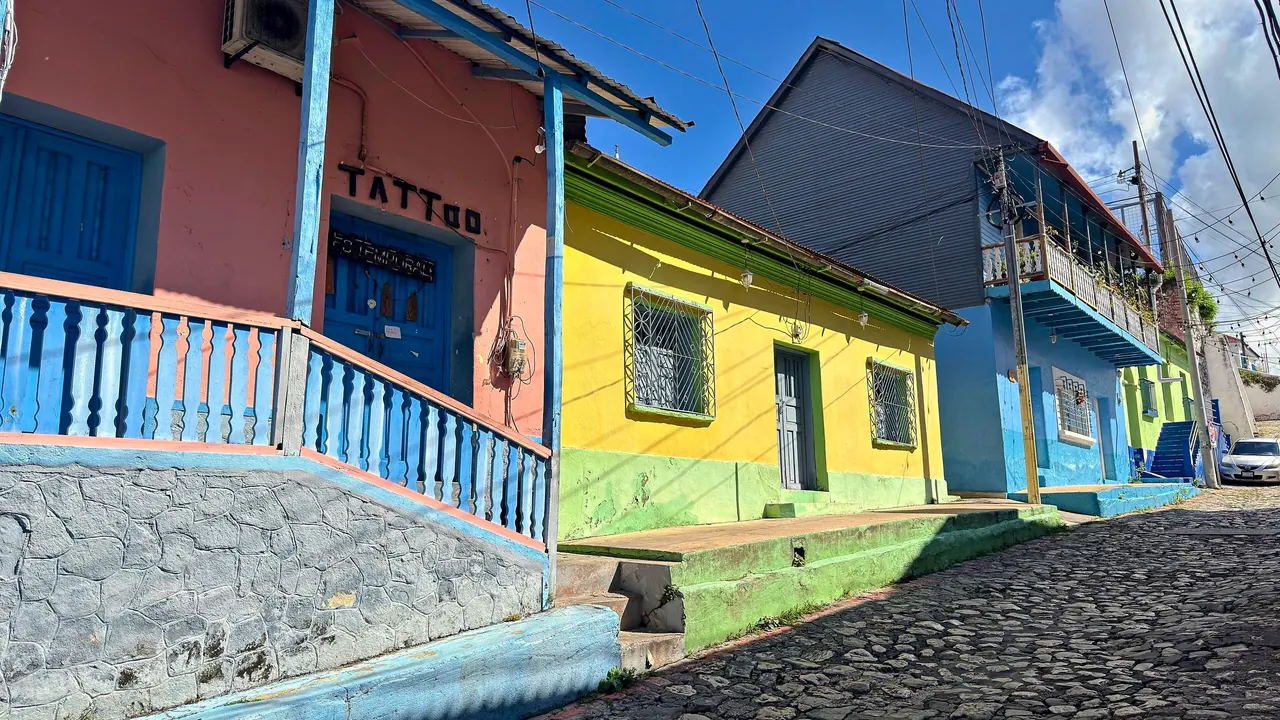
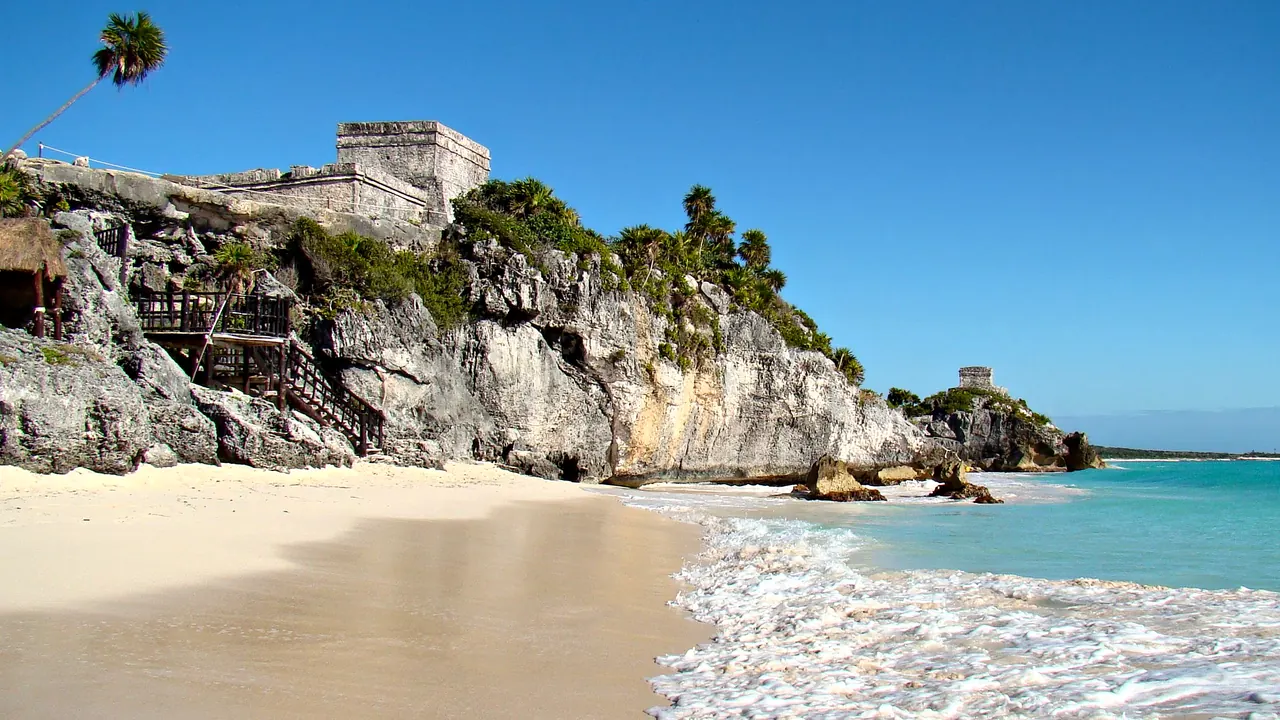
Photos: Flores, Guatemala by Bex Walton, CC BY 4.0, cropped; Tulum by Bjørn Christian Tørrissen, CC BY-SA 3.0, cropped.
Flores, Guatemala or Tulum?
Our verdict in twelve categories, each scored against the same fixed benchmark cities, and the climate month by month, so you can choose for your trip.
Choose Flores, Guatemala for
- prices
- getting around
- day trips
Flores suits the traveller who comes for the ancient Maya and the jungle rather than the comforts. The island is a cheap, walkable base of guesthouses and lakeside terraces. From it, sunrise trips go out to Tikal, Yaxhá and the deep forest of the Maya Biosphere Reserve, with howler monkeys and toucans along the way. Expect early nights, simple food and a backpacker crowd, and you will find it very good value.
Choose Tulum for
- beaches
- wellness
- nightlife
Tulum is the choice if the sea is the point of the trip. It has long pale beaches, warm turquoise water, cenotes to snorkel and a large choice of yoga, spa and temazcal sessions, plus electronic music nights for anyone who wants them. Coba and Chichen Itza are close enough for a day out. It costs far more and is spread out along a highway, but for beach days, slow wellness or a sociable winter break it gives much more than an inland lake town can.
Scoreboard
Twelve categories on one fixed scale from 0 to 100. The shaded stretch is the gap between the two.
Your match
Pick a travel style or drag the sliders, and both match scores follow your weighting.
Wins on prices and getting around with your weighting.
Wins on beaches and wellness with your weighting.
What matters to you?
Category by category
What the scores mean for a trip.
Beaches & swimming
Here the two hardly compete. Tulum has a long run of pale sand below palms and dunes, running south from the cliff-top ruins towards Sian Ka'an, and the sea changes from turquoise to deep blue a short swim out. Akumal's sheltered bay, with turtles in the shallows, adds another reason to go. The catch is sargassum, which can cover the sand in the warmer months.
Flores has warm lake water instead of a sea. Locals and visitors jump off docks and rope swings around the island in the late afternoon. For clearer swimming, go to the piers at El Remate or San José on the eastern shore. It is a good way to cool off after a day in the jungle, but there is no sand.
Food & drink
Neither town is a reason to travel for the food, but Tulum gives you more choice. Its beach road and jungle strip have candlelit restaurants that cook Caribbean fish over open fires, and the town centre has taco stands selling al pastor and cochinita pibil, plus evening street stalls.
In Flores, most of the lakeside terraces serve pizza and pasta for travellers. The dish to look for is pescado blanco, the white fish from Lake Petén Itzá. The comedores and market stalls across the causeway in Santa Elena give the more everyday local meal.
Culture & sights
Tulum has one sight that matters more: the walled Maya port on the cliff edge, where El Castillo stands above the sea. It takes a couple of hours, and the modern town around it has little else.
Flores is itself the sight. It is a small island of steep lanes and painted houses rising to a white church, on the spot where Nojpetén held out as the last independent Maya capital. Almost nothing from that time is visible, though, and an hour's walk covers it all, with Tayasal a short boat ride away.
Nightlife
Tulum is known for its electronic music. DJ sets play in jungle clearings, beach clubs run from late afternoon into the night, and full-moon parties draw a dressed-up crowd, most of all in winter. Away from the big nights, there are mezcal bars along the main avenue.
Flores is much quieter. Sunset drinks on a terrace lead into a few friendly backpacker bars, and most people are in bed early because the Tikal shuttles leave before dawn.
Nature & outdoors
Tulum has the edge for nature, though Flores is better at one thing. Flores sits at the edge of the largest tropical forest in Central America, and its strength is wildlife on land. You will see howler and spider monkeys, toucans and ocellated turkeys on the Tikal trails, and crocodiles in the lagoon at Yaxhá. Kayaking on Lake Petén Itzá makes a gentler afternoon.
Tulum gives you more to do outdoors, and most of it is in the water. The cenotes and flooded caves at Gran Cenote and Dos Ojos are among the best places anywhere to snorkel in clear water. Sian Ka'an adds boat trips and floats through mangrove channels where dolphins and turtles live, and the reef offshore is a third outing. Neither place has hills to walk, and in both the heat makes midday hard work.
Day trips
Both make strong bases for Maya ruins, but the trips differ. From Flores, the outings are almost all archaeological. Tikal's temples rise above the forest canopy about an hour and a quarter away, and Yaxhá, Uaxactún and the river trip to Ceibal follow. Crossing into Belize for Xunantunich and San Ignacio is the main change of scene.
From Tulum, the ruins come with more variety. Coba is under an hour inland, and Chichen Itza fits into a day with the colonial streets of Valladolid. Playa del Carmen and the Cozumel ferry, or the lagoon at Bacalar, take you somewhere quite different.
Good for families
Tulum is easier with children, mostly because of the water. They can snorkel with turtles at Akumal, swim in calm cenote pools with wooden steps, and spend a day at the eco-parks at Xel-Ha and Xcaret, which are built for families. A villa with a pool and a hire car makes it work best, since much of the beach strip is aimed at adults.
Flores suits adventurous school-age children who will enjoy climbing temples and spotting coatis at Tikal. Toddlers will struggle with the steep island lanes, the dawn starts and the heat, and medical care is basic.
Getting around
Flores is easier to handle day to day. You can walk round the whole island in under half an hour, and tuk-tuks cross the causeway to Santa Elena all day. Beyond that, it is shuttles, tours and colectivos booked the evening before.
Tulum is spread out. The town grid, the beach a few kilometres east and the long hotel strip to the south mean daily bike rides or taxis that cost a lot for the distance. Most visitors who want cenotes and ruins end up hiring a car.
Shopping & style
Tulum has more to browse. Boutiques on the beach road sell linen, macramé and woven bags to a well-off crowd. On the main avenue, embroidered huipiles, silver and hammocks often cost less.
Flores has only a few island stalls, with highland textiles, carved masks and Tikal T-shirts. Anyone keen on Guatemalan weaving does better buying it in the highland markets.
Affordability
Flores is much the cheaper of the two. Island hostels, Santa Elena set lunches and tuk-tuks cost very little. The real expenses are the foreigners' park fees at Tikal and the guided sunrise tours.
Tulum is among the most expensive places to stay in Mexico. Beach-road hotels, beach clubs, party tickets and taxis all cost more, and every cenote charges its own entry. You can keep the budget down by staying in the town centre and eating at taco stands.
Live music & performing arts
Neither has a stage to plan an evening around, though Tulum has a little more live music. Bands and acoustic sets play in bars on the main avenue, saxophone and drums often join the DJs, and the eco-parks put on staged ceremonial dance. In Flores, live music means a marimba player in a restaurant or dancing at a saints' day fiesta.
Wellness & relaxation
Wellness is one of the main reasons people go to Tulum. Yoga shalas, retreat hotels and open-air spas fill the beach road and the jungle behind it, offering sound baths, breathwork and the Maya temazcal sweat lodge. For real calm, stay well away from the clubs.
Flores has a few massage rooms and treatments at some lakeside lodges. Its rest comes from hammocks on guesthouse terraces and quiet lodges on the far shore, which the early starts and the heat soon cut into.
When should you go?
Pick your month. The climate figures are measured averages, not a forecast.
Flores, Guatemala in July
Tulum in July
Daytime high, °C
Rainfall in the month, mm
Where the figures come from
Flores, Guatemala has no rain gauge within 25 km of the centre, so its rainfall comes from a gridded climate dataset read at the destination rather than from a gauge further away.
Tulum has no weather station within reach, so its figures come from a gridded climate model rather than a measured record, and read a broad area rather than one spot.
Temperature and rainfall are climate normals, averaged over the years shown. Flores, Guatemala: 2011-2025 (rainfall 1991-2020) normals, Mundo Maya International Airport (2.8 km from centre). Tulum: 2001-2020 normals, NASA POWER reanalysis grid, no weather station within 90 km.
Both are at their best in the dry season, but the heat feels very different. Flores lies in lowland jungle and gets fiercely hot in April and May, with highs of 36°C that make Tikal's long walks hard work by late morning. The cooler, drier months from December to February are the most comfortable. The rain starts in May and settles in from June to October, when monthly totals come close to 250mm, bringing mud and mosquitoes on the forest trails.
Tulum stays within a few degrees of 30°C all year, and the sea is warm enough to swim in every month, between 27°C and 29°C. Its wet season runs over the same months, and October is the wettest. The drier stretch from February to April is the best time for beach days and cenote trips without the heavier summer and autumn rain.
Which traveller are you?
On a trip on a tight budget, Flores goes much further. Island guesthouses, set lunches at the Santa Elena market and shared shuttles cost little. In Tulum, a cheap stay means a room inland and cycling to an expensive coast.
For a beach and sun trip, Tulum wins outright. It has long pale sand, sea warm enough to swim in all year and turtles in the bay at Akumal. In Flores, the swimming is off wooden docks into a lake, with no real sand.
On a relaxing and wellness trip, Tulum is built for it, with yoga shalas, open-air spas, temazcal sweat lodges and hammocks along the southern beach strip. Flores offers quiet lakeside evenings, but heat and dawn starts get in the way.
Before you go
| Measure | Flores, Guatemala | Tulum |
|---|---|---|
| Official language | Spanish | Spanish, Nahuatl, Yucatec Maya |
| Currency | Quetzal (GTQ) | Mexican Peso (MXN) |
| Sockets | AB120 V, 60 Hz | AB127 V, 60 Hz |
| Driving side | Right | Right |
| Time zone | UTC-6 | UTC-5 |
| Emergency number | Police 110/120, ambulance 128, fire 123 | 911 |
| Elevation | 113 m | 5 m |
| Main airport | Mundo Maya International Airport (FRS)3 km from centre1 non-stop destination | Felipe Carrillo Puerto International Airport Tulum (TQO)21 km from centre8 non-stop destinations |
| Public holidays this year | 13 days | 9 days |
By the numbers
| Measure | Flores, Guatemala | Tulum |
|---|---|---|
| Population | 44,706 | 33,374 |
| People per km² | 10 | - |
| Museums within 10 km | 0 | 0 |
| UNESCO World Heritage sites within 50 km | 1 | 0 |
| Swim season, months above 21 °C | - | 12 months |
Where else could you go?
Every comparison below shares a destination with this one, so you can follow Flores, Guatemala or Tulum somewhere new.
- Akumalvs Tulum
- Playa del Carmenvs Tulum
- Cozumelvs Tulum
- Valladolid, Mexicovs Tulum
- Cancunvs Tulum
- Isla Mujeresvs Tulum