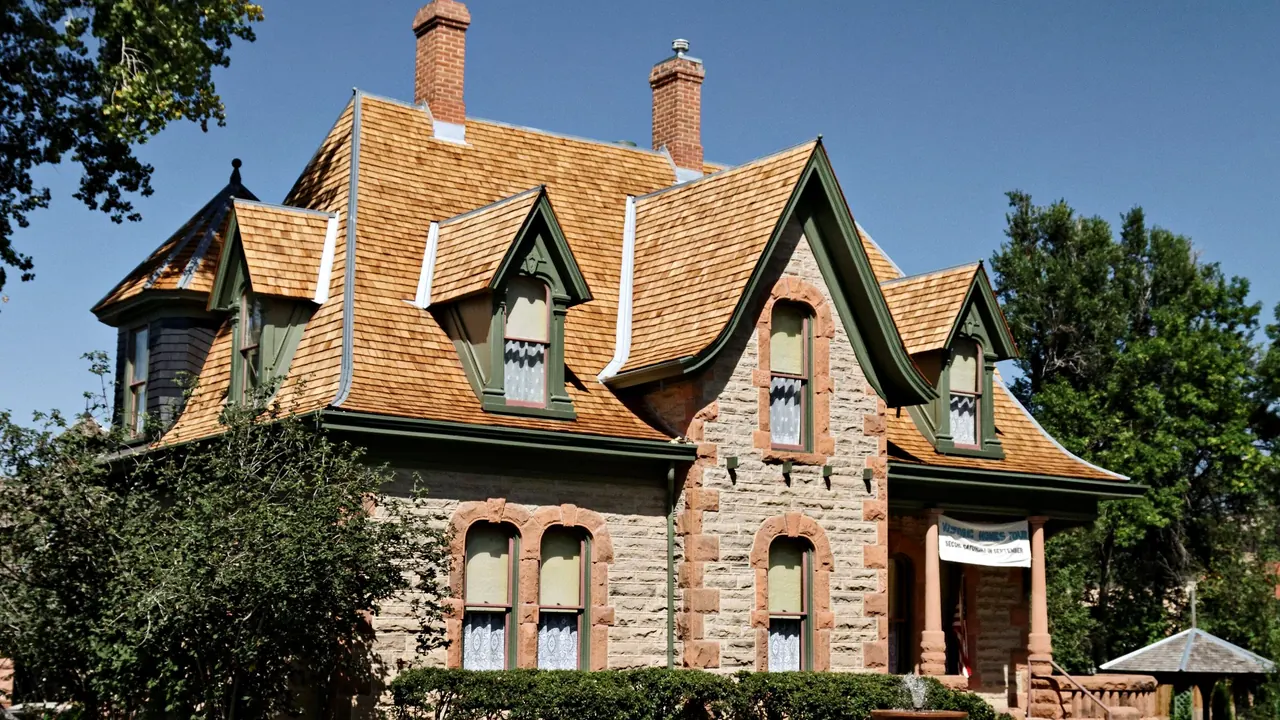
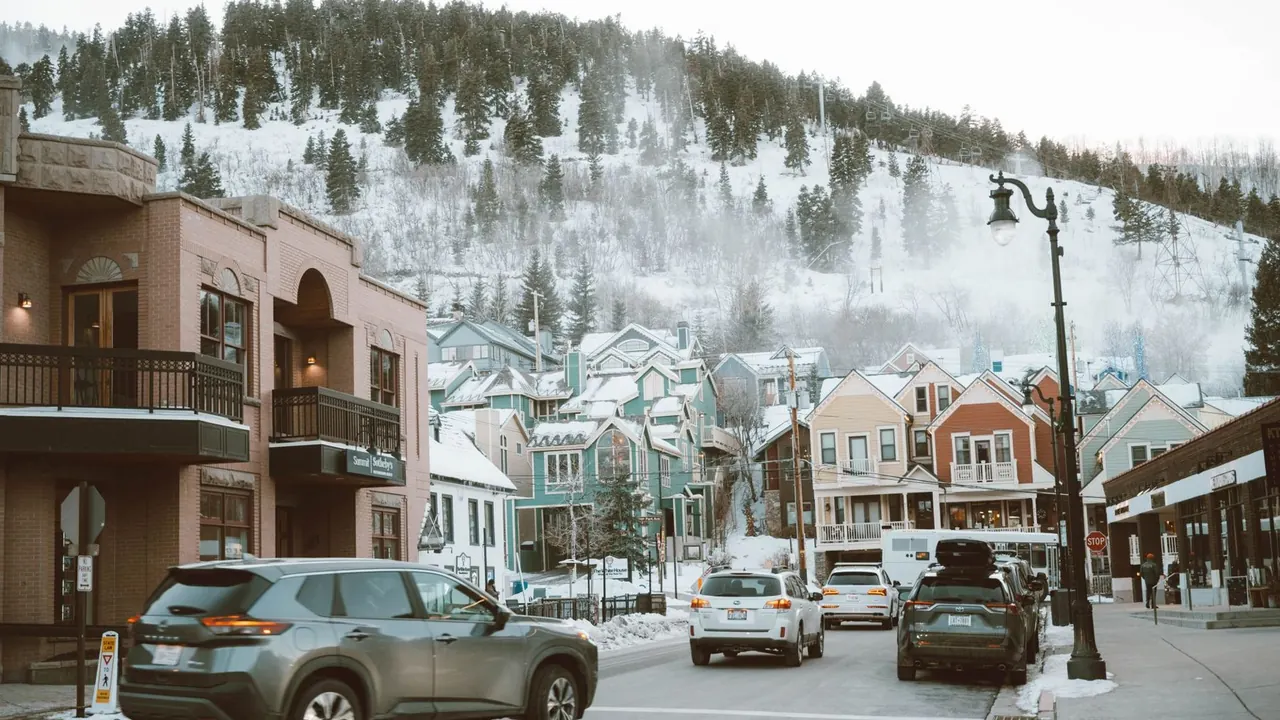
Photos: Fort Collins by Gribeco, CC BY-SA 3.0, cropped; Park City by Quang Vuong, Pexels License.
Fort Collins or Park City?
Our verdict in twelve categories, each scored against the same fixed benchmark cities, and the climate month by month, so you can choose for your trip.
Choose Fort Collins for
- prices
- nightlife
- day trips
Fort Collins suits a relaxed, lower-cost trip built around craft beer, cycling and the foothills. Old Town's brick streets, the taprooms and the river trails make for easy days, the evenings are livelier thanks to the university, and Denver, Boulder and Cheyenne are all within reach for a day out. It is the better pick if you want a summer base where hiking and the Poudre Canyon sit beside a proper town, and you would rather not pay resort prices.
Choose Park City for
- wellness
- families
- getting around
Park City is the choice when the mountains are the whole point. In winter that means two large ski areas rising straight from town and Utah powder, and in summer it means singletrack and lift-served biking from the streets. Families get ski schools, the Olympic Park and free buses, and the resort spas and hot tubs round off each day. The catch is the cost, which is far higher, especially in ski season.
Scoreboard
Twelve categories on one fixed scale from 0 to 100. The shaded stretch is the gap between the two.
Your match
Pick a travel style or drag the sliders, and both match scores follow your weighting.
Too close to call, 1 point apart
Wins on prices and nightlife with your weighting.
Wins on wellness and families with your weighting.
What matters to you?
Category by category
What the scores mean for a trip.
Beaches & swimming
Neither town has anything like a beach, and both offer summer swimming at a nearby reservoir. Fort Collins has Horsetooth Reservoir right on the edge of town, with a swim beach and coves full of paddleboards, and the water warms up better in its hotter summers.
Park City's equivalent is Jordanelle Reservoir down the valley, with sandy swimming areas and mountain views but cooler water. In practice most visitors there get wet in hotel pools and hot tubs instead.
Food & drink
The two are broadly level, but they shine in different ways. Fort Collins is a beer town first, with big breweries offering tours on the north side of Old Town and taprooms with food trucks all over the city, while its restaurants are casual gastropubs, tacos and a few farm-to-table kitchens.
Park City turns that around. The drinking is mostly après-ski on slopeside decks, and the food is more polished, with elk, bison and trout served in Main Street dining rooms that cater to wealthy skiers. For wider choice, both send you down the road, to Denver or Salt Lake City.
Culture & sights
Neither is a sightseeing destination, and both are best appreciated by walking their historic main streets. Fort Collins has red-brick Old Town around its pedestrian square, the Museum of Discovery, the Victorian Avery House and the university's art museum.
Park City's story is silver mining, told through the wooden storefronts of Main Street, headframes on the slopes and the Park City Museum with its old jail cells, plus the Olympic museums at the 2002 Games site. You can see either in a day or less.
Nightlife
Fort Collins makes for the better evening out. A big student population fills the pubs, rooftop patios, cocktail bars and taprooms around Old Town on weekends, and there are at least a few dance clubs, though it quietens over the summer break.
Park City's nightlife starts at the lifts and stays short: a run of Main Street saloons and bars that gets rowdy on winter weekends and fades early, especially outside ski season. For real clubbing, Denver and Salt Lake City are the respective escapes.
Nature & outdoors
Both are outdoor towns, but Park City is the more spectacular base. It sits at around 2,100m in the Wasatch, with two major ski areas starting in town, famous dry powder, more steep resorts over the ridge, and hundreds of kilometres of singletrack for summer riding.
Fort Collins has the foothills rather than high peaks on its doorstep: Horsetooth Mountain and Lory State Park trails, rafting and fly fishing in the Poudre Canyon, and Rocky Mountain National Park about an hour and a half away. It is excellent for hiking and cycling, but with no downhill skiing nearby it cannot match Park City in winter.
Day trips
Fort Collins has more places to drive to. Boulder beneath the Flatirons and the museums of Denver lie south, Estes Park leads into the national park, and Cheyenne and Laramie are just over the Wyoming line, giving a reasonable spread of towns and cities.
Park City leans almost entirely on Salt Lake City, with Temple Square and the Capitol, plus smaller outings to the Heber Valley steam railway, Swiss-style Midway, Ogden's railroad street and the Sundance canyon road. After those, most of what is in reach is scenery.
Good for families
Park City is the more engaging place for children. Ski schools and gentle learning slopes in winter, the Olympic Park's alpine coaster, ziplines and freestyle jumps into a splash pool, and summer alpine slides and climbing walls give plenty to do, with free buses doing the ferrying. Altitude and winter costs are the drawbacks.
Fort Collins is safe and easy but quieter: playgrounds, flat riverside cycle paths, the Museum of Discovery's dome theatre, the farm at Lee Martinez Park and tubing on gentle river stretches. It suits younger children and a slower pace better than an action-packed stay.
Getting around
Park City is easier to manage without a car once you arrive. Free buses link Main Street, both ski bases, the lodging areas and Kimball Junction, and many hotels add shuttles, though anything beyond town needs wheels.
Fort Collins works well for cyclists: a flat, compact Old Town, protected bike lanes, bike-share and long off-street trails, and a rapid bus along the main corridor. Beyond that core the suburbs sprawl, buses thin out, and the foothills and every day trip need a car.
Shopping & style
Park City has slightly more to browse, and it is aimed at visitors with money: Main Street galleries, Western-wear and cowboy-boot shops, jewellers and ski fashion, with an outlet centre at Kimball Junction.
Fort Collins is more homespun, with independent bookshops, vintage clothing, cycling and outdoor shops and Colorado-made gifts in Old Town. Neither is worth a trip for shopping alone.
Affordability
Fort Collins is much the cheaper stay. Chain hotels and taproom meals are mid-priced for the US, only graduation and football weekends push rooms up, and the trails, river paths and Old Town cost nothing. A hire car is the main extra.
Park City sits at the top end of North American ski resorts, with lodging, lift passes, ski school and Main Street dinners all costly, and the Christmas and New Year weeks dearer still. Summer and autumn are much gentler, and many visitors on a budget sleep in Salt Lake City or the Heber Valley instead.
Live music & performing arts
Fort Collins offers a little more through the year. The Lincoln Center brings touring Broadway, dance and the local symphony, the university adds concerts, opera and theatre in term time, and small Old Town stages book bluegrass, indie and rock bands.
Park City's programme comes alive mainly in summer, when the Utah Symphony plays on the lawns at Deer Valley and free concerts fill the parks. The 1920s Egyptian Theatre on Main Street keeps going year-round with comedy and plays, but the rest of the year is thin.
Wellness & relaxation
Park City is the better place to unwind. The big ski lodges at Deer Valley and the Canyons run large spas built around tired legs, outdoor hot tubs in the snow come with most stays, and Homestead Crater in Midway lets you swim in warm geothermal water inside a limestone dome.
Fort Collins has only ordinary day spas and yoga studios, with the nearest hot springs well over an hour's drive away. Its calm comes instead from quiet neighbourhoods, shaded river paths and long sunny days.
When should you go?
Pick your month. The climate figures are measured averages, not a forecast.
Fort Collins in July
Park City in July
Daytime high, °C
Rainfall in the month, mm
Where the figures come from
Fort Collins has no rain gauge within 25 km of the centre, so its rainfall comes from a gridded climate dataset read at the destination rather than from a gauge further away.
Park City's temperatures are measured 79 km from the centre, at Evanston.
Park City has no rain gauge within 25 km of the centre, so its rainfall comes from a gridded climate dataset read at the destination rather than from a gauge further away.
Temperature and rainfall are climate normals, averaged over the years shown. Fort Collins: 2006-2020 (rainfall 1991-2020) normals, Fort Collins / Redmond (16.1 km from centre). Park City: 1999-2020 (rainfall 1991-2020) normals, Evanston (78.8 km from centre).
Fort Collins is the warmer and drier of the two. Summer highs reach about 32°C in July, which suits the reservoir and the river but can make midday walking hot, and May and June are the wettest stretch, mostly in afternoon storms. Autumn is the sweet spot for town and trails. Winters are cold but very dry, so sunny days on the paths are common even in January.
Park City sits much higher and runs cooler all year. Daytime highs stay below freezing from December to February and the winter precipitation, around 44mm a month, falls as snow on the slopes, which is exactly what skiers come for. July peaks near 28°C, pleasant for hiking and biking rather than hot, and spring and late autumn are the quiet in-between seasons, with snow melting on the trails or not yet deep enough to ski.
Which traveller are you?
On a trip on a tight budget, Fort Collins is the sensible choice. Rooms and taproom meals cost far less than in a top ski resort, and the foothills trails, river paths and Old Town itself are free, though a hire car adds to the bill.
On a family trip with children, Park City has the edge. Ski schools with gentle learning areas, the Olympic Park's coaster and ziplines, summer alpine slides and free buses to the slopes keep children busy, which Fort Collins's parks and small museum cannot match.
For skiers, Park City is the obvious answer. Two big ski areas rise directly from town, and Alta, Snowbird and the other Cottonwood resorts are within an hour. From Fort Collins winter means snowshoeing, with downhill resorts hours away.
Before you go
| Measure | Fort Collins | Park City |
|---|---|---|
| Currency | US Dollar (USD) | US Dollar (USD) |
| Sockets | AB120 V, 60 Hz | AB120 V, 60 Hz |
| Driving side | Right | Right |
| Time zone | UTC-7, UTC-6 in summer | UTC-7, UTC-6 in summer |
| Emergency number | 911 | 911 |
| Elevation | 1,525 m | 2,134 m |
| Main airport | Denver International Airport (DEN)88 km from centre231 non-stop destinations | Salt Lake City International Airport (SLC)43 km from centre108 non-stop destinations |
| Public holidays this year | 12 days | 12 days |
By the numbers
| Measure | Fort Collins | Park City |
|---|---|---|
| Population | 169,810 | 8,396 |
| People per km² | 1,181 | 185 |
| Museums within 10 km | 2 | 1 |
| UNESCO World Heritage sites within 50 km | 0 | 0 |
Where else could you go?
Every comparison below shares a destination with this one, so you can follow Fort Collins or Park City somewhere new.
- Deer Valleyvs Park City
- Alta, Utahvs Park City
- Snowbirdvs Park City
- Salt Lake Cityvs Park City
- Estes Parkvs Fort Collins
- Bouldervs Fort Collins