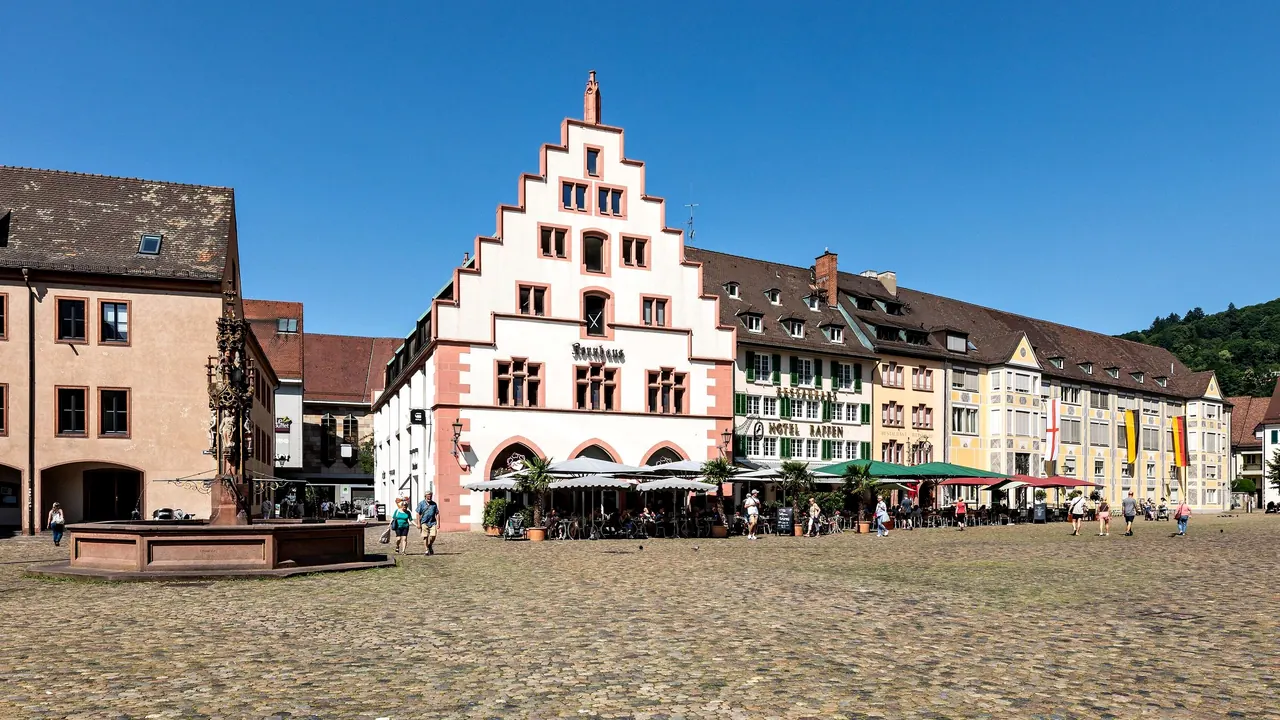
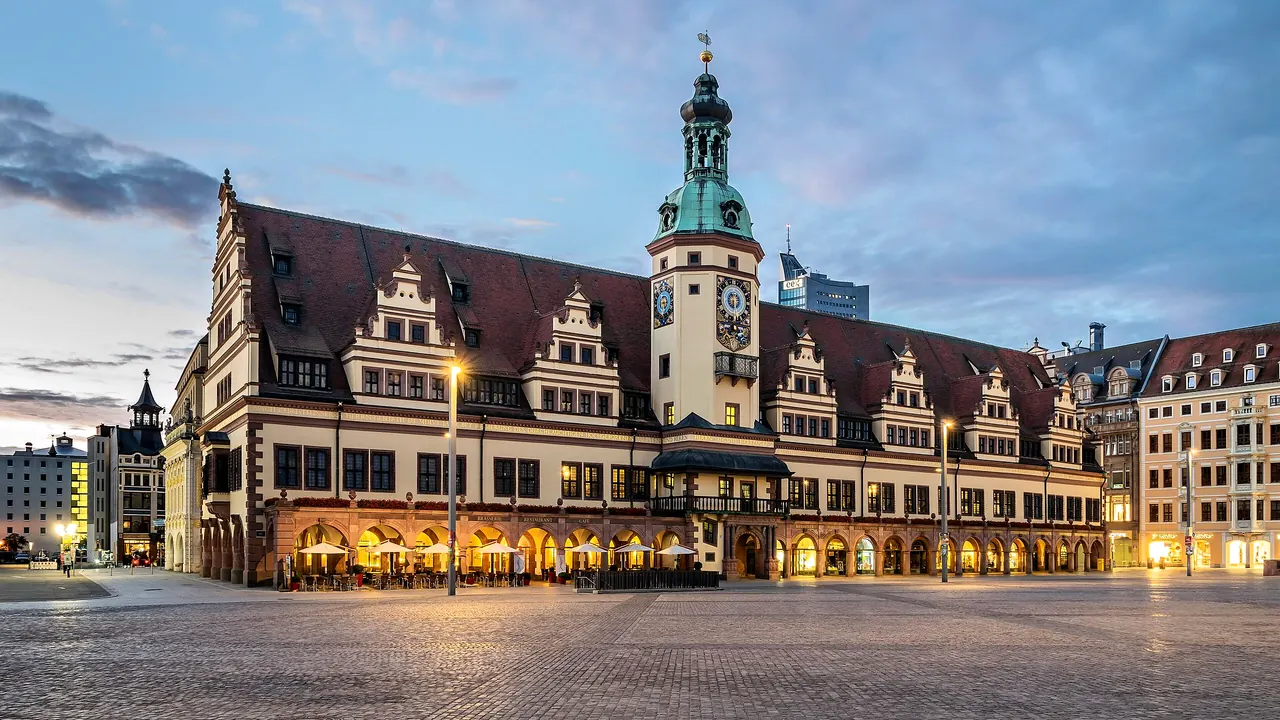
Photos: Freiburg by Dietmar Rabich, CC BY-SA 4.0, cropped; Leipzig by Krzysztof Golik, CC BY-SA 4.0, cropped.
Freiburg or Leipzig?
Our verdict in twelve categories, each scored against the same fixed benchmark cities, and the climate month by month, so you can choose for your trip.
Choose Freiburg for
- nature and the outdoors
- wellness
- families
Choose Freiburg if the landscape matters as much as the town. The Black Forest begins at the edge of the old town, the thermal baths of southern Baden are close by, and the Baden cooking with its Kaiserstuhl wines is the better food of the two. It suits walkers, cyclists, families and anyone who wants a slower, greener week, as long as they don't need much happening after dark.
Choose Leipzig for
- live music and the arts
- nightlife
- beaches
Leipzig is the pick for a trip built around the evenings. Its music, from the Gewandhaus Orchestra to the Thomanerchor singing in Bach's own church, is in another league, and its clubs in old factories stay open far later than anything in Freiburg. Rooms are easier to find and cheaper, and the rail hub puts Dresden, Weimar and Berlin within easy reach. The trade-off is flat countryside and no spas in town.
Scoreboard
Twelve categories on one fixed scale from 0 to 100. The shaded stretch is the gap between the two.
Your match
Pick a travel style or drag the sliders, and both match scores follow your weighting.
Too close to call, level with your weighting
Wins on nature and the outdoors and wellness with your weighting.
Wins on live music and the arts and nightlife with your weighting.
What matters to you?
Category by category
What the scores mean for a trip.
Beaches & swimming
Neither city is near the sea, but Leipzig has the better swimming. South of the centre, the Cospudener See and Markkleeberger See are flooded lignite mines with sandy shores and beach bars, and you can get there by tram. On a hot afternoon that comes close to a real beach day.
In Freiburg you swim in grassy gravel-pit lakes on the Rhine plain or in crowded open-air pools. The cooler Black Forest lakes of Titisee and Schluchsee are about an hour away. They are lovely for a dip after a hike, but there is no sand to lie on.
Food & drink
Freiburg eats better. Its Baden cooking leans towards France, the Münster market is worth visiting every morning, and the Pinot Noir and Pinot Gris come from the Kaiserstuhl just outside town. There is serious fine dining across the surrounding region too.
Leipzig's Saxon food is heavier and plainer: roasts with dumplings, salty Gose beer and a coffee-house tradition that goes back three centuries. It does beat Freiburg on variety, though. The casual international kitchens along the Karli and in Plagwitz offer a range of food that Freiburg doesn't have.
Culture & sights
The two are close here, and they differ in the kind of sights rather than how many there are. Freiburg centres on one handsome Gothic scene: the red sandstone Münster with its climbable tower, the market square and the Bächle channels running through carefully rebuilt medieval streets. The Augustinermuseum adds medieval art.
Leipzig's sights tell a story instead. It runs from Bach's grave in the Thomaskirche to the Nikolaikirche prayers of 1989 and the Stasi headquarters at the Runde Ecke. It also has more museums, such as the Grassi collections and the Museum der bildenden Künste, so it holds up a little longer on a rainy day.
Nightlife
Leipzig is the better night out by some distance. Its club scene grew up in old factories and warehouses, electronic music plays well past dawn at weekends, and the Karli, Connewitz and the canal-side bars of Plagwitz each go out in a different way.
Freiburg's evenings are friendly but smaller: student pubs and wine bars around the Martinstor, and summer crowds sitting by the Dreisam until late. Both cities go noticeably quiet during the semester break.
Nature & outdoors
Freiburg is in a different class here. The Black Forest rises right behind the old town. You can walk the ridge from the Schauinsland at about 1,280m, hike or ski on the Feldberg, walk gorges like the Ravenna valley or go mountain biking, and the Kaiserstuhl vineyards offer gentler cycling.
Leipzig's green side is real but flat. It has the Auwald floodplain forest, canoe routes along the canals from Plagwitz and sailing or paddling on the old mining lakes. For proper hills you need a train of about two hours to Saxon Switzerland or the Harz.
Day trips
Both are excellent bases, and the difference is where the trips take you. From Freiburg you cross borders: Basel by train, Colmar and the half-timbered villages of Alsace, and Strasbourg. Baden-Baden is also in reach, so one week can take in three countries and plenty of wine.
Leipzig's trips are about German history, and they all leave by rail from one station: Dresden, Weimar, Erfurt, Wittenberg, Naumburg and the Bauhaus at Dessau, with Berlin as well. You never need a car, while some of Freiburg's Alsace villages are easier to reach by road.
Good for families
Freiburg is the easier family base. Children can play in the Bächle in the centre, the Mundenhof animal park and the Schauinsland cable car are close by, and Europa-Park, Germany's largest theme park, is about 40 minutes away. Lakes and gentle forest walks fill the rest of the week.
Leipzig has the better plan for a rainy day: its zoo and the covered Gondwanaland tropical hall work in any weather, and Freiburg has nothing to match them. Once you have done the zoo, the summer lakes and Belantis, though, Leipzig runs out of things for children sooner.
Getting around
There is little to choose between them, and in both you will do most of your sightseeing on foot. Freiburg's edge is that its transport leads into the hills. The compact old town is mostly closed to cars, trams run out to the Schauinsland cable car, and regional trains climb the Höllental into the Black Forest. Many hotels also give guests a card that covers local buses and trains.
Leipzig's network leads out to the neighbourhoods and the water instead. The old town inside the ring road is quick to cross, trams serve Plagwitz and Connewitz for the evening, and the S-Bahn tunnel under the centre takes you south to the swimming lakes. The whole city is flat, so cycling is as easy as in Freiburg, but the rides end at lakes and forest rather than mountains.
Shopping & style
Leipzig has more interesting shopping, though neither city is worth visiting for it. Covered arcades such as the Mädlerpassage make browsing pleasant in any weather, and the west of the city adds vintage clothes, record shops and the galleries at the Spinnerei.
Freiburg has a main street of chain stores, independent boutiques in Gerberau and Konviktstrasse, and good local buys at the Münster market, from schnapps to cuckoo clocks. For bigger shopping, people go over to Basel.
Affordability
Leipzig is the cheaper place to stay, almost entirely because rooms cost less. Hotels near the old town are cheaper than in most large German cities and there are plenty of them, though rates jump during the big trade-fair weeks.
In Freiburg, hotels are the expensive part, because rooms are scarce for the demand, especially on summer weekends. Some visitors stay in Black Forest villages instead. Day-to-day spending is similar in both cities, and Freiburg's market snacks and low-cost sights help, but any trip into Switzerland costs noticeably more.
Live music & performing arts
Music is Leipzig's great strength, and Freiburg can't match it. The Gewandhaus Orchestra and the opera house face each other across Augustusplatz, and the Thomanerchor sings Bach in his own church. The Bachfest fills the churches each June, and every Whitsun the Wave-Gotik-Treffen brings goth music fans from around the world.
Freiburg has a respectable programme for a smaller city. The Theater Freiburg stages opera and drama, the Freiburger Barockorchester plays at the Konzerthaus, and the Zelt-Musik-Festival comes round each summer. It makes a good evening out, but it isn't a reason to travel.
Wellness & relaxation
Freiburg is in spa country and Leipzig is not. There is a thermal bath on Freiburg's eastern edge, and the warm pools of Bad Krozingen and Badenweiler, with its Roman bath ruins, are a short trip south. The bathhouses of Baden-Baden are an hour away by train.
In Leipzig, wellness means German sauna culture in modern pool complexes and hotel spas. Its spa towns have to be a separate outing. The rest comes from long walks in the floodplain forest and quiet Sundays.
When should you go?
Pick your month. The climate figures are measured averages, not a forecast.
Freiburg in July
Leipzig in July
Daytime high, °C
Rainfall in the month, mm
Temperature and rainfall are climate normals, averaged over the years shown. Freiburg: 1991-2020 normals, Freiburg (0.6 km from centre). Leipzig: 1991-2020 (sunshine 1961-1990, rainfall 1961-1990) normals, Leipzig-Holzhausen (5.7 km from centre).
The best months in both cities are May to September, but Freiburg is warmer and sunnier. July highs reach about 27°C there, against 25°C in Leipzig, and Freiburg gets noticeably more sunshine all summer. The price is rain. Freiburg's wettest months are late spring and summer, with May bringing over 100mm, while Leipzig is drier in every month of the year. July and August are the months for lake swimming in either city, and neither gets too hot for a day on foot.
Spring and autumn suit Freiburg better. It is already mild in April and still pleasant in October, which is good weather for walking in the Black Forest. Winters are grey in both, but Leipzig is colder and darker, with January highs near 4°C and very little sun, so a winter visit there means concert halls and museums rather than strolling outdoors.
Which traveller are you?
On an outdoors trip, Freiburg is the clear choice. Trails start on the Schlossberg behind the old town, the Schauinsland cable car lifts you onto the ridge, and the Feldberg and Kaiserstuhl add hiking, skiing and cycling through the vineyards. Leipzig's forest and lakes are pleasant but flat.
For a culture and arts trip, Leipzig wins because of its music. The Gewandhaus Orchestra, the opera, the Thomanerchor and the Bachfest give it far more on stage than Freiburg has, and the Bach and GDR sights fill a stay of two or three days.
On a relaxing and wellness trip, Freiburg is the calmer base. There is a thermal bath on the edge of town and more in nearby Bad Krozingen and Badenweiler, with Baden-Baden an hour away by train. Leipzig has sauna complexes and forest walks but no spa tradition.
Before you go
| Measure | Freiburg | Leipzig |
|---|---|---|
| Official language | German | German |
| Currency | Euro (EUR) | Euro (EUR) |
| Sockets | CF230 V, 50 Hz | CF230 V, 50 Hz |
| Driving side | Right | Right |
| Time zone | UTC+1, UTC+2 in summer | UTC+1, UTC+2 in summer |
| Emergency number | 112 | 112 |
| Elevation | 278 m | 110 m |
| Main airport | EuroAirport Basel–Mulhouse–Freiburg (BSL)50 km from centre112 non-stop destinations | Leipzig/Halle Airport (LEJ)13 km from centre20 non-stop destinations |
| Public holidays this year | 12 days | 11 days |
By the numbers
| Measure | Freiburg | Leipzig |
|---|---|---|
| City population | 238,299 | 615,932 |
| People per km² | 1,558 | 2,068 |
| Museums within 10 km | 13 | 40 |
| UNESCO World Heritage sites within 50 km | 2 | 1 |
Where else could you go?
Every comparison below shares a destination with this one, so you can follow Freiburg or Leipzig somewhere new.
- Colmarvs Freiburg
- Baselvs Freiburg
- Strasbourgvs Freiburg
- Zurichvs Freiburg
- Baden-Badenvs Freiburg
- Dresdenvs Leipzig