Loango National Park
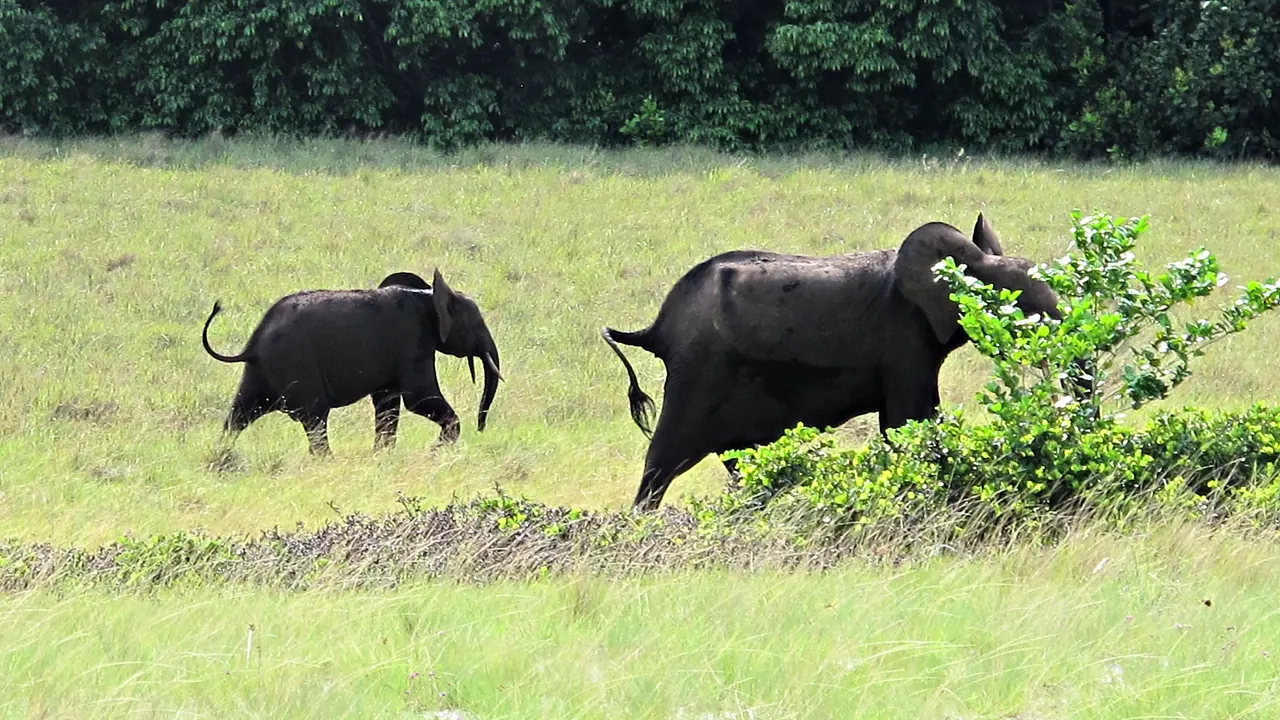
An African forest elephant and her calf on the savannah of Loango National Park
- Nature & outdoors90
- Beaches30
- Wellness & relaxation22
Photo: Kurt Dundy at English Wikipedia, CC BY 3.0, cropped
Match
18
Every category weighted equally
- Beach & sun21
- Culture & arts12
- Food & nightlife11
- Family trip22
- Outdoors28
- Relax & unwind23
- Shopping & style12
- On a budget17
Loango National Park in twelve categories
Our verdict on each, scored 0 to 100 against the same fixed benchmark cities, so a score means the same thing on every page.
Beaches & swimming. Scores 30 out of 100.
Food & drink. Scores 12 out of 100.
Culture & sights. Scores 10 out of 100.
Nightlife. Scores 2 out of 100.
Nature & outdoors. Scores 90 out of 100.
Day trips. Scores 10 out of 100.
Good for families. Scores 15 out of 100.
Getting around. Scores 10 out of 100.
Shopping & style. Scores 3 out of 100.
Affordability. Scores 8 out of 100.
Live music & performing arts. Scores 4 out of 100.
Wellness & relaxation. Scores 22 out of 100.
Loango National Park category by category
Beaches & swimming
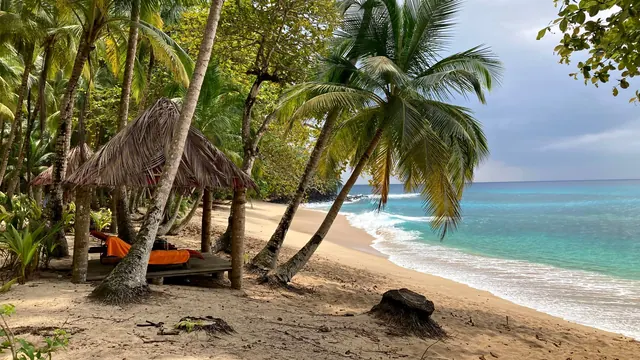
30Loango's coast is one long, empty strand of pale sand running roughly 100km between lagoon mouths and forest, and its beaches are some of the wildest anywhere. But they are not swimming beaches. The water is warm, around 26°C for much of the year, yet the open Atlantic breaks heavily here, currents are strong and there are no lifeguards, facilities or sheltered coves.
Visitors walk the sand at dawn looking for elephant and hippo tracks and paddle at the edge, and the calm lagoons behind the shore are used for boating rather than bathing. Anyone who wants a swim every afternoon should choose a lodge with a pool.
Food & drink
12There is no food scene to speak of. Meals are taken at the lodge or camp where you stay, usually full board, with fresh fish from the lagoons and the sea, grilled meat, cassava and plantain alongside simple international cooking. Kitchens rely on supplies brought in by boat, so menus are short.
The Gabonese dishes worth looking for, such as fish or chicken cooked in nyembwe, the palm-nut sauce, appear when a cook chooses to make them. Visitors eat well enough but do not come for the table.
Culture & sights
10Loango is a wilderness, and its heritage is thin on the ground. The one built landmark visitors seek out is the mission of Sainte-Anne on the shore of the Fernan Vaz lagoon, a late nineteenth-century church with a prefabricated iron frame, often linked to the Eiffel workshops, standing among the palms of a quiet Catholic mission.
Beyond that, the human interest lies in the small fishing villages around the lagoons and the communities of the Nkomi people, best met with a local guide. There are no museums, old towns or archaeological sites within the park.
Nightlife
2There is no nightlife. Evenings are a drink at the lodge as the light goes over the lagoon, dinner, and an early night before a dawn start. The sounds after dark are frogs, insects and the occasional elephant moving past camp.
Nature & outdoors
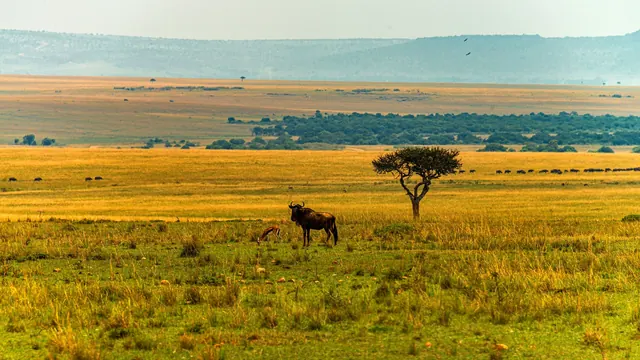
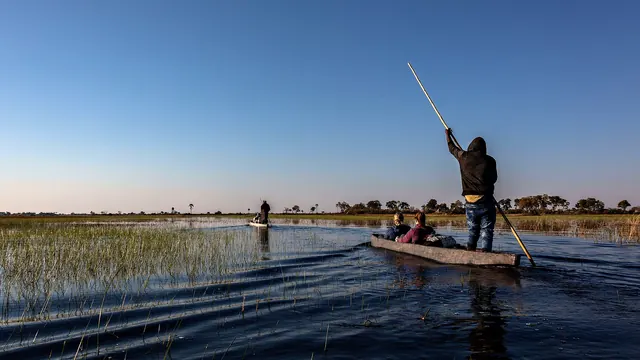
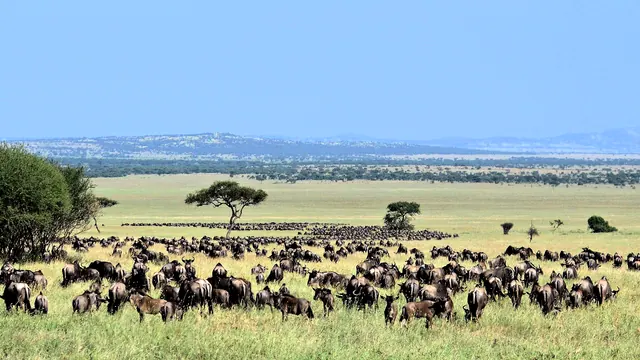
90This is one of Africa's most remarkable wildlife landscapes. Rainforest, open savannah, mangrove-lined lagoons and an untouched Atlantic shore run straight into one another. Forest elephants, buffalo and red river hogs come out onto the beach, and hippos are sometimes seen in the surf. Guided walks track habituated western lowland gorillas in the forest. Boat trips on the Iguéla and Fernan Vaz lagoons and their creeks bring crocodiles, hippos and a great deal of birdlife. Chimpanzees, leopards and sitatungas live in the park too, but they are shy and seen only now and then.
The sea has seasons of its own. Humpback whales and dolphins pass offshore from about July to September, in the dry season, and leatherback and olive ridley turtles nest on the beaches from roughly November to February. Anglers come for tarpon fishing in the lagoon mouths. Every activity is guided, by vehicle, boat or on foot, and there are no hills and no long trails to walk on your own.
Day trips
10Day trips in the sense of other towns to visit barely exist. A boat outing on the Fernan Vaz lagoon can take in the fishing villages along its shore and the small town of Omboué, which is mainly a transfer point. Port-Gentil, the nearest city, is a long journey away and is passed through rather than visited. Almost every outing here is into the park itself.
Good for families
15Loango suits older children and teenagers with a real passion for animals, travelling with parents who are comfortable with remoteness. Seeing elephants on a beach or gorillas in the forest can be unforgettable at that age.
For younger children it is hard work. This is a malarial zone far from good medical care, the journey in involves flights, roads and boats, gorilla tracking has minimum age limits, and there are no attractions, play areas or facilities made for families. The sea is too rough for children to swim.
Getting around
10Getting in is the main effort. The usual route is a flight to Port-Gentil followed by road and boat transfers through Omboué and across the lagoons, or a light-aircraft charter to an airstrip near the park. There is no public transport and almost no road network inside the park.
Once there, everything moves by lodge boat, open vehicle or on foot with a guide, so the logistics are handled for you, but distances between camps are long and the rainy months make some tracks heavy going.
Shopping & style
3There is nothing to shop for beyond a few carvings, fabrics or souvenirs at the lodges. Anyone wanting Gabonese crafts or masks should look in Libreville before or after the trip.
Affordability
8Loango is an expensive destination. Visits are almost always sold as packages that combine transfers, full-board lodge or camp stays and guided activities, and the remoteness, small number of beds and specialist guiding put it in the upper range of African wildlife travel. Gabon itself is costly by regional standards.
There is no budget way to do it: no independent guesthouses, cheap transport or local restaurants inside the park. Once a package is paid for, there is little left to spend on site.
Live music & performing arts
4There is no performing arts life here. Occasionally a lodge or village visit includes traditional drumming or dance, and Gabon's Bwiti ceremonial music exists in the wider region, but there is nothing a visitor can plan to attend.
Wellness & relaxation
22Loango offers no spas, baths or treatment culture, and lodges keep to simple comforts. What it does have is deep quiet: no traffic, no towns, and long afternoons on a veranda over the lagoon between dawn and dusk outings. The rhythm is set by early wildlife activities, heat and humidity, so it restores through remoteness rather than pampering.
When should you go?
Pick a month to see what it is like. The climate figures are measured averages, not a forecast.
Loango National Park in July
Daytime high, °C
Rainfall in the month, mm
The whole year
Shaded against this destination’s own year: the deepest cell is its best month for that figure and the palest its weakest.
Where the figures come from
Loango National Park has no weather station within reach, so its figures come from a gridded climate model rather than a measured record, and read a broad area rather than one spot.
Temperature and rainfall are climate normals, averaged over the years shown. Loango National Park: 2001-2020 normals, NASA POWER reanalysis grid, no weather station within 90 km.
Before you go
| Measure | Loango National Park |
|---|---|
| Official language | French |
| Currency | CFA Franc BEAC (XAF) |
| Sockets | C220 V, 50 Hz |
| Driving side | Right |
| Time zone | UTC+1 |
| Emergency number | Police 1722, ambulance 1300, fire 18 |
| Main airport | Port Gentil International Airport (POG)3 non-stop destinations |
| Public holidays this year | 11 days |
By the numbers
| Measure | Loango National Park |
|---|---|
| Swim season, months above 21 °C | 12 months |
Compare Loango National Park with
Every comparison with a written verdict behind it.