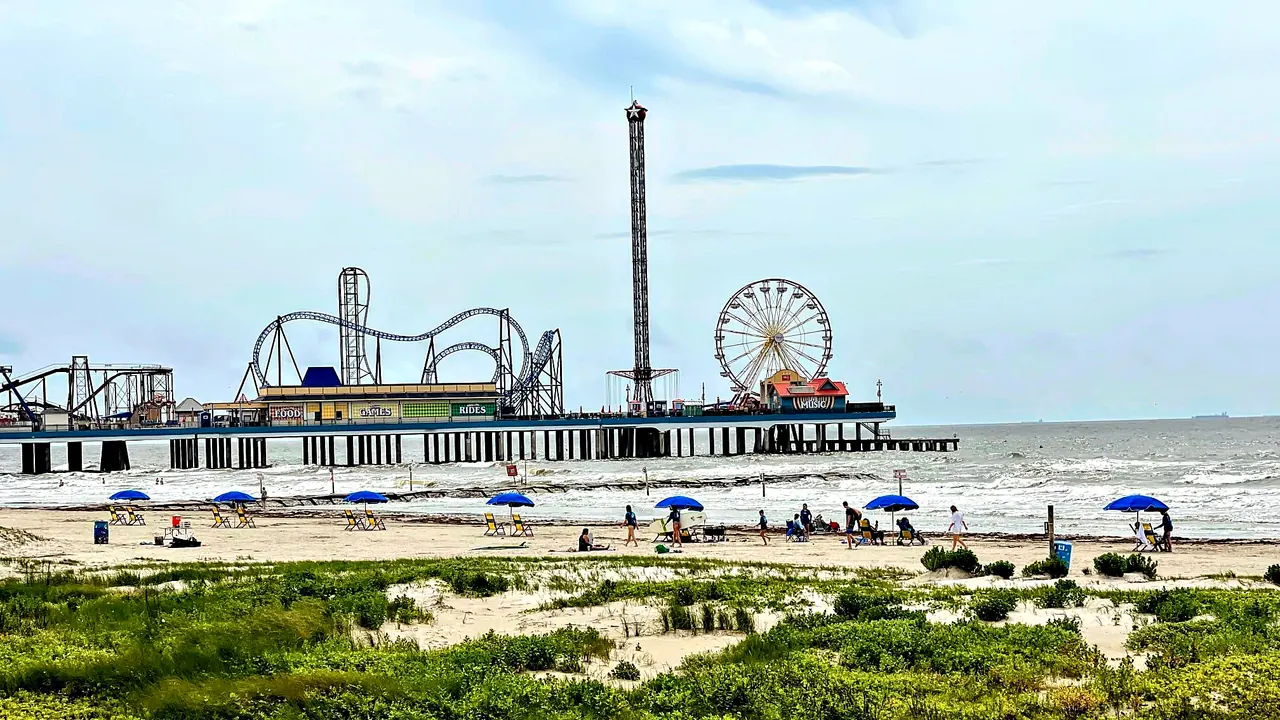
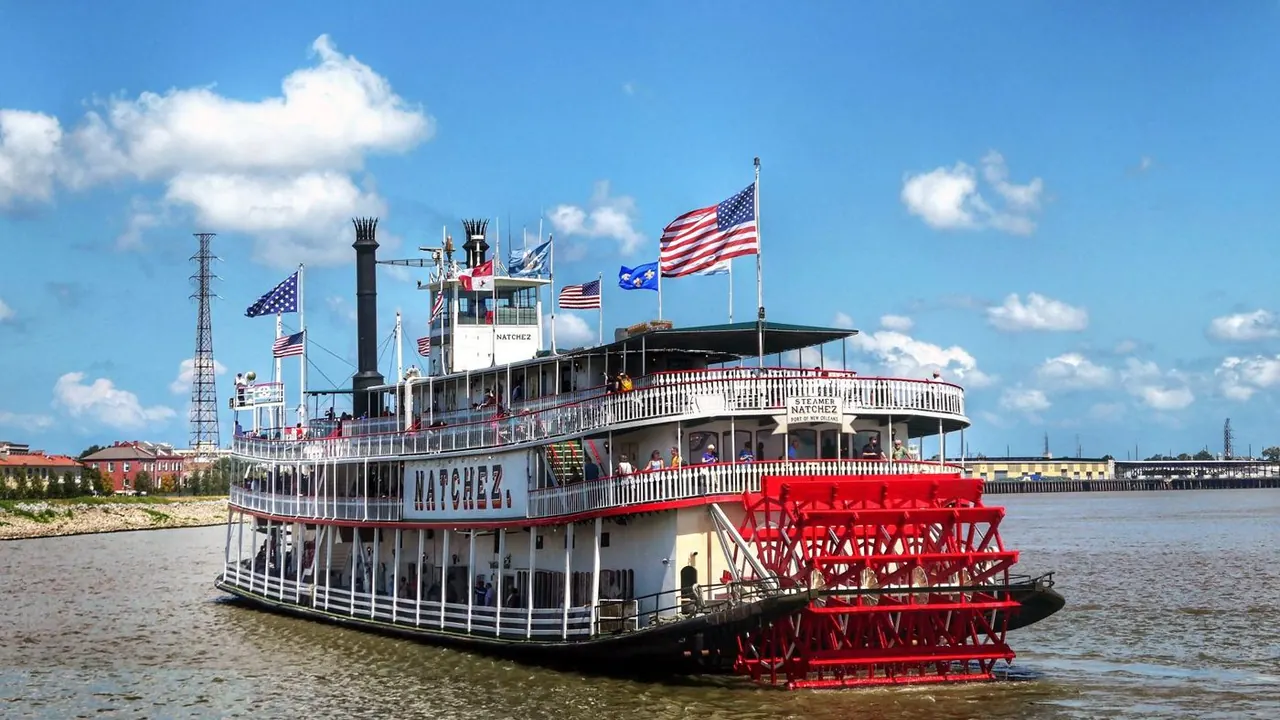
Photos: Galveston by Devin P Morris, CC BY-SA 4.0, cropped; New Orleans by Bernard Spragg, CC0.
Galveston or New Orleans?
Our verdict in twelve categories, each scored against the same fixed benchmark cities, and the climate month by month, so you can choose for your trip.
Choose Galveston for
- beaches
- families
- nature and the outdoors
Galveston is the choice for a warm-water beach vacation, especially with children. Its long Gulf shoreline, the lifeguarded family beaches, Moody Gardens and the funfair pier make an easy, outdoor trip. Visitors who can live with murky water, a car for every outing and early nights get a relaxed island with Victorian streets for the cooler hours.
Choose New Orleans for
- nightlife
- live music and the arts
- food and drink
New Orleans suits travellers who come for the evenings and the table rather than the sand. Creole and Cajun cooking, jazz on Frenchmen Street, bars that never close and the old colonial French Quarter add up to a far richer city trip, and most of it can be reached on foot or by streetcar. There is no beach to speak of, though, and the late scene is not built around children.
Scoreboard
Twelve categories on one fixed scale from 0 to 100. The shaded stretch is the gap between the two.
Your match
Pick a travel style or drag the sliders, and both match scores follow your weighting.
Wins on beaches and families with your weighting.
Wins on nightlife and live music and the arts with your weighting.
What matters to you?
Category by category
What the scores mean for a trip.
Beaches & swimming
Here Galveston has what New Orleans simply lacks. The island has sand along most of its Gulf side, from the busy Seawall stretch and the family beaches at Stewart and East Beach to the quieter West End and the state park, with warm water close to the room. It is not a postcard shore: the water is murky, sargassum can drift in and rip currents form by the jetties.
New Orleans sits on a river and a lake that nobody swims in. The nearest sand is on the Mississippi coast well over an hour away, and it is just as brownish and shallow as Galveston's, so a beach day from the city means a long drive to a lesser version of what Galveston has on its doorstep.
Food & drink
The two eat from the same Gulf, with oysters, shrimp and po'boys on both menus, but at very different levels. Galveston keeps it simple: fried platters, gumbo and chargrilled oysters in waterfront rooms on the Seawall or by the harbour, with Tex-Mex and barbecue filling in and the best independent places around the Strand.
New Orleans is one of the few American cities with a cuisine of its own. Old-line Creole dining rooms in the French Quarter, Cajun dishes from the bayous, neighbourhood po'boy shops in Mid-City, beignets by Jackson Square and cocktails like the Sazerac make eating a reason to travel there, which Galveston never claims to be.
Culture & sights
Galveston's history is that of a rich Victorian port: the cast-iron facades of the Strand, porch-lined houses in the East End, Bishop's Palace and the story of the 1900 storm, with the tall ship Elissa at the harbour. It fills a day or two well.
New Orleans goes deeper and older. The French Quarter is an unusually complete colonial town, with the Cabildo where Louisiana passed to the United States in 1803, and the Garden District, the above-ground tombs and the National WWII Museum add more. Neither city is built on great art collections; the pleasure in both lies in the streets, but New Orleans has far more of them.
Nightlife
Both cities hold Mardi Gras, and that is where the likeness ends. Outside Carnival, a night in Galveston means a pub or wine bar on the Strand or a beach patio on the Seawall, and the island is quiet early, particularly on weeknights and in the cooler months.
New Orleans has no closing time and lets drinks travel down the street in plastic cups. Bourbon Street stays loud until dawn, while Frenchmen Street, the Bywater and the corner bars offer a more local night that drifts on foot from one place to the next. Neither is a club city; the difference is that New Orleans keeps going.
Nature & outdoors
Both are flat, wet and too hot for comfort outdoors in high summer, so the interest in each lies in water and wildlife. Galveston has the slight edge for birdwatchers: it sits on a major migration flyway, and Bolivar Flats and High Island fill with warblers, spoonbills and shorebirds in spring, with dolphins often beside the ferry and good pier and jetty fishing.
New Orleans counters with cypress swamps and bayous within an hour, where boat tours and kayaks pass alligators, plus the Barataria Preserve boardwalks and the old live oaks of City Park. Swamp and alligator scenery against coastal marsh and birdlife is the real choice.
Day trips
The choice of outings is about as wide in each, but they lead in different directions. From Galveston nearly everything points to Houston: Space Center Houston, the Museum District with the Menil and the Rothko Chapel, and the San Jacinto Monument, all reached by car.
From New Orleans the classic day follows the River Road to the sugar plantations, with the Whitney telling the story of enslaved people, then on to Baton Rouge or west into Cajun country. Space and big-city museums on one side, plantation history and Cajun towns on the other.
Good for families
Galveston is set up as a family beach resort, and it shows. Moody Gardens' pyramids give an aquarium, rainforest and science centre for hot or rainy days, and there is a waterpark, a funfair pier on the Seawall and shallow, lifeguarded water at Stewart Beach.
New Orleans has more for children than its reputation suggests, with Audubon Zoo, the riverfront aquarium, the City Park carousel and children's museum, and streetcar and paddle-steamer rides. Yet parents have to plan around Bourbon Street and some areas at night, which a Galveston beach week rarely asks of them.
Getting around
New Orleans is much easier without a car. The French Quarter, the Marigny and the Warehouse District sit in a compact, walkable band along the river, and the green St. Charles streetcars run out through the Garden District; ride-hailing fills the gaps.
Galveston is long and thin, with its sights strung out over many kilometres. The Strand is walkable and a trolley and buses reach parts of the Seawall, but Moody Gardens, the West End and the state park mean driving, and there is no rail link from Houston's airports.
Shopping & style
Both trade in antiques and character rather than luxury, but New Orleans offers far more to browse. Royal Street's long-established dealers sell chandeliers and estate jewellery, Magazine Street runs for miles of boutiques and vintage shops, and Carnival masks and costumes are a speciality of the city.
Galveston's version is a smaller afternoon among antique shops and galleries in the Strand's Victorian storefronts, plus swimwear and shell souvenirs on the Seawall. For anything beyond that, people drive to Houston.
Affordability
Neither is a bargain, and the costs land in different places. In Galveston the beaches are free and motels and beach rentals are plentiful, but the car most visitors need adds up, and Seawall hotels charge much more on summer weekends.
In New Orleans rooms in and near the French Quarter are the big expense and climb at Mardi Gras and Jazz Fest, while the streetcar, po'boys and free street music keep days cheap. Galveston is gentler in the cooler months; New Orleans is easier on the wallet in the summer heat.
Live music & performing arts
Galveston has one fine room, the restored Grand 1894 Opera House on Postoffice Street, with touring shows and the community symphony, and cover bands on the beach patios. That is an evening or two, not a reason to visit.
New Orleans, the birthplace of jazz, is a reason in itself. Traditional jazz, brass bands, blues and zydeco play every night on Frenchmen Street and in the neighbourhood bars of Tremé and the Bywater, second lines parade on Sundays, and Jazz Fest fills the spring. Its formal opera and orchestral side is modest, but music lovers will barely notice.
Wellness & relaxation
Neither city has a spa or bathing tradition, so treatments in both come down to massages at the larger hotels. The difference lies in where you find calm. In Galveston it comes from the island's slow pace: rides along the flat Seawall, the porch-lined East End and quiet evenings away from the summer weekend crowds.
In New Orleans it means a courtyard guesthouse in the morning, the slow streetcar under St. Charles Avenue's oaks and afternoons in City Park, with the noise of the French Quarter at night working against it.
When should you go?
Pick your month. The climate figures are measured averages, not a forecast.
Galveston in July
New Orleans in July
Daytime high, °C
Rainfall in the month, mm
Temperature and rainfall are climate normals, averaged over the years shown. Galveston: 1991-2020 normals, Scholes Field (8 km from centre). New Orleans: 1991-2020 (sunshine 1981-2010) normals, New Orleans Airport (2.7 km from centre).
Both cities lie on the hot, humid Gulf coast and get hot at the same times of year. In Galveston the beach season runs from late May into October, and from June to September the Gulf stays near 29°C. July and August highs of about 33°C are fine by the water but heavy going on land. New Orleans reaches the same heat, so walking its streets in summer is tiring. Winters in both are mild, too cool for swimming but pleasant for sightseeing.
Rain is where they part. Galveston is the drier of the two for most of the year, especially in spring, but its wettest spell comes in autumn and peaks in September at about 167mm. New Orleans gets more rain from winter through summer, with about 194mm in June, though it has long sunny days from March onwards. Spring and late autumn suit sightseeing in both. In October the pattern turns: it is New Orleans's driest month, while Galveston is still fairly wet but easing after September, with the sea still warm enough for a swim.
Which traveller are you?
On a beach and sun trip, Galveston is the clear pick. Sand runs along most of the island's Gulf side, the water is very warm from late spring to autumn, and New Orleans offers only a hotel pool or a long drive to the Mississippi coast.
For a food and nightlife trip, New Orleans wins easily. Creole and Cajun dining rooms, crawfish boils and classic cocktails lead into a night of jazz clubs and street bars, while Galveston offers seafood platters and a drink by the water before an early night.
On a family trip with children, Galveston is easier. Moody Gardens, the waterpark, the Seawall funfair and lifeguarded Stewart Beach fill whole days, whereas New Orleans has a good zoo and aquarium but asks parents to steer around Bourbon Street and some areas after dark.
Before you go
| Measure | Galveston | New Orleans |
|---|---|---|
| Currency | US Dollar (USD) | US Dollar (USD) |
| Sockets | AB120 V, 60 Hz | AB120 V, 60 Hz |
| Driving side | Right | Right |
| Time zone | UTC-6, UTC-5 in summer | UTC-6, UTC-5 in summer |
| Emergency number | 911 | 911 |
| Elevation | 2 m | -2 m |
| Main airport | William P. Hobby Airport (HOU)60 km from centre73 non-stop destinations | Louis Armstrong New Orleans International Airport (MSY)18 km from centre51 non-stop destinations |
| Public holidays this year | 13 days | 14 days |
By the numbers
| Measure | Galveston | New Orleans |
|---|---|---|
| City population | 53,695 | 383,997 |
| People per km² | 99 | 423 |
| Museums within 10 km | 7 | 16 |
| UNESCO World Heritage sites within 50 km | 0 | 0 |
| Swim season, months above 21 °C | 7 months | 7 months |
Where else could you go?
Every comparison below shares a destination with this one, so you can follow Galveston or New Orleans somewhere new.
- Houstonvs Galveston
- Gulf Shoresvs New Orleans
- Orange Beachvs New Orleans
- Pensacolavs New Orleans
- Austinvs Galveston
- Destinvs New Orleans