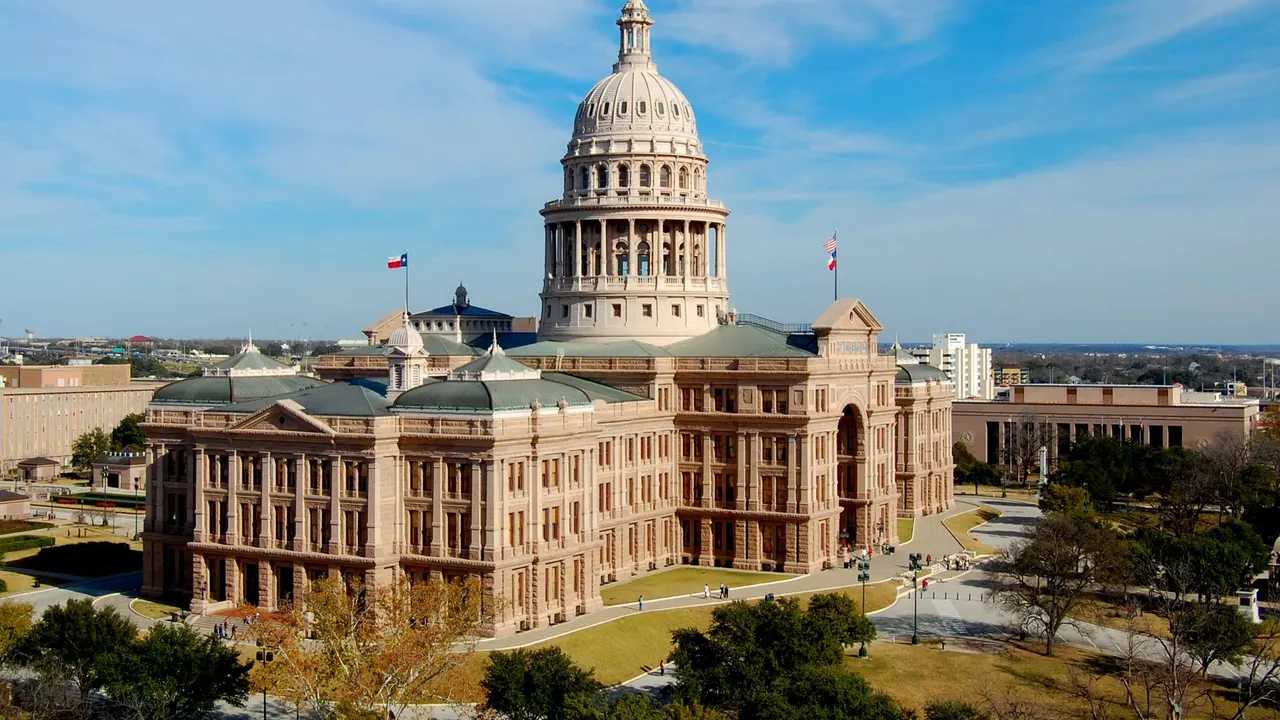
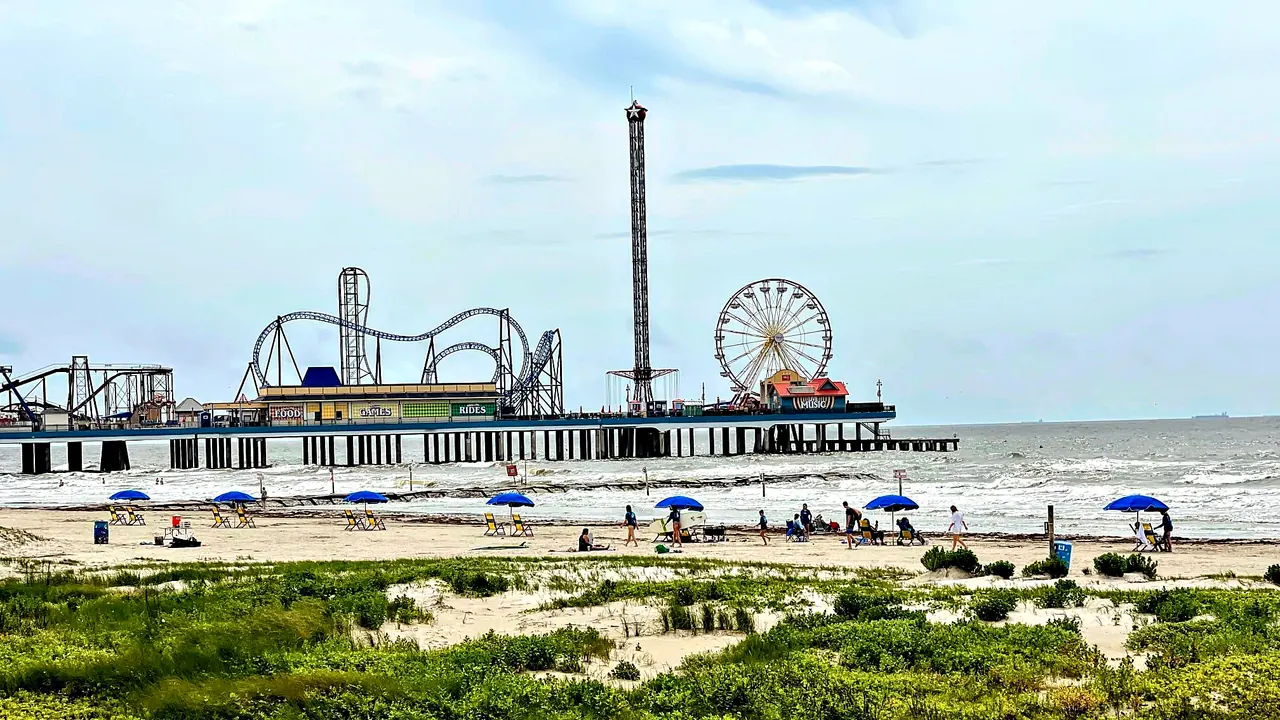
Photos: Austin by LoneStarMike, CC BY 3.0, cropped; Galveston by Devin P Morris, CC BY-SA 4.0, cropped.
Austin or Galveston?
Our verdict in twelve categories, each scored against the same fixed benchmark cities, and the climate month by month, so you can choose for your trip.
Choose Austin for
- live music and the arts
- nightlife
- food and drink
Austin suits travellers who want the evenings to be the point of the trip. Bands play every night on Red River Street and in the honky-tonks, the days revolve around brisket and breakfast tacos, and the bars of Sixth Street and the east side carry on late. It also has the better outdoors, with the Greenbelt, the lakes and the Hill Country close by, though you will need a car for most of it.
Choose Galveston for
- beaches
- families
- prices
For a warm-water beach vacation, especially with children, Galveston is the one to pick. Gulf sand runs along most of the island. Moody Gardens and the Seawall pier fill the days when the sun is too strong, and the Victorian Strand is good for an afternoon of history. Nights are quiet and the food is simple, which is exactly what many families want.
Scoreboard
Twelve categories on one fixed scale from 0 to 100. The shaded stretch is the gap between the two.
Your match
Pick a travel style or drag the sliders, and both match scores follow your weighting.
Wins on live music and the arts and nightlife with your weighting.
Wins on beaches and families with your weighting.
What matters to you?
Category by category
What the scores mean for a trip.
Beaches & swimming
Austin is far inland, three hours or more from the Gulf, so swimming here means Barton Springs Pool at a cold 20°C, the gentler Deep Eddy, or boat days in the coves of Lake Travis. These make good summer afternoons, but they are not beach days.
Galveston comes out well ahead because it has the beach Austin lacks. There is sand along most of its 50km Gulf shore, from the busy Seawall stretch to the wider, quieter West End, and the sea is warm enough for long swims all summer. Expect murky brown-green water, seaweed in some years and rip currents beside the jetties, not a postcard coast.
Food & drink
Austin is much the better place to eat. Central Texas brisket smoked over post oak, breakfast tacos and Tex-Mex give it a food culture of its own. East Austin and South Congress have the more ambitious kitchens, and the barbecue towns of Lockhart and Luling are a short drive away.
Galveston's strength is Gulf seafood: oysters, shrimp and snapper eaten by the water, with po'boys that show the Louisiana influence along this coast. Apart from a few independent places around the Strand, much of the food is fried platters for beach crowds.
Culture & sights
The two are close here, but their sights are of different kinds. Austin's best are indoors, in the museums around the University of Texas, from the Blanton's art collection to the Harry Ransom Center's Gutenberg Bible, along with the pink granite Capitol. It has few historic streets.
Galveston is the opposite. Its draw is the townscape of a rich 19th-century port: cast-iron shopfronts on the Strand, porch-lined houses in the East End, Bishop's Palace, the story of the 1900 storm, and the barque Elissa in the harbour. People who love architecture will prefer the island, and museum-goers will prefer Austin.
Nightlife
Austin is far ahead after dark. A large student population, warm nights and several distinct areas make going out part of the trip. You can choose between the crowded shot bars of Sixth Street, the bungalow yards of Rainey Street and the mezcal and dive bars of the east side. Clubs are few, though, and bars stop serving at 2am.
In Galveston a night out means a drink in a Strand pub or on a Seawall patio, and the island goes to bed early except on summer weekends. Mardi Gras is the one time it parties hard.
Nature & outdoors
Austin has the more varied outdoors. The wooded canyon of the Barton Creek Greenbelt starts in town, and Lady Bird Lake is for kayaks and paddleboards. Enchanted Rock and Pedernales Falls are within two hours, and at dusk the bats pour out from under the Congress Avenue Bridge.
Galveston is all flat sand, marsh and bay, but it has one thing Austin cannot match: the spring migration, when Bolivar Flats and High Island fill with warblers, spoonbills and shorebirds. Fishing and paddling on the bay make up the rest.
Day trips
Austin has the slightly better choice of outings. San Antonio, with the Alamo, the River Walk and its UNESCO-listed missions, is about an hour and a half away. The Hill Country adds Fredericksburg, a town founded by German settlers, with wineries along the road there, as well as Gruene and small towns such as Wimberley.
From Galveston most trips head north. Space Center Houston is the obvious one, Houston's Museum District and the Rothko Chapel are about an hour away, and Kemah and the San Jacinto Monument are on the way. In the other direction the free ferry crosses to Bolivar, but beyond these the coastal plain has little to see.
Good for families
Austin is easy with children but has few big attractions. There is Zilker Park with its miniature train and Barton Springs Pool, the hands-on Thinkery and the IMAX screen at the Bullock museum. The theme parks are about an hour away in San Antonio and New Braunfels.
Galveston is built around family vacations. The pyramids at Moody Gardens hold an aquarium and an indoor rainforest for the hottest or wettest days. There is also a waterpark and a funfair on a Seawall pier, Stewart Beach has lifeguards and shallow water, and dolphins often follow the ferry.
Getting around
Neither is easy without a car, but for different reasons. Austin is a spread-out city with buses, a single commuter rail line and heavy highway traffic. Only the core around downtown and Rainey Street is walkable, with bikes and scooters on the lakeside trail helping in the centre.
Galveston is a long, narrow island. The Strand is compact and walkable, a heritage trolley links it with parts of the Seawall, and cycling the flat seafront works outside high summer. Moody Gardens and the West End still need a car, and so does the journey from Houston's airports.
Shopping & style
Austin gives shoppers more to do. South Congress Avenue has independent boutiques, vintage clothing, and the cowboy boots and pearl-snap shirts that make the best souvenirs. The east side adds small design stores, although the big brands are in a mall on the city's northern edge.
Galveston is for browsing antiques, galleries and sweet shops in the Victorian storefronts of the Strand, with T-shirts and shells along the Seawall. For anything more, people drive to Houston.
Affordability
Neither is a bargain, since both come with American room rates, tips, sales tax and the cost of a car, but Galveston is easier on the budget. Austin's downtown hotels are priced like those of a big city and climb sharply during the music, film and motor racing weeks. Tacos, food trucks and free sights such as the Greenbelt keep the days cheaper.
Galveston has plenty of motels, mid-range hotels and rental beach houses, and its beaches are free. Weekdays and the cooler months are noticeably cheaper, and rooms cost most on summer weekends on the Seawall and during Mardi Gras.
Live music & performing arts
This is where Austin is strongest and where the two differ most. Bands play every night, often with no cover, in the clubs of Red River and Sixth Street, the bars of South Congress and honky-tonks where couples two-step. The music runs from blues and indie to Texas country and conjunto. The formal arts at the Long Center are more modest.
Galveston's highlight is a show at the Grand 1894 Opera House, a restored Victorian theatre with touring musicals, concerts and the community symphony. Cover bands play on the beachfront patios. It makes a pleasant evening, but not a reason to come.
Wellness & relaxation
For a restful stay, Austin has more to offer. Its destination spa resorts on the shores of Lake Austin and in the Hill Country are the most restorative choice, with lake views and quiet grounds. Day spas across town and a strong yoga culture add to that. Away from the downtown bar streets the city feels easy-going, though anyone looking for thermal baths or a hammam will not find them.
Galveston has no spa tradition either, and treatments usually mean a massage at one of the larger resort hotels on the Seawall or by the bay. What the island really offers is a slow pace, with long bike rides along the seafront and quiet evenings in the porch-lined streets of the East End, away from the busy summer weekends.
When should you go?
Pick your month. The climate figures are measured averages, not a forecast.
Austin in July
Galveston in July
Daytime high, °C
Rainfall in the month, mm
Temperature and rainfall are climate normals, averaged over the years shown. Austin: 1991-2020 normals, Camp Mabry/Austin City Asos (3.7 km from centre). Galveston: 1991-2020 normals, Scholes Field (8 km from centre).
Both cities have the same mild winters, about 17°C by day in January. That is pleasant for walking but too cool for swimming. Austin is at its best in March, April, October and November, either side of a long hot summer that reaches 36°C in July and August. Those summer months are also its sunniest, but sightseeing then means early mornings and spring-fed pools. May and October are Austin's wettest months.
Galveston stays a few degrees cooler than Austin in summer, and from June to September the sea is around 30°C, warm enough for long swims. May and October are milder months for the beach. The island's wet season runs from late summer into autumn, and September is by far the rainiest month at 167mm, so June and July are the safer choice for a beach trip.
Which traveller are you?
For a beach and sun trip, Galveston is the only real option of the two. Sand runs along most of its Gulf side and the water stays very warm all summer. Austin has spring-fed pools and lake coves, which are pleasant swims but never a day on the sand.
On a food and nightlife trip, Austin wins easily. Brisket, breakfast tacos and food-truck lots fill the days. At night you can move from Sixth Street and Rainey Street to the east-side dive bars, with live bands nearly everywhere. Galveston offers good seafood and then an early night.
On a family trip with children, Galveston is the one set up for it. It has lifeguarded Stewart Beach with shallow water, the aquarium and rainforest pyramids at Moody Gardens, a waterpark and a funfair on a pier. Austin has Zilker Park and the Thinkery, but far fewer big attractions.
Before you go
| Measure | Austin | Galveston |
|---|---|---|
| Currency | US Dollar (USD) | US Dollar (USD) |
| Sockets | AB120 V, 60 Hz | AB120 V, 60 Hz |
| Driving side | Right | Right |
| Time zone | UTC-6, UTC-5 in summer | UTC-6, UTC-5 in summer |
| Emergency number | 911 | 911 |
| Elevation | 149 m | 2 m |
| Main airport | Austin Bergstrom International Airport (AUS)13 km from centre91 non-stop destinations | William P. Hobby Airport (HOU)60 km from centre73 non-stop destinations |
| Public holidays this year | 13 days | 13 days |
By the numbers
| Measure | Austin | Galveston |
|---|---|---|
| City population | 961,855 | 53,695 |
| People per km² | 1,217 | 99 |
| Museums within 10 km | 21 | 7 |
| UNESCO World Heritage sites within 50 km | 0 | 0 |
| Swim season, months above 21 °C | - | 7 months |
Where else could you go?
Every comparison below shares a destination with this one, so you can follow Austin or Galveston somewhere new.
- Houstonvs Galveston
- San Antoniovs Austin
- Houstonvs Austin
- San Antoniovs Galveston
- New Orleansvs Galveston
- Gulf Shoresvs Galveston