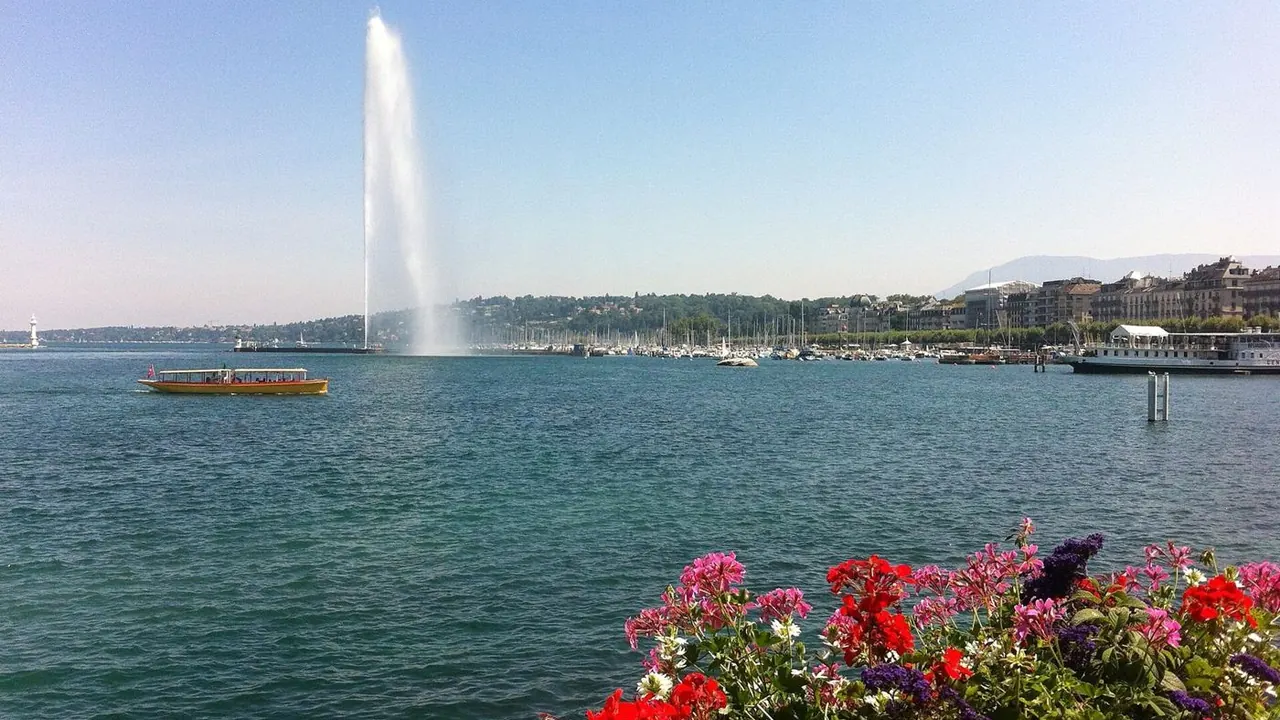
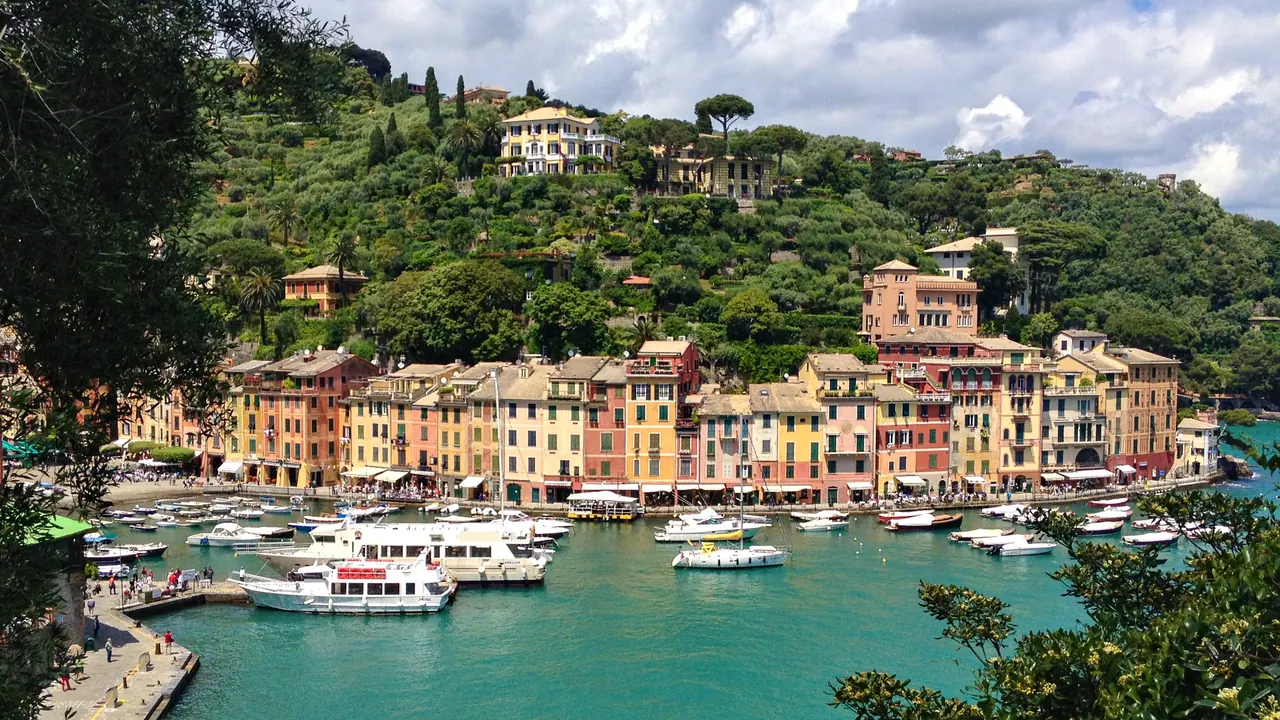
Photos: Geneva by Diviosen, CC BY-SA 3.0, cropped; Portofino by Michal Osmenda, CC BY 2.0, cropped.
Geneva or Portofino?
Our verdict in twelve categories, each scored against the same fixed benchmark cities, and the climate month by month, so you can choose for your trip.
Choose Geneva for
- live music and the arts
- shopping
- culture and sights
Geneva is the better choice for a city stay with real substance. It has an opera house and a fine orchestra, the Reformation and diplomatic sights, the watch boutiques, trams and trains that make everything easy, and the Alps and the Jura on the horizon. It suits travellers who want plenty to do on a grey afternoon, and families who need a trip to run smoothly.
Choose Portofino for
- beaches
- prices
Pick Portofino for a short, scenic stay built around the sea. That means swimming off the rocks, walking the headland to San Fruttuoso, diving in the marine reserve and long dinners on the harbour. It rewards couples who care more about the setting than about sights, and who don't mind that the evenings end early and there is little else to do.
Scoreboard
Twelve categories on one fixed scale from 0 to 100. The shaded stretch is the gap between the two.
Your match
Pick a travel style or drag the sliders, and both match scores follow your weighting.
Wins on live music and the arts and shopping with your weighting.
Wins on beaches and prices with your weighting.
What matters to you?
Category by category
What the scores mean for a trip.
Beaches & swimming
Neither place has a long sandy beach. Geneva's swimming happens in the lake: you dive off the Bains des Pâquis jetty or lie on the lawns at Genève-Plage. The water is cold until June and the season is short.
Portofino has the Ligurian sea, which is clearer, warmer and good for swimming from June into early October. You get deep water off the rocks towards the lighthouse, the sheltered cove at Paraggi and the pebbles below the abbey at San Fruttuoso. The catch is space. The spots are small, paid loungers take up most of Paraggi, and in summer the free strip fills early.
Food & drink
Geneva gives you far more to eat. There is lake perch, fondue and raclette in wood-panelled brasseries, and Chasselas and Gamay from the canton's own vineyards. The diplomatic population also brings a wide range of cuisines and polished fine dining, at its best in Carouge and the Old Town.
Portofino's menu is Ligurian: trofie with pesto, fritto misto and the cheese focaccia from Recco. It comes from a small cluster of harbour terraces that charge for the view of the yachts and rarely cook to match. People who care about food head out to Camogli or the trattorie in the hills.
Culture & sights
Geneva has a real heritage to work through. You can see St Pierre Cathedral and the archaeological site beneath it, the Reformation Wall, the Palais des Nations and the Red Cross Museum, CERN, and the museums of art and watchmaking. That makes two or three full days.
In Portofino the main sight is the village itself: the painted houses around the harbour, San Giorgio, Castello Brown and the walk to the lighthouse. Add the abbey at San Fruttuoso, reached by boat or on foot. It all fits into about a day, with no museum of any size, and appeals to people who value atmosphere over a list of sights.
Nightlife
Geneva is no party city, but it offers more after dinner. There are late bars in the Pâquis, wine terraces in Carouge, and club nights and electronic music in the alternative centres of Plainpalais and Jonction. In Portofino the evening is an aperitivo and a dressed-up dinner facing the yachts, then bed. There are no clubs, and anyone wanting more goes to Santa Margherita, Rapallo or Genoa.
Nature & outdoors
Both are excellent bases for the outdoors, but the terrain is very different. Geneva looks out on mountains. There is the Salève, with its cable car and paragliding, the forests and cross-country trails of the Jura, and sailing on the lake. Chamonix and the ski resorts are about an hour away, so it works in winter as well as summer.
Portofino's nature is one protected headland where land meets sea. Cliff paths, some with chained sections, run to San Fruttuoso and Punta Chiappa, and below them the marine reserve has coral walls and the Christ of the Abyss for divers. It is best in spring and autumn, when the slopes are cooler.
Day trips
Both have a strong list of outings, and in both a boat is often the best way to go. From Geneva, lake steamers and trains run to Lausanne, the Lavaux vineyard terraces and Chillon. Annecy and Yvoire are close by on the French side, and Gruyères and Bern make longer days out.
Portofino's outings stay along one coast. Camogli, Santa Margherita and Sestri Levante are close, summer ferries reach the Cinque Terre and Portovenere, and Genoa's palaces and old port are under an hour away. Outside summer the boats stop and the trains take over, while Geneva's rail links work all year.
Good for families
Geneva is the easier choice with children, if not an exciting one. The streets are flat, the trams take pushchairs, and there are the animal dioramas of the Natural History Museum, small animal enclosures, lakeside playgrounds and the yellow harbour boats. There is no zoo or theme park, so it runs thin after a few days.
Portofino is safe, but it is built for adults. The paths are steep steps, there are no playgrounds, and beach clubs take up most of the sand. Families usually stay in Santa Margherita or Rapallo and go to Genoa for its aquarium.
Getting around
Geneva is one of the simplest cities to get around. The centre is walkable, the trams and buses are punctual, the harbour boats are part of the same network, and the airport is minutes away by train. Rail lines carry on into France and the rest of Switzerland, so a car is rarely needed.
Portofino itself takes minutes to cross on foot, apart from the steep paths, but getting there is the problem. The one narrow road from Santa Margherita jams in summer, parking is scarce and the buses fill up. The ferries that help only run from spring to autumn.
Shopping & style
Geneva is worth shopping in for its own sake. Few cities anywhere can match it for fine watches and jewellery, with the great Swiss watchmakers keeping their flagship stores in the streets just back from the lake. On a smaller budget you can still spend a happy afternoon among the chocolatiers, the craft studios of Carouge and the antiques laid out on the Plainpalais plain, although the ordinary chain-store shopping is nothing special.
Portofino is a pocket-sized version of the luxury end. It has a few designer and jewellery names, some beachwear and linen, and local lace and pesto, and you can see all of it in under an hour. It makes a gentle wander after lunch, and for a market or a proper day of shopping you have to go further along the coast.
Affordability
Neither is a place to save money. Both are among the most expensive stops in Europe. In Geneva the cost is everywhere, in hotels, meals and wine. Free city museums, free transport for hotel guests and cheap lidos soften it, and France is just across the border for cheaper beds.
In Portofino the cost centres on a few luxury hotels, the tables on the piazzetta, the loungers and boat hire, while walking and the buses cost little. The usual workaround is to sleep in Camogli or Rapallo and come over for the day.
Live music & performing arts
Here the gap could hardly be wider. Geneva has a full season of opera and ballet at the Grand Théâtre, the Orchestre de la Suisse Romande in Victoria Hall, French-language theatre at the Comédie, and concerts and dance in the old pumping station on the Rhône.
Portofino has the odd summer concert in the piazzetta or at Castello Brown and nothing regular. A night at the opera from there means the trip into Genoa for the Teatro Carlo Felice.
Wellness & relaxation
Geneva has the stronger bathing culture. In winter the Bains des Pâquis becomes a sauna and hammam, and regulars plunge straight into the cold lake. The spa towns of Évian and Divonne are across the border, and the city's orderly pace and quiet Sundays help too.
Portofino's calm is more fragile. Its spas belong to the hotels on the hillside. The peace of early mornings, shaded paths and long lunches by the water gives way to tour-boat crowds at midday in high summer, so it is most restful outside the peak season.
When should you go?
Pick your month. The climate figures are measured averages, not a forecast.
Geneva in July
Portofino in July
Daytime high, °C
Rainfall in the month, mm
Where the figures come from
Portofino's temperatures are measured 31 km from the centre, at Genova / Sestri.
Portofino has no rain gauge within 25 km of the centre, so its rainfall comes from a gridded climate dataset read at the city rather than from a gauge further away.
Temperature and rainfall are climate normals, averaged over the years shown. Geneva: 1991-2020 normals, Geneve-Cointrin (5.7 km from centre). Portofino: 1991-2020 normals, Genova / Sestri (31 km from centre).
Geneva is at its best from June to August, when days reach about 27°C and the long, sunny weather makes the lake warm enough for a swim late in the season. May and September are pleasant for walking the streets and the mountain trails. There is no dry season, though, and rain falls steadily all year, most of all in autumn. Winter is cold, at about 5°C in January, with short grey days. It suits ski day trips more than sightseeing on foot.
Portofino is milder all round, with winter days in the low teens, and its summer is much drier, with only 32mm of rain in July. The sea is warm enough to swim in from June and reaches about 25°C in August. Autumn is the catch. October brings some 225mm of rain and November is nearly as wet, so late May, June and September are the sweet spot for swimming and for hiking without the full heat of midsummer on the exposed slopes.
Which traveller are you?
On a beach and sun trip, Portofino is the clear pick. The sea is warm from June into early October, the water off the rocks is deep and clear, and boats run to San Fruttuoso. Geneva's lake swimming is a short summer extra.
For a culture and arts trip, Geneva wins easily. The Reformation sights of the Old Town, the Palais des Nations and CERN fill several days, and in the evenings there is opera at the Grand Théâtre and concerts in Victoria Hall. Portofino has nothing to match that.
On a family trip with children, Geneva works far better, with flat streets, trams that take pushchairs, the Natural History Museum and playgrounds by the lake. Portofino's steep steps, lack of playgrounds and paid beach clubs make it hard going with young children.
Before you go
| Measure | Geneva | Portofino |
|---|---|---|
| Official language | French, German, Italian, Romansh | Italian |
| Currency | Swiss Franc (CHF) | Euro (EUR) |
| Sockets | CJ230 V, 50 Hz | CFL230 V, 50 Hz |
| Driving side | Right | Right |
| Time zone | UTC+1, UTC+2 in summer | UTC+1, UTC+2 in summer |
| Emergency number | 112 | 112 |
| Elevation | 403 m | 20 m |
| Main airport | Geneva International Airport (GVA)5 km from centre150 non-stop destinations | Genoa Cristoforo Colombo Airport (GOA)32 km from centre25 non-stop destinations |
| Public holidays this year | 9 days | 13 days |
By the numbers
| Measure | Geneva | Portofino |
|---|---|---|
| City population | 211,152 | 355 |
| People per km² | 13,280 | 142 |
| Museums within 10 km | 34 | 14 |
| UNESCO World Heritage sites within 50 km | 2 | 2 |
| Swim season, months above 21 °C | - | 4 months |
Where else could you go?
Every comparison below shares a destination with this one, so you can follow Geneva or Portofino somewhere new.