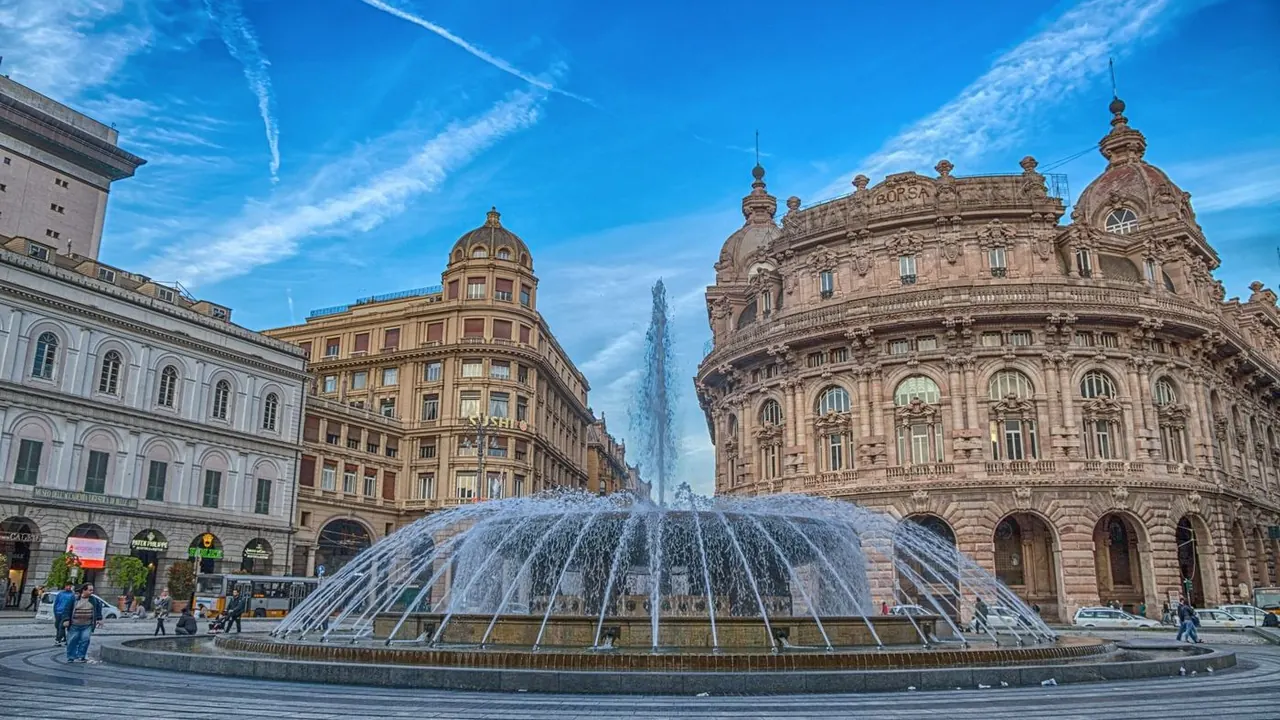
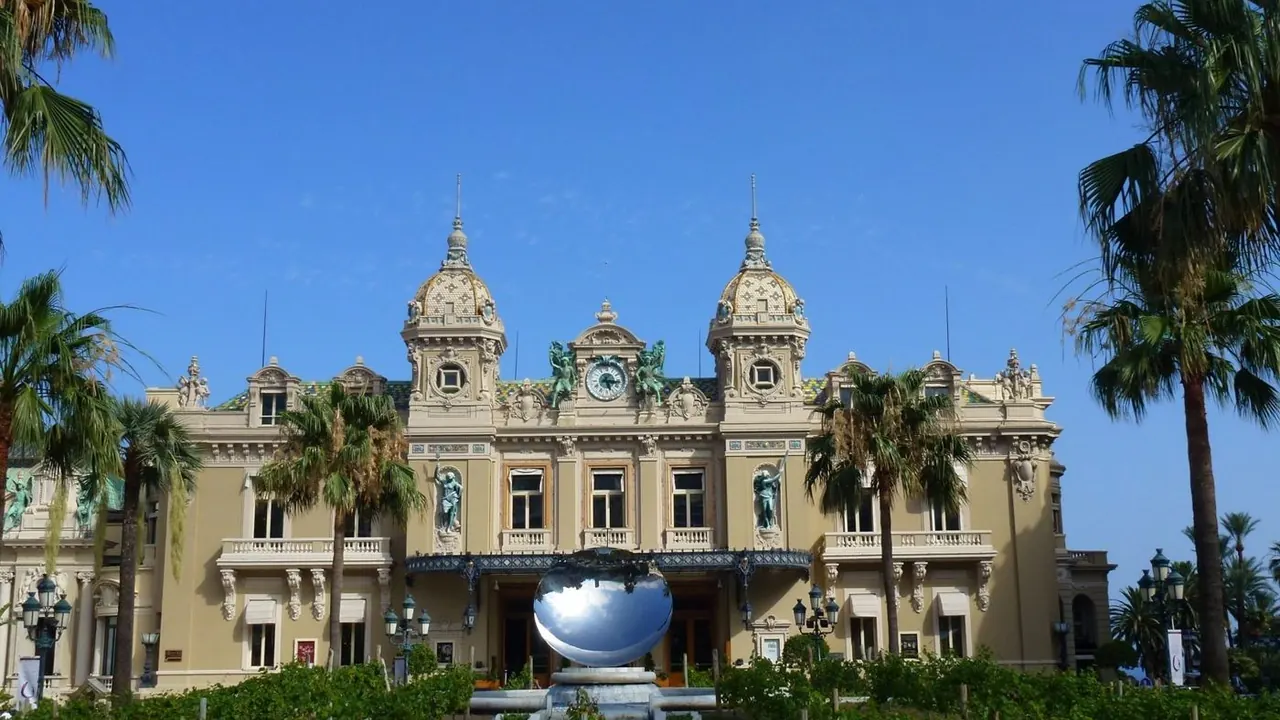
Photos: Genoa by Faber1893, CC BY-SA 4.0, cropped; Monaco by otterboris, CC BY 3.0, cropped.
Genoa or Monaco?
Our verdict in twelve categories, each scored against the same fixed benchmark cities, and the climate month by month, so you can choose for your trip.
Choose Genoa for
- prices
- culture and sights
- food and drink
Genoa suits the traveller who wants a real working city with depth. It has a vast medieval old town, palace museums on the Strade Nuove, pesto and farinata from the shop on the corner, and hill and coast walks that start from a funicular. It costs a fraction of what its neighbour does and still puts Portofino and the Cinque Terre a train ride away.
Choose Monaco for
- wellness
- getting around
- live music and the arts
Monaco is for a polished, compact stay where the setting is the point. Think of the Rock and the Casino square, opera and ballet in the Salle Garnier, a morning of seawater treatments and dressed-up evenings by the harbour. It is easy to walk and makes a fine base for Nice, Èze and Menton, but only if your budget can take some of the steepest prices anywhere.
Scoreboard
Twelve categories on one fixed scale from 0 to 100. The shaded stretch is the gap between the two.
Your match
Pick a travel style or drag the sliders, and both match scores follow your weighting.
Wins on prices and culture and sights with your weighting.
Wins on wellness and getting around with your weighting.
What matters to you?
Category by category
What the scores mean for a trip.
Beaches & swimming
Neither is a beach destination, and serious swimmers head along the coast from both. Monaco has the edge for an easy swim. Larvotto is groomed and calm behind its breakwaters, and the coves at Cap d'Ail and the long beaches of Menton and Nice are close by.
Genoa's swimming is more scattered: the small pebble cove at Boccadasse, the bathing establishments over the rocks of Corso Italia and the platforms below Nervi. Better shores are a train ride away at Camogli, Sestri Levante and sandy Varazze. Expect pebbles, rented loungers and busy summer weekends.
Food & drink
Genoa is the better place to eat, and in a very different style. It is the home of pesto, and everyday food is the point here. Breakfast is focaccia, lunch is trofie or pansoti, and the old town's friggitorie sell farinata and fried fish by the slice. The Mercato Orientale shows off the region's produce.
Monaco uses similar Riviera and Ligurian ingredients but mostly at the top end, in starred and grand hotel dining rooms where people dress for dinner. Barbagiuan and socca at the Condamine market are the casual exception. Otherwise cheap, relaxed meals are scarce, and many visitors go to Nice or Menton to eat.
Culture & sights
Genoa has far more to see. Its caruggi make up one of Europe's largest medieval quarters, and the Rolli palaces on Via Garibaldi and Via Balbi hold Van Dyck, Rubens and Paganini's violin. Add San Lorenzo, the Palazzo Ducale and the marble sculpture of Staglieno, and the city rewards several days.
Monaco's sights are fewer and closer together. There are the Prince's Palace and Grace Kelly's grave on the Rock, the Oceanographic Museum on its cliff, the Casino and the princely car collection. They fill a day or two, and the setting impresses more than the depth.
Nightlife
Neither suits a big night out, but Monaco has more glamour after dark. There are hotel bars around the Casino square and glossy clubs and lounges along the Larvotto seafront and the port. In summer and on Grand Prix weekend the harbour becomes one long party. It expects a dress code and a deep wallet, and it goes quiet out of season.
Genoa's evenings are cheaper and more casual. Students and locals drink aperitivo in the small bars around Piazza delle Erbe and the university lanes. Weeknights are quiet and there are few clubs, so it suits a late glass of wine in a medieval square.
Nature & outdoors
Genoa gets you outdoors more easily, with more choice. A funicular to Righi starts a ridge walk past the old fortresses, and the Portofino promontory and the Cinque Terre trails are a train ride away. The Apennines and the Beigua Geopark offer quieter hiking and biking, and boats go out to the Pelagos Sanctuary to watch whales and dolphins.
Monaco itself is almost entirely built up, but the limestone backdrop is dramatic. You can take in the view from the Tête de Chien, climb the old mule path from Èze-sur-Mer up to Èze, or follow the shore paths around Cap d'Ail and Cap Martin past villas and pines.
Day trips
Both are excellent bases, and the choice comes down to which coast you want. From Genoa the train runs east to Camogli, Portofino, Sestri Levante and the Cinque Terre and west to Finale Ligure Borgo and Noli. Milan and Turin are each about an hour and a half inland for a museum day.
Monaco looks onto the French Riviera instead. Nice and Villefranche are under half an hour away, Menton, Èze and La Turbie are close, and Antibes, Saint-Paul-de-Vence, Cannes and Grasse are further on. Sanremo and Dolceacqua lie over the Italian border. Genoa adds big cities, while Monaco adds art towns and hill villages.
Good for families
The two are close, and each has an aquarium at its heart. Genoa's is one of Europe's largest, with a science centre, a tropical biosphere and the Galata museum's walk-through submarine next door. The old town is steep and dark, though, and hard going with a pushchair, and there is little green space beyond Nervi.
Monaco is smaller, spotless and safe, with lifts and escalators that do much of the climbing and Larvotto's sheltered water for young swimmers. Its weakness is that it is built for adults, with formal restaurants. In Genoa's trattorias, by contrast, children are welcome at every table.
Getting around
Monaco is easier to get around. At about 3km end to end it is walkable, and free public lifts and escalators deal with the steep levels. There are also buses, a small solar ferry across the harbour and a station that opens up the whole Riviera.
Genoa is larger and more of a maze. The old town and the Porto Antico are fine on foot, but reaching the hills means funiculars, a rack railway and lifts. The single metro line is short and the buses crawl through narrow streets, so the coastal railway is the most useful link. In both, you are better off without a car.
Shopping & style
Genoa is a place to shop for food and crafts and Monaco for luxury, and each is thin on what the other does well. In Genoa's old town, long-established shops sell candied fruit, olive oil and pesto, small workshops make silver filigree and coral, and the Mercato Orientale has produce to take home. Via XX Settembre and Via Roma cover the familiar Italian labels without much luxury depth.
Monaco is the reverse. The fashion houses, jewellers and watchmakers of the Carré d'Or cluster around the Casino gardens, and window-shopping there is part of the evening. There are hardly any high-street chains and few independent designers, so most people go to Nice for everyday shopping.
Affordability
This is the widest gap between them. Genoa is a mid-range city that feels fair for northern Italy. Focaccia and farinata make very cheap meals, trattoria lunches are reasonable, central hotels cost less than in better-known cities and the funiculars are inexpensive. Costs rise in the Riviera resorts and on lounger days.
Monaco is among the most expensive places in the world to visit, from hotel rooms down to a café coffee, and event weekends push prices higher still. Walking the Rock and the gardens costs nothing, and many budget travellers sleep in Beausoleil, Menton or Nice and come in for the day.
Live music & performing arts
Monaco has the stronger stage, remarkably so for its size. The Monte-Carlo Opera in the gilded Salle Garnier, the Philharmonic and Les Ballets de Monte-Carlo all have international reputations. The Grimaldi Forum, the Printemps des Arts and summer concerts by the sea add to the calendar, though opera and ballet run mainly from winter to spring.
Genoa offers a good evening or two. There is opera, ballet and symphonic music at the Teatro Carlo Felice on Piazza De Ferrari, along with Paganini concerts and small clubs that carry on the city's singer-songwriter tradition. Its respected drama company performs in Italian.
Wellness & relaxation
Monaco is the more restful choice. Its large thalassotherapy centre beside the Casino continues a long tradition of sea-bathing cures, with heated seawater pools and treatments, and the grand hotels have sizeable spas. The Japanese Garden and the ramparts of the Rock make for calm mornings.
Genoa has no bathing culture, and its spas are mostly in hotels. The nearest thermal waters are at Acqui Terme, over an hour away. Its quiet corner is Nervi, with villa gardens and a seafront promenade, while the port and crowded lanes of the centre are far from restful.
When should you go?
Pick your month. The climate figures are measured averages, not a forecast.
Genoa in July
Monaco in July
Daytime high, °C
Rainfall in the month, mm
Where the figures come from
Genoa has no rain gauge within 25 km of the centre, so its rainfall comes from a gridded climate dataset read at the city rather than from a gauge further away.
Genoa's sunshine is measured 80 km from the centre, at Capo Mele.
Temperature and rainfall are climate normals, averaged over the years shown. Genoa: 1991-2020 normals, Genova / Sestri (6.7 km from centre). Monaco: 1991-2020 normals, Nice (19.9 km from centre).
The two share almost the same Mediterranean year. Both are warm enough for swimming from June to September, and the sea reaches 25°C in August. Summer highs of about 28°C are pleasant by the water but warm for climbing steep streets, though Genoa's shaded caruggi help. Late spring and early autumn are the best times for walking either city and the coast paths, and mild winters keep both comfortable for sightseeing.
Rain arrives in September and is heaviest in October and November. In November Genoa gets about 195mm and Monaco slightly more, around 138mm. Monaco is also the sunnier of the two all year. The gap is widest from spring through high summer and narrows to very little by December.
Which traveller are you?
On a trip on a tight budget, Genoa is the obvious choice. Focaccia and farinata cost little, central hotels are cheaper than in Italy's most visited cities, and the train reaches Portofino and the Cinque Terre. Monaco is among the most expensive places anywhere.
For a culture and arts trip, Genoa has much more to explore: the caruggi of its huge medieval quarter, the Rolli palaces with their Van Dyck and Rubens paintings, and the sculpture at Staglieno. Monaco has first-rate opera and ballet, but its sights fill only a day or two.
On a relaxing and wellness trip, Monaco is the better fit. Its thalassotherapy centre and grand hotel spas make for proper treatment days, the town is clean, safe and orderly, and the Japanese Garden is calm in the morning. Genoa's centre is busy and has no bathing culture.
Before you go
| Measure | Genoa | Monaco |
|---|---|---|
| Official language | Italian | French |
| Currency | Euro (EUR) | Euro (EUR) |
| Sockets | CFL230 V, 50 Hz | CEF230 V, 50 Hz |
| Driving side | Right | Right |
| Time zone | UTC+1, UTC+2 in summer | UTC+1, UTC+2 in summer |
| Emergency number | 112 | 112 |
| Elevation | 20 m | 68 m |
| Main airport | Genoa Cristoforo Colombo Airport (GOA)7 km from centre25 non-stop destinations | Nice-Côte d'Azur Airport (NCE)18 km from centre130 non-stop destinations |
| Public holidays this year | 13 days | 12 days |
By the numbers
| Measure | Genoa | Monaco |
|---|---|---|
| City population | 558,745 | 38,857 |
| People per km² | 2,325 | 18,503 |
| Museums within 10 km | 51 | 14 |
| UNESCO World Heritage sites within 50 km | 1 | 2 |
| Swim season, months above 21 °C | 4 months | 4 months |
Where else could you go?
Every comparison below shares a destination with this one, so you can follow Genoa or Monaco somewhere new.