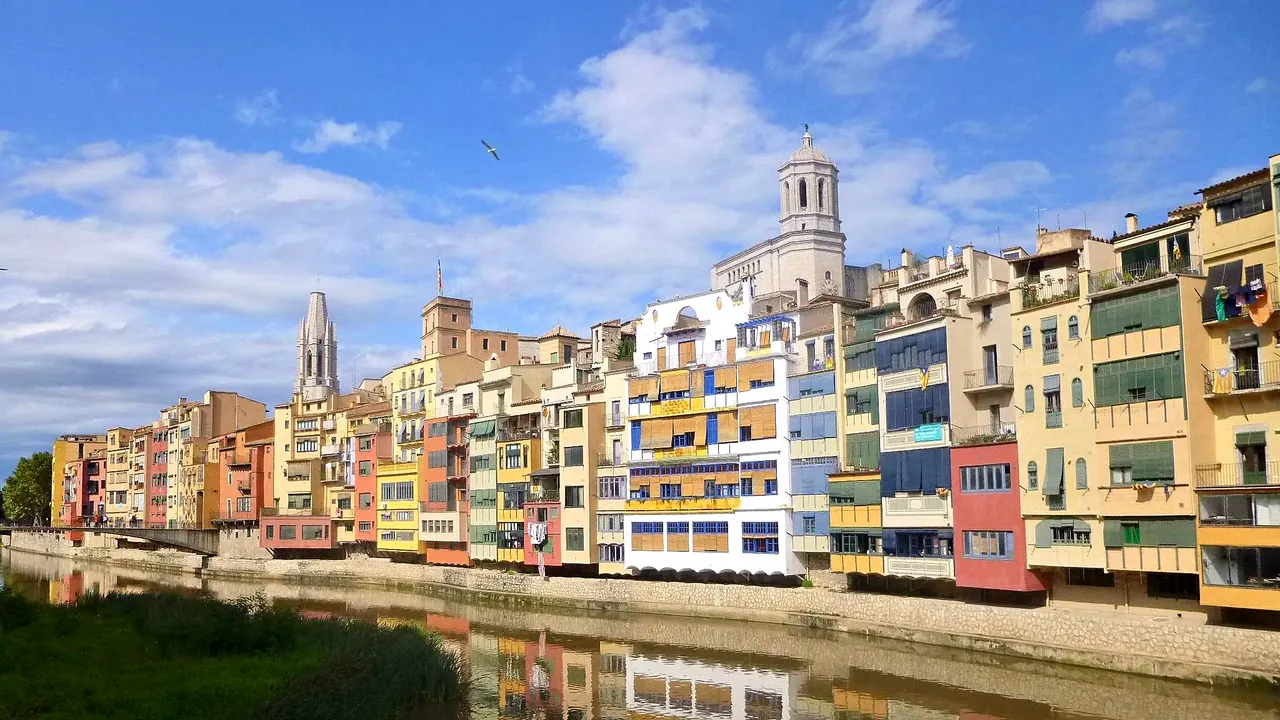
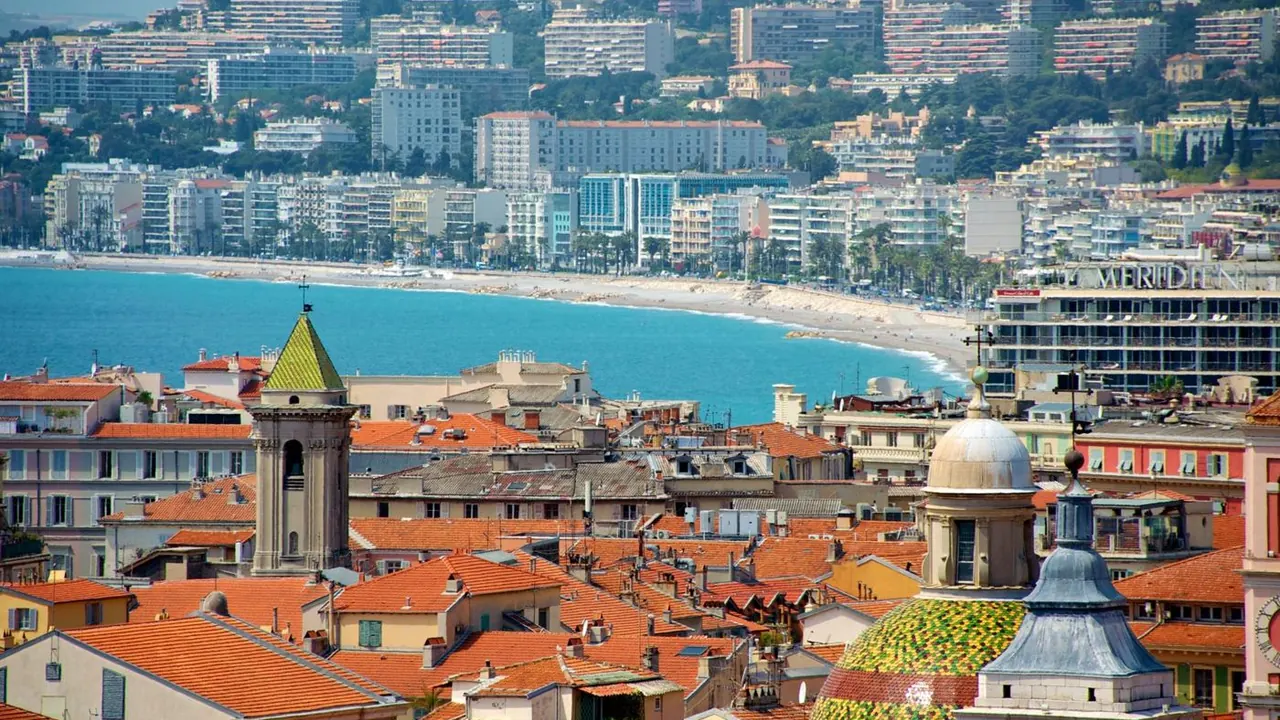
Photos: Girona by Zarateman, CC0; Nice by Daniel Stockman, CC BY-SA 2.0, cropped.
Girona or Nice?
Our verdict in twelve categories, each scored against the same fixed benchmark cities, and the climate month by month, so you can choose for your trip.
Choose Girona for
- prices
- wellness
Girona suits travellers who want a compact medieval city with quiet evenings and a lot of country around it. The walled old quarter rewards slow walking, road cyclists and walkers have lanes, greenways and volcanic hills on the doorstep, and Barcelona, the Dalí sites and the Costa Brava coves are all close enough for a day out. It also costs noticeably less to stay, though a hire car for part of the trip makes the region much easier.
Choose Nice for
- beaches
- shopping
- nightlife
Nice is the better pick if the sea matters and you would rather not drive. You can swim from the city itself, trams and coastal trains take you to Monaco, Antibes and the perched villages, and the old town keeps going later at night than Girona does. Families, shoppers and opera or jazz fans get more from it too. In return it costs more, especially in summer.
Scoreboard
Twelve categories on one fixed scale from 0 to 100. The shaded stretch is the gap between the two.
Your match
Pick a travel style or drag the sliders, and both match scores follow your weighting.
Wins on prices and wellness with your weighting.
Wins on beaches and shopping with your weighting.
What matters to you?
Category by category
What the scores mean for a trip.
Beaches & swimming
Girona is an inland river city, so going to the beach means a trip of about 40 minutes to the Costa Brava. When you get there, the coves around Begur and the long bays near Sant Feliu are excellent, and the water is very clear. Without a car, though, the infrequent buses limit how much of the coast you can see.
Nice has its beach in the city, a 7km pebble shore running along the promenade. You can swim before breakfast and be back at your hotel by lunchtime. The stones make the beach clubs' loungers and water shoes worthwhile, and the sand is a short train ride away in Villefranche, Beaulieu or Antibes.
Food & drink
Girona is the place for a long Catalan lunch at a table. Nice is the place for socca eaten hot from the pan in the street. Girona's reputation rests on home cooking such as mar i muntanya and botifarra with beans, on its serious tasting-menu kitchens and on Empordà wine and cava. Street food and international cooking are thin.
In Nice, pissaladière and pan bagnat come from counters in the old town, and the Cours Saleya market sells olives and produce for a picnic. Each city has its tourist traps: the Barri Vell menus in Girona, and in Nice the terraces along the promenade.
Culture & sights
Girona is a medieval townscape to walk through, while Nice is a city of art museums. In Girona you walk the walls, see the cathedral's enormous single Gothic nave and the Arab Baths, and get lost in the narrow alleys of the Call, its old Jewish quarter. A day or two covers it, and the museums are small.
Nice has the Matisse and Chagall museums in Cimiez and the Yves Klein works at MAMAC, which give it a depth Girona's collections lack. Its Belle Époque villas and the Russian cathedral add the history of a winter resort to the baroque old town, enough for two or three days.
Nightlife
Neither is a clubbing city, but Nice clearly offers more of a night out. The lanes of Vieux Nice fill with pubs and wine bars that spill onto the street, the port has more grown-up bars, and in summer the beach clubs keep going late. Monaco and Cannes are close if you want something glossier.
In Girona the evening usually ends after a slow dinner on a terrace. There are student bars in term time and a few late music bars at weekends, and most people who want a big night take the train to Barcelona.
Nature & outdoors
Both are strong outdoor bases, with different scenery. Girona is one of the world's great road-cycling towns. Flat greenways on old railway lines run to Olot and the sea, and the beech woods and cinder cones of the Garrotxa volcanic zone are within about an hour.
Nice has the higher mountains closer to the sea. The Mercantour's lakes and ibex are about two hours inland, and the coastal paths around Cap Ferrat start just east of the city. Both have skiing about an hour and a half away, but from Nice you can be back at the sea the same afternoon.
Day trips
Both make excellent bases for day trips, and the difference lies in how you travel. From Girona, Barcelona is a fast train ride away and Figueres has the Dalí Theatre-Museum. The best of the rest, such as Besalú's fortified bridge, the stone villages of Pals and Peratallada and the ruins at Empúries, are much easier to reach by car.
From Nice, almost everything is a train or bus ride along the coast: Monaco, Menton, Èze, Antibes and Cannes, with Grasse and Saint-Paul-de-Vence inland and Italy just over the border. You never need a car.
Good for families
Nice is the easier choice with children. The flat promenade suits pushchairs and bikes, the Promenade du Paillon has playgrounds and water jets, and Parc Phoenix and the Oceanographic Museum in Monaco fill a day. The pebble beaches are the main drawback for small children.
Girona is calm and safe, the Devesa park has shade and play areas, and walking the walls feels like an adventure. Almost nothing is built for children, though, and the old town's stairs and cobbles are hard work with a pushchair. Families usually head to the Costa Brava for beach days.
Getting around
Nice is clearly easier without a car. Its centre is flat and walkable, trams run from the airport to the port, and coastal trains go to the main day-trip towns. You only need to drive into the mountains.
Girona is small enough to walk in about twenty minutes, but the Barri Vell is steep and full of steps. Trains to Barcelona and Figueres are fast. Beyond those, the buses are sparse, and the villages, wineries and coves are why so many visitors hire a car for part of their stay.
Shopping & style
Nice has the wider choice. Avenue Jean Médecin has the chain stores and Galeries Lafayette, the streets around rue Paradis have the fashion houses, and the old town sells Provençal soaps, fabrics and olive oil. The Cours Saleya also has a flea and antiques market on Mondays.
Girona is browsing on a small scale: independent shops along the Rambla, Empordà cheeses and sausages from the Mercat del Lleó, and a lot of cycling kit. For anything more, people go to Barcelona.
Affordability
Girona is the cheaper of the two. Set lunches and everyday taverns are fairly priced, and you can walk almost everywhere. The costs to watch are old-town rooms in summer, during the flower festival and in the cycling season, plus a hire car if you want to see the region.
Nice is expensive in summer, and seafront hotels, beach loungers and promenade terraces all add to the bill. It gets some of that back with cheap trains, inexpensive city museums and socca for lunch. Spring and late autumn are easier on the budget.
Live music & performing arts
Nice has the fuller programme. The nineteenth-century Opéra de Nice stages opera, ballet and the Philharmonic through the season, the Jazz Festival brings big names every July, and Carnival fills February with parades.
Girona has no resident opera or orchestra. Its Auditori hosts touring concerts, and its high point is Temporada Alta, the autumn festival of theatre and dance. Much of the drama is in Catalan, just as much of Nice's is in French.
Wellness & relaxation
Near Girona the water to soak in is thermal. Caldes de Malavella, a spring town with Roman roots about 20 minutes south, has hotels with spring-water pools and treatments. In town, quiet lanes in the morning and long lunches set an easy pace.
Nice has the sea instead. You can swim early before the crowds, book a session at one of the thalassotherapy centres towards Monaco or Antibes, and walk the promenade in the evening as the light fades over the bay. It is at its calmest outside high summer.
When should you go?
Pick your month. The climate figures are measured averages, not a forecast.
Girona in July
Nice in July
Daytime high, °C
Rainfall in the month, mm
Temperature and rainfall are climate normals, averaged over the years shown. Girona: 1991-2020 normals, Gerona / Costa Brava (10.1 km from centre). Nice: 1991-2020 normals, Nice (8 km from centre).
Girona's rain is spread fairly evenly through the year, so it is the temperature that decides the best months. May and June are warm and get sunnier as the weeks go on, but they are not yet hot, which suits the Barri Vell's stairs and long rides on the country lanes. September is similar, although autumn brings Girona's heaviest rain. Inland, July and August reach about 31°C, too hot for walking in the middle of the day. That is when the Costa Brava sea is warmest, so midsummer is the time for a beach day on the coast. Winters are mild at around 14°C and suit unhurried sightseeing.
Nice is cooler in midsummer, nearer 28°C, and it gets more sunshine from spring onwards. July and August there are almost dry. Its sea is a little warmer than the Costa Brava's, reaching about 25°C in August, so swimming is comfortable from June to September. The autumn rain is much heavier than Girona's and peaks at about 138mm in November. That makes April to June the best season for the old town and the coastal paths, with September a good second choice if swimming matters most.
Which traveller are you?
For a beach and sun trip, choose Nice. The swimming starts below the promenade, sandy coves at Villefranche and Juan-les-Pins are a short train ride away, and summers are drier and sunnier. Girona's beaches are a separate trip out to the Costa Brava.
On a trip with a tight budget, Girona goes further. Rooms and meals cost less, a weekday set lunch is good value and you can walk everywhere in town. In Nice the summer hotel rates and the beach loungers soon add up, although the trains are cheap.
On a food and nightlife trip, Nice has the edge. Socca and market snacks make it easy to eat on the move, and Vieux Nice's lanes stay busy with wine and cocktail bars. Girona has the finer tasting menus, but its evenings mostly end after a long dinner.
Before you go
| Measure | Girona | Nice |
|---|---|---|
| Official language | Spanish | French |
| Currency | Euro (EUR) | Euro (EUR) |
| Sockets | CF230 V, 50 Hz | CE230 V, 50 Hz |
| Driving side | Right | Right |
| Time zone | UTC+1, UTC+2 in summer | UTC+1, UTC+2 in summer |
| Emergency number | 112 | 112 |
| Elevation | 70 m | 0 m |
| Main airport | Girona-Costa Brava Airport (GRO)10 km from centre18 non-stop destinations | Nice-Côte d'Azur Airport (NCE)6 km from centre130 non-stop destinations |
| Public holidays this year | 14 days | 11 days |
By the numbers
| Measure | Girona | Nice |
|---|---|---|
| City population | 108,666 | 357,737 |
| People per km² | 2,779 | 4,975 |
| Museums within 10 km | 9 | 17 |
| UNESCO World Heritage sites within 50 km | 0 | 2 |
| Swim season, months above 21 °C | 3 months | 4 months |
Where else could you go?
Every comparison below shares a destination with this one, so you can follow Girona or Nice somewhere new.