Georgetown
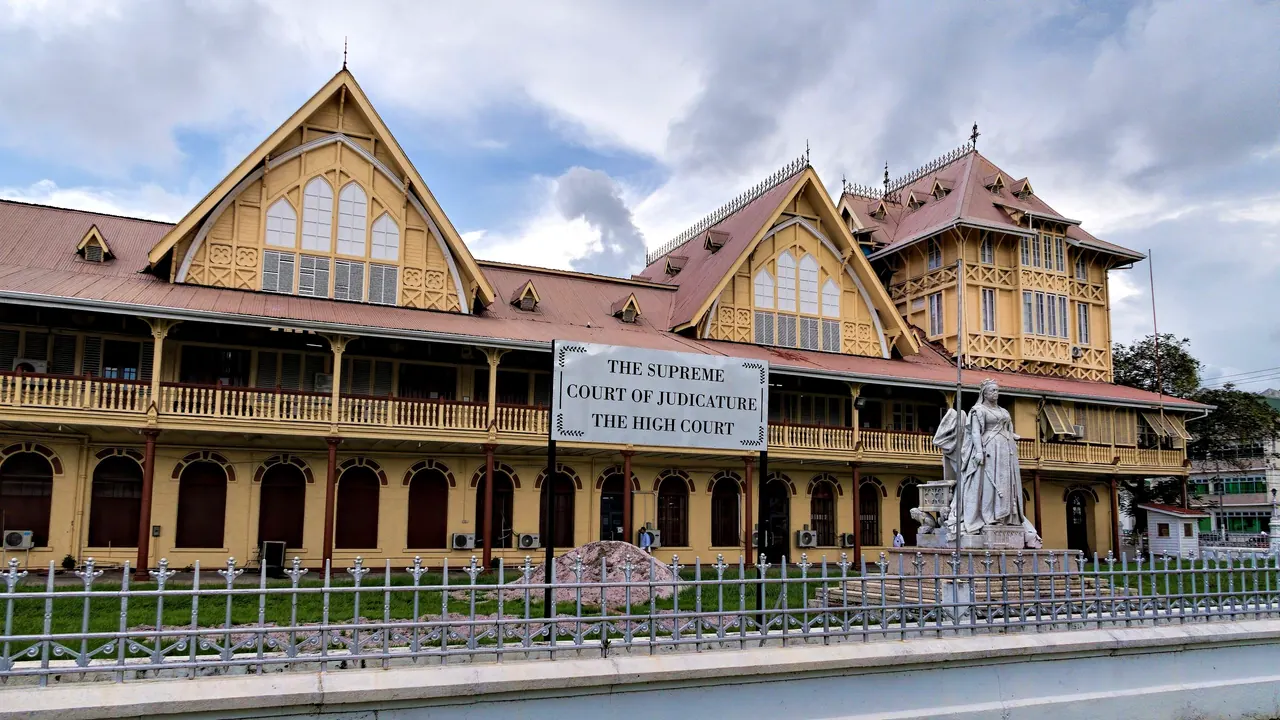
The Victoria Law Courts in Georgetown with the statue of Queen Victoria
- Nature & outdoors58
- Food & drink46
- Affordability45
Photo: Dan Lundberg, CC BY-SA 2.0, cropped
Match
32
Every category weighted equally
- Beach & sun31
- Culture & arts33
- Food & nightlife34
- Family trip32
- Outdoors35
- Relax & unwind31
- Shopping & style33
- On a budget34
Georgetown in twelve categories
Our verdict on each, scored 0 to 100 against the same fixed benchmark cities, so a score means the same thing on every page.
Beaches & swimming. Scores 12 out of 100.
Food & drink. Scores 46 out of 100.
Culture & sights. Scores 36 out of 100.
Nightlife. Scores 38 out of 100.
Nature & outdoors. Scores 58 out of 100.
Day trips. Scores 26 out of 100.
Good for families. Scores 27 out of 100.
Getting around. Scores 32 out of 100.
Shopping & style. Scores 27 out of 100.
Affordability. Scores 45 out of 100.
Live music & performing arts. Scores 27 out of 100.
Wellness & relaxation. Scores 14 out of 100.
Georgetown category by category
Beaches & swimming
12Georgetown sits below sea level behind a long seawall, and the Atlantic in front of it is brown with silt carried down by the Demerara and Essequibo rivers. The water is warm, but nobody swims off the city shore and there is no beach to speak of. The seawall is for evening strolls and breezes, not for bathing.
If you want to swim, the local habit is to head inland to the blackwater creeks south of the city, where the tea-coloured water is warm and calm and families gather at weekends. Sandy river beaches on the Essequibo near Bartica are a longer trip by road and boat. Beach life plays no real part in a stay here.
Food & drink
46Guyanese food mixes Indian, African, Chinese, Portuguese and Amerindian cooking, and Georgetown is where you can taste all of them. Pepperpot is the national dish, a dark, slow-cooked meat stew made with cassareep from cassava, traditionally eaten at Christmas. Around it you find cook-up rice, metemgee, curries with roti or dhal puri, and a long-rooted style of Chinese-Guyanese cooking with its own chow mein and fried rice. Snacks such as pine tarts, cheese rolls and egg balls are sold from bakeries and street stalls.
Stabroek and Bourda markets sell tropical fruit, river fish and street food, and Demerara rum, aged in the sugar country along the coast, is the local drink. The range is narrow, though, and there are only a few serious restaurants. Come to eat home cooking, not for fine dining.
Culture & sights
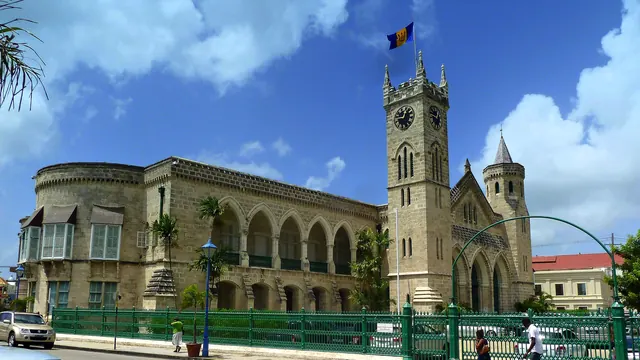
36Georgetown's character comes from its colonial wooden architecture. The city was laid out by the Dutch and built up by the British, with white-painted timber buildings on stilts along wide avenues divided by canals. The highlights are St George's Cathedral, one of the tallest wooden churches in the world, the Gothic-style City Hall, the cast-iron Stabroek Market with its clock tower, and the Parliament Building.
The Walter Roth Museum of Anthropology covers Amerindian cultures, the National Museum covers natural and colonial history, and Castellani House holds the national art collection. The 1763 Monument remembers the Berbice slave uprising. All of this fills a day or two. Many of the old wooden buildings are weathered, and the city is better understood as a stop on the way to the interior than as a sightseeing destination in itself.
Nightlife
38Going out in Georgetown is loud and Caribbean in feel, and it is best at weekends. Everyday drinking happens in rum shops and open-air bars playing soca, dancehall and Indo-Guyanese chutney. A cluster of bars and clubs along and around Sheriff Street stays busy well past midnight on Fridays and Saturdays, and the seawall fills with cars and music on warm evenings.
The scene is small and local, with a handful of hotel lounges for something quieter. Most visitors take taxis between venues rather than walking the dark streets late at night. It is fun to dip into, but it is not a reason to come.
Nature & outdoors
58The city is flat, hot and wet, set on reclaimed coastal land, but it is the gateway to one of the least-touched rainforest regions on the continent. The Botanical Gardens have manatees in their ponds and plenty of birdlife. Short boat trips up the Mahaica River go looking for the hoatzin, the strange national bird, and the Demerara and Essequibo rivers lead into forest and blackwater creeks within a couple of hours.
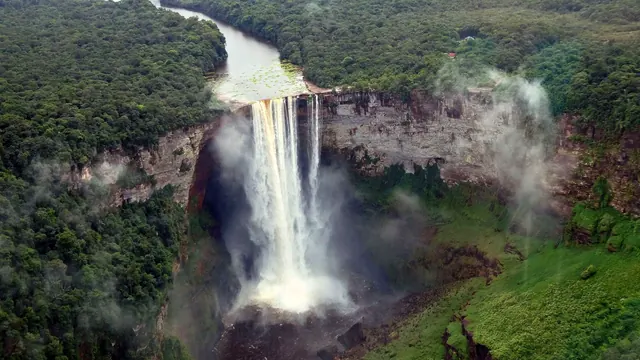
The great outing is Kaieteur Falls, a single drop of over 200m into a forested gorge, reached by about an hour's flight in a small plane and done as a day trip. The savannahs, Iwokrama forest and the jaguar country of the interior need several days and internal flights. Rain falls heavily in the two wet seasons.
Day trips
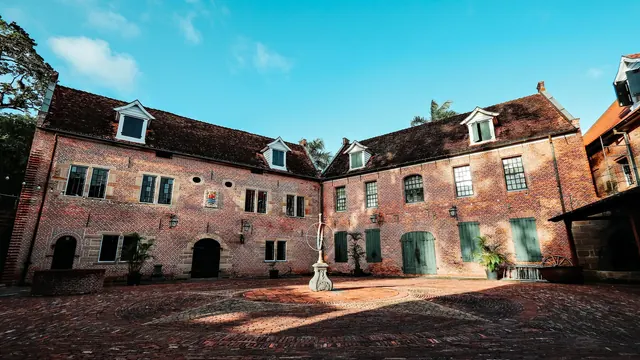
26Places to visit near Georgetown are few. The best outing is up the Essequibo to Fort Island, where the Dutch built Fort Zeelandia and a brick Court of Policy in the eighteenth century. It is often combined with a river trip to Bartica, a mining and river town at the meeting of three rivers. Santa Mission, an Amerindian village on a blackwater creek, is a popular half-day visit.
East along the coast road, past sugar estates and Hindu temples, New Amsterdam is about two hours away and has a few old wooden churches and colonial buildings. Beyond these, what lies within reach is forest and river rather than towns, and most visitors spend their spare days on flights into the interior.
Good for families
27Families are made welcome and Guyanese culture is warm towards children, but there is little in the city built for them. The Guyana Zoo and the Botanical Gardens next to it, where children can feed the manatees, are the main outings. On weekend afternoons the seawall is a family promenade with kites and snacks. The blackwater creek parks along the Linden highway are where local families go to swim.
The city itself is tiring with small children. It is hot and humid, the pavements are broken and run beside open canals, traffic is fast and unruly, and evenings are spent indoors or travelling by taxi. Trips into the interior for older children are an adventure, but they are long and basic.
Getting around
32The centre of Georgetown is compact and flat, and most sights lie within a few streets of the Stabroek Market and Main Street. Walking is possible by day, but the pavements are uneven, open drains run along many roads, and the heat is constant. Public transport means privately run minibuses on numbered routes. They are fast, loud and crowded, and confusing for a newcomer.
Most visitors rely on registered taxis, which are plentiful and the usual way to get around after dark, when walking is not advised. There is no rail. The coast roads are often congested, and the interior is reached by river boats and small planes rather than roads.
Shopping & style
27Shopping in Georgetown is mostly practical. Stabroek Market, under its cast-iron roof by the river, sells everything from produce to household goods, and Bourda Market is more local and food-focused. Both are busy, and you should keep an eye on your valuables.
What a visitor takes home is Amerindian craft: woven baskets, balata figures, carvings and hammocks, sold at craft stalls and through community outlets. There is also gold jewellery made from Guyanese gold, and bottles of aged Demerara rum. A few malls serve residents, but there is no fashion or design shopping of any depth.
Affordability
45Georgetown is cheaper to eat and move around in than to sleep in. Street food, market snacks, roti shops and minibuses cost little, and taxis are inexpensive. Comfortable hotels are limited and priced for business travellers rather than tourists, so a good room costs about what it would in a mid-priced European city.
The biggest costs are trips into the interior. Kaieteur flights, river lodges and guided tours depend on small planes and boats, and they quickly push up the total. A cheap stay is possible for travellers willing to use simple guesthouses and eat locally, but a typical trip is mid-range.
Live music & performing arts
27Formal performing arts are modest. The National Cultural Centre is the main stage, used for local plays, dance companies, pageants and concerts, and a small playhouse puts on Guyanese drama and comedy, which can be very funny and is strongly rooted in local life. There is no opera or professional orchestra, and programmes are irregular.
Performance mostly happens on the streets and at festivals. Mashramani, the Republic Day carnival, brings costume bands, steel pan and soca. Phagwah fills the city with colour and chowtal singing. Diwali has its illuminated motorcades. Outside those seasons, live music mostly means bands and DJs at weekend events.
Wellness & relaxation
14Georgetown is not a place to unwind. There is no bathing tradition. Spa options come down to a few hotel spas and local massage and beauty salons, and the city is hot, noisy and full of honking minibuses. The calmest moments are an evening breeze on the seawall or a shaded bench in the Botanical Gardens.
Visitors looking for rest usually find it outside the city, at river and forest lodges in the interior, where days follow the light and evenings are quiet.
When should you go?
Pick a month to see what it is like. The climate figures are measured averages, not a forecast.
Georgetown in July
Daytime high, °C
Rainfall in the month, mm
The whole year
Shaded against this destination’s own year: the deepest cell is its best month for that figure and the palest its weakest.
Temperature and rainfall are climate normals, averaged over the years shown. Georgetown: 1961-1990 (sunshine 1991-2020, rainfall 1991-2020) normals, Georgetown (0.7 km from centre).
Before you go
| Measure | Georgetown |
|---|---|
| Official language | English |
| Currency | Guyana Dollar (GYD) |
| Sockets | ABG240 V, 60 Hz |
| Driving side | Left |
| Time zone | UTC-4 |
| Emergency number | 999 |
| Elevation | 0 m |
| Main airport | Cheddi Jagan International Airport (GEO)36 km from centre16 non-stop destinations |
| Public holidays this year | 11 days |
By the numbers
| Measure | Georgetown |
|---|---|
| Population | 235,017 |
| People per km² | 1,592 |
| Museums within 10 km | 3 |
| UNESCO World Heritage sites within 50 km | 0 |
| Swim season, months above 21 °C | 12 months |
Compare Georgetown with
Every comparison with a written verdict behind it.