Guyana
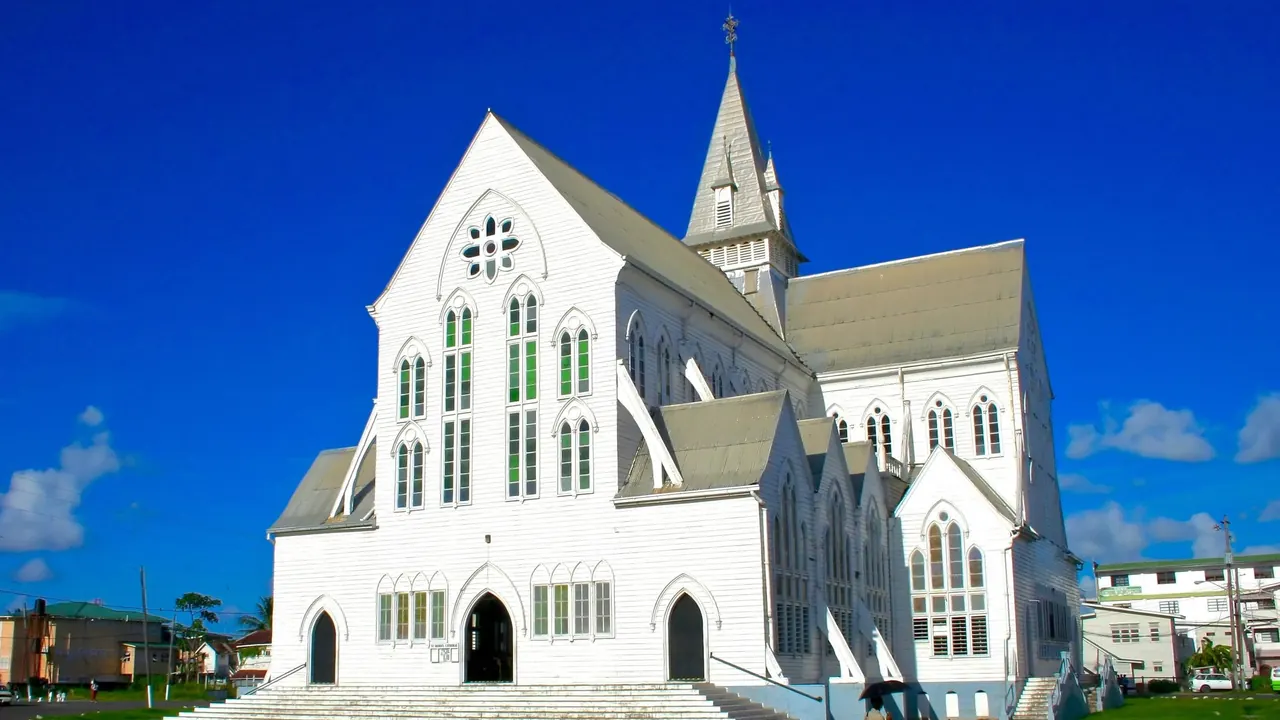
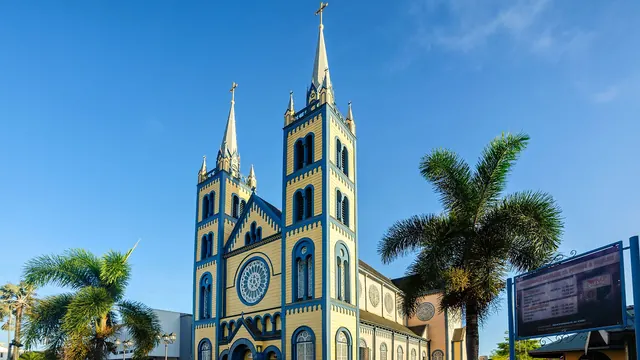
St George's Cathedral, the white wooden cathedral in Georgetown
- Nature & outdoors80
- Food & drink42
- Affordability38
Photo: Ian Mackenzie, CC BY 2.0, cropped
Match
27
Every category weighted equally
- Beach & sun27
- Culture & arts26
- Food & nightlife26
- Family trip28
- Outdoors33
- Relax & unwind28
- Shopping & style26
- On a budget29
Guyana in twelve categories
Our verdict on the country as a whole, scored 0 to 100 against the same fixed benchmark cities as every destination, so a score means the same thing on every page.
Beaches & swimming. Scores 10 out of 100.
Food & drink. Scores 42 out of 100.
Culture & sights. Scores 30 out of 100.
Nightlife. Scores 27 out of 100.
Nature & outdoors. Scores 80 out of 100.
Day trips. Scores 17 out of 100.
Good for families. Scores 18 out of 100.
Getting around. Scores 17 out of 100.
Shopping & style. Scores 18 out of 100.
Affordability. Scores 38 out of 100.
Live music & performing arts. Scores 18 out of 100.
Wellness & relaxation. Scores 14 out of 100.
Guyana category by category
Under each: where in Guyana it is best, and our destinations in Guyana that score highest on it.
Beaches & swimming
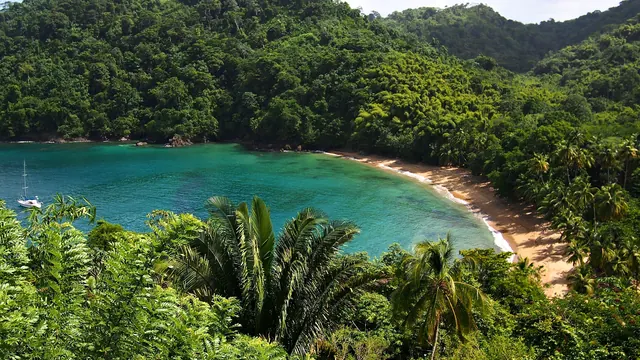
10Guyana is not a beach country. The Atlantic shore is lined with mudflats and mangroves, and the sea is brown with silt carried down by the great rivers. A sea wall, not a promenade, protects Georgetown from it. Shell Beach in the far northwest is a turtle-nesting coast that people visit for wildlife, not for swimming.
Guyanese swim in fresh water instead. They go to the tea-coloured black-water creeks along the Soesdyke-Linden highway, to the sandy river banks of the Essequibo near Bartica, and to Lake Mainstay on the Essequibo coast. These are pleasant weekend outings, warm all year, but a visitor should not plan a trip around them.
Where: Essequibo River near Bartica, Lake Mainstay, Soesdyke-Linden creeks
Our top destinations in Guyana
Food & drink
42Guyanese food mixes the Caribbean with India, China and the Amerindian interior. The national dish is pepperpot, a dark stew of meat slow-cooked in cassareep, which is made from cassava. Cook-up rice, metemgee, curry with roti, Guyanese-style chow mein and fried bake with saltfish are everyday food. Demerara rum, aged in the sugar country along the river, is a serious local drink and the usual order in rum shops.
Georgetown is the only place with real range. It has Stabroek and Bourda markets, roadside roti and snack stalls, and a small number of good sit-down restaurants. Berbice, east along the coast, is the Indo-Guyanese heartland, where curry, dhal puri and sweets are cooked with particular pride, especially around Diwali. Elsewhere, food means simple village cooking and set meals at lodges, sometimes with river fish or farine. It is good, honest eating, but there isn't much depth.
Where: Georgetown, Berbice
Our top destinations in Guyana
Culture & sights
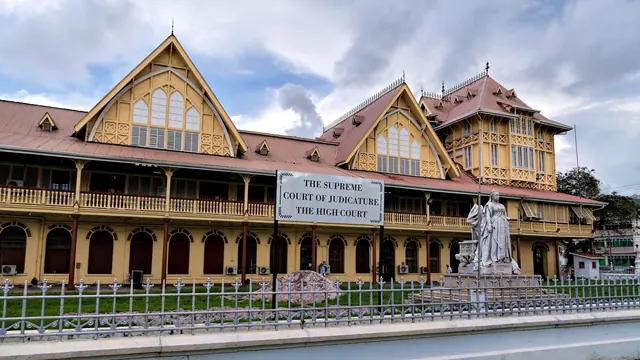
30Most of Guyana's heritage is in Georgetown. The capital is laid out on a grid of canals and broad avenues, lined with white-painted wooden buildings on stilts left by Dutch and British rule. St George's Cathedral is one of the tallest wooden churches in the world. The Gothic-style City Hall, the iron clock tower of Stabroek Market and the Parliament Building make up the rest of the colonial core. The Walter Roth Museum of Anthropology and the National Museum are small, but useful on Amerindian and colonial history.
Up the Essequibo River, Fort Zeelandia on Fort Island is a Dutch brick fort with an old courthouse beside it, and Kyk-Over-Al is a fragment of the earliest Dutch outpost. New Amsterdam, on the Berbice River, has a quieter colonial centre with wooden houses and churches. Many old buildings are weathered, and a few days cover everything.
Where: Georgetown, Essequibo River, New Amsterdam
Our top destinations in Guyana
Nightlife
27Going out in Guyana means Georgetown, and it runs on rum, soca, dancehall and chutney. Nights out centre on rum shops with sound systems, open-air lounges and a handful of clubs that fill up on Friday and Saturday. The streets get far livelier around Mashramani and other national celebrations. It is a loud, friendly scene, but a small one, and most visitors take taxis between places at night rather than walking. Away from the capital, evenings at interior lodges end with dinner and the sound of the forest.
Where: Georgetown
Our top destinations in Guyana
Nature & outdoors
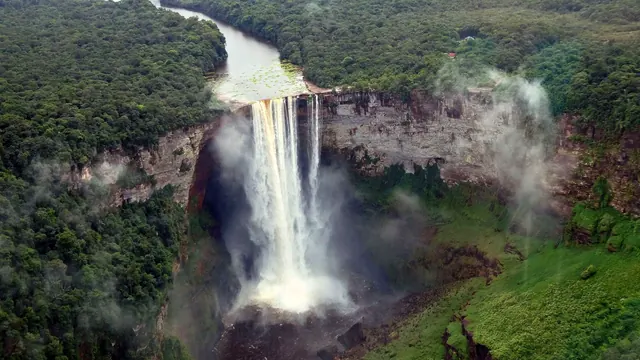
80Most of Guyana is intact wilderness, and that is the reason to go. In Kaieteur National Park, the Potaro River drops in a single plunge of about 226m off a sandstone plateau into a forested gorge, usually reached by light aircraft. Iwokrama's rainforest is crossed by rivers where black caiman and giant otters live, and a canopy walkway gives dawn birding above the trees. To the south, the open Rupununi savannahs below the Kanuku Mountains are good for giant anteaters, harpy eagles and, on lucky days, jaguars, while arapaima rise in the oxbow lakes.
Shell Beach, on the remote northwest coast, is a separate trip by boat, where sea turtles come ashore to nest from about March to August. Travel everywhere is by boat, on foot and by 4x4 from small community-run lodges, not on marked trails. The drier months, roughly September to November and February to April, make roads and rivers easier.
Where: Kaieteur National Park, Iwokrama, Rupununi, Shell Beach
Our top destinations in Guyana
Day trips
17Day trips to other places are few. From Georgetown, a boat from Parika takes you up the wide Essequibo to Fort Island and its Dutch fort and courthouse. Further on, Bartica is a river town at the gateway to the gold-mining interior. Heading east along the coast, past rice fields and sugar estates, the old town of New Amsterdam on the Berbice River has a modest colonial centre. The well-known day flights from the capital go to Kaieteur Falls, but those are about scenery, not towns.
Where: Fort Island, Bartica, New Amsterdam
Our top destinations in Guyana
Good for families
18Guyana suits adventurous families with older children better than young ones. In Georgetown, the Botanical Gardens have ponds where manatees come to be fed, and there is a small zoo, but little else is built for children. The real draw is the interior. Ranch and riverside lodges in the Rupununi offer giant otters, caiman, anteaters and horseback rides across the savannah, and these can thrill a curious child. But getting there means small aircraft or long, bumpy drives, heat, humidity and constant insect protection, and medical care outside the capital is basic. Guyanese are warm towards children, which helps.
Where: Rupununi, Georgetown
Our top destinations in Guyana
Getting around
17Getting around Guyana takes planning. A paved coastal road links Georgetown with the Berbice and Essequibo regions, and the capital is served by crowded minibuses and plentiful taxis, but there is no rail or formal public transport. Rivers are crossed by ferry or speedboat. Inland, the single road south through the forest to Lethem and the Rupununi is a long, rough journey and can turn to deep mud in the rainy season. Most visitors reach Kaieteur and the lodges on small domestic planes landing on grass and dirt strips, and in practice tours or lodge transfers do most of the work.
Where: Georgetown, Rupununi
Our top destinations in Guyana
Shopping & style
18Shopping is limited and practical. Stabroek Market in Georgetown, under its iron clock tower, is the most interesting place for a visitor. It is a crowded hall and street market selling produce, household goods and spices, and you need to watch your bag there. Look for woven baskets, hammocks and carved balata figures made by Amerindian communities, sometimes sold in Georgetown and at villages in the Rupununi. Aged Demerara rum is the obvious thing to take home. There are no fashion or design shops worth seeking out.
Where: Georgetown, Rupununi
Our top destinations in Guyana
Affordability
38Guyana is cheaper on the street than it is for a visitor. Roti, cook-up and market food, minibus rides and rum are inexpensive. But good hotels in Georgetown are priced for business travellers. The interior, which is why most people come, is reached by light aircraft and stays at remote lodges where meals, guides and boat trips are bundled together, and both cost a great deal. Overland travel by road to the Rupununi saves money, but takes time and patience.
Where: Georgetown, Rupununi
Our top destinations in Guyana
Live music & performing arts
18There is little formal performing arts. The National Cultural Centre in Georgetown stages plays, dance and concerts on an irregular schedule. Live music mostly means soca, chutney, reggae and steel pan at parties and street events. The biggest occasion is Mashramani, the republic celebration in February with costume bands and music in the streets. Phagwah and Diwali bring music and celebration to the Indo-Guyanese communities. A visitor who comes at the right time sees a lively popular culture, but there is little to attend at other times.
Where: Georgetown
Our top destinations in Guyana
Wellness & relaxation
14Guyana has no spa or bathing tradition. Wellness here means a few hotel spas in Georgetown and the stillness of the interior. A few days at a savannah or riverside lodge in the Rupununi, with hammocks, early nights and forest sounds, can be very restful. But the travel to get there is tiring, and the capital itself is hot, noisy and not a place to slow down.
Where: Rupununi, Iwokrama Forest
Our top destinations in Guyana
Where to go in Guyana
Guyana divides into two trips: the coast around Georgetown, and the wild interior that most visitors come for. Nearly every vacation starts and ends in Georgetown, and two or three days there are enough. It has the wooden St George's Cathedral, the canals and colonial avenues, Stabroek Market, the widest choice of food and the only real nightlife. From the capital, a boat from Parika runs up the Essequibo to the Dutch fort on Fort Island and on to the river town of Bartica. A drive east along the coast reaches New Amsterdam and Berbice, where you go for Indo-Guyanese cooking, especially around Diwali.
Kaieteur Falls is usually seen on a day flight from Georgetown in a light aircraft, landing near the single drop of about 226m. It is a short trip for the scenery rather than a stay. To spend real time in the wilderness, head to Iwokrama, where the rainforest has giant otters, black caiman and a canopy walkway for birding at dawn. Further south, ranch and riverside lodges on the Rupununi savannahs below the Kanuku Mountains offer anteaters, harpy eagles, horseback rides and quiet evenings in a hammock. Iwokrama and the Rupununi fit into one trip, joined by the single road south to Lethem. That road is a long, rough journey that can turn to mud in the rains, so many visitors fly to grass airstrips instead. This is the part of the country for wildlife, a restful stay and adventurous families with older children.
Shell Beach, on the remote northwest coast, is a separate journey by boat to watch sea turtles nest, from about March to August. Don't come for beaches. Guyanese swim in the black-water creeks off the Soesdyke-Linden highway, at Lake Mainstay and on the Essequibo's sandbanks near Bartica, but these are weekend outings. Travel inland is easiest in the drier months, roughly September to November and February to April.
When should you go?
Guyana has no single climate. Its months are measured at Georgetown and Kaieteur Falls; pick one to see it. The figures are measured averages, not a forecast.
Where in Guyana
Georgetown in July
Daytime high, °C
Rainfall in the month, mm
Temperature and rainfall are climate normals, averaged over the years shown. Georgetown: 1961-1990 (sunshine 1991-2020, rainfall 1991-2020) normals, Georgetown (0.7 km from centre).
Compare Guyana with
Every comparison with a written verdict behind it, and any other country below.
Our destinations in Guyana
Every place in Guyana with its own page: its twelve scores, its texts and its months.
Regions and islands
Cities and towns