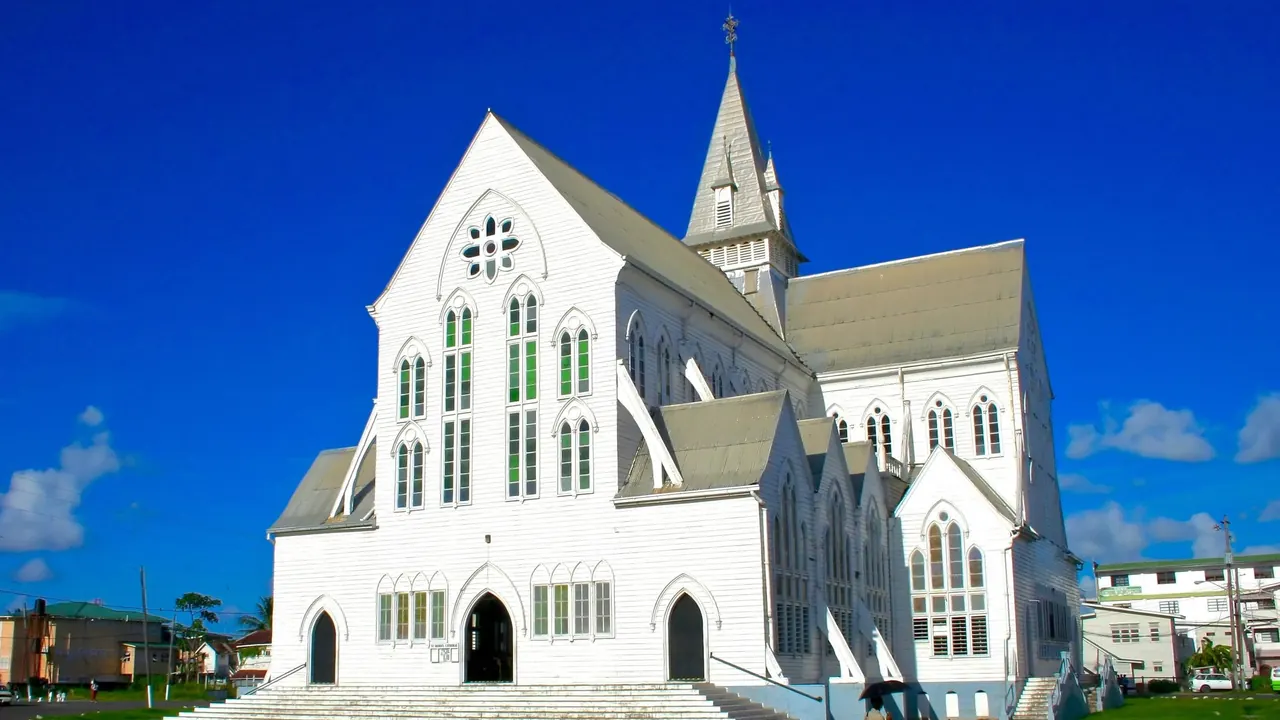
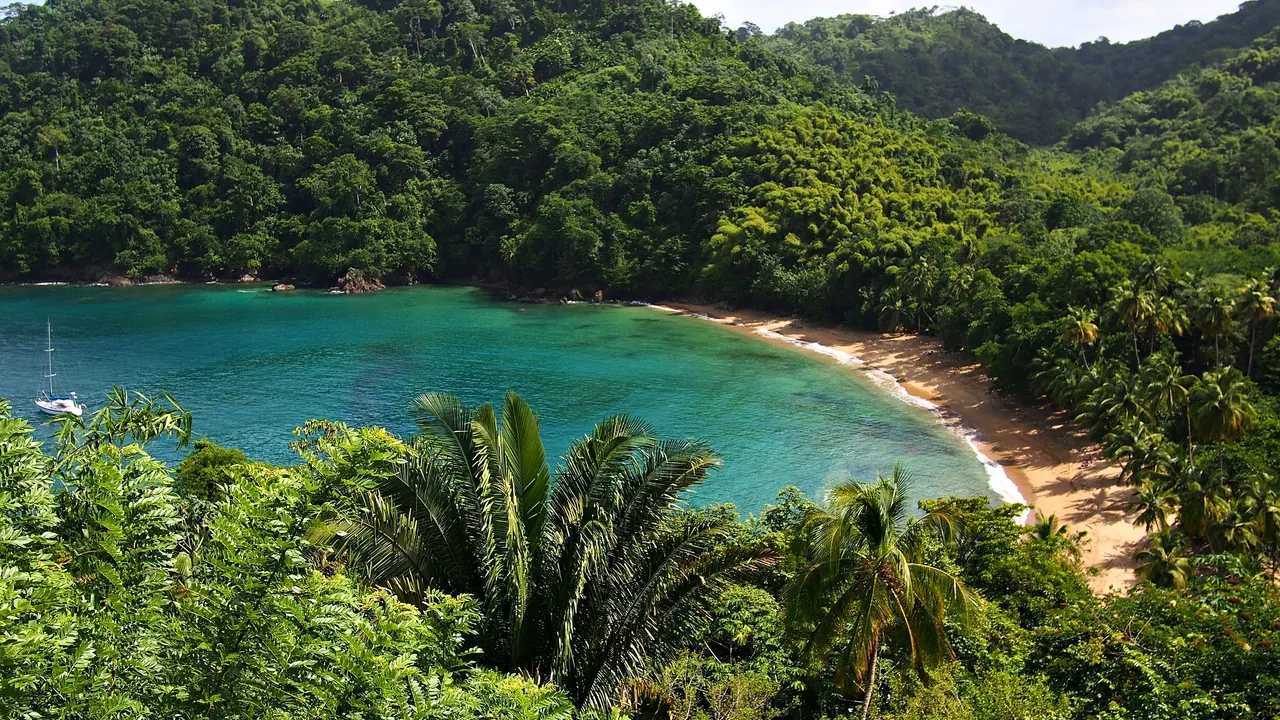
Photos: Guyana by Ian Mackenzie, CC BY 2.0, cropped; Trinidad and Tobago by Alfred Jarman, Pexels License.
Guyana or Trinidad and Tobago?
Our verdict in twelve categories, each scored against the same fixed benchmark cities, and the climate month by month, so you can choose for your trip.
Choose Guyana for
- nature and the outdoors
Guyana is for travellers who would build a whole trip around wilderness. Kaieteur's single plunge off its sandstone plateau, the black-water rivers of Iwokrama with giant otters and caiman, and the open Rupununi savannahs where anteaters and harpy eagles live are bigger and wilder than anything on the islands. The cost is a trip run on light aircraft, boats and lodge transfers, with Georgetown's wooden colonial core as a short stop at either end rather than the point of the journey.
Choose Trinidad and Tobago for
- beaches
- live music and the arts
- nightlife
Trinidad and Tobago makes the more rounded and easier vacation. Birding in the Northern Range and scarlet ibis over the Caroni Swamp sit within reach of Port of Spain's street food, late nights on Ariapita Avenue and the panyards before Carnival. Tobago then adds calm, clear water and slow fishing villages to rest in. Families, beach lovers and anyone who wants music and food alongside nature will do better here.
Scoreboard
Twelve categories on one fixed scale from 0 to 100. The shaded stretch is the gap between the two.
Your match
Pick a travel style or drag the sliders, and both match scores follow your weighting.
Wins on nature and the outdoors with your weighting.
Wins on beaches and live music and the arts with your weighting.
What matters to you?
Category by category
What the scores mean for a trip.
Beaches & swimming
Guyana has no swimming coast at all. The Atlantic arrives brown with river silt against mudflats and Georgetown's sea wall, and even Shell Beach is a turtle coast rather than a place to bathe. Local swimming happens in fresh water: the tea-coloured creeks off the Soesdyke-Linden highway, the sandy banks of the Essequibo near Bartica and Lake Mainstay. These make nice outings, but they are no reason to fly in.
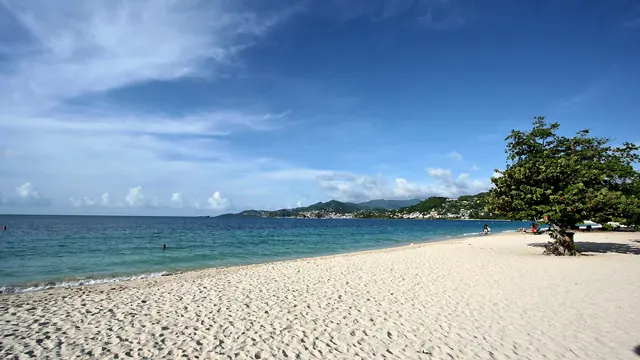
Trinidad and Tobago has real beaches, almost all of them on Tobago. Pigeon Point and Store Bay have calm, shallow water, and Castara, Englishman's Bay and Pirate's Bay are quieter coves backed by forest. On Trinidad, Maracas Bay is a fine day out with a rougher Atlantic swell. A beach vacation here works. In Guyana it does not.
Where in Guyana: Essequibo River near Bartica, Lake Mainstay, Soesdyke-Linden creeks
Where in Trinidad and Tobago: Tobago, Pigeon Point, Castara, Maracas Bay
Food & drink
Both kitchens grew from the same mix of Indian, African and Chinese cooking, so curry and roti are everyday food in each. Each country also has an Indian heartland to seek out, Berbice in Guyana and Debe and Chaguanas in Trinidad. Guyana's own dishes are pepperpot slow-cooked in cassava-based cassareep, cook-up rice and metemgee, washed down with aged Demerara rum. Outside Georgetown's Stabroek and Bourda markets, though, meals mostly mean village cooking or set lodge dinners.
Trinidad eats better and more widely, much of it on the street. Doubles make breakfast, bake and shark belong to Maracas Bay, and at night you can graze the stalls around the Queen's Park Savannah and the restaurants of Ariapita Avenue. Tobago adds curry crab and dumpling. Over a week, food is a real pleasure in Trinidad and simply decent in Guyana.
Where in Guyana: Georgetown, Berbice
Where in Trinidad and Tobago: Port of Spain, Central and South Trinidad, Maracas Bay, Tobago
Culture & sights
Neither has major sights, and each is covered in a few days. Trinidad and Tobago has a little more variety. Guyana's heritage is architectural and mostly in Georgetown: white wooden buildings on stilts along canal-lined avenues, the towering timber St George's Cathedral, the Gothic City Hall and Stabroek's iron clock tower, plus the Dutch brick fort on Fort Island up the Essequibo.
Port of Spain has its own colonial set piece in the Magnificent Seven mansions on the Savannah, along with the Red House and Fort George. Central Trinidad then offers something Guyana's sights lack, Hindu heritage you can visit, from the Temple in the Sea at Waterloo to the giant Hanuman statue at Carapichaima.
Where in Guyana: Georgetown, Essequibo River, New Amsterdam
Where in Trinidad and Tobago: Port of Spain, Central Trinidad, Scarborough
Nightlife
Both scenes run on rum, soca and dancehall. Guyana's is a small one, confined to Georgetown's rum shops with sound systems, open-air lounges and a few clubs that fill at weekends. It gets livelier around Mashramani, and inland evenings end with dinner at the lodge.
Liming in Trinidad is a national habit on a far bigger scale. Ariapita Avenue in Woodbrook and the Western Main Road in St James stay busy well past midnight, and from Christmas to Carnival the island runs a whole calendar of fetes, boat rides and dawn parties that ends at J'ouvert. Even Tobago has its weekly Sunday School street party at Buccoo. In both capitals, taxis are the way home at night.
Where in Guyana: Georgetown
Where in Trinidad and Tobago: Port of Spain, Buccoo, Tobago
Nature & outdoors
Guyana is the wilder of the two and the stronger for nature, because most of the country is intact forest and savannah. The Potaro River drops in one long plunge at Kaieteur, giant otters and black caiman live along Iwokrama's rivers, and the Rupununi savannahs below the Kanuku Mountains have anteaters, harpy eagles and, with luck, a jaguar. None of it is on marked trails. You travel by boat, 4x4 and on foot from community-run lodges.
Trinidad and Tobago packs its nature into a small space you can reach from a comfortable base. Hundreds of bird species live in a very small area, and the Northern Range waterfalls, scarlet ibis flying into the Caroni Swamp at dusk and easy trails in Tobago's Main Ridge reserve are each a day out. Both countries have nesting turtles in spring and summer, but Grande Riviere and Matura are far easier to reach than Guyana's remote Shell Beach. Diving with manta rays off Speyside is something Guyana cannot offer at all.
Where in Guyana: Kaieteur National Park, Iwokrama, Rupununi, Shell Beach
Where in Trinidad and Tobago: Northern Range, Main Ridge Forest Reserve, Speyside, Caroni Swamp
Day trips
Neither is a place for a string of excursions, but Trinidad and Tobago has a few more. From Port of Spain you can head out to the Chaguaramas peninsula and the Bocas islands, or south to Waterloo and San Fernando, and the short flight makes Tobago possible in a day.
Guyana's outings are slower and fewer: a boat from Parika up the Essequibo to Fort Island and on to Bartica, or the coast road east to New Amsterdam. Its best day out is the flight to Kaieteur Falls, which is about scenery, not towns.
Where in Guyana: Fort Island, Bartica, New Amsterdam
Where in Trinidad and Tobago: Tobago, Waterloo, San Fernando, Chaguaramas
Good for families
Trinidad and Tobago is much the easier choice with children, and Tobago is why. Pigeon Point and Store Bay have calm, shallow water for small swimmers, glass-bottom boats cross Buccoo Reef to the waist-deep Nylon Pool, and older children can watch leatherbacks nest on summer nights.
Guyana suits adventurous families with older children only. Feeding manatees in Georgetown's Botanical Gardens is a highlight, and the Rupununi ranches offer horseback rides and giant otters. But reaching them means small aircraft or long, rough drives, plus heat, insects and only basic medical care outside the capital.
Where in Guyana: Rupununi, Georgetown
Where in Trinidad and Tobago: Tobago, Buccoo Reef, Port of Spain
Getting around
Guyana needs the most planning. Paved roads cover only the coast and the near interior, such as the highway to Linden. The long road south to Lethem is the rough one, and in the rains it can turn to deep mud. Kaieteur and most lodges are reached by small planes landing on grass or dirt strips, and rivers are crossed by ferry or speedboat. In practice tours arrange everything, so the whole trip follows their transfers.
Trinidad and Tobago is far simpler to cover. A hired car or driver reaches most places on either island, maxi taxis run along the main roads, and a short flight or ferry links the two islands. Around the Savannah and Woodbrook, central Port of Spain can be walked.
Where in Guyana: Georgetown, Rupununi
Where in Trinidad and Tobago: Port of Spain, Tobago
Shopping & style
Guyana has one place worth a shopping trip, Stabroek Market under its iron clock tower, and you should keep an eye on your bag there. Beyond that, the things to bring home are Amerindian crafts such as woven baskets, hammocks and carved balata figures, plus aged Demerara rum.
Port of Spain gives you more to browse, with the fabric shops and vendors of Frederick and Charlotte Streets and large suburban malls. Its best souvenirs are made locally: fine-flavour chocolate from Trinidad cocoa, hot pepper sauces, small steelpans and pieces by designers from the Carnival costume world. Tobago adds only craft stalls by the beaches.
Where in Guyana: Georgetown, Rupununi
Where in Trinidad and Tobago: Port of Spain
Affordability
The two work the same way: street food, rum and minibuses are cheap, and rooms are where the money goes. Trinidad and Tobago comes out a little kinder to a budget, because its main draws need no flights. Village guesthouses in Castara and elsewhere on Tobago keep costs down, as long as you avoid Carnival, when rooms and fete tickets jump.
In Guyana the interior is the reason to come, and that means light aircraft and remote lodges whose meals, guides and boat trips come bundled at a high price. Going overland to the Rupununi saves money but costs days.
Where in Guyana: Georgetown, Rupununi
Where in Trinidad and Tobago: Castara, Tobago, Port of Spain
Live music & performing arts
Trinidad is the birthplace of the steelpan, and its live music is a reason to travel in itself. In the weeks before Carnival you can stand in a Port of Spain panyard while a hundred-piece orchestra rehearses for Panorama at the Queen's Park Savannah, and calypso tents and soca shows run through the same season. Outside it, the Queen's Hall carries a smaller programme of concerts, theatre and dance.
Guyana's music lives mainly at parties and street events, in soca, chutney and steel pan. Mashramani in February, Phagwah and Diwali are the times to see it. The National Cultural Centre in Georgetown is its only real stage, and it has no regular programme.
Where in Guyana: Georgetown
Where in Trinidad and Tobago: Port of Spain, Queen's Park Savannah, Tobago
Wellness & relaxation
Neither country has a spa or bathing tradition, so rest comes from pace. Tobago does that far better: Castara, Speyside and Charlotteville are quiet fishing villages with little traffic, and resort spas are there if you want them.
In Guyana the calm is in the interior, with hammocks, early nights and forest sounds at a Rupununi or Iwokrama lodge. The flights and drives to get there are tiring, though, and Georgetown is too hot and noisy to unwind in.
Where in Guyana: Rupununi, Iwokrama Forest
Where in Trinidad and Tobago: Tobago, Castara, Charlotteville
When should you go?
Pick your month, and for a country the place in it. The climate figures are measured averages, not a forecast.
Where in Guyana
Georgetown (Guyana) in July
Tobago (Trinidad and Tobago) in July
Daytime high, °C
Rainfall in the month, mm
Where the figures come from
Tobago (Trinidad and Tobago)'s sunshine is measured 84 km from the centre, at Piarco International Airport, Trinidad.
Temperature and rainfall are climate normals, averaged over the years shown. Georgetown (Guyana): 1961-1990 (sunshine 1991-2020, rainfall 1991-2020) normals, Georgetown (0.7 km from centre). Tobago (Trinidad and Tobago): 1991-2020 (rainfall 1981-2010) normals, Crown Point Airport, Tobago (2.8 km from centre).
Both countries are hot all year, so the real question is rain. Georgetown stays close to 30°C every month and has two wet seasons, the heavier from May to July, when a month can bring over 300mm, and a second around December and January. The drier spells, roughly February to April and September to November, are the time to go inland. Kaieteur Falls is also wettest from May to August and much drier either side, and October is the driest month on the coast. The sea off Georgetown is warm but brown with silt, so it plays no part in planning.
Tobago runs a degree or two hotter, around 31°C, and its sea stays near 28°C all year, so swimming works in any month. Its dry season is January to May, which is also the sunniest part of the year, with February the driest month of all. From June the rain builds, peaking in August and again in November. In neither country is it ever too cold to walk the streets. Midday heat is what to plan around, and in both the early morning and late afternoon are the times to be out.
Which traveller are you?
On a beach and sun trip, Guyana has little to offer. Its Atlantic coast is mudflat and mangrove, and swimming means creeks and river banks. Trinidad and Tobago wins clearly, with warm water at Tobago's Pigeon Point, Store Bay and Castara.
For an outdoors trip, Guyana goes further. Kaieteur, the Iwokrama canopy walkway and the Rupununi savannahs, where a jaguar is a matter of luck, are true wilderness. Trinidad and Tobago packs its birding and forests into a smaller, easier space.
On a food and nightlife trip, Georgetown's rum shops and roti stalls are good but few. Trinidad and Tobago is far ahead, with doubles, bake and shark and Savannah stall food, then late nights liming in Woodbrook and St James.
More comparisons
Each shares a side with Guyana or Trinidad and Tobago.
Where else could you go?
Set Guyana or Trinidad and Tobago against any other country.