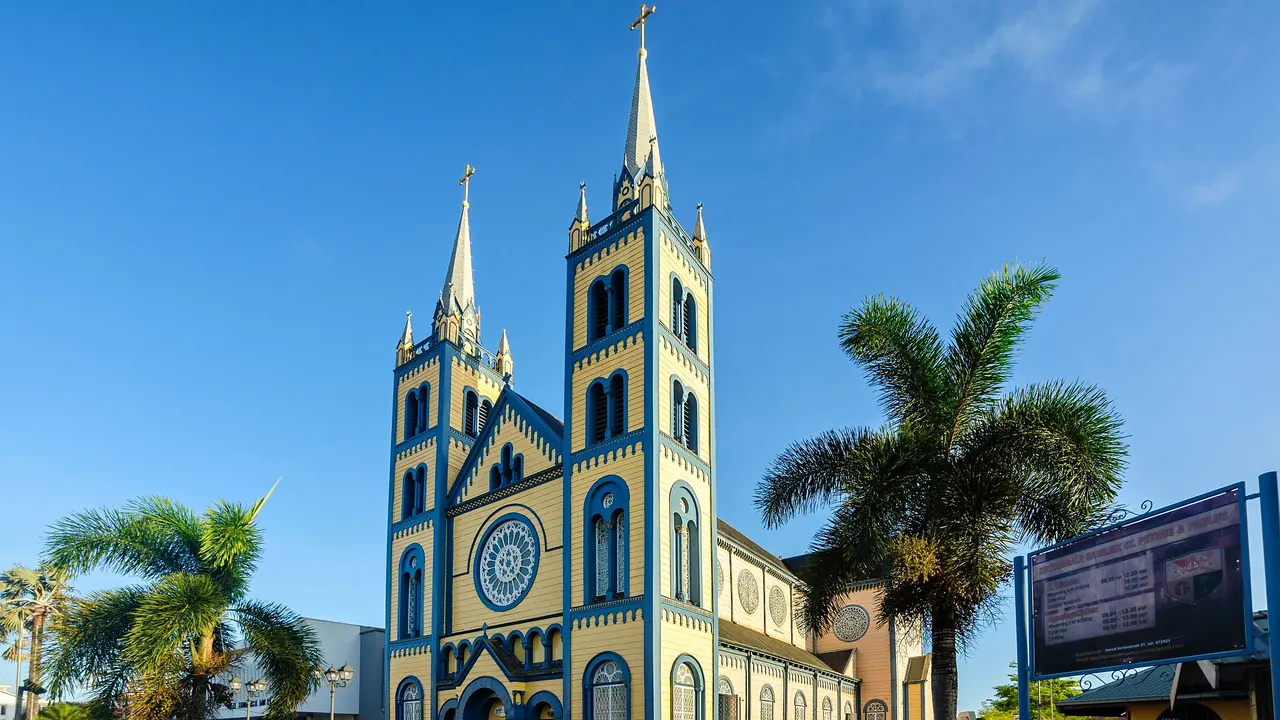
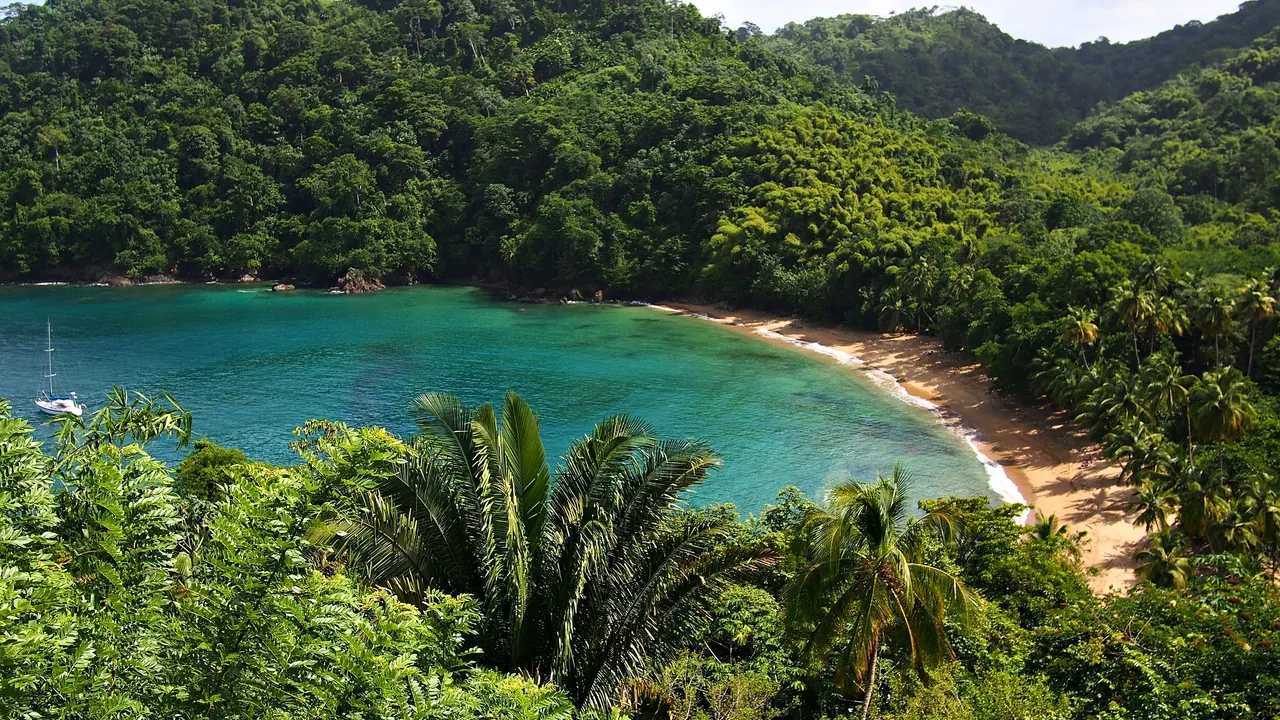
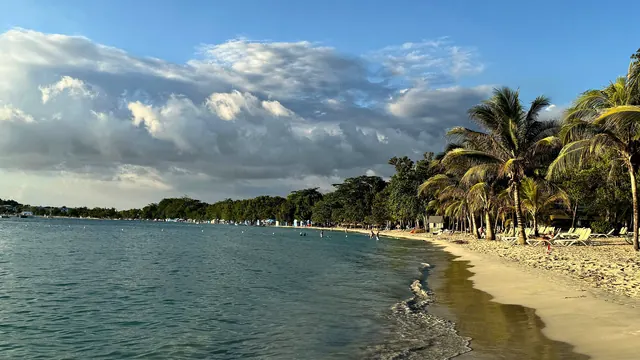
Photos: Suriname by ApintiGamelan, CC BY-SA 4.0, cropped; Trinidad and Tobago by Alfred Jarman, Pexels License.
Suriname or Trinidad and Tobago?
Our verdict in twelve categories, each scored against the same fixed benchmark cities, and the climate month by month, so you can choose for your trip.
Choose Suriname for
- prices
- day trips
- culture and sights
Suriname is for travellers who want the rainforest without the crowds and don't mind working to reach it. Its draw is the deep interior: canoe journeys between Maroon villages, granite domes above the canopy, river lodges with no phone signal. Paramaribo's wooden colonial centre and its mix of Javanese, Hindustani and Creole cooking make a good first and last few days. It is also the cheaper of the two if you stay near the capital, though you'll have to accept simple lodges, slow transport and almost no beach life.
Choose Trinidad and Tobago for
- beaches
- live music and the arts
- nightlife
Trinidad and Tobago gives you more to do between the nature trips. Tobago has the clear warm water and calm coves Suriname lacks, and it is the easier choice with children or for a slower pace. Trinidad brings the steelpan, the street food and the late nights of liming, all at full strength in the weeks before Carnival. Rooms cost more, but the trip is easier to put together and has a wider range.
Scoreboard
Twelve categories on one fixed scale from 0 to 100. The shaded stretch is the gap between the two.
Your match
Pick a travel style or drag the sliders, and both match scores follow your weighting.
Wins on prices and day trips with your weighting.
Wins on beaches and live music and the arts with your weighting.
What matters to you?
Category by category
What the scores mean for a trip.
Beaches & swimming
Trinidad and Tobago is far ahead for the beach. Tobago's leeward coast has Pigeon Point, Store Bay, Englishman's Bay and Pirate's Bay, with warm, clear water in every month. On Trinidad, Maracas Bay is a fine day out when the Atlantic swell allows.
Suriname has no beaches to speak of. Its coast is mudflat and mangrove, and the sandy stretch at Galibi belongs to nesting turtles. You swim in the dark creeks south of Paramaribo, at Brokopondo Reservoir or in the current of the Upper Suriname River. These are refreshing, but they are a break from the jungle, not a beach vacation.
Where in Suriname: Upper Suriname River, Creeks south of Paramaribo, Brokopondo Reservoir
Where in Trinidad and Tobago: Tobago, Pigeon Point, Castara, Maracas Bay
Food & drink
Both countries eat well because of who settled them, but Trinidad has the edge in range and in street food. Suriname's table is notably Javanese as well as Hindustani and Creole. You can have saoto soup and bami from warungs, pom at celebrations and moksi meti from Chinese counters, with the Central Market and the weekend stalls at Blauwgrond and Lelydorp the places to graze. Beyond Paramaribo the choice falls away to set lodge meals.
Trinidad spreads its food over more of the island. There are doubles for breakfast, bake and shark at Maracas Bay, curries and snacks around Chaguanas and Debe, and night stalls by the Queen's Park Savannah. Tobago adds curry crab and dumpling. Neither country is the place for fine dining.
Where in Suriname: Paramaribo, Blauwgrond, Lelydorp
Where in Trinidad and Tobago: Port of Spain, Central and South Trinidad, Maracas Bay, Tobago
Culture & sights
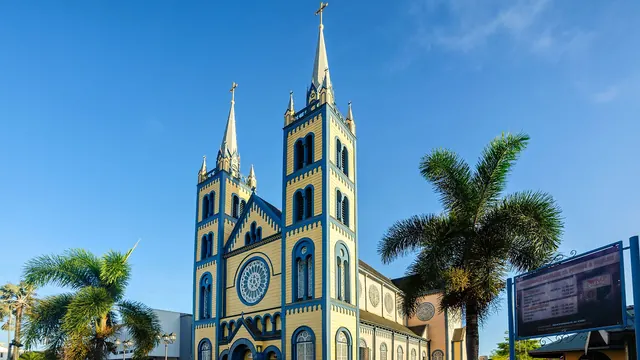
Suriname has the stronger sights. Paramaribo's UNESCO-listed centre of white wooden houses is a real townscape. The huge wooden cathedral, Fort Zeelandia and the synagogue standing beside the Keizerstraat mosque are all within a few streets. Jodensavanne and the Commewijne plantation houses add depth outside the city.
Trinidad's sights are more scattered and less of a reason to come. Its highlights are the Magnificent Seven mansions on the Savannah, the National Museum, the Temple in the Sea at Waterloo and the Hanuman statue at Carapichaima. Both sets are small, but Suriname's hangs together as a single historic place.
Where in Suriname: Paramaribo historic inner city, Commewijne, Jodensavanne
Where in Trinidad and Tobago: Port of Spain, Central Trinidad, Scarborough
Nightlife
Trinidad goes out much harder. Liming is a national habit, and Ariapita Avenue and the Western Main Road keep going well past midnight. In the run-up to Carnival there are fetes, boat parties and J'ouvert, which runs from night into morning. On Tobago the big night is the Sunday street party at Buccoo.
Paramaribo has a friendly, loud weekend scene of open-air bars, casinos and kaseko and dancehall parties, and locals dress up for it. Outside the capital, nights end early in both countries. In Suriname that usually means a drink by the river at a lodge.
Where in Suriname: Paramaribo
Where in Trinidad and Tobago: Port of Spain, Buccoo, Tobago
Nature & outdoors
Both are excellent for nature, but in different ways. Suriname's strength is scale. Unbroken rainforest covers most of the country, and the Central Suriname Nature Reserve is reached by small plane, with the climb up the Voltzberg as its high point. Brownsberg and the Upper Suriname River add trails, waterfalls and travel by canoe.
Trinidad and Tobago packs its wildlife into a small, easy space. The two islands together have more than 400 bird species, and the forested Northern Range and the Asa Wright nature centre are the places to see them. Tobago's Main Ridge has gentle trails. It also has something Suriname can't match: diving with manta rays off Speyside. Each country has its scarlet ibis, at Caroni Swamp and Bigi Pan, and its nesting leatherbacks, at Grande Riviere and Galibi.
Where in Suriname: Central Suriname Nature Reserve, Upper Suriname River, Brownsberg Nature Park, Galibi
Where in Trinidad and Tobago: Northern Range, Main Ridge Forest Reserve, Speyside, Caroni Swamp
Day trips
Suriname has slightly more to fill days away from the capital. Commewijne is an easy outing by ferry and bicycle between Peperpot, Frederiksdorp and the star-shaped Fort Nieuw Amsterdam. Jodensavanne and the Javanese villages around Lelydorp make a second and third day.
From Port of Spain the options are Chaguaramas and the Bocas islands, or Waterloo and San Fernando in the south. Beyond those, outings in Trinidad mean forest and beach rather than towns. Tobago can be reached for the day by the short flight, but it works better as a second base.
Where in Suriname: Commewijne, Jodensavanne, Lelydorp
Where in Trinidad and Tobago: Tobago, Waterloo, San Fernando, Chaguaramas
Good for families
Trinidad and Tobago is the better choice with children, mostly because of Tobago. The calm shallows at Pigeon Point and Store Bay suit small swimmers, and glass-bottom boats run out to the waist-deep Nylon Pool. Trinidad adds the Emperor Valley Zoo and the Kiddies Carnival parades.
Suriname suits adventurous families with older children. They can watch dolphins at the river confluence, see turtles at Galibi and travel by canoe. But the constant humidity, mosquitoes, small planes and basic lodges make it hard work with young ones.
Where in Suriname: Paramaribo, Galibi, Upper Suriname River
Where in Trinidad and Tobago: Tobago, Buccoo Reef, Port of Spain
Getting around
Neither is easy without help, but Trinidad and Tobago is a little simpler. A hired car or driver gets you round both islands. Route taxis and maxi taxis cover the main corridors, and the crossing to Tobago is a short flight or a ferry.
In Suriname, the paved roads stop at Atjoni and Brownsberg. Past them, the rivers and forest airstrips take over. That is why most visitors book the interior as a package, and why a do-it-yourself trip there uses up so much time. In both countries the capital's centre is walkable and the rest is not.
Where in Suriname: Paramaribo
Where in Trinidad and Tobago: Port of Spain, Tobago
Shopping & style
Shopping is a minor part of either trip, and Trinidad offers a bit more choice. Frederick Street and Charlotte Street in Port of Spain have fabric shops and street vendors, and the suburbs have large malls. The best things to take home are fine-flavour chocolate, rum, pepper sauce and small steelpans.
Suriname's best buys are crafts. Look for Maroon carved and painted trays, stools and paddles from the waterfront stalls and the Upper Suriname River villages, along with Javanese batik and local gold. The Paramaribo Central Market is better for browsing than for buying.
Where in Suriname: Paramaribo, Upper Suriname River
Where in Trinidad and Tobago: Port of Spain
Affordability
Suriname is the cheaper trip, as long as you stay near the coast. Warungs, roti shops, minibuses and modest guesthouses in Paramaribo cost little, and Commewijne by bicycle is cheaper still. The interior is the exception, because guided boat and flight packages make up most of the cost.
In Trinidad and Tobago the street food is just as cheap, but rooms are the problem. Port of Spain business hotels and Tobago resorts charge Caribbean rates, and Carnival pushes everything higher. Village guesthouses in Castara are the way to keep the cost down.
Where in Suriname: Paramaribo, Commewijne
Where in Trinidad and Tobago: Castara, Tobago, Port of Spain
Live music & performing arts
This is where Trinidad stands well apart. It is the home of the steelpan. In the weeks before Carnival you can stand in a Port of Spain panyard while a hundred-piece orchestra rehearses for Panorama at the Queen's Park Savannah, with calypso tents and soca shows on the same nights. Outside the season, Queen's Hall keeps up a smaller programme.
Suriname's kaseko and Maroon drumming are real traditions, but you mostly catch them at parties, at Keti Koti in July, at New Year or in village performances for visitors. There is no regular stage to see them on.
Where in Suriname: Paramaribo, Upper Suriname River
Where in Trinidad and Tobago: Port of Spain, Queen's Park Savannah, Tobago
Wellness & relaxation
Neither country has a spa or bathing culture, but Tobago is the easier place to slow down. It has resort spas, and fishing villages like Castara, Speyside and Charlotteville have little traffic and quiet evenings.
Suriname's version of rest is a hammock at a lodge on the Upper Suriname River, with the sound of the rapids and no signal. It is restful, but the comfort is basic, and getting there is part of a jungle trip. Paramaribo offers little beyond a few hotel massage rooms.
Where in Suriname: Upper Suriname River, Paramaribo
Where in Trinidad and Tobago: Tobago, Castara, Charlotteville
When should you go?
Pick your month, and for a country the place in it. The climate figures are measured averages, not a forecast.
Paramaribo (Suriname) in July
Tobago (Trinidad and Tobago) in July
Daytime high, °C
Rainfall in the month, mm
Where the figures come from
Paramaribo (Suriname)'s temperatures are measured 45 km from the centre, at Zanderij.
Paramaribo (Suriname) has no rain gauge within 25 km of the centre, so its rainfall comes from a gridded climate dataset read at the destination rather than from a gauge further away.
Tobago (Trinidad and Tobago)'s sunshine is measured 84 km from the centre, at Piarco International Airport, Trinidad.
Temperature and rainfall are climate normals, averaged over the years shown. Paramaribo (Suriname): 1991-2020 (sunshine 1981-2010) normals, Zanderij (44.7 km from centre). Tobago (Trinidad and Tobago): 1991-2020 (rainfall 1981-2010) normals, Crown Point Airport, Tobago (2.8 km from centre).
Both countries are hot all year, so heat never rules out a month. Rain sets the seasons, and the two run on different timetables. Paramaribo is at its best from August to November, its driest and sunniest stretch. September and October fall to about 65mm of rain, though they are also the hottest months at around 34°C, so walking the streets is slower at midday. The heavy rains come in May and June, at over 300mm a month, and that makes interior trails and river trips hard going.
Tobago's good season comes earlier. There, January to May is dry and bright, with February down to about 50mm, so it is the best time for the island's beaches. From June the rain builds to a peak of about 227mm in August, and it stays fairly wet until December. The sea around Tobago is warm enough to swim in every month. These figures are for Tobago only, as none are given for Trinidad. Tobago is best early in the year and Paramaribo late in it, so if you want both countries at their best, you will need two separate trips.
Which traveller are you?
For a beach and sun trip, Trinidad and Tobago is the clear choice. Tobago's Pigeon Point, Store Bay and Castara have warm, clear, calm water. Suriname's coast is mangrove and brown silt, so swimming there means jungle creeks and rivers.
For a food and nightlife trip, Trinidad wins. You can graze on doubles and bake and shark, then go liming along Ariapita Avenue and the Western Main Road in St James. Paramaribo's warungs and roti shops are excellent, but its nights are one small city's worth.
On a trip on a tight budget, Suriname goes further if you stay around Paramaribo and Commewijne, eating at warungs and cycling between plantations. Trinidad's street food is cheap too, but rooms there are priced like the rest of the Caribbean.
More comparisons
Each shares a side with Suriname or Trinidad and Tobago.
Where else could you go?
Set Suriname or Trinidad and Tobago against any other country.