Paramaribo
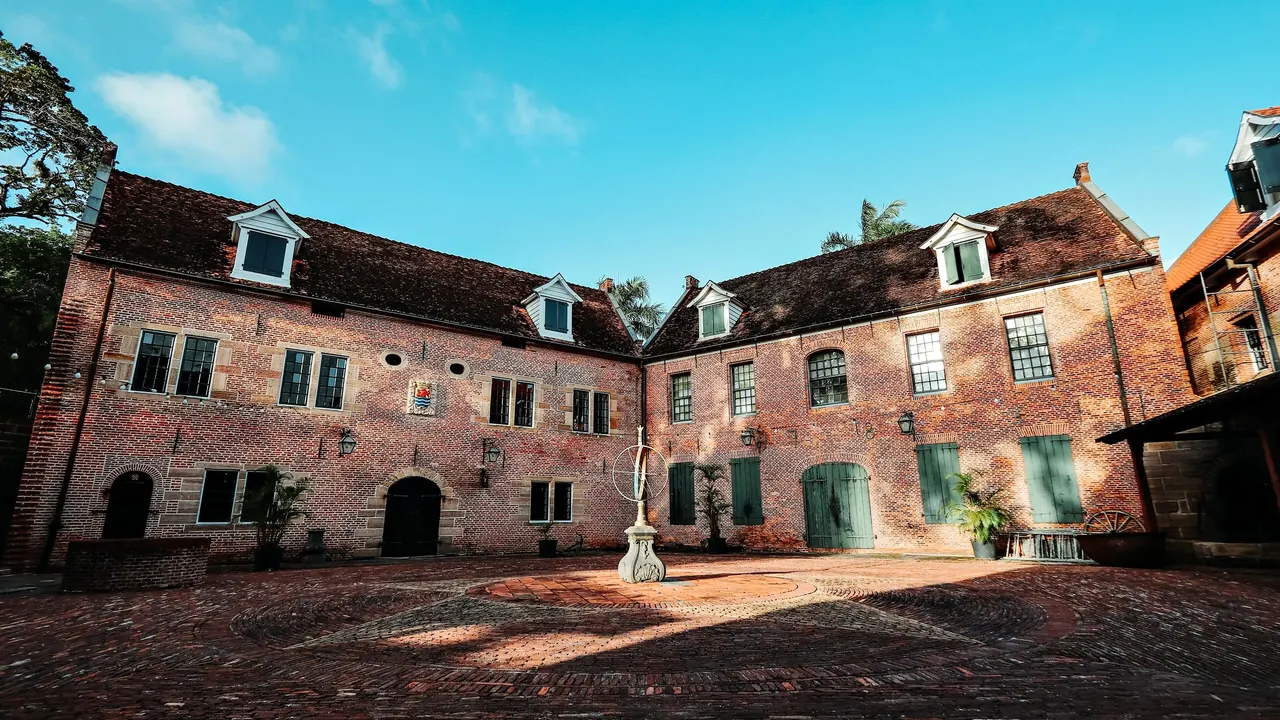
The courtyard of Fort Zeelandia in Paramaribo
- Nature & outdoors63
- Affordability62
- Food & drink60
Photo: Junie609, CC BY-SA 4.0, cropped
Match
39
Every category weighted equally
- Beach & sun38
- Culture & arts41
- Food & nightlife40
- Family trip39
- Outdoors43
- Relax & unwind38
- Shopping & style39
- On a budget41
Paramaribo in twelve categories
Our verdict on each, scored 0 to 100 against the same fixed benchmark cities, so a score means the same thing on every page.
Beaches & swimming. Scores 12 out of 100.
Food & drink. Scores 60 out of 100.
Culture & sights. Scores 52 out of 100.
Nightlife. Scores 38 out of 100.
Nature & outdoors. Scores 63 out of 100.
Day trips. Scores 42 out of 100.
Good for families. Scores 30 out of 100.
Getting around. Scores 30 out of 100.
Shopping & style. Scores 28 out of 100.
Affordability. Scores 62 out of 100.
Live music & performing arts. Scores 25 out of 100.
Wellness & relaxation. Scores 25 out of 100.
Paramaribo category by category
Beaches & swimming
12Paramaribo sits on the Suriname River a short way inland from a coast of mudflats and mangroves, where the sea runs brown with river silt and nobody swims. There is no beach life in the usual sense.
What locals do instead is head for the creeks. Within about an hour of the city, blackwater streams the colour of strong tea run over white sand through the forest, with bathing spots, picnic shelters and hammocks, busiest at weekends. The water is warm, soft and pleasant, and a lazy afternoon at a creek is a genuine part of local life, but it is a day out rather than a reason to come, and anyone wanting sea and sand should plan for somewhere else.
Food & drink
60Food is one of the best reasons to spend time in Paramaribo, because the city's mix of peoples has produced a cooking found almost nowhere else. Javanese warungs serve bami, nasi, saoto soup and satay, often in simple open-sided places on the edges of town; Hindustani roti shops fold curried chicken, potato and long beans into soft flatbread; Creole kitchens make pom, the festive baked dish of grated root and chicken, alongside peanut soup and salted fish. Chinese restaurants, bakeries and late snack stalls fill the gaps.
The Central Market on the Waterkant is the place to see tropical fruit, river fish and spices in quantity. Drinking is simpler: cold local lager, rum and fresh juices rather than wine or coffee culture, and the upmarket restaurant tier is small. It suits curious eaters who like cheap, generous plates more than formal dining.
Culture & sights
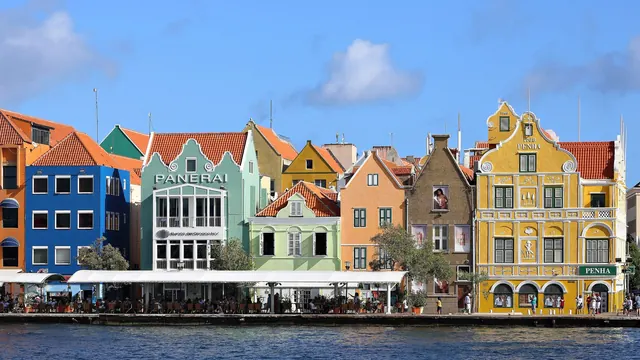
52The historic inner city is a UNESCO World Heritage site, and its appeal lies in the streets themselves: white-painted wooden houses with dark green shutters, brick foundations and steep roofs, a Dutch colonial grid adapted to the tropics. The Cathedral of Saints Peter and Paul, built almost entirely of wood, is the standout, with a vast honey-coloured interior. Nearby, the Neve Shalom synagogue and the Keizerstraat mosque stand side by side, a much-photographed sign of the city's mixed communities.
Fort Zeelandia on the river holds the main historical museum, and Independence Square, the Presidential Palace and the palm garden behind it complete a compact circuit. Some wooden buildings are well kept and others are weathered, and the museums are small. A day or two covers it, best on foot in the early morning before the heat.
Nightlife
38Going out in Paramaribo is relaxed and local. Early evening, people gather along the riverfront Waterkant for cold beer, grilled snacks and the sunset over the river, and the stretch of bars and terraces around the hotel district north of the centre fills up on Thursday to Saturday nights. Clubs play kaseko, dancehall, Latin and Dutch-Caribbean hits, and weekend nights can run well past midnight.
Midweek is quiet, the scene is small, and much of it depends on taxis between scattered venues rather than a single walkable quarter. Casinos are a noticeable part of the evening landscape. It is a pleasant place to drink and dance with locals, not a destination for nightlife.
Nature & outdoors
63Paramaribo is the gateway to one of the least disturbed rainforest regions on earth, and some of it is close. Across the river, the Commewijne district is a flat green world of old plantation channels, cycle paths through orchards and Peperpot nature park, where monkeys and toucans are often seen. Boat trips to the meeting of the Suriname and Commewijne rivers look for the Guiana dolphins that feed there, and the mangrove coast north of the city is rich in scarlet ibis and wading birds.
About two hours south, Brownsberg rises above the Brokopondo reservoir with forest trails, waterfalls and howler monkeys. The truly wild interior, with Maroon villages and jungle lodges on the upper rivers, takes several days and usually a flight or long boat ride. Heat and humidity make early starts essential.
Day trips
42The best day out is across the river to Commewijne, where old sugar and coffee plantations line the waterways. Fort Nieuw Amsterdam, a star-shaped Dutch fort at the river mouth, is an open-air museum, and estates such as Frederiksdorp and the former sugar works at Marienburg show the plantation economy and the contract labourers who followed slavery. Many visitors combine it with a cycle ride or a dolphin boat trip.
Upriver, Jodensavanne preserves the ruins of a seventeenth-century Jewish settlement and its brick synagogue in the forest, a World Heritage site about two hours away by road. Beyond that the choice thins: the towns of Suriname are small and far apart, and most longer excursions are about forest rather than places.
Good for families
30Children are welcomed easily in Paramaribo's family-centred culture, but there is little made for them. The small zoo on the city edge, a dolphin-spotting boat trip, a bike ride through the Commewijne plantations and an afternoon at a forest creek with sandy shallows are the highlights, and hotel pools do a lot of the work.
The constant tropical heat, broken pavements, open drains and busy traffic make walking with small children tiring, and getting anywhere means taxis or a hired driver. Medical care is basic by Western standards outside the capital, and mosquito protection matters. Families who enjoy wildlife and simple outdoor days will manage; those expecting attractions will find few.
Getting around
30The historic centre is small enough to cover on foot, and the riverfront, cathedral, fort and markets are all within a short walk of each other. Beyond it the city spreads out low and wide, pavements are patchy or absent, and the heat makes long walks hard work.
Public transport means privately run minibuses on loose routes without a clear timetable or map, which locals use but visitors find hard to read. Most travellers rely on taxis, booked through their hotel, or hire a car, which is driven on the left. Bicycles are a good option across the river in flat Commewijne, and outings to the interior are usually arranged as tours with transport included.
Shopping & style
28Shopping here is practical and local rather than stylish. The Central Market on the Waterkant is the liveliest place, with produce downstairs and clothes, household goods and Indonesian and Indian textiles above. The souvenirs worth seeking out are Maroon woodcarvings with their bold interlaced patterns, painted trays and stools, Javanese batik and locally made gold jewellery, sold in the shops along the Domineestraat and from craft stalls near the fort.
The main commercial streets of the centre are lined with general stores and traders' shops, and there are a few modern malls on the outskirts. There is no luxury or design scene to speak of.
Affordability
62Day-to-day costs in Paramaribo are modest. Eating in warungs, roti shops and at the market is cheap, local beer and rum are inexpensive, and taxis across town cost little. Simple guesthouses in the centre are good value.
The larger hotels are priced with business travellers and visiting officials in mind and feel closer to international rates, imported goods in supermarkets are costly, and tours into the interior, which often involve flights or long boat journeys, are the biggest single expense of most trips. A visitor who eats locally and keeps to the city spends little; one who plans several rainforest excursions spends a good deal more.
Live music & performing arts
25Suriname's own music is kaseko, a brassy, drum-driven dance music with Creole roots, and kawina, its percussion-led ancestor; a visitor hears them at weekend parties, outdoor events and family celebrations more than in dedicated venues. The Thalia theatre, among the oldest in the Caribbean region, stages Dutch- and Sranan-language plays and local productions, but there is no opera, orchestra or steady concert calendar.
The richest time to come for music and performance is around the turn of the year, when street parties, fireworks and bands fill the centre, and around the July commemoration of emancipation, Keti Koti, with drumming and dance.
Wellness & relaxation
25There is no bathing or spa tradition in Paramaribo; wellness amounts to the spas of the larger hotels and a scattering of massage studios. What the city does offer is an unhurried pace: long afternoons in the shade, slow river views from the Waterkant and a culture that does not rush. For real rest, most visitors pick a jungle lodge upriver or a creek resort rather than staying in town.
When should you go?
Pick a month to see what it is like. The climate figures are measured averages, not a forecast.
Paramaribo in July
Daytime high, °C
Rainfall in the month, mm
The whole year
Shaded against this destination’s own year: the deepest cell is its best month for that figure and the palest its weakest.
Where the figures come from
Paramaribo's temperatures are measured 45 km from the centre, at Zanderij.
Paramaribo has no rain gauge within 25 km of the centre, so its rainfall comes from a gridded climate dataset read at the destination rather than from a gauge further away.
Temperature and rainfall are climate normals, averaged over the years shown. Paramaribo: 1991-2020 (sunshine 1981-2010) normals, Zanderij (44.7 km from centre).
Before you go
| Measure | Paramaribo |
|---|---|
| Official language | Dutch |
| Currency | Surinam Dollar (SRD) |
| Sockets | CF127 V, 60 Hz |
| Driving side | Left |
| Time zone | UTC-3 |
| Emergency number | 112 |
| Elevation | 3 m |
| Main airport | Johan Adolf Pengel International Airport (PBM)44 km from centre14 non-stop destinations |
| Public holidays this year | 19 days |
By the numbers
| Measure | Paramaribo |
|---|---|
| Population | 223,757 |
| People per km² | 1,229 |
| Museums within 10 km | 15 |
| UNESCO World Heritage sites within 50 km | 1 |
| Swim season, months above 21 °C | 12 months |
Compare Paramaribo with
Every comparison with a written verdict behind it.