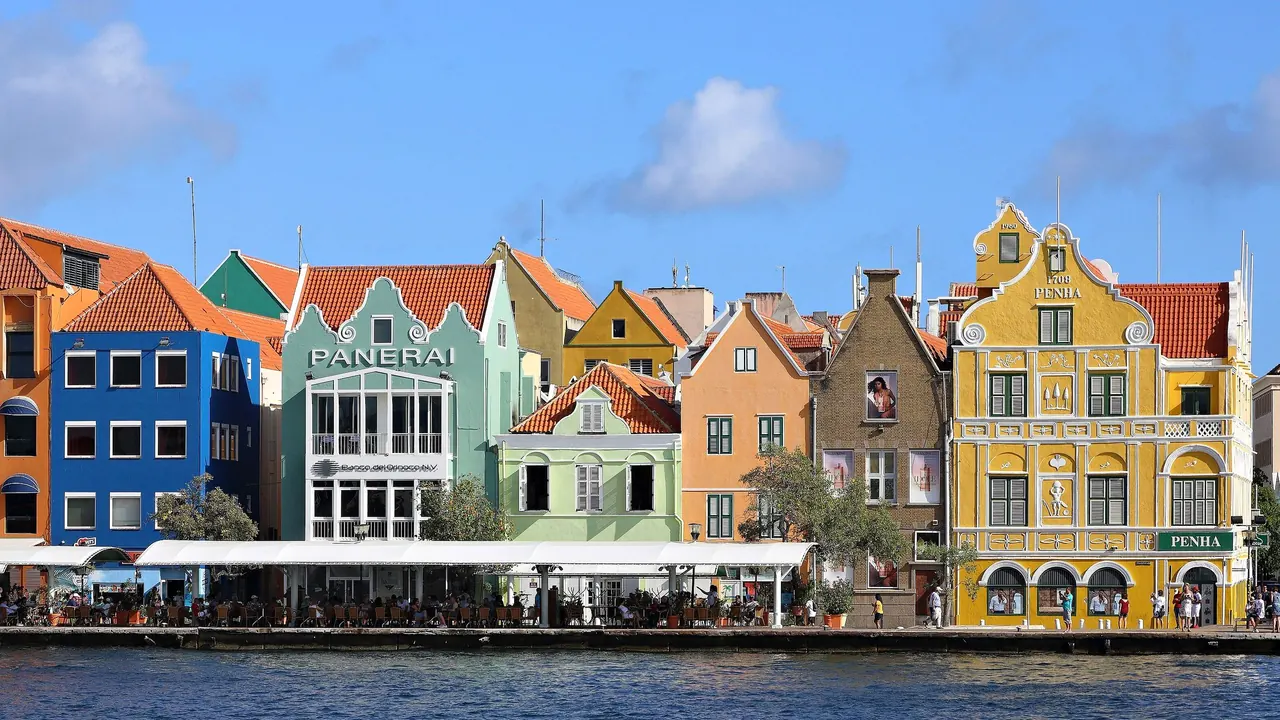
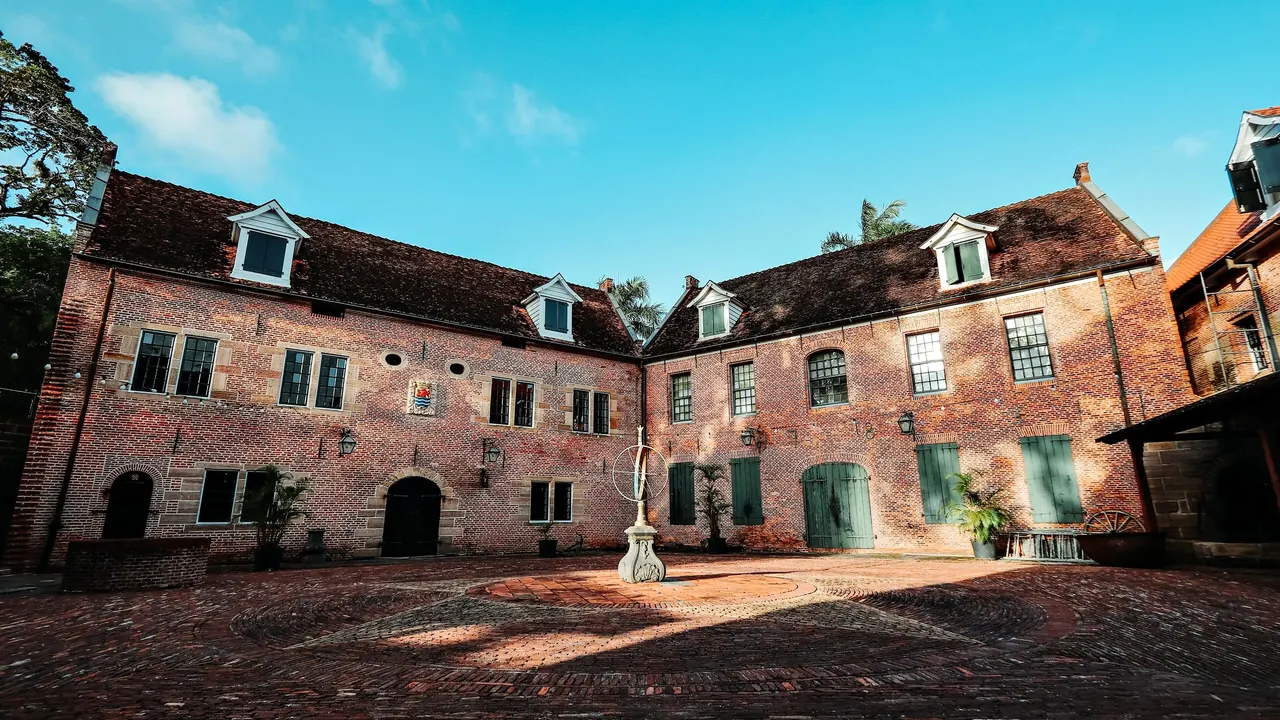
Photos: Curaçao by Martin Falbisoner, CC BY-SA 4.0, cropped; Paramaribo by Junie609, CC BY-SA 4.0, cropped.
Curaçao or Paramaribo?
Our verdict in twelve categories, each scored against the same fixed benchmark cities, and the climate month by month, so you can choose for your trip.
Choose Curaçao for
- beaches
- families
- wellness
Curaçao is the choice for a sea-based trip. Its sheltered leeward coves, reef just offshore and dry, sunny climate make it a place to swim, snorkel and dive every day, with Willemstad's painted harbour front for an evening or two. It also suits families and anyone who wants comfort, quiet villas and a pace that runs on trade winds, provided they accept high costs and the need for a hire car.
Choose Paramaribo for
- prices
- day trips
- food and drink
Paramaribo suits a different traveller: someone curious about food, people and forest rather than beaches. The city's Javanese, Hindustani and Creole kitchens, its wooden colonial streets and the plantations and rainforest beyond the river make it a richer base for excursions. Everyday costs are far lower too. In return you get no swimming sea, heavy rain for much of the year and a city that is harder work to get around.
Scoreboard
Twelve categories on one fixed scale from 0 to 100. The shaded stretch is the gap between the two.
Your match
Pick a travel style or drag the sliders, and both match scores follow your weighting.
Wins on beaches and families with your weighting.
Wins on prices and day trips with your weighting.
What matters to you?
Category by category
What the scores mean for a trip.
Beaches & swimming
This is the widest gap between the two. Curaçao has dozens of sandy coves along its sheltered west and south coasts, from the turquoise water of Grote Knip and the turtles at Playa Lagun to the lounger-lined resort strips of Jan Thiel and Mambo Beach, plus boat trips to the long white sand of Klein Curaçao.
Paramaribo has no beach to speak of, since the river silt turns the sea brown along a mangrove shore. Its swimming happens in the tea-coloured blackwater creeks about an hour away, pleasant for a lazy afternoon in a hammock but no substitute for a beach vacation.
Food & drink
Paramaribo is the better place to eat, because its mix of communities has produced a cooking you rarely meet elsewhere: bami and satay at Javanese warungs, roti stuffed with curried chicken, and Creole pom and peanut soup. The Central Market on the Waterkant shows off river fish, spices and tropical fruit in quantity, and plates are cheap and generous.
Curaçao's Antillean Creole dishes such as keshi yena and goat stobá are worth seeking out at the old market hall in Punda, and the late-night food trucks are fun. Beyond that, the choice is narrower, often aimed at tourists and built on imported ingredients.
Culture & sights
Both have a UNESCO-listed Dutch colonial centre that takes two or three days at most, so the difference is in character. Willemstad is built in stone and colour: gabled merchant houses along the Handelskade, the swinging Queen Emma bridge, Fort Amsterdam and the sand-floored Mikvé Israel-Emanuel synagogue, with the Kura Hulanda museum and the landhuizen out in the cactus country telling the story of slavery.
Paramaribo's appeal is wood. Its white-painted houses with green shutters, the honey-coloured interior of the wooden cathedral and the synagogue and mosque standing side by side reflect a city of many faiths. Its museums are smaller and some buildings are weathered.
Nightlife
Neither is a nightlife destination, and both come alive mainly from Thursday to Saturday. Curaçao's evenings centre on Pietermaai's cocktail bars in old mansions, which you can walk between, and on beach bars at Mambo Beach and Jan Thiel that turn into weekend parties, with salsa and merengue nights.
Paramaribo starts with sunset beers on the Waterkant and moves on to clubs playing kaseko and dancehall well past midnight, but its venues are scattered and you need taxis between them.
Nature & outdoors
The two are evenly matched outdoors, but one is underwater and the other is forest. Curaçao's fringing reef lies right off the leeward shore, so you can walk in from the beach to dive the Tugboat wreck or the west end drop-offs, with flamingos in the salt pans and a morning climb up Mount Christoffel on land.
Paramaribo opens onto rainforest: monkeys and toucans in Peperpot, Guiana dolphins where the rivers meet, scarlet ibis in the mangroves and the waterfalls of Brownsberg two hours south. The deep interior with its Maroon villages needs several days.
Day trips
Paramaribo has far more to fill a day out. Across the river, Commewijne combines Fort Nieuw Amsterdam, the plantation estates and the old Marienburg sugar works with cycling or a dolphin boat trip, and the ruined seventeenth-century synagogue at Jodensavanne lies about two hours upriver.
On Curaçao, the island itself is the excursion. Its sights are short drives from wherever you stay, and the only real trip out is the boat to Klein Curaçao, while Aruba and Bonaire need flights.
Good for families
Curaçao works much better with children, as long as the plan is a beach vacation. Sheltered shallow coves, resort beaches with facilities, dolphin encounters near the Sea Aquarium and half-day outings to the Hato caves fill the days, though shade is scarce and a hire car is needed.
Paramaribo is welcoming to children but offers them little: a small zoo, a dolphin boat, a creek afternoon and the hotel pool. The heat, open drains and traffic make getting about with young children hard going.
Getting around
Curaçao is the easier of the two, though both expect you to drive or take taxis. Willemstad's quarters are linked by a free ferry and the pontoon bridge, and beyond town the decent roads mean the far west end is about an hour away by hire car.
In Paramaribo, only the historic centre is pleasant on foot. The rest of the city sprawls, the minibuses run on loose routes with no timetable that visitors can follow, and hire cars drive on the left. Bicycles come into their own across the river in flat Commewijne.
Shopping & style
Neither is worth the trip for shopping, so the difference is in what you bring home. Curaçao's shopping is built around the cruise ships. The streets of Punda behind the harbour lean towards jewellery, watches and perfume, much like the shops in many Caribbean ports, and the souvenirs that belong to the island itself come down to a painted chichi doll or a bottle of its orange liqueur.
Paramaribo's shops are less polished, but more of what they sell is made locally. Upstairs at the Central Market on the Waterkant there are Indonesian and Indian textiles, and along the Domineestraat and at the craft stalls by the fort you can find Maroon woodcarving, Javanese batik and gold jewellery made in the city. These are souvenirs that show the country's mix of peoples.
Affordability
Paramaribo is clearly the cheaper trip day to day. Warung and market meals, local beer and cross-town taxis cost little, and simple guesthouses are good value, although big hotels and flights or boat trips into the interior can push the total up quickly.
Curaçao is expensive from the start, with resort prices, imported food and car hire hard to avoid. Self-catering apartments in the west, food trucks and free public coves help, and shore diving is the one thing that comes cheaper than you might expect.
Live music & performing arts
Neither has much formal programming, so music here means local styles at the right time of year. On Curaçao it is tumba, heard at its best during the long Carnival season before Lent, plus live Latin and jazz in bars and hotels.
Paramaribo has kaseko and kawina at weekend parties, the long-established Thalia theatre for plays in Dutch and Sranan, and its liveliest moments around New Year and the July Keti Koti emancipation day.
Wellness & relaxation
Curaçao is the better place to unwind. Its larger resorts have spas, Jan Thiel has yoga and massage, and the quiet villas around Westpunt offer slow mornings with a swim and the trade wind keeping the heat bearable.
In Paramaribo, the offer in town is thin and the humid heat is less restful. The pleasure is in shaded afternoons by the Waterkant, and real rest usually means heading upriver to a jungle lodge or creek resort.
When should you go?
Pick your month. The climate figures are measured averages, not a forecast.
Curaçao in July
Paramaribo in July
Daytime high, °C
Rainfall in the month, mm
Where the figures come from
Paramaribo's temperatures are measured 45 km from the centre, at Zanderij.
Paramaribo has no rain gauge within 25 km of the centre, so its rainfall comes from a gridded climate dataset read at the destination rather than from a gauge further away.
Temperature and rainfall are climate normals, averaged over the years shown. Curaçao: 1991-2020 normals, Hato Airport, Curacao (10.8 km from centre). Paramaribo: 1991-2020 (sunshine 1981-2010) normals, Zanderij (44.7 km from centre).
Curaçao is warm enough for the beach every month, with the sea between 26°C and 29°C all year and plenty of sunshine. February to September is the dry heart of the year, with little rain and steady trade winds taking the edge off highs in the low thirties. The short rainy season runs from October to December, peaking in November at about 141mm, though even then showers come and go between sunny spells.
Paramaribo is hotter, more humid and much wetter. Rain falls heavily in two seasons, December to January and especially May to June, when each month brings over 300mm. The best window is August to October, the sunniest and driest stretch, with September and October down to about 65mm. The catch is heat: those same months reach 34°C, so walking the streets is best done early in the morning. Taken together, Curaçao's weather is reliable for most of the year, while Paramaribo rewards careful timing.
Which traveller are you?
On a beach and sun trip, Curaçao is the obvious pick. Its west end coves around Westpunt offer clear warm water, turtles near the shore and snorkelling straight off the sand, while Paramaribo's coast is brown mudflat and mangrove where nobody swims.
On a trip with a tight budget, Paramaribo goes much further. Warung meals, roti shops, cheap taxis and simple central guesthouses keep daily spending low, whereas Curaçao's resort prices, imported groceries and unavoidable car hire make it an expensive island to stay on.
On a family trip with children, Curaçao is easier. Calm shallow coves let children snorkel among fish, and resort beaches have food and facilities on hand. In Paramaribo, heat, broken pavements, traffic and basic medical care make days with small children tiring.
Before you go
| Measure | Curaçao | Paramaribo |
|---|---|---|
| Official language | English, Dutch, Papiamento | Dutch |
| Currency | Caribbean Guilder (XCG) | Surinam Dollar (SRD) |
| Sockets | AB120 V, 55 Hz | CF127 V, 60 Hz |
| Driving side | Right | Left |
| Time zone | UTC-4 | UTC-3 |
| Emergency number | 911 | 112 |
| Elevation | - | 3 m |
| Main airport | Hato International Airport (CUR)21 non-stop destinations | Johan Adolf Pengel International Airport (PBM)44 km from centre14 non-stop destinations |
| Public holidays this year | 14 days | 19 days |
By the numbers
| Measure | Curaçao | Paramaribo |
|---|---|---|
| Population | 152,849 | 223,757 |
| People per km² | 344 | 1,229 |
| Museums within 10 km | - | 15 |
| UNESCO World Heritage sites within 50 km | - | 1 |
| Swim season, months above 21 °C | 12 months | 12 months |
Where else could you go?
Every comparison below shares a destination with this one, so you can follow Curaçao or Paramaribo somewhere new.
- Bonairevs Curaçao
- Arubavs Curaçao
- Georgetownvs Paramaribo
- Tobagovs Curaçao
- Bridgetownvs Curaçao
- Manausvs Paramaribo